Why are construction sites prime targets without proper security?
Construction sites tend to attract crime because of how they operate, not because of who is in charge. Temporary layouts, open boundaries, predictable routines and concentrated materials build construction site security risks gradually when planning is reactive. Without preventative planning and clear management oversight, unsecured construction sites often drift into higher levels of site vulnerability without any clear moment where things appear to go wrong.
What Do We Cover In This Article?
Why Construction Sites Attract Risk When Security Is Overlooked
Construction sites are rarely selected at random. Their design, visibility and daily rhythms create operational blind spots when security is treated as a background task instead of a defined management responsibility.
A live site is organised around progress, movement and access. These priorities are necessary for delivery, but they also increase risk exposure when protection is not considered as part of everyday operational governance.
Risk tends to build quietly through routine behaviour. Temporary infrastructure, changing boundaries and regular working hours form patterns that can be observed over time. Once those routines settle, it becomes easier to see why construction sites attract crime, especially where controls remain fixed while the environment and work zones continue to change.
alone does not equal effective construction site security. Fences, alarms or guards may exist without reflecting how the site actually operates. The assumption that construction site theft cannot be avoided often delays stronger decisions, even though many losses trace back to gaps in preventative planning rather than inevitability.
Temporary Environments Create Built-In Security Weaknesses
Temporary construction sites carry vulnerability from the outset because layouts are short term by design. Fencing, hoarding, cabins and access routes are installed to support immediate activity rather than sustained protection. As phases move on, these interim controls are relocated or extended, while security arrangements are frequently left unchanged.
Build programmes rarely stay still. Gates appear, fencing shifts and delivery points move as work areas change. What seems acceptable early in the project can introduce exposure later, particularly when temporary works and non-permanent boundaries remain in place longer than first expected.
Permanent buildings benefit from security designed into their structure. Construction site vulnerabilities emerge because evolving layouts and shifting perimeters increase environmental exposure unless security planning advances at the same pace as the build programme.
Pro Tip: Out of hours risk usually comes from unclear response processes rather than missing equipment.
Construction Site Security That Keeps Pace With Change
Get structured site security that adapts as your project evolves, with clear accountability and consistent oversight from experienced operators.
Visibility, Open Access and Predictable Routines Increase Targeting
Construction site visibility shapes risk in subtle but consistent ways. Sites positioned along public routes, with branded hoarding and visible activity, allow routines to be observed without any need for access.
Delivery schedules often repeat, and opening and closing times remain consistent week after week. Open access construction sites can also develop informal habits where gates are left unsecured for convenience, which gradually becomes accepted practice rather than an exception.
Risk usually develops through routine exploitation rather than obvious mistakes. Predictable site routines create patterns that raise observation risk during ordinary operations, especially when supervision levels fluctuate.
High-Value Materials, Tools and Machinery Draw Criminal Attention
Construction site theft closely follows asset concentration. Tools, fuel, metals and plant machinery are stored temporarily but in meaningful volumes, which increases attractiveness compared with completed premises.
Many items are portable and difficult to trace once removed. Resale markets reduce friction, and losses may occur during working hours as well as overnight, blending into legitimate movement across busy work zones.
Value concentration matters because it shapes theft motivation. Where valuable materials remain accessible within short-term layouts, risk increases even when other controls appear adequate on paper.
A Transient Workforce Makes Access Control Harder to Manage
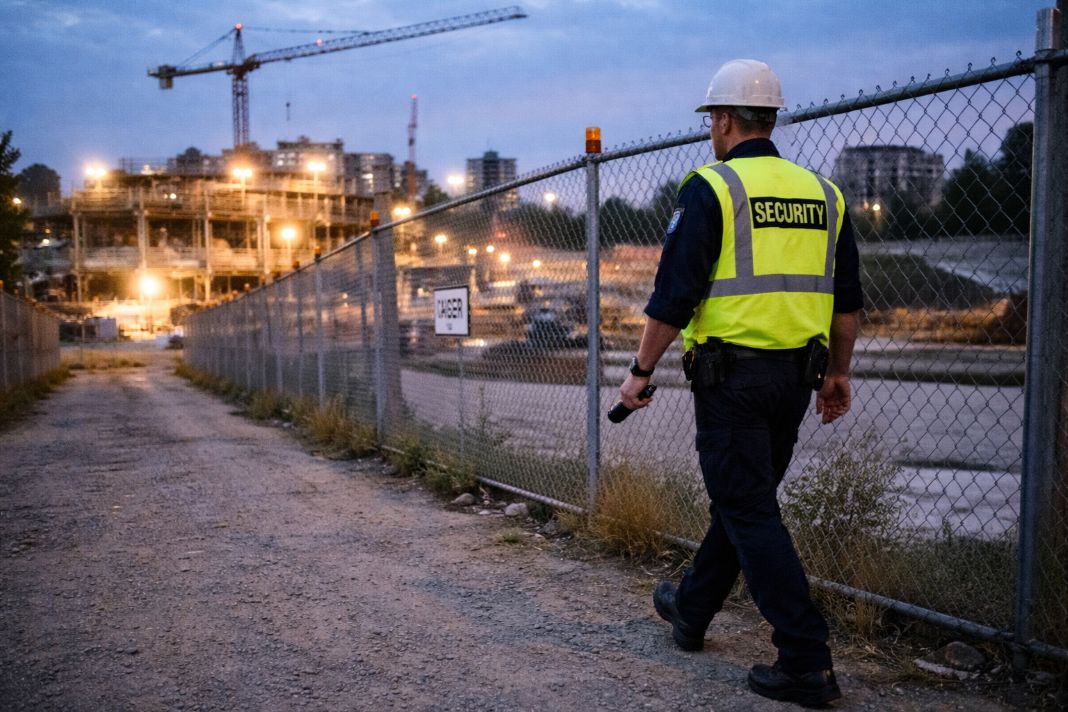
Construction workforce security is shaped by constant movement of people across the site. Subcontractors, agency staff and short-term specialists are essential to delivery, but workforce turnover makes access control harder to manage consistently.
Access credentials are sometimes shared to avoid delays during busy phases. Induction gaps appear when programme pressure overtakes onboarding, introducing human factor risk linked to process gaps rather than deliberate misuse.
Effective site access control relies on systems and clear accountability rather than assumptions. When access accountability is unclear, distinguishing authorised presence from unauthorised access becomes increasingly difficult as the site grows and responsibilities overlap.
Why Static Security Measures Fail on Constantly Changing Sites
Static security decisions struggle to keep up with live construction environments. Measures installed at the start often remain untouched while layouts, access routes and working zones change around them.
Cameras, alarms or guarding arrangements lose relevance once system alignment no longer reflects site reality. Detection without response planning creates reassurance without meaningful intervention, particularly when escalation pathways are unclear.
Construction site security planning works best when treated as a live management process. Layered security and ongoing review allow protection to adapt alongside the programme rather than falling behind operational change.
Pro Tip: Security reviews should move in step with the build programme, not sit as a one off decision made at the start.
Out of Hours Protection You Can Rely On
Reduce overnight and weekend risk with monitored response, clear escalation, and reliable control centre support across your sites.
Why Proper Security Planning Changes Construction Outcomes
Construction sites attract risk because of how they function, not because of poor intent or effort. Integrating security planning into project management clarifies responsibility, strengthens oversight and supports better decision making.
Continuous review replaces one-off decisions, allowing controls to respond to operational change. This approach strengthens operational confidence, reduces long-term risk and supports resilience throughout the build.
Experienced operators such as Double Check Security Group demonstrate how professional construction security works in practice by treating protection as an ongoing operational discipline rather than a single installation choice.
Out-of-Hours Periods Are When Most Security Gaps Appear
Out of hours construction security exposes weaknesses that remain hidden during the working day. Nights, weekends and shutdowns leave unattended construction sites open for longer periods with reduced supervision.
Reduced oversight increases the chance of response failure, particularly where alarm monitoring produces alerts without clear escalation pathways. Weekend construction site theft often takes advantage of these quieter windows rather than forced access.
The most common out-of-hours weaknesses tend to sit in process rather than equipment:
-
Alerts that are raised but not escalated quickly
-
Responsibility for response outside normal working hours being unclear
-
Delays caused by access issues or incomplete site information
-
Repeated false alarms leading to slower reactions and delayed intervention
Timing itself becomes a risk factor. Predictable inactivity highlights existing vulnerabilities rather than introducing new threats.
The Wider Cost of Inadequate Site Security Goes Beyond Theft
The cost of poor construction security extends beyond missing items. Theft or damage can disrupt schedules, increase costs and affect delivery confidence across the project lifecycle.
Insurance implications include excesses, investigation time and potential premium impact. Construction security insurance risk increases where claims history suggests unmanaged exposure or repeated process failure.
Reputational damage affects relationships with clients, insurers and local authorities. Over time, financial exposure, compliance risk and duty of care concerns accumulate, turning isolated losses into broader governance issues.
Why Proper Security Planning Changes Construction Outcomes
Construction sites attract risk because of how they function, not because of poor intent or effort. Integrating security planning into project management clarifies responsibility, strengthens oversight and supports better decision making.
Continuous review replaces one-off decisions, allowing controls to respond to operational change. This approach strengthens operational confidence, reduces long-term risk and supports resilience throughout the build.
Experienced operators such as Double Check Security Group demonstrate how professional construction security works in practice by treating protection as an ongoing operational discipline rather than a single installation choice.