Industrial Cleaning · London and UK-wide · Since 1998
Industrial Cleaning Services That Stand Up To Audit
Cleaning for factories, warehouses and production sites across the UK, scoped on your site and evidenced in writing, so the standard holds between visits.
Surveys are free and come with no obligation.
Industrial Cleaning Services
Deep Cleaning for Factories and Warehouses, UK-Wide
Industrial cleaning is the deep cleaning of factories, warehouses and production sites, covering dusts, oils and residues that fall under COSHH as well as ordinary surfaces.
Double Check Security Group delivers it UK-wide on live and shut-down sites, with method statements, COSHH assessments and photographic reports supplied as part of the work.
Scope of Work
What does an industrial clean actually cover?
Plenty of facilities managers assume industrial cleaning is commercial cleaning scaled up. Bigger floors, bigger machines, same job. In practice the difference sits in what you are removing. Office cleaning deals with surfaces people touch. Industrial cleaning deals with process residue: dust, oil, swarf, grease and product build-up that settles on floors, on machinery, and on everything above head height.
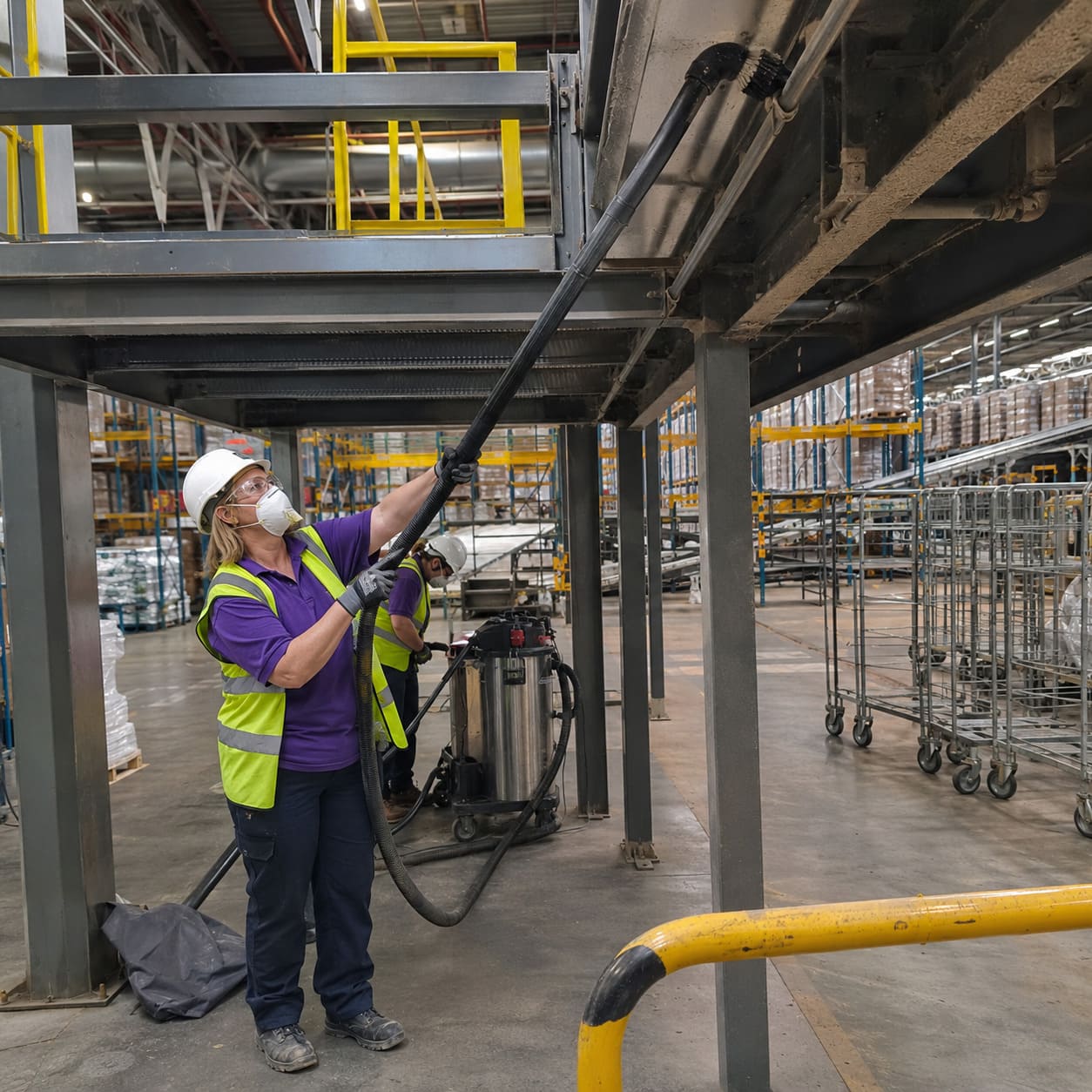
That last part causes most of the trouble. Floors get attention because everyone walks on them. Structural steel, cable trays, ductwork runs and roof-void surfaces do not. Sites usually find this out at audit, when an inspector looks up and finds years of build-up on surfaces nobody was ever asked to clean.
Method matters as much as frequency. Sweeping and blowing down with compressed air both look like cleaning, and both simply move dust into the air. Capture at source, using correctly filtered industrial vacuums, removes it. Where respirable crystalline silica is present, the workplace exposure limit under COSHH is 0.1 mg/m3 averaged over eight hours, so how dust gets handled carries a measurable legal consequence.
Standard scope usually includes:
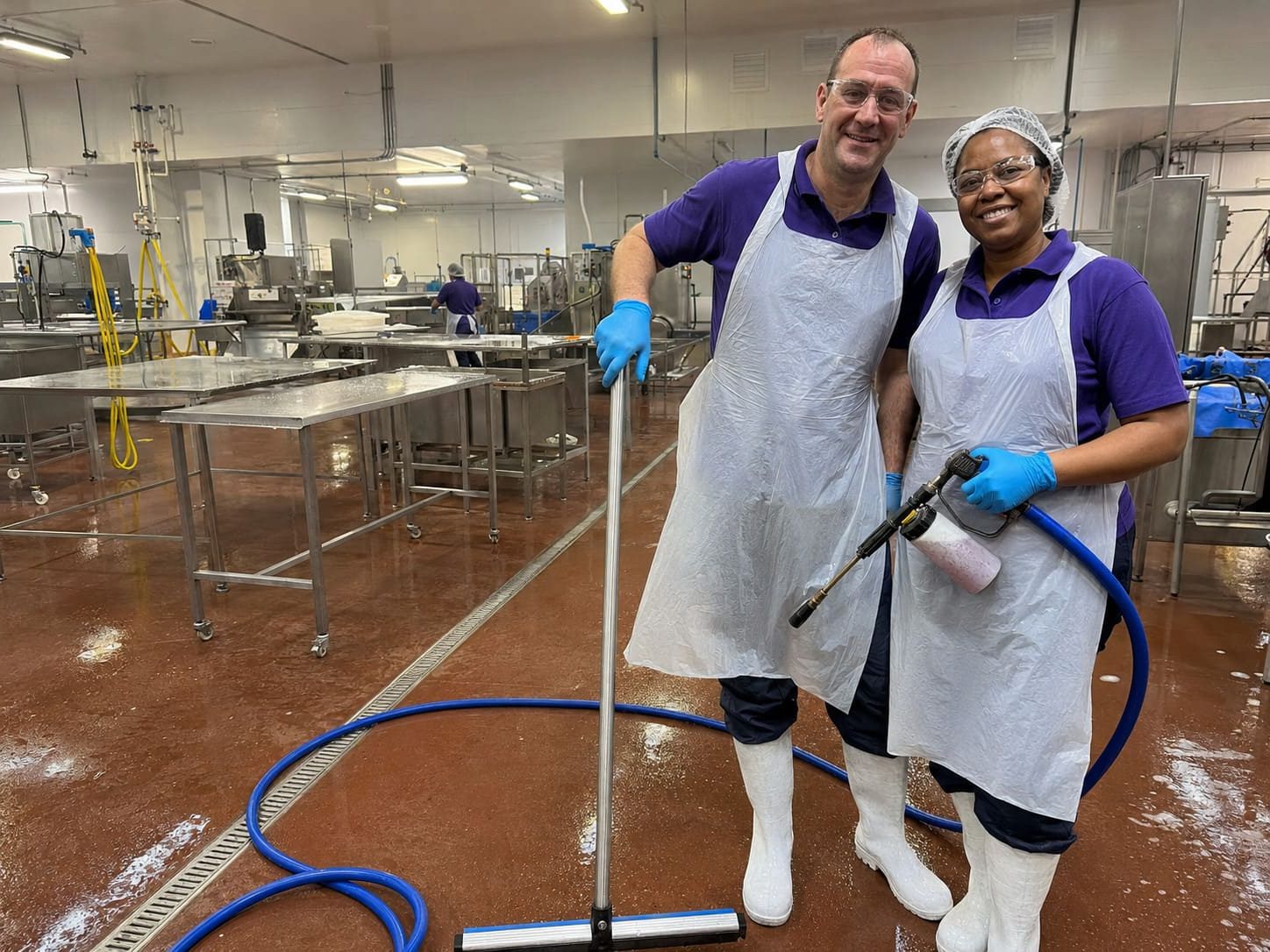
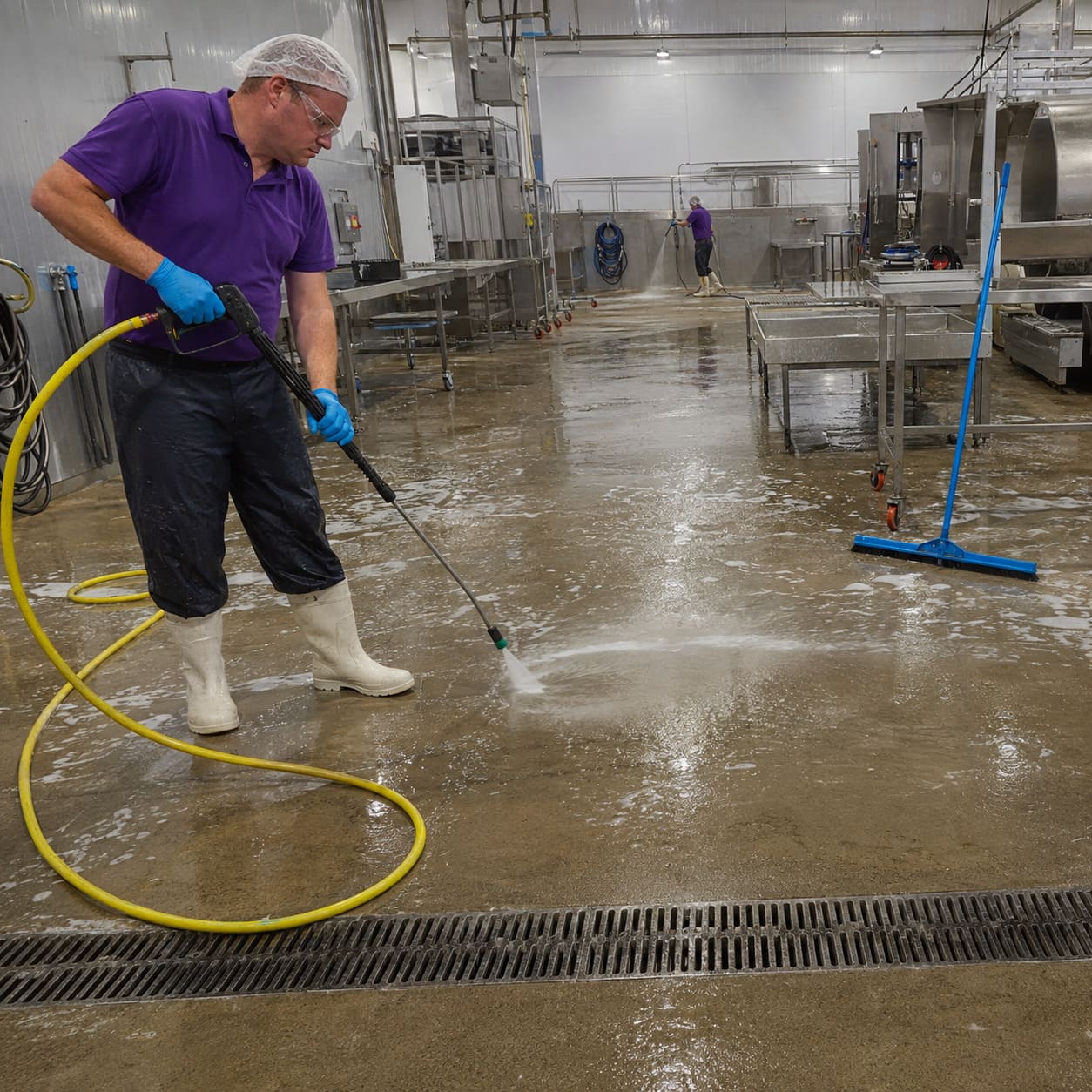
- Floor scrubbing, degreasing and heavy soil removal across production and storage areas
- Machine and production line cleaning, including guarding and hard-to-reach housings
- Racking, structural steel, cable trays and other high-level surfaces
- Ductwork exteriors, extract housings and plant room surfaces
- Drains, pits, gullies and bunded areas
- Post-shutdown and post-maintenance clear-downs
Anything off the ground falls under the Work at Height Regulations 2005, which require the work to be avoided where it reasonably can be, then prevented, then mitigated, in that order. Access therefore gets designed before a cleaning method is chosen. Specialist work sitting outside the standard scope, including confined space entry and hazardous zone cleaning, is identified at survey and quoted separately through accredited teams.
Lighter routine work belongs under our wider cleaning contracts or day-to-day commercial cleaning. Cleaning after a fit-out or build runs as its own job with a different scope again.
What kinds of sites do you clean?
Every industrial site dirties differently, so scope changes with what happens inside it.
Storage and Distribution
-
Warehouses and distribution centres
Racking, floor lanes and dock levellers take the heaviest wear, and floor markings need to stay visible for forklift traffic.
-
Logistics hubs
Round-the-clock operation means cleaning slots are short and fixed, so crews work to a timed plan with defined handover points.
Production and Processing
-
Factories and manufacturing plants
Cleaning is planned around the line, with machine housings and guarding cleaned during isolation windows.
-
Food production
High-level dust build-up is a common reason sites fail a BRC audit, and dust control is expected to sit inside your HACCP procedures.
Estates and Workshops
-
Industrial estates and units
Shared yards, loading areas and external surfaces usually need attention alongside the internal work.
-
Workshops and depots
Oil, swarf and tyre marks build up quickly on floors, so degreasing runs more often here than in other settings.
Sites needing security cover alongside cleaning can run both under one agreement.
Kitchen Cleaning & Extract Systems
Where does daily kitchen cleaning stop and extract cleaning start?
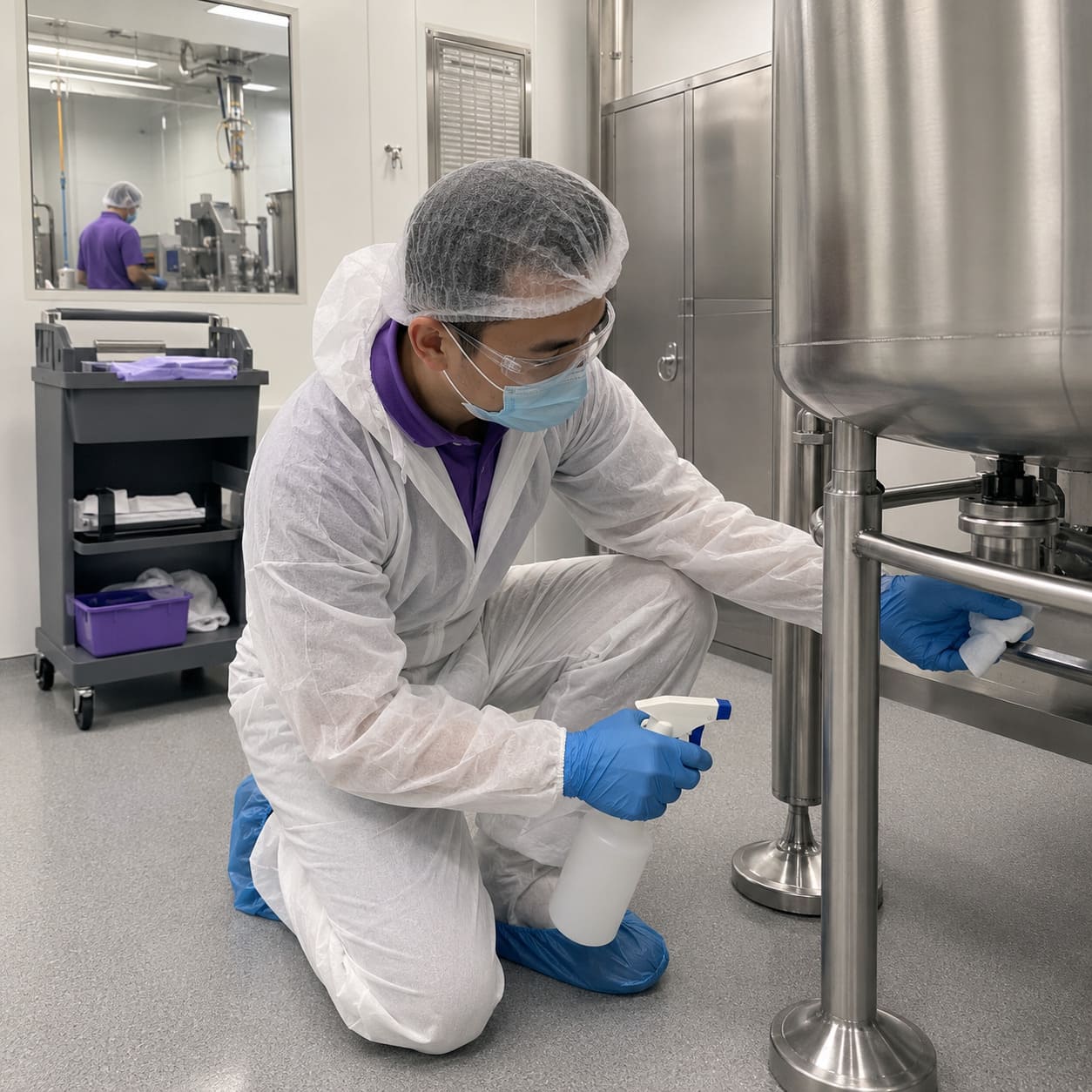
Daily kitchen cleaning covers what you can see and reach. Extract system cleaning covers what sits above and behind it, and that is a separate specialist job with its own certificate.
What does each clean actually cover?
A daily kitchen clean handles floors, walls, surfaces, sinks, wash-up areas, equipment exteriors and waste. Extract cleaning handles the canopy, filters, ductwork and fan, and it is carried out to TR19 Grease, the specification published by the Building Engineering Services Association for managing fire risk from grease build-up.
Why does the standard matter to insurers?
That distinction matters commercially, because insurers reference the standard in policy wording:
- Heavy-use kitchens are generally cleaned every three months, and moderate-use kitchens every six months
- Work is signed off by technicians holding the BESA Grease Hygiene Technician qualification
- Qualified contractors are listed on the Vent Hygiene Register, so the claim can be checked
- The output is a dated certificate covering the whole system, not just the canopy
What standard should cleaning products meet?
Cleaning products carry a specification of their own. Food Standards Agency guidance is that disinfectants and sanitisers used on food-contact surfaces meet BS EN 1276 or BS EN 13697, so ask any contractor to name the standard their products are tested against rather than accepting the phrase food safe.
How do I check a contractor is doing it properly?
A contractor who folds extract cleaning into a daily kitchen clean is not doing it. Ask for the certificate and the frequency, and read the TR19 Grease specification if you want the detail behind it. Extract work is arranged separately from a daily cleaning contract.
Compliance and Documentation
Are your teams safe and compliant on our site?
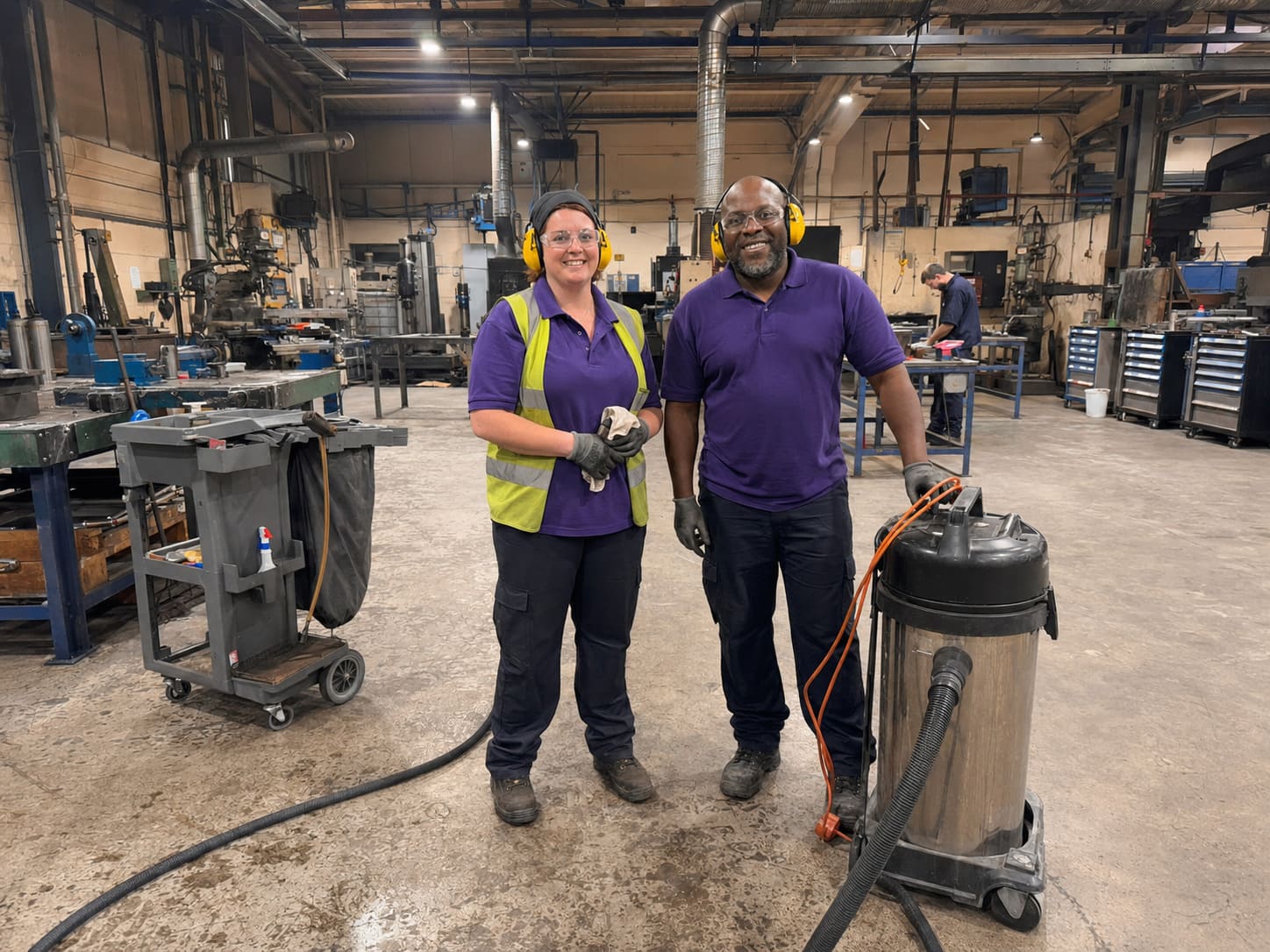
Your site rules apply to us exactly as they apply to anyone else standing on it. That means induction, permits, isolation procedures and sign-in. It also means the documentation exists before work starts, not afterwards.
Four sets of rules do most of the work on an industrial site.
COSHH 2002, as amended
Covers dusts, fumes, vapours and mists, not only labelled chemical products. Anything we bring on site carries an assessment.
Confined Spaces Regulations 1997
With Approved Code of Practice L101, these require a safe system of work and rescue arrangements before entry. Silos, tanks, pits, hoppers and ducts can all count as confined spaces.
DSEAR 2002
Sits behind ATEX zoning. Your operator classifies the zones, and any contractor working inside them uses equipment rated for that zone.
Work at Height Regulations 2005
Set the order of decisions for anything off the ground, which shapes how high-level cleaning gets planned.
A deep clean quoted with no method statement, and no COSHH assessment for the products being used, tells you something useful. On an industrial site the paperwork forms part of the deliverable. Risk assessments, method statements, product assessments and completion records come as standard, because your auditor will ask for them and so will your insurer.
Accreditation covers the governance behind that. BICSc membership, ISO 9001 for quality management and SafeContractor approval each cover a different part of the picture, and RISQS approval applies where rail-connected sites are involved.
Client feedback
What Our Industrial Cleaning Clients Say
Reliable service is measured by the people who experience it every day. See what clients say about working with us




Industrial Cleaning Pricing
How much does industrial cleaning cost?
No honest figure exists before someone has walked your site. Most industrial cleaning quotes are wrong because the specification was written from a floor plan. Racking heights, machine guarding, drain positions, access windows and what is stored where all move the labour hours far more than the square footage does.
Three things move the hours on your site
- Access and timing
- Night work, weekend work and shutdown windows cost more than daytime access, because crew availability and supervision both change.
- Contamination level
- A routine maintenance clean and a first deep clean on a neglected site are different jobs, needing different hours.
- Height and equipment
- Anything requiring a mobile platform, extended reach or specialist filtration adds plant hire and trained operators.
A cheap quote is worth reading carefully. Since 1 April 2026 the National Living Wage has been £12.71 an hour for workers aged 21 and over, and employer National Insurance, pension, holiday cover, insurance, supervision and materials all sit on top of that. Published guidance puts the floor for a viable charge-out rate at around £15 to £16 an hour. Below that, something is being cut, and it is usually supervision, training, or the hours actually worked on your site.
Our Process
How does the work get organised?
-
Site survey
Someone walks the site with you, looks above head height, checks access and notes what the floor plan does not show.
-
Written scope
You receive a defined scope, a method statement, COSHH assessments for every product, and a price built from the hours the work needs.
-
Scheduled delivery
Crews work to the agreed slots, inducted and vetted, with a named supervisor accountable for each visit.
-
Reporting and review
Completion records and photographic evidence follow every visit, and scope gets reviewed as the site changes.
Cover and Continuity
Who covers sickness, holiday and staff turnover?
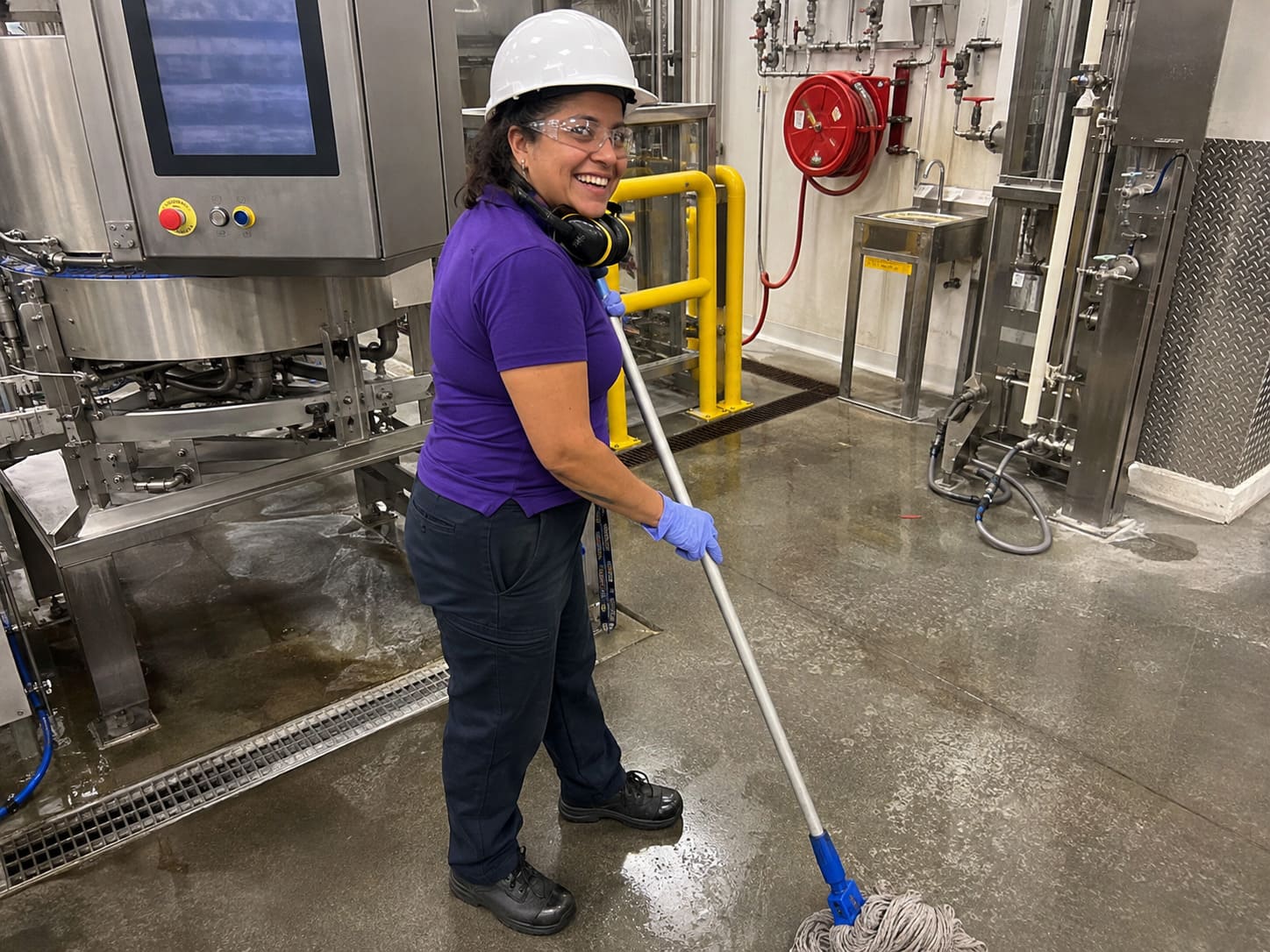
Cover is written into the contract, so an absence is filled rather than explained. Relief operatives are trained on your site before they are needed, which means a stand-in already knows the room routine and where things live.
Absence is the part of a cleaning contract that quietly decides whether standards hold. From 6 April 2026, Statutory Sick Pay became payable from the first day of absence under the Employment Rights Act 2025, and the Lower Earnings Limit was removed, so short absences now carry a cost that thinly staffed contracts struggle to absorb.
Read more Read less
Turnover matters just as much. Low staff turnover means guests and managers see familiar faces, and a cleaner who has worked a floor for a year spots what a new starter walks past.
Supervision closes the last gap. Most dirty-room complaints come from the space between a room marked clean and a room actually checked, so supervisors inspect against the schedule and report at an agreed frequency instead of assuming the work landed.
Scheduling and Shutdowns
Can you clean without stopping production? Usually, yes.
Access is what costs money on an industrial site, not the cleaning itself: isolating machinery, getting a platform down a racked aisle, and fitting the work into a shift pattern that cannot move.
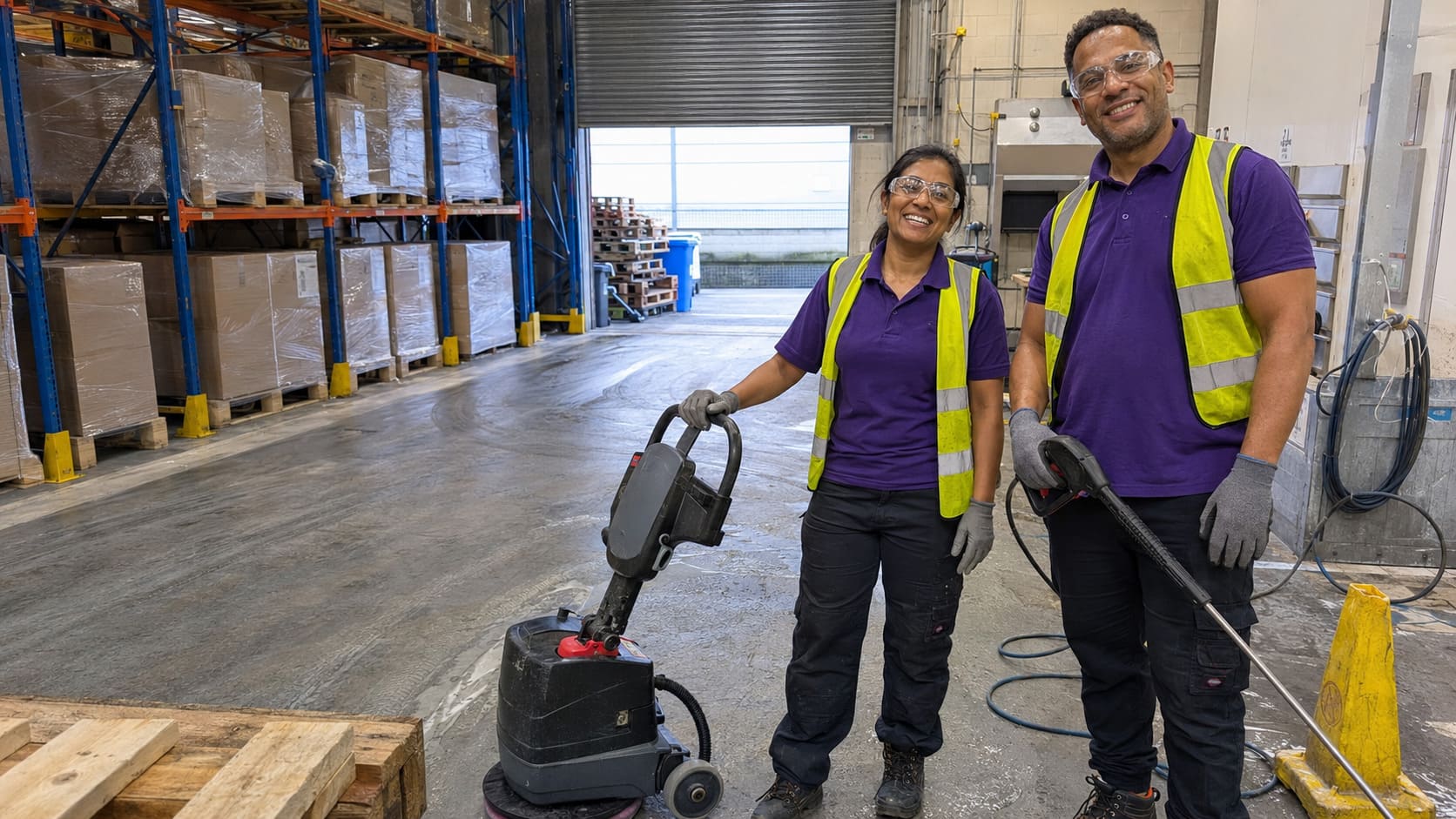
Night shifts, weekend slots, shift-change gaps, planned maintenance days and annual shutdowns each give a different amount of usable time, so scope gets split accordingly.
- Shift-change gaps
- Night shifts
- Weekend slots
- Planned maintenance days
- Annual shutdowns
Listed shortest first Longest usable window
Into shutdown windows
High-level and machine work goes into shutdown windows.
Around live operation
Floors and general areas run around live operation.
Some jobs cannot run alongside production at all
In a dust-bearing area, a layer as thin as one millimetre can be disturbed into a concentration capable of igniting, so blow-downs near live plant and ignition sources are off the table. Work like that gets booked into an isolation window with the right extraction in place, and the reason is written into the scope so nobody is surprised on the day.
Coordination runs through a control centre staffed 24 hours a day, every day of the year, so out-of-hours crews are never working without support.
Accountability and Oversight
How do we know the standard will hold?
Sites rarely change cleaning provider over one bad clean. They change because the standard drifted quietly and nobody noticed until it mattered.
The same faces, every visit
Low staff turnover means crews learn your site, your rules and your restricted areas, so quality does not reset with each new starter. Operatives are vetted before they set foot on site, and you get notice of planned cover for holidays and sickness rather than an unfamiliar name at the gate.
What happens to your current cleaners
Where a cleaning contract changes hands and a dedicated team is already on site, TUPE usually applies, so those cleaners transfer across on their existing terms. That is generally good news, because they already know your building, your access routes and your restricted zones. The improvement comes above them, in supervision, training and reporting. Our guide to TUPE transfers sets out what a compliant handover looks like.
Someone answering at 3am
Our control centre runs 24 hours a day, 365 days a year, so a missed slot or an access problem gets resolved that night, not the following week.
Evidence, not assurances
Completion records with pre and post clean photographs give you something to file, hand to an auditor, and check against the scope you signed.
One contract, wider cover
Cleaning, security and facilities work can sit under one facilities management contract, which matters on sites where access control and out-of-hours entry are part of the job.
Areas Covered
Where do you work?
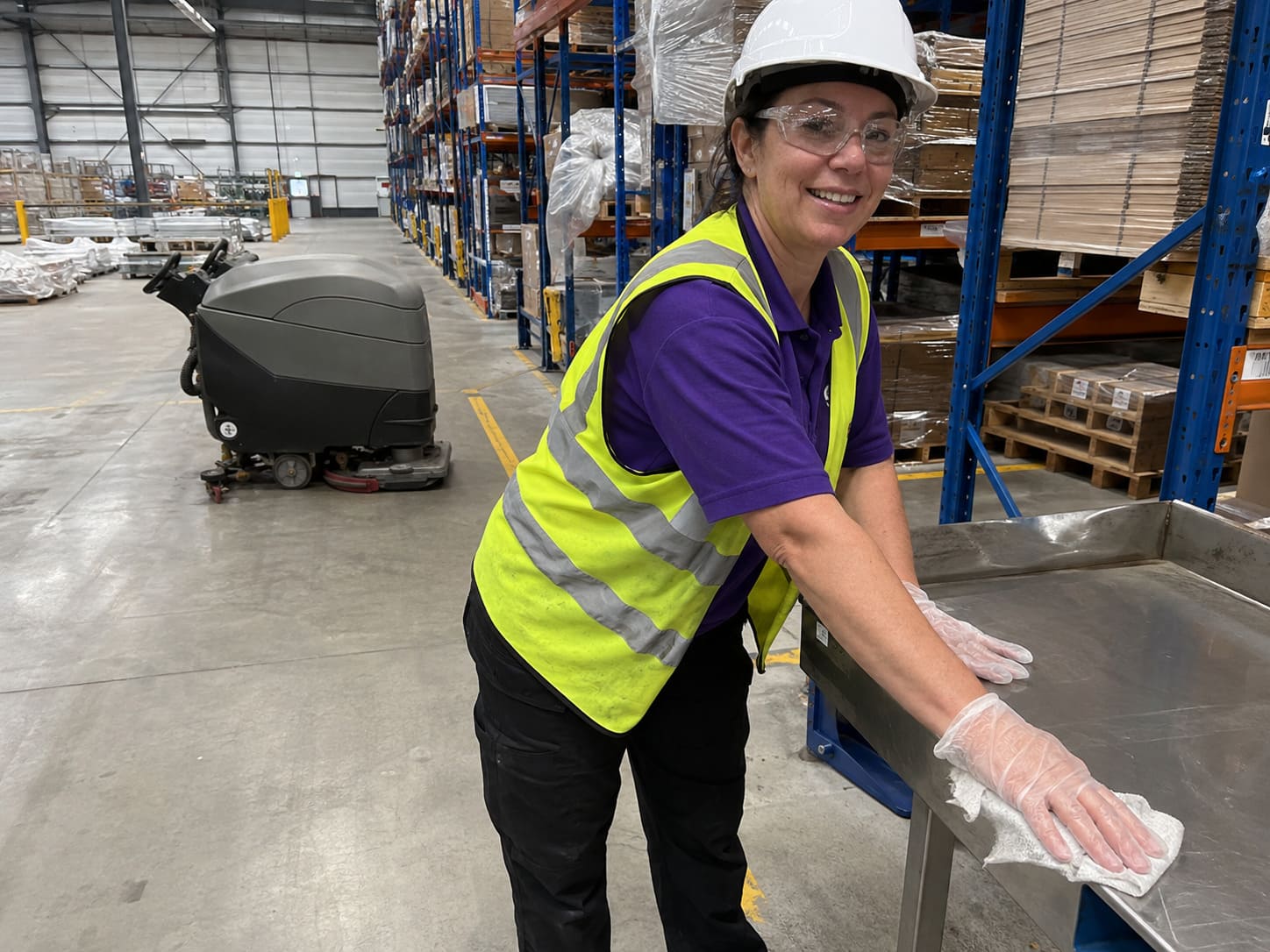
Cleaning teams cover industrial sites across the UK, including Greater London and the South East, the Midlands, the North West, Northern England, Wales, Scotland and Northern Ireland.
Regional crews keep travel time down, so a site in Manchester is not serviced out of London.
Surveys are free and come with no obligation.
Not sure whether we cover your site's location? Get in touch. We can confirm cover for your city or region before you book.
Common questions
Questions we get asked
Clear answers on scope, frequency, documentation and how industrial cleaning differs from a standard commercial clean.
020 3794 8182
What is included in industrial cleaning services?
Standard cover includes floors, machinery, racking, structural steel, high-level surfaces, drains and plant areas. Scope is set at survey, because a food production line and a distribution warehouse need very different work. One-off deep cleans and scheduled contracts both go through the same scoping process.
What is the difference between industrial and commercial cleaning?
Commercial cleaning maintains the spaces people use, so it handles desks, washrooms, kitchens and floors. Industrial cleaning removes process residue such as dust, oil, grease and swarf from production areas, machinery and high-level structures. Equipment, training and safety documentation all differ between the two.
How often should a warehouse be deep cleaned?
Most warehouses run a daily or weekly routine clean with a deep clean once or twice a year. Frequency depends on throughput, what is stored and how much dust the operation generates. Sites under audit conditions often align the deep clean with the audit calendar.
Do you offer one-off deep cleans, or only contracts?
Both. One-off work suits a shutdown, a site handover, a failed inspection, or a first clean before a contract begins. Ongoing contracts suit sites needing a consistent standard and a fixed reporting cycle.
How quickly can you attend an emergency?
Emergency response is arranged through the control centre, which is staffed at all hours. Response time depends on site location, the nature of the incident and what access is available, so you get a realistic answer on the call instead of a fixed promise.
How do you choose an industrial cleaning company?
Ask three things: what the scope actually includes above head height, what documentation arrives with each visit, and who supervises the crew. Ask for the method statement and COSHH assessments before you sign anything. A provider quoting without visiting is guessing.
Closing Insight
What changes for your waste in 2027?
Waste separation is already law in England.
-
In force since
31 March 2025
Every workplace with 10 or more full-time equivalent employees has had to separate dry recyclables (glass, metal, plastic, paper and card) and food waste from general waste before collection.
-
Two changes land
31 March 2027
Micro-firms with fewer than 10 full-time equivalent employees come into scope, and plastic film and plastic bags join the plastic stream for everybody. Industrial sites generate plenty of both, particularly pallet wrap and shrink film, which makes the second change the one worth planning for now.
Here is the part most sites miss
Government guidance on the workplace recycling rules in England(opens in a new tab) states that Environment Agency compliance notices can be issued against landlords or facilities management companies presenting waste on the producer's behalf, not only against the business itself. How your cleaning contractor handles waste is therefore not simply a housekeeping question. Sites building separation into the cleaning specification now, while there is time, will not be scrambling in 2027.
Request a call back about industrial cleaning requirements.