

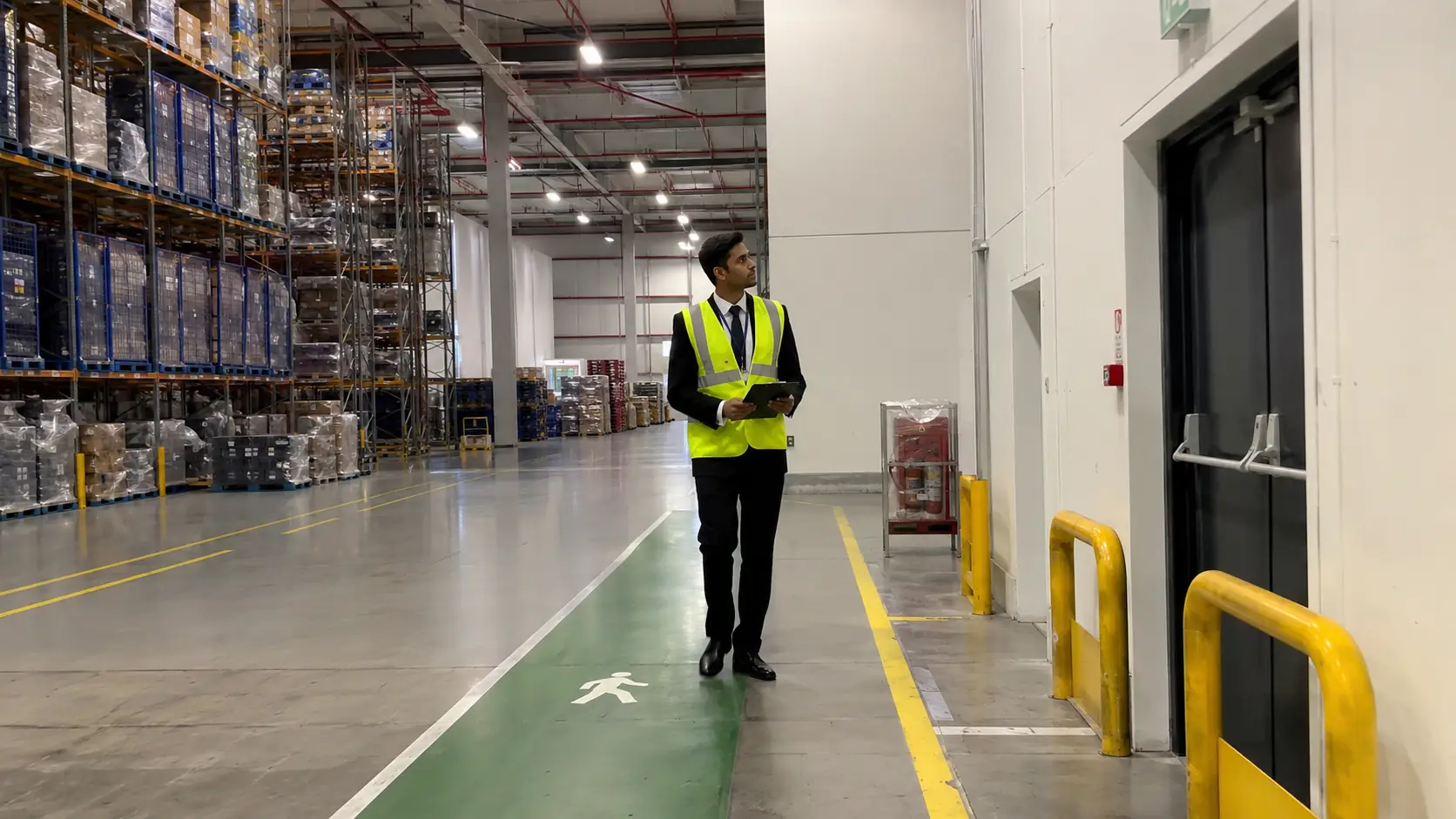
Logistics Security · UK-wide
Logistics Security for Warehouses and Distribution Centres
Most cargo is not lost on the motorway. It goes while the vehicle is parked, which is why logistics security works best at the gate, in the yard and on the loading bay.
A site assessment walks your yard, your access points and your peak hours before anyone quotes a figure.
The assessment is free and carries no obligation.
Logistics Security Services
Guarding UK Logistics Sites Since 1998
Logistics security is on-site guarding that protects warehouses, distribution centres, depots and transport hubs from cargo theft, unauthorised access and disruption. Double Check Security Group has supplied SIA licensed guards to UK sites since 1998, holds SIA Approved Contractor status for security guarding, and is registered under RISQS for rail-connected work.
Where Freight Crime Happens
54% of Cargo Crime Happens Where Vehicles Park
Three quarters of recorded UK cargo crime happens while the vehicle is standing still, not while it is moving.
- 3,424 HGV and cargo crime notifications recorded across the UK in 2025
- 1,831 of them, 54%, at independent parking locations: industrial estates, yards and laybys
- 699 a further 20%, at motorway service stations
- 915 curtain-slashing cases, 26.9% of the total and the most common method
Figures: The National Vehicle Crime Intelligence Service (opens in a new tab), 2025.
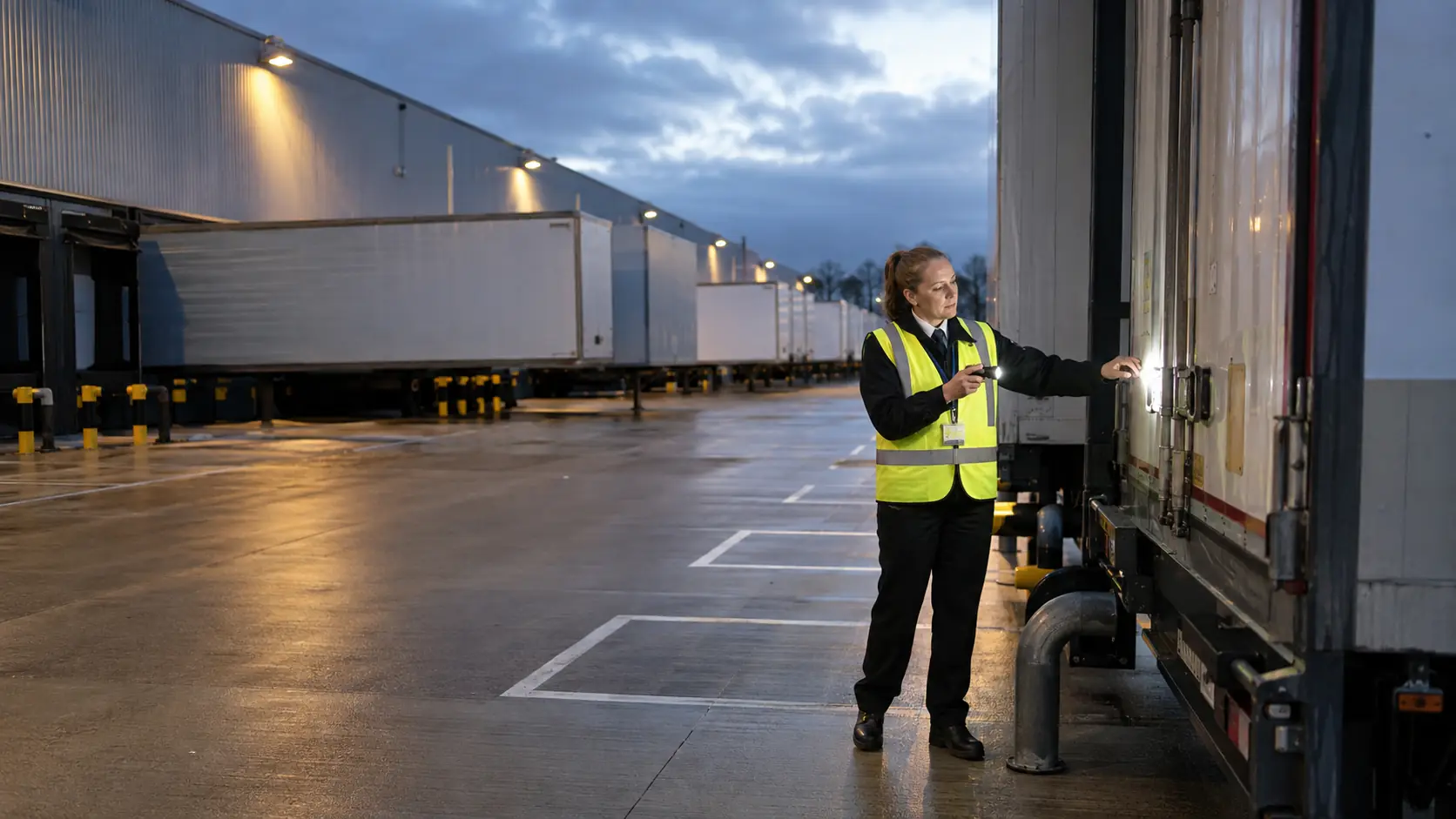
That changes where the money is best spent. A load moving down the M6 is difficult to protect. A trailer parked in your yard at four in the morning is not, and it is where most of the recorded loss actually occurs. On-site guarding sits exactly where the risk is highest.
What the figures do not show Show less
The recorded cost-price loss for the year was £65.1 million. NaVCIS field intelligence officer Mike Dawber has said the true figure is likely around four times that once vehicle damage, replacement transport, missed deliveries and insurance are counted. Dawber has also said that three quarters or more of it is serious and organised crime rather than opportunist theft, which is worth knowing before deciding a camera and a fence are enough.
Curtain slashing is reconnaissance before it is theft. Most operators read it as a theft technique. It is more often a way of finding out what is inside: a slash tells the criminal what the trailer is carrying, and the vehicle comes back later for the whole consignment. A slashed curtain found on the night shift and logged there and then changes what happens next, which is the difference between a guard on site and a camera nobody is watching.
Supply chain security services are only as strong as the weakest standing point, and for most operations that point is the yard.
What Our Guards Do
Every Vehicle Logged, Every Manifest Checked
Physical security for logistics facilities is a specific job with named tasks, not a body posted at a door. Five of them make up most of a shift.
Gatehouse and logistics access control
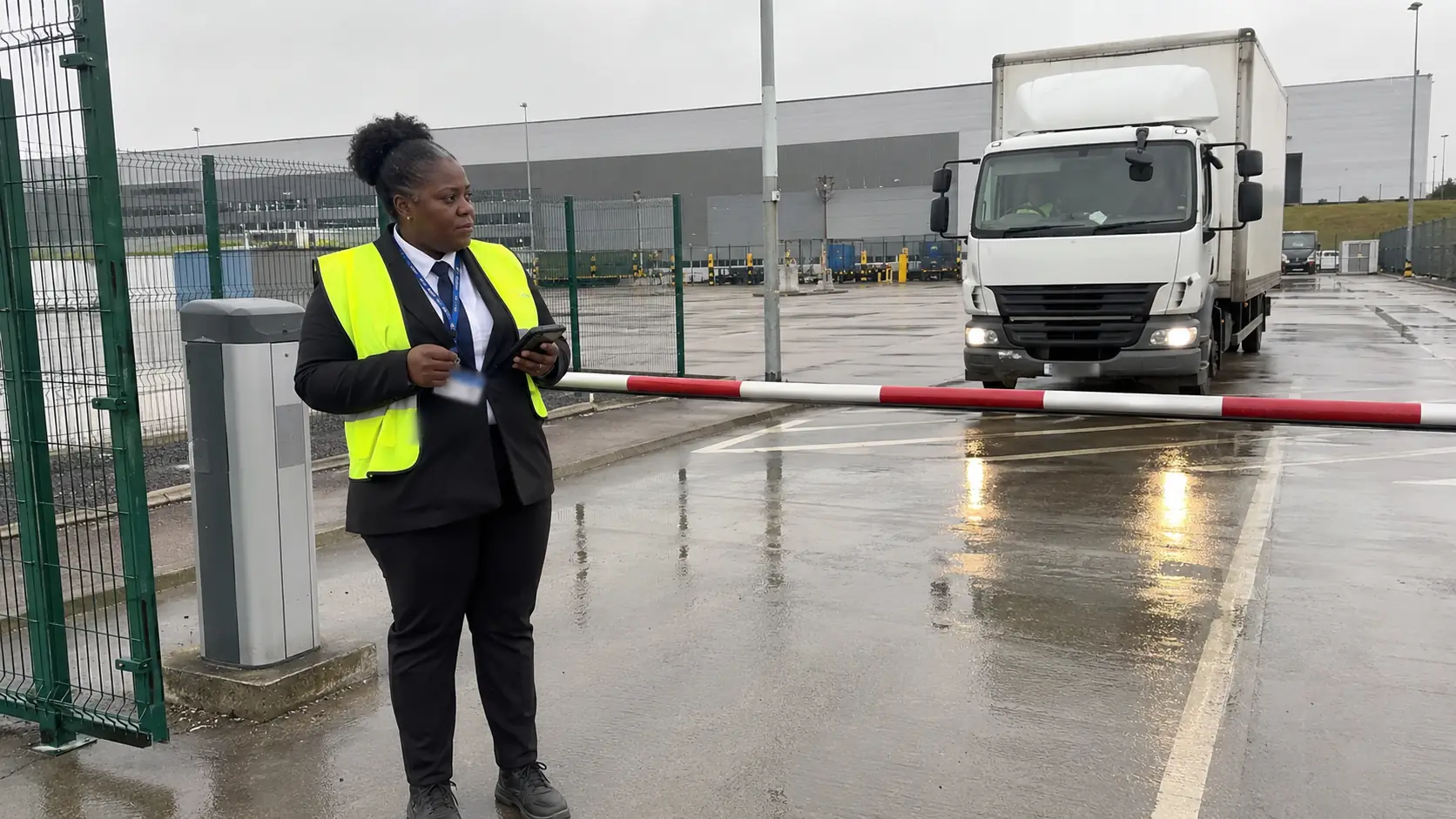
Every arrival is identified before the barrier lifts. Drivers, hauliers, contractors and agency staff are checked against the expected list, and anyone not on it does not come on site.
Driver and vehicle verification
HGV registrations, driver identity and booking references are matched before unloading starts, because a vehicle nobody verified is the simplest way into a yard.
Manifest and seal checks, both directions
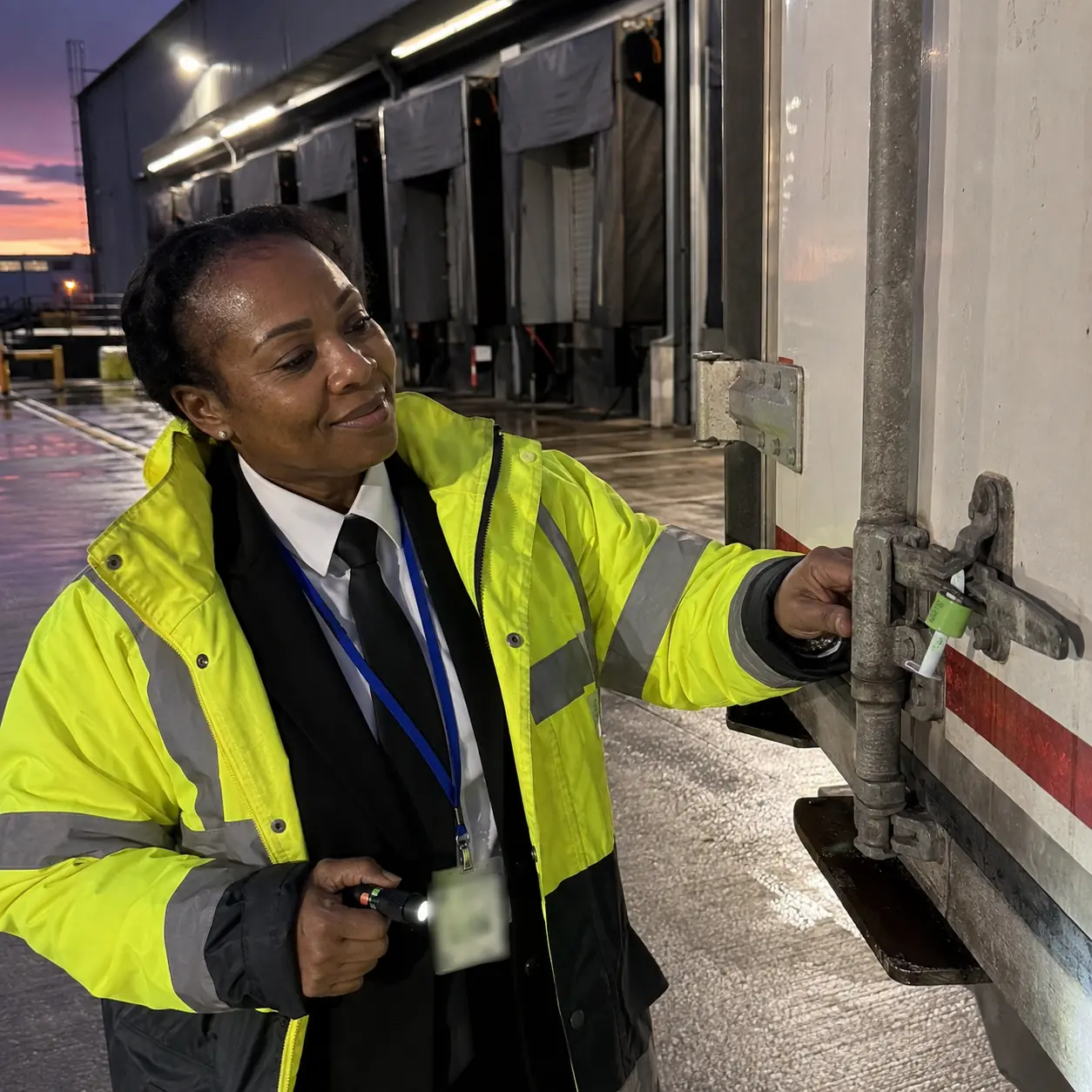
Loads are checked against paperwork on the way in and on the way out. The outbound side is the one most often skipped and the one internal theft relies on: loads verified against dispatch documentation, seals applied and recorded on departure, and random inspection kept in the pattern so it cannot be predicted. Any discrepancy is recorded on the spot rather than discovered at the far end.
Loading bay cover
The dock is where goods change hands and where opportunist loss concentrates. A guard present during unloading watches the point of transfer, not just the perimeter.
Yard and perimeter patrols
Timed tours of the yard, trailer park, storage areas and boundary, with each tour logged, so gaps are visible rather than assumed.
Fitting Your Operation
A Guard Who Slows the Gate Costs You More
Security has to move at the speed of your operation. A guard who turns the gate into a queue can cost more in missed slots and demurrage than the theft they prevented, and that is how good security gets a bad name in a transport office.
The fix is where the brief comes from. Ours is built with the people who run the operation, not written by a security company in isolation, because they are the ones who know the booking windows, the peak hours and which supplier always turns up an hour early. Guards are briefed on your loading schedules and shift patterns before their first shift, so checks happen inside the slot rather than on top of it.
Cover flexes with the operation rather than sitting on a fixed pattern. Overnight and weekend cover, cover through a seasonal peak, additional guards for a high-value consignment or short-notice cover when something changes are all handled the same way.
Sites We Cover
From a Single Depot to a National Network
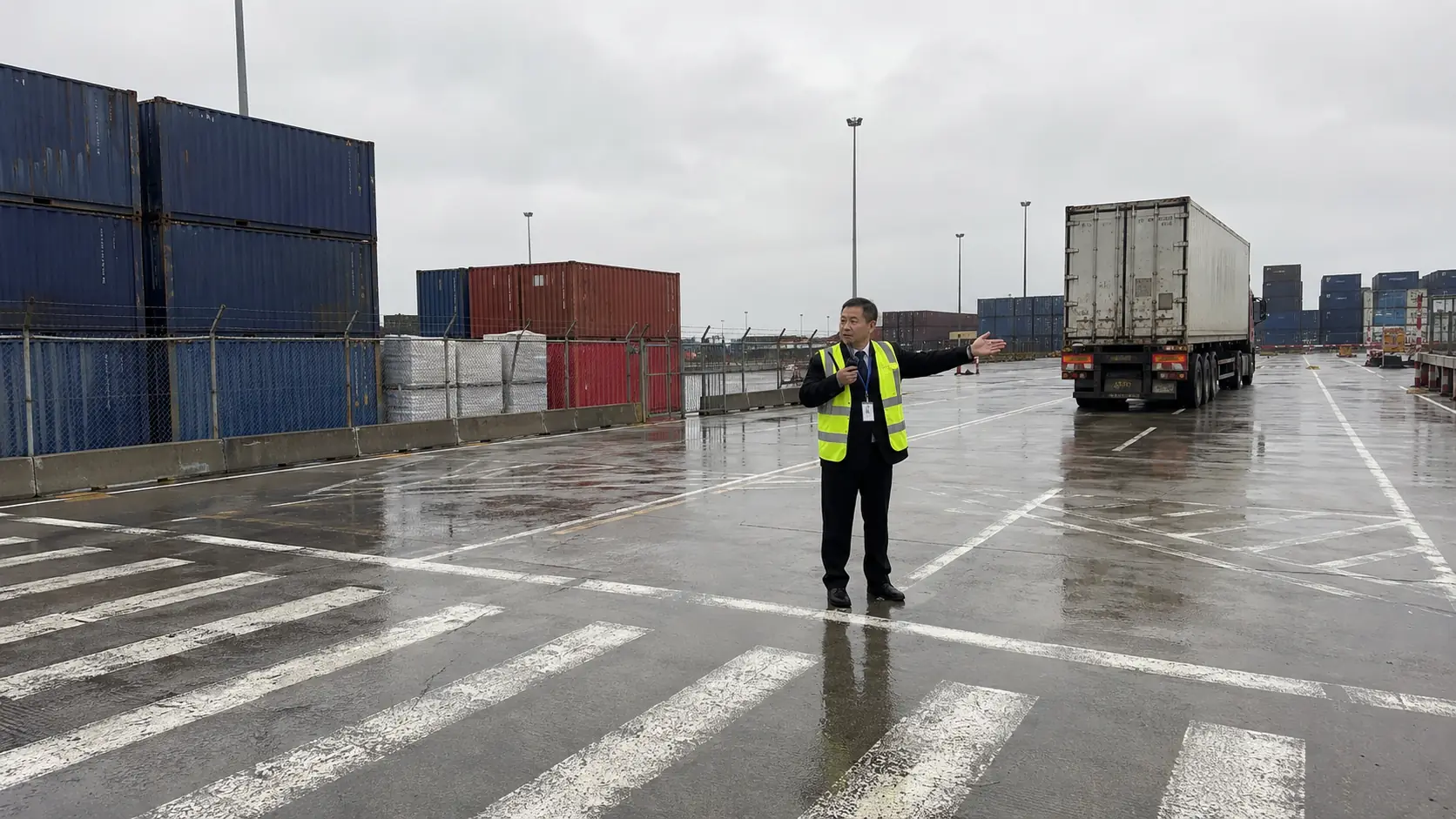
Guards are supplied to distribution centres, warehouses, haulage yards, transport hubs, rail-connected depots, cold storage and third-party logistics sites across the UK, whether that is one unit or a portfolio.
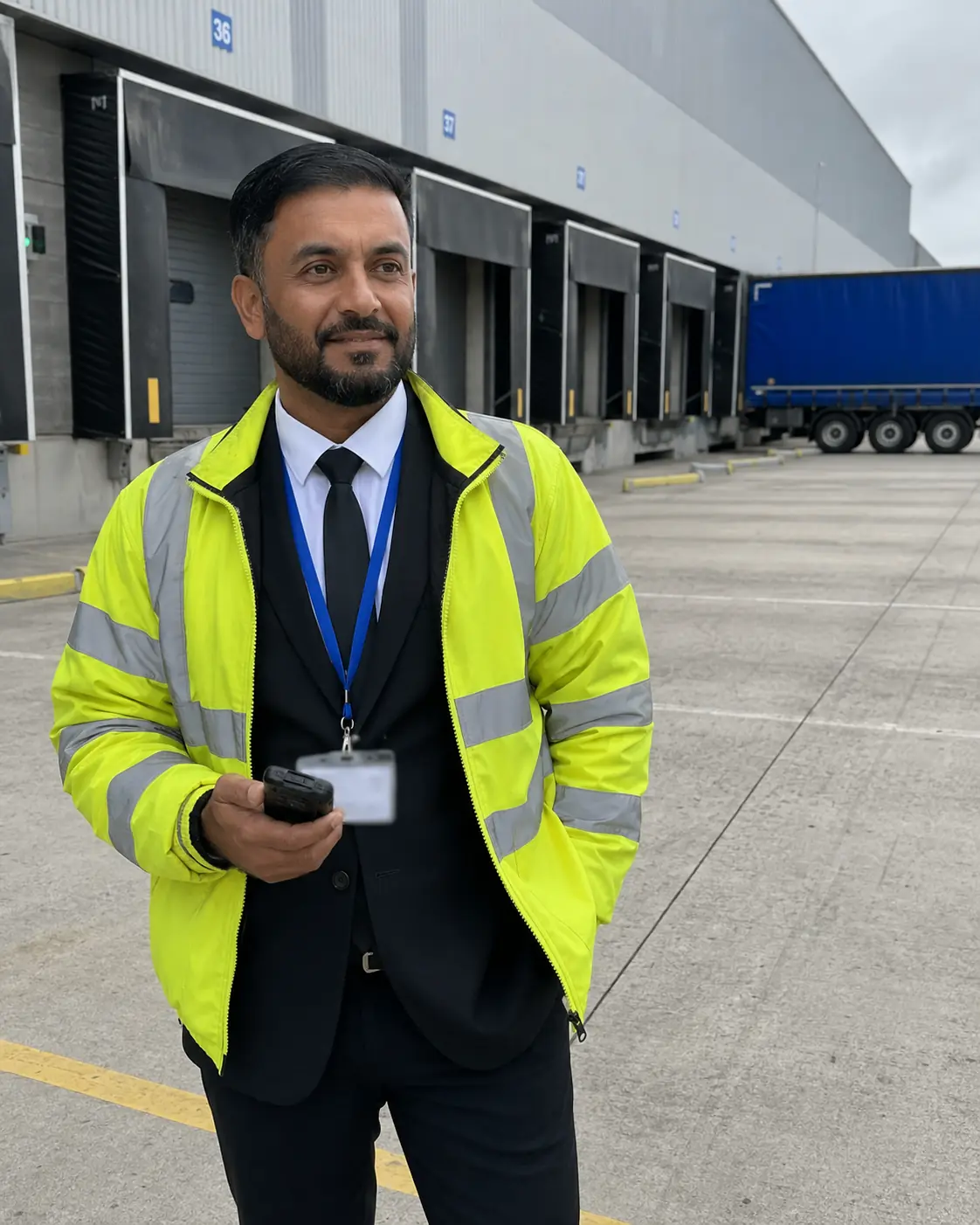
Cover from one unit to a portfolio
Site Types We Cover
- Distribution Centres
- Warehouses
- Haulage Yards
- Transport Hubs
- Rail-Connected Depots
- Cold Storage
- Third-Party Logistics Sites
Transport security services and warehouse security services are priced and briefed differently, because a fast-moving fulfilment centre and a temperature-controlled store have different exposure and different traffic. Distribution centre security usually needs the most attention at the dock. A haulage yard needs it at the perimeter and the trailer park. Bonded warehouses need more again, because HMRC access conditions sit on top of the commercial requirement and the access record has to satisfy both. Rail-connected sites bring their own supplier requirements, covered in the next section.
Logistics security services here can also be combined with the rest of the group's cover:
-
A handler and dog cover more perimeter than a guard on foot
Dog units on big yards -
Pairs with guarding rather than replacing it
Cameras watched by our control centre -
For sites that close
Attendance when an alarm goes off overnight -
For the rest of an estate
Guarding for sites outside logistics
Licensed and Accredited
Check Our SIA Approval on the Public Register
Any logistics security company can say it is approved. Ours can be checked before you ring. Double Check Security Group Ltd, trading as T-Class UK, appears on the Security Industry Authority register of approved contractors (opens in a new tab) under the Approved Contractor Scheme for security guarding. That takes about thirty seconds and it is worth doing for every provider on your shortlist.
Read more about our accreditations
Every guard holds a valid SIA licence. Guards are screened to BS 7858, the British Standard for screening individuals working in a secure environment, which verifies identity and address history, right to work, five years of activity history with every gap explained, criminal record and financial probity. Adherence to BS 7858 is a condition of the Approved Contractor Scheme, so the two travel together. Most security companies say their people are vetted. Fewer name the standard.
RISQS registration is the one worth knowing about if any part of your operation touches rail. The Railway Industry Supplier Qualification Scheme is the qualification route rail buyers use to assess suppliers, and it is rare among guarding contractors. If your depot is rail-connected or you tender into rail freight, it removes a procurement obstacle before it appears.
Alongside those sit ISO 9001 for quality management, SafeContractor approval for health and safety, the Armed Forces Covenant, participation in the Action Counters Terrorism programme, and a place in the Infologue Top 100 UK Security Companies. A 24-hour control centre runs 365 days a year behind every contract.


Client feedback
What Our Logistic Security Clients Say
Reliable service is measured by the people who experience it every day. See what clients say about working with us.




Records and Evidence
Freight Crime Has No Police Crime Code
There is no dedicated police crime code for freight crime. An entire stolen consignment is recorded under the same category as a smashed car window in a supermarket car park, which is why the national picture is understated and why your crime reference number tells an insurer almost nothing.
Your own records fill that gap. Access logs showing who came on site and when, timed patrol records, vehicle and manifest checks, and incident reports written at the time rather than reconstructed later are frequently better evidence for a claim or an internal investigation than anything the crime reference carries. They are also what a buyer's auditor asks for.
Records only hold if the people producing them stay. Guarding contracts fail on turnover more often than on method, because every replacement needs re-inducting and learning the site, and standards dip each time. Low turnover means familiar faces who know which supplier is expected on a Tuesday and which trailer should not be there.
If you want to know whether the procedure holds under pressure rather than on paper, we can test whether your gatehouse procedure actually holds with an authorised physical penetration test.
Logistics Guarding Pricing
What Moves the Price of Logistics Guarding?
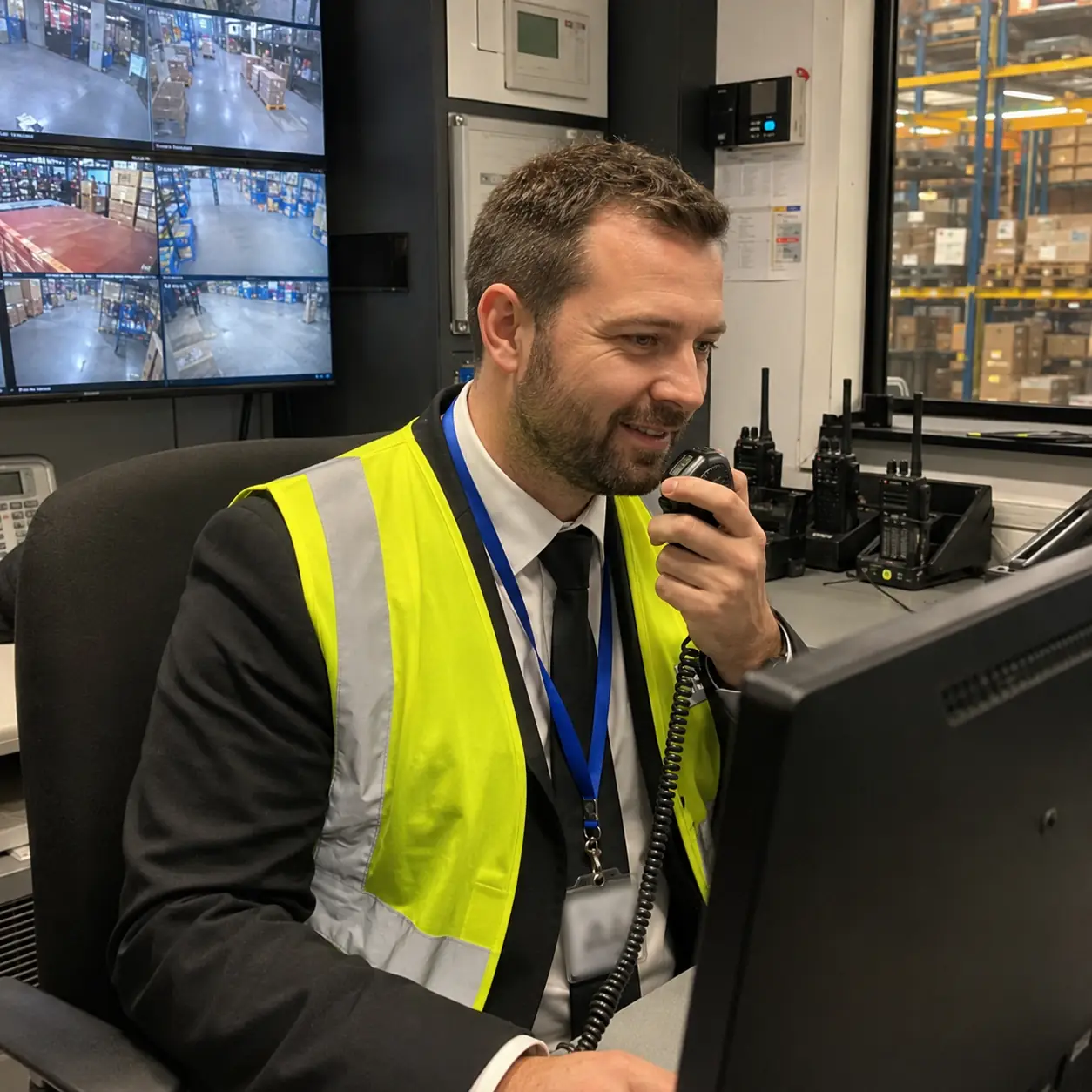
Logistics guarding is quoted per site rather than from a price list, because a single depot on day cover and a national network on twenty-four hour cover are different jobs.
Five things move the figure
- Hours and cover pattern
- Nights only, weekends only, or round the clock. Out-of-hours hours cost more than daytime hours.
- Guard numbers and post structure
- One officer on a gatehouse is not the same as a gate post plus a roving patrol.
- Site size and layout
- Yard area, trailer parking, and how many access points have to be watched at once.
- Risk profile
- Goods value, local theft patterns and whether the site has a recent incident history.
- Contract shape
- Ongoing cover, a seasonal peak, or short-notice cover for a single consignment.
There is also a floor below which a quote cannot be honest. An SIA licence now costs £204, the National Living Wage rose to £12.71 an hour in April 2026, and BS 7858 screening, employer's and public liability insurance, uniform, supervision and holiday cover all sit on top of the officer's wage. A quote much under £14 an hour outside London, or £18 inside it, is not covering all of that. Something is being left out, and it is usually the vetting or the supervision.
The site assessment is what turns those into a number for your site. An operations manager walks the yard, the gatehouse and the loading bays, looks at your traffic flow and your peak hours, and the proposal that follows sets out the post structure, the hours and the price for each.
Areas Covered
Where Do We Provide Commercial Cleaning?
Coverage runs UK-wide, across England, Scotland and Wales. Single buildings, multi-tenant sites and multi-site portfolios all sit inside the same coverage, with one specification and one point of contact.
Vetted, supervised teams for single-site and multi-site buildings.
How UK-wide cover works
Wherever the building sits, we can put a vetted, directly employed team on site, supervised and covered when someone is off sick.
Not sure whether we cover your building's location? Get in touch. We can confirm cover for your city or region before you book.
Site surveys are free, with no obligation to proceed.
Common questions
Seven Questions Operations Managers Ask First
Straight answers on what logistics guarding covers, how it fits around your loading schedule, and what it costs.
020 3794 8182
What does logistics security cover?
Logistics security covers on-site guarding for warehouses, distribution centres, depots, haulage yards and transport hubs, including gatehouse and access control, driver and vehicle verification, manifest and seal checks, loading bay cover and yard patrols. The aim is to protect stock, vehicles and staff without slowing the operation.
Will security slow down our loading schedule?
No, provided the brief comes from the operation rather than the security company. Guards are briefed on your booking windows, peak hours and shift patterns before their first shift, so checks happen inside the slot. A gate that queues is a briefing failure, not an inevitable cost of security.
Who provides security guards for distribution centres?
SIA licensed guarding contractors do, and the ones worth shortlisting hold SIA Approved Contractor status, which can be checked on the SIA public register. Double Check Security Group supplies distribution centre security across the UK and holds that status for security guarding.
Does a warehouse need 24 hour security?
Not always. Many sites are covered overnight and at weekends only, because that is when they stand empty and when most recorded cargo crime happens. Round-the-clock cover suits sites running continuous shifts, holding high-value stock, or with a recent incident history. The site assessment is what settles it.
Are your guards SIA licensed and vetted?
Yes. Every guard holds a valid SIA licence and is screened to BS 7858, which verifies identity, address history, right to work, five years of activity history, criminal record and financial probity. Screening documentation can be provided for your own compliance records.
Can you cover several sites, or a seasonal peak?
Yes. Cover runs from a single depot to a national network on one specification and one point of contact, and it flexes for seasonal peaks, high-value consignments and short-notice requirements. Cargo theft runs by season and by commodity, so weighting cover to your busy period usually beats spreading it evenly across the year.
What happens if a guard does not turn up?
A 24-hour control centre runs 365 days a year and confirms shift attendance rather than waiting for you to report a gap, so a no-show is picked up centrally instead of being noticed on your site. Supervisors hold the cover arrangements for each contract and absence cover is agreed in the specification before the contract starts, not improvised on the night. Ask any provider you are considering how they detect a missed shift, because a company that finds out when the client rings has no system at all.
Request a call back about your logistics security requirements.

Logistics Security · Warehouses and Distribution Centres · UK-wide
Book a Site Assessment Before Your Next Peak
Most sites review security after an incident, which is the most expensive moment to start. NaVCIS tracks theft of commodity by region and by season, meaning the risk on your site is not flat across the year, it rises with your busiest weeks. The sensible time to walk the yard and agree a post structure is the quiet stretch before that, while there is time to brief guards properly rather than deploy in a hurry.
The ground is also shifting on the planning side. The revised National Planning Policy Framework published on 17 August 2026 introduced policy E3, which requires freight and logistics developments to provide sufficient and secure parking for lorries and other vehicles. Against an industry estimate of around 11,000 missing secure overnight spaces nationally, yard security is now a question that arrives at design stage on new and expanding sites rather than after the first loss.
An operations manager will walk your site, look at your access points and peak hours, and put a proposal in writing. Free site assessment, free written proposal, and no obligation to proceed.
020 3794 8182