Hospitality Cleaning · Hotels, Pubs, Restaurants and Venues · UK-wide
Hospitality Cleaning Services for Hotels and Venues
Cleaning teams for hotels, pubs, restaurants and event venues across the UK, vetted, supervised and covered when someone is off sick.
UK-wide cover, 24 hours a day. Talk to the cleaning team on 0203 794 8182.
Hospitality Cleaning Services
What Hospitality Cleaning Covers in Hotels and Venues
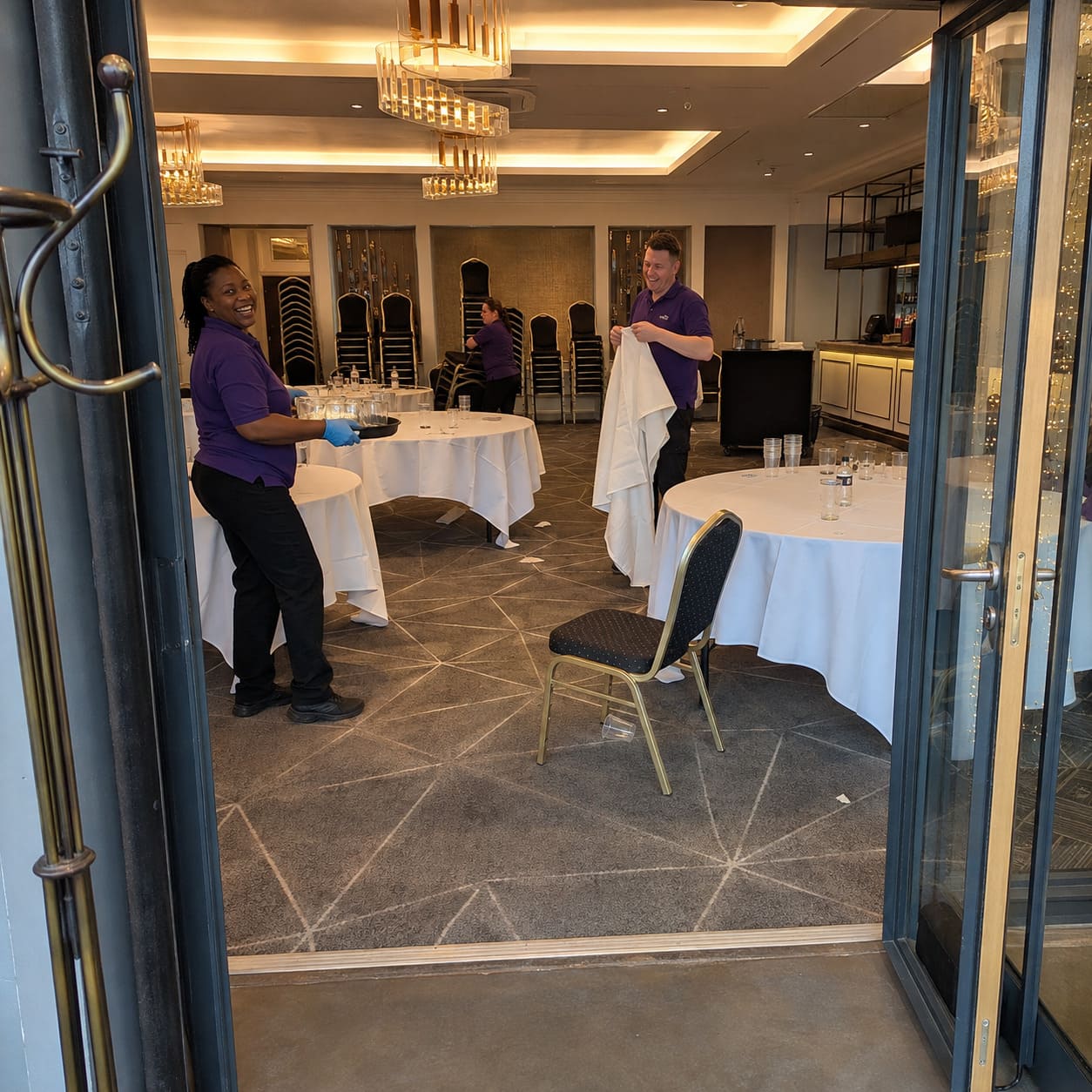
Hospitality cleaning is contract cleaning built around guest-facing venues. At Double Check Security Group, that covers hotels, pubs, restaurants, event spaces and leisure facilities across the UK.
That includes guest rooms, front of house, washrooms and back of house areas. Teams are directly employed, vetted and BICSc trained.
Venues We Clean
Most venue managers start by asking who can clean the building. The question that settles the contract is who will still be cleaning it properly in six months, once the first flush of effort has passed and somebody has gone off sick.
Six venue types sit inside our full range of cleaning contracts, and each one is judged on something different.
Stay and Accommodation
-
Hotels and serviced apartments
Rooms are judged in the window between checkout and check-in, so a team is sized around the changeover peak rather than the daily average.
-
Hostels and guest accommodation
High occupancy and shared washrooms mean frequent servicing and clear linen handling.
Food and Drink
-
Pubs and bars
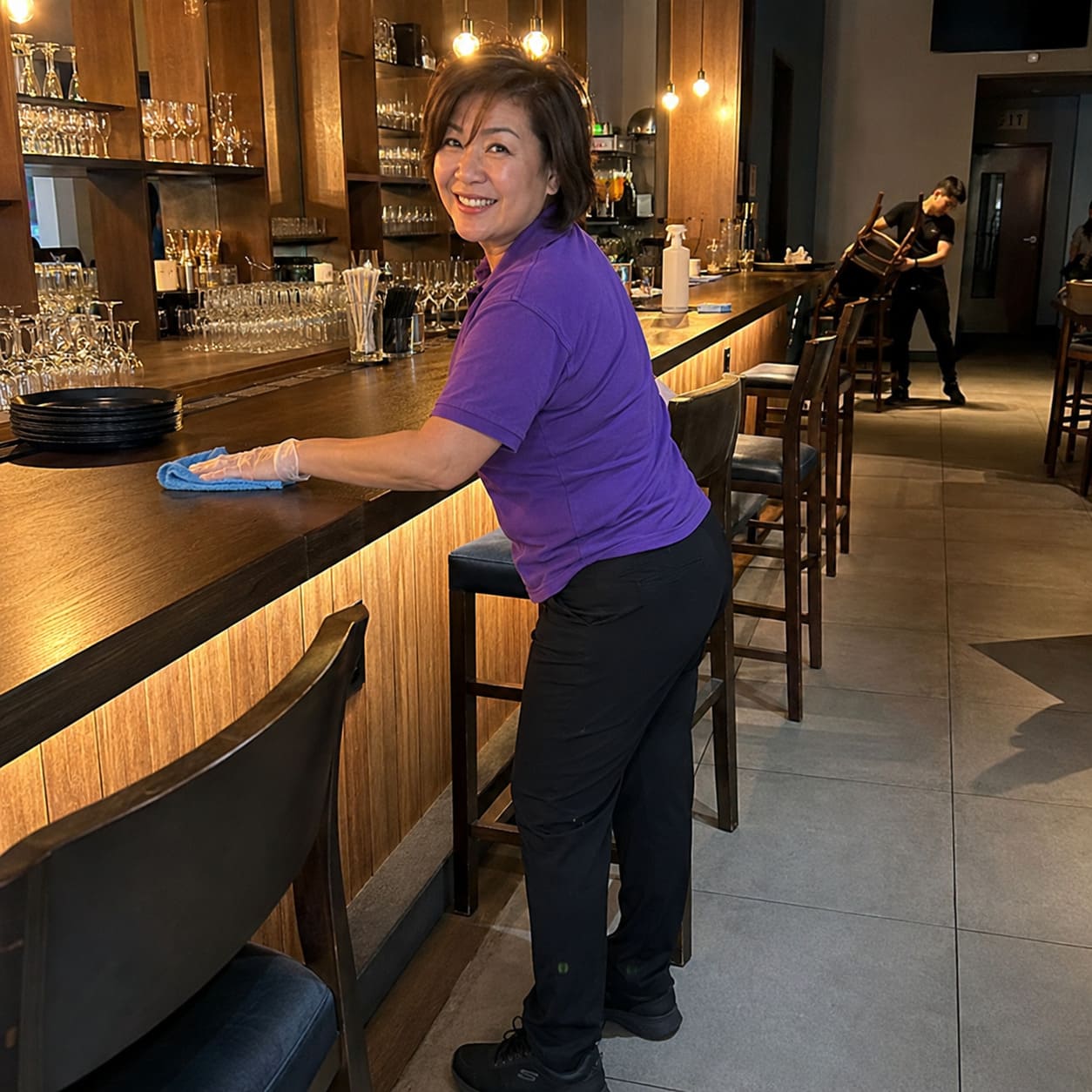
Spilt drinks and sticky floors build up quickly, so cleans are timed around opening hours and the morning reset.
-
Restaurants and cafes
Dining rooms and prep areas are cleaned to hygiene standards before service starts, not after the doors open.
Events and Leisure
-
Event and conference venues
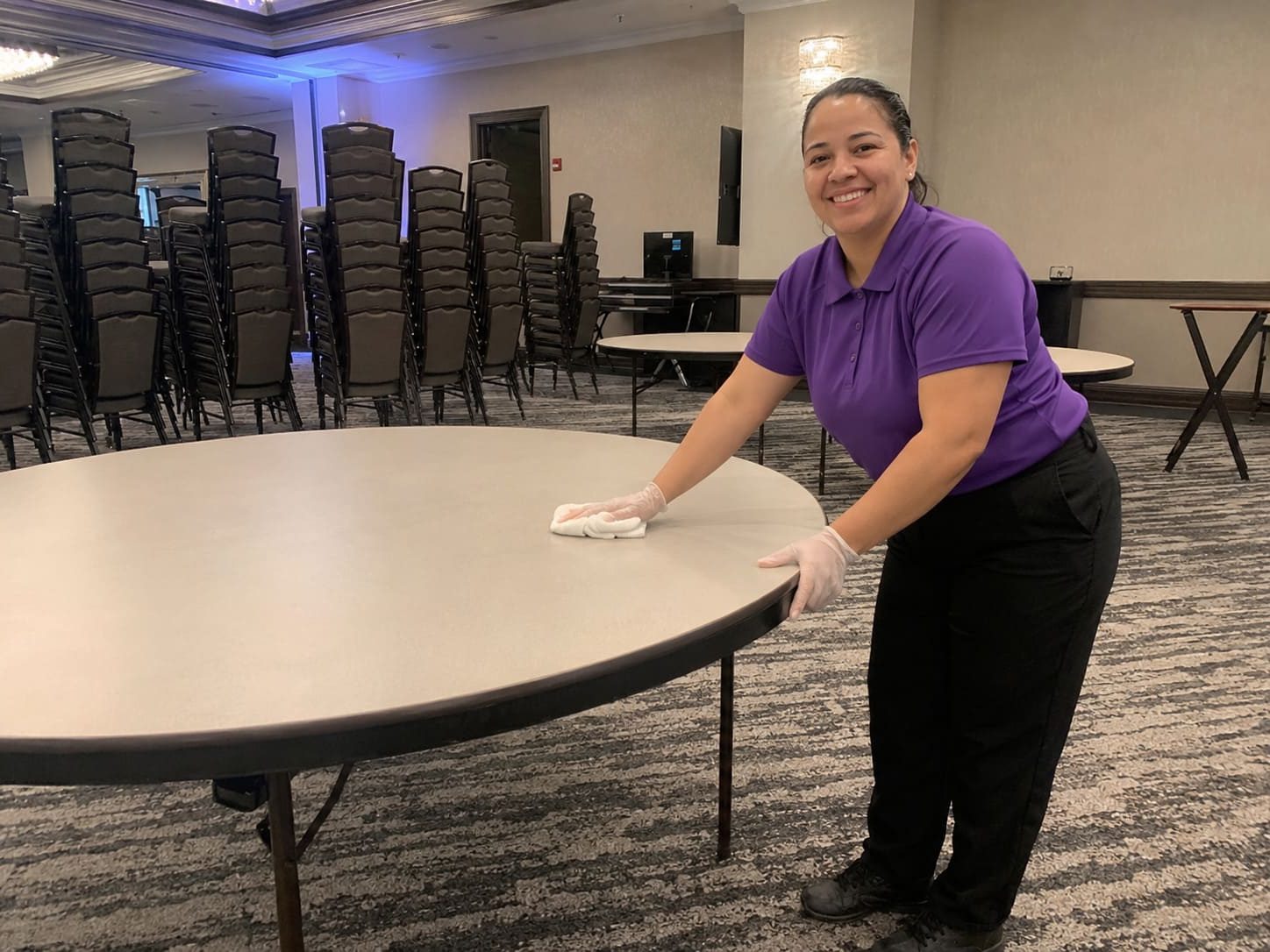
Turnaround between bookings is short, so teams work before, during and after events to keep the space usable.
-
Leisure facilities
Gyms, spas and pool surrounds need wet-area routines and descaling, because damp surfaces show problems faster than dry ones.
What a Contract Covers
What does a hospitality cleaning contract cover?
A hospitality cleaning contract covers the guest-facing areas, the guest rooms and the back of house areas behind them, on a schedule agreed for your venue. Most contracts run daily, with periodic deep cleans booked at a set frequency.
Front of house takes in:
- Entrances and reception
- Lobbies and corridors
- Lifts
- Dining rooms and bars
- Public washrooms
These are the areas guests form a view on within seconds of arriving, so they carry the highest servicing frequency.
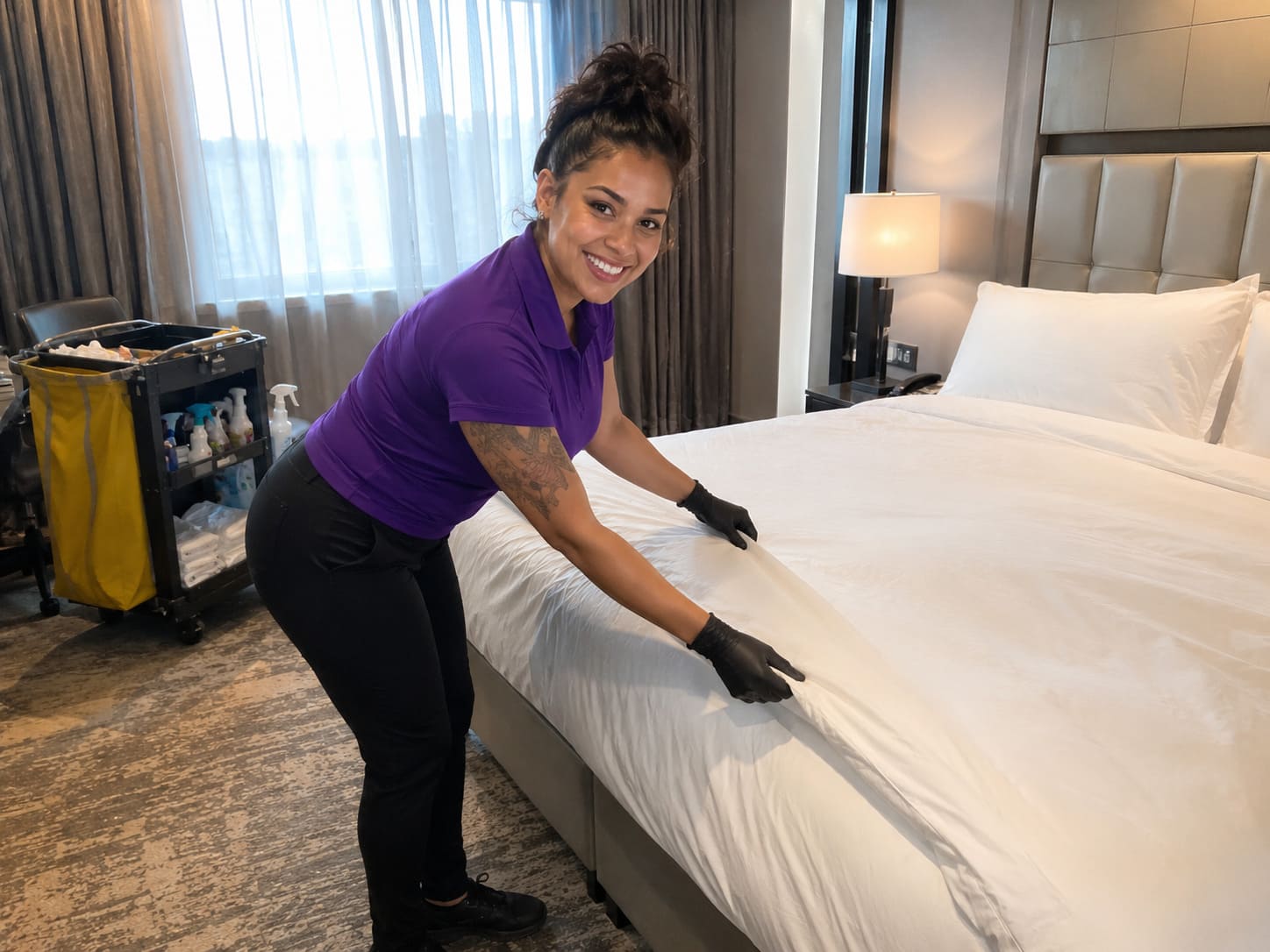
Guest rooms are serviced to a set routine covering beds and linen, bathrooms, surfaces, floors and high-touch points such as handles, switches and remote controls. Bathroom complaints in hotels are usually limescale and mildew rather than loose dirt, which is a descaling and ventilation problem, so those routines are built into the schedule rather than fixed by wiping more often.
Back of house work covers staff rooms, offices, service corridors, laundry areas, goods-in routes and kitchen surfaces. Periodic work sits alongside the daily contract and covers carpets, upholstery, hard floors, high-level dusting and post-refurbishment cleans when a floor or wing reopens.
Client feedback
What Our Hospitaliy Cleaning Clients Say
Reliable service is measured by the people who experience it every day. See what clients say about working with us




Hygiene Ratings and Inspections
How does cleaning affect your food hygiene rating?
Cleaning affects one of the three elements scored in the Food Hygiene Rating Scheme. Inspectors score how hygienically food is handled, the physical condition of the premises, and how the business manages food safety. Structural condition includes cleanliness, layout, lighting, ventilation and pest control.
The sticker in your window is partly a cleaning outcome, not purely a kitchen one. Cracked tiles, engrained dirt on surfaces, poor washroom facilities and dirty ventilation all score against a venue, and none of those sit with the chef.
Read more Show less
Display rules differ across the UK. Businesses in Wales must show their rating in a prominent place, and businesses in England are encouraged to display it but are not required to. Scotland runs a separate Food Hygiene Information Scheme.
That may not hold for long. The Food Standards Agency's Future of Food Regulation programme, agreed by its Board in March 2026, includes a proposal to make display mandatory in England, with a work plan due in June 2026. Nothing has changed in law yet, although venues carrying a middling rating in England may not keep the choice of whether to show it.
Inspection frequency is risk based, so a busy hotel restaurant is visited more often than a low-risk premises. You can read the scoring detail on the Food Standards Agency website.
How Pricing Works
How is hospitality cleaning priced?
Hospitality cleaning is priced on hours, not on floor area alone, because a venue with heavy changeover needs more labour than a quiet one of the same size. A site survey sets the hours, and the hours set the price.
Six things move the figure
- Room count
- The occupancy pattern across the week.
- Changeover volume
- How tight the checkout to check-in window is.
- Shift timing
- Overnight and early morning work costs more than daytime.
- Back of house scope
- Whether kitchens are included.
- Deep clean frequency
- Carpets, upholstery and hard floors.
- Consumables
- Who supplies them.
A quote well below the market is almost always thin on hours. The National Living Wage rose to £12.71 an hour on 1 April 2026, and the Real Living Wage now sits at £13.45, or £14.80 in London, so the arithmetic behind a very cheap price leaves little room. That shortfall tends to surface as skipped areas by about month three. If you are setting frequencies from scratch, here is how a cleaning schedule is built with a provider.
Switching Providers
How do you switch cleaning providers?
Groups running several venues follow the same route, with one specification and one audit routine applied at each site and reported in one place.
-
Site survey
An operations manager walks the venue with you, covering guest areas, back of house and any kitchens, and agrees the frequencies and hours.
-
Written proposal
You receive a schedule showing what is cleaned, how often, by how many people and at what times, with the price built from those hours.
-
Staff consultation and transfer
TUPE applies when a cleaning contract changes hands, so an existing team transfers on their existing terms. Consultation and paperwork are handled for you, and your people stay on site.
-
Mobilisation and first audit
Teams are site-trained before the start date, and the first supervisor audit is scheduled inside the opening weeks so any gap is caught early rather than reported by a guest.
Areas Covered
Where Do We Provide Hospitality Cleaning?
We clean venues nationwide, including major cities across England, Scotland and Wales. Hotels, pubs, restaurants, event spaces and leisure facilities all sit inside the same coverage.
Wherever your venue sits, we can put a vetted, directly employed team on site, supervised and covered when someone is off sick.
Site surveys are free, with no obligation to proceed.
Not sure whether we cover your venue's location? Get in touch. We can confirm cover for your city or region before you book.
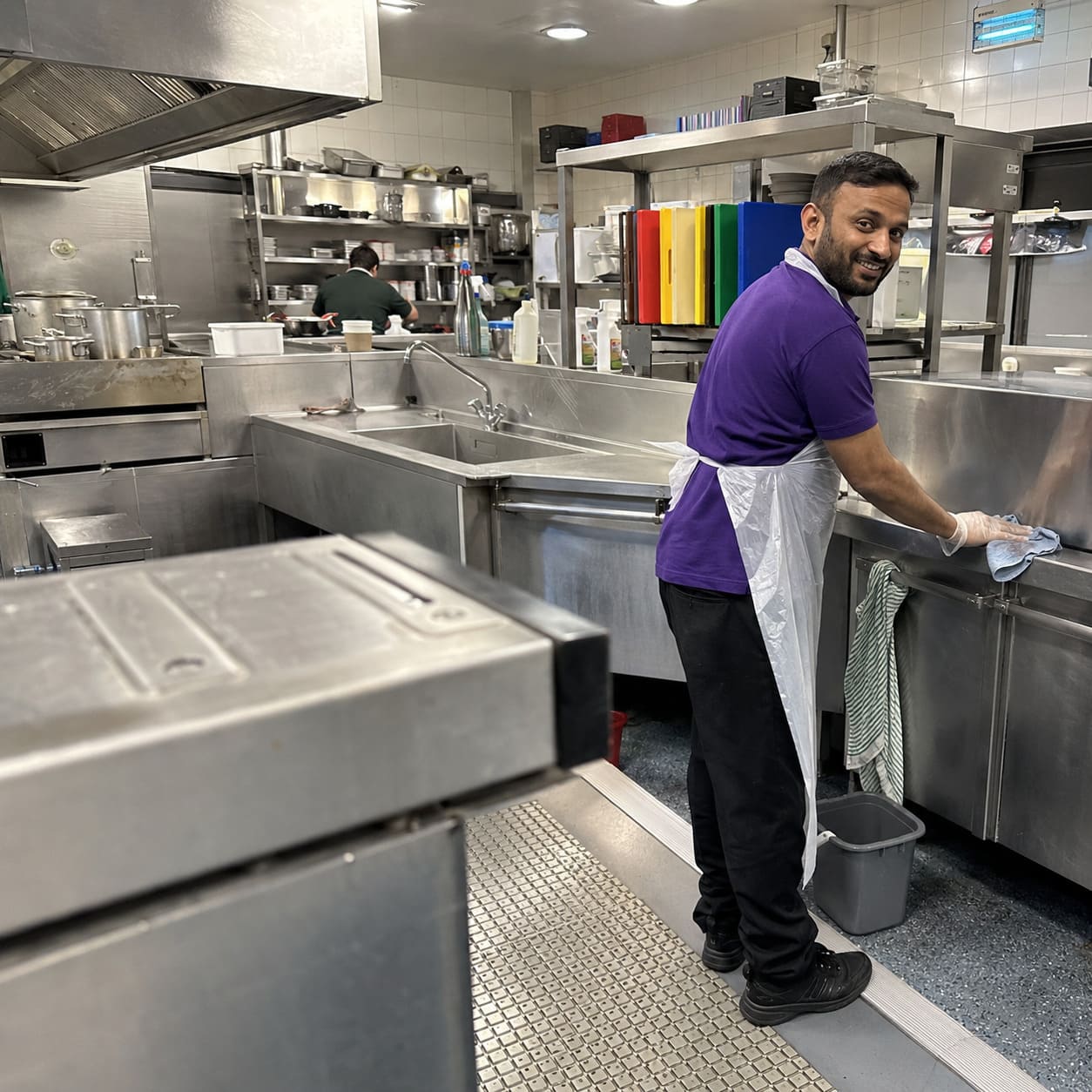
Why Venues Stay
Why do venues stay with us?
Most contracts are won on price and lost on consistency. These are the four things venue managers tell us keep the arrangement working past the first year.
What Keeps It Working
-
Continuity
The same faces, not a rota of strangers
Cleaners are directly employed and vetted, and low turnover means your duty manager deals with people who already know the building.
-
Hygiene control
Cross-contamination controlled by system, not memory
BICSc colour-coded cloths and equipment keep washroom, food area and guest room kit separate, so the control is built into the trolley rather than left to judgement.
Cleaning and security under one framework
Venues already using hotel and venue security teams can run both under one managed facilities contract, with a single point of contact for both.
Scope stated plainly, including what we do not do
Specialist extract cleaning, pest control and other certified work is named separately in the proposal, so nothing is assumed to be covered when it is not.
Coordination runs through a control centre staffed 24 hours a day, so an overnight or early morning team is never working without support.
FAQ Section
What else do venue managers ask?
Clear answers on frequency, shift timing, kitchens and what happens to your existing cleaning team when a contract changes hands.
0203 794 8182
How often should hotel rooms be cleaned?
Occupied guest rooms are usually serviced daily, with a fuller clean between guest stays. Longer stays are often handled with light daily servicing and a full service every few days. Periodic deep cleans covering mattresses, curtains, carpets and upholstery are typically scheduled every few months, and the frequency is agreed at survey.
Can cleaners work around our opening and service hours?
Yes. Shifts are set around your operation, so bar and restaurant cleaning usually runs overnight or before opening, guest floors run through the changeover window, and event spaces are worked before, during and after bookings. The aim is that guests see the result rather than the process.
Do you clean commercial kitchens?
Daily and periodic kitchen cleaning covering floors, surfaces, wash-up areas and equipment exteriors can be included in the contract. Extract system cleaning to TR19 Grease is a separate certified job and is quoted separately, because it needs qualified technicians and produces its own certificate for your insurer.
What happens to our current cleaning team if we switch?
TUPE usually applies, which means the existing cleaning staff transfer to the incoming provider on their existing terms and continue working at your venue. Consultation and the transfer paperwork are handled as part of mobilisation, so the change is administrative for your team rather than disruptive.
Are your cleaning staff vetted?
Yes. Operatives are vetted before they start on site and are directly employed rather than supplied through an agency, so the same people return to your venue. Training follows BICSc methods, including the colour-coded system used to separate high and low risk areas.
Do you handle one-off deep cleans as well as ongoing contracts?
Yes. Periodic and one-off work is available with or without a daily contract, covering carpet and upholstery cleaning, hard floor work, high-level dusting, post-refurbishment cleans and seasonal deep cleans between busy periods.
What Managers Wish They Had Asked
What do experienced operators check before signing?
Managers who have changed cleaning contractor more than once stop asking about products and start asking about people. Three questions predict how a contract performs.
-
Hours
How many hours are actually in the schedule?
-
Cover
Who turns up when the regular cleaner is off?
-
Audit
How often does a supervisor check the work against the specification?
A proposal that answers those three in writing is a proposal you can hold someone to. One that talks about standards without naming hours, cover and audit frequency is a price, not a plan.
Request a call back about your hospitality cleaning requirements.