Why are retailers deep cleaning stores between Black Friday and Christmas?
Retailers are increasingly choosing to deep clean stores during the peak season, not after it. This mid season strategy boosts hygiene, strengthens customer perception, improves staff wellbeing, and maintains high visual standards, all while supporting better sales performance. It is a smart move that shows which teams are staying ahead.
What Do We Cover In This Article?
What is the hidden strategy behind mid season retail deep cleaning?
Picture this: doors swing open, crowds surge in, and every polished floor turns dull under the weight of festive footfall. Lights sparkle, but the scuff marks are impossible to miss. For many retail teams, this moment signals the start of a slow decline in how the store feels and looks.
Mess accumulates quickly during the mid season. Even tidy shelves can lose their appeal when smudged glass or dusty corners catch the eye. These small signs influence how shoppers view your store.
Many retailers overlook how much cleanliness shapes customer perception. A mid season deep clean refreshes the entire environment. It lifts staff morale and can lead to improved conversions. Clean stores create confidence and that has commercial value.
Pro Tip: Schedule deep cleaning just after Black Friday to secure crews before the rush.
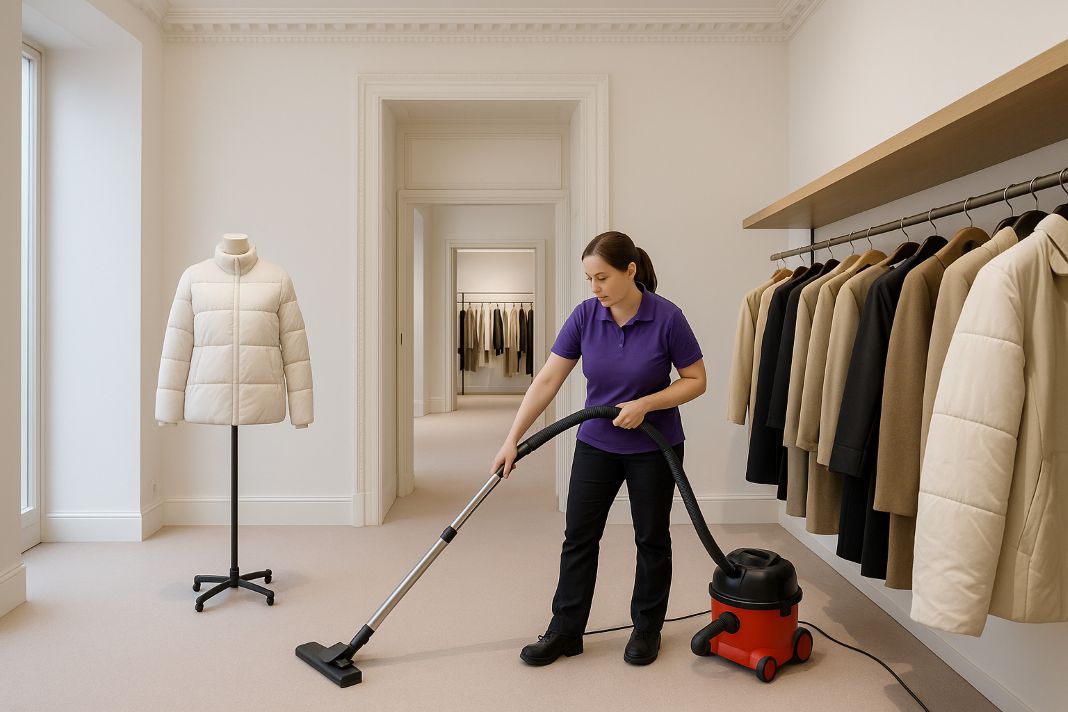
A AI photo of a cleaner professionally cleaning an upmarket retail store
Plan Your Holiday Clean with the Pros
Get expert help booking your store’s mid season deep clean without disruption.
Why deep cleaning mid season is smarter than waiting
- Hygiene builds trust during the colder months
Shoppers pay more attention to cleanliness when illness is spreading. Wet shoes, coughs and sneezes are common during winter. A spotless environment makes people feel more comfortable. - Staff stay healthier and more motivated
Unclean break areas and messy floors lower morale. Prioritising a clean workplace helps reduce sickness and keeps motivation high. - Clean visual standards uphold your brand
A well presented product display loses its impact if surrounded by grime. Clean floors, walls and touchpoints show professionalism. - Preventative cleaning preserves store assets
Grime wears down surfaces over time. Regular deep cleaning protects flooring, filters and displays. It helps reduce maintenance costs. - Cleaner stores often lead to better sales performance
Customers tend to spend more time in stores that look and feel clean. The longer they stay, the more likely they are to buy.
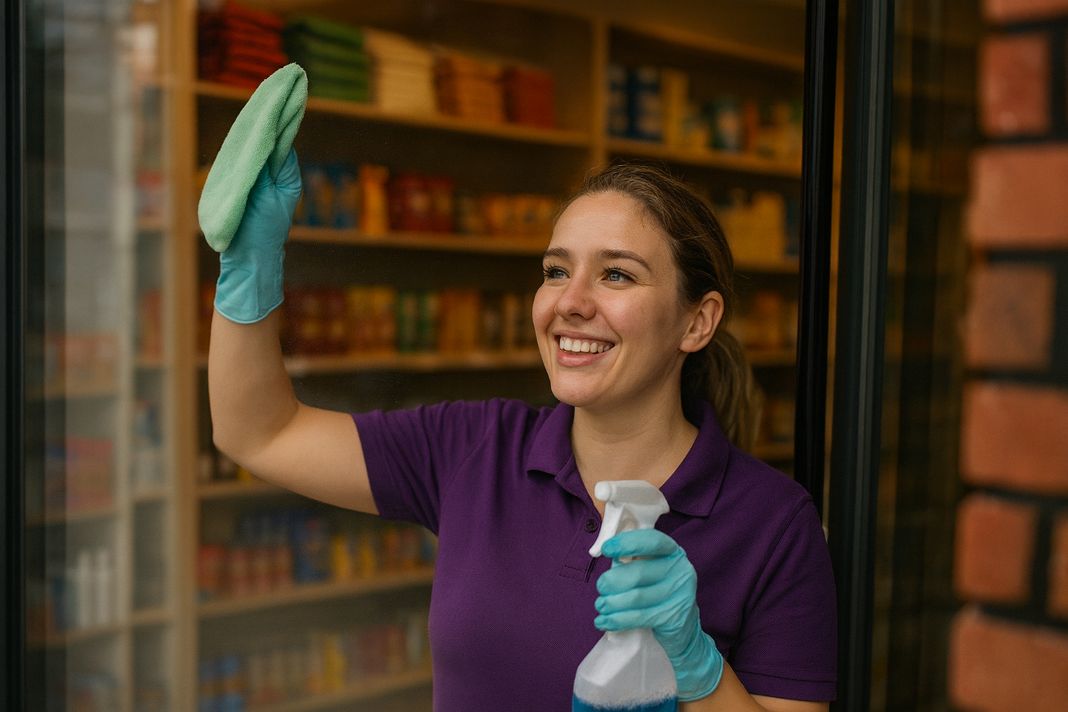
A AI photo of a cleaner professionally cleaning an uk retail store
When should stores book deep cleaning in December?
Timing is everything. Between Black Friday and Christmas, opportunities to clean are limited.
Early December right after Black Friday can offer a break before other sales begin. However, cleaning providers are in high demand. Delaying reduces your chances of finding the right team.
Booking early helps secure the best crews. It also gives time to plan cleaning without rushing or disruption.
Which store areas should be prioritised for deep cleaning?
Focus on the areas that impact shoppers and staff the most:
- Entrance and mat zones – These areas catch grit, slush and debris.
- Point of sale areas and touchpoints – Card readers and counters collect bacteria quickly.
- Shelving and visual displays – Dust can dull product presentation.
- Staff areas and break spaces – A clean break room supports staff wellbeing.
- Floor joins and corners – Dirt builds up in edges that regular mopping misses.
- HVAC vents and overhead areas – These spots collect dust and affect air quality.
- Back of house walkways and storage – Safe, clear walkways prevent trips and support efficient work.
Addressing these areas improves hygiene and enhances the in store experience.
Pro Tip: Always audit HVAC and high surfaces, dust there quietly damages air quality.
Need Cleaners For Your Store?
Let us help you schedule smart and clean efficiently across your busiest weeks.
How can stores deep clean without disrupting business?
Cleaning does not need to interfere with operations if planned well.
Start by walking the site and listing cleaning priorities. Look at the trading calendar and shift schedules. Use this to identify when and where crews can work.
Split the work across several days. Clean front areas during early morning hours. Move to staff and back areas when the store is quieter.
Check each completed area. Use a basic checklist and assign someone to confirm the work. A planned process helps keep things smooth.
Good cleaning teams offer flexible schedules and can work with your rota. Work closely with store operations leads to coordinate the timing with minimal disruption.
When should cleaning be avoided?
Some periods are too busy for a deep clean:
-
The final days before a big sale
-
When teams are already stretched
-
When the store calendar has not been confirmed
Trying to clean at the wrong time can cause more problems than it solves. Wait for a clear slot with enough resources.
What can retailers measure after a deep clean?
To understand if the clean made a difference, track a few useful metrics:
-
Internal audit results for cleanliness
-
Comments or complaints from shoppers
-
Absence levels in staff teams
-
How long shoppers stay and how much they spend
A cleaner store should feel more inviting, look sharper and perform more effectively. Use retail performance tracking tools to review the changes.
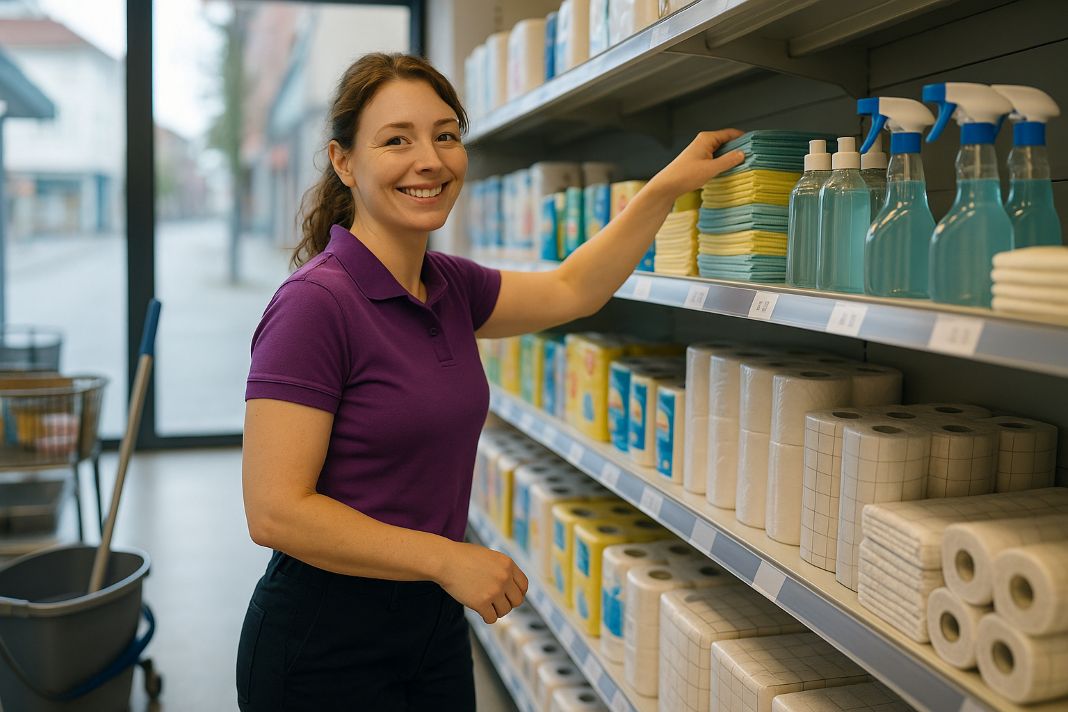
A AI photo of a cleaner professionally cleaning a shop
What do customers notice first when entering a store?
Shoppers form opinions quickly. They may not say anything, but they notice the state of the space.
Clean floors, fresh air and uncluttered displays send the message that your store is cared for. A tidy entryway, clean signage and well lit interior make people more likely to browse.
What safety risks increase without a deep clean?
Winter conditions bring extra hazards. Water and grit from outside can cause floors to become slippery.
The UK Health and Safety Executive reports that slips and trips are the leading cause of major retail injuries. Many of these can be avoided through floor care.
Deep cleaning helps remove buildup that leads to risk. It is a simple step that protects staff and customers alike.
Surface clean vs deep clean: What is the difference?
Surface cleaning keeps things looking tidy. Deep cleaning goes further and removes the buildup that affects hygiene and safety.
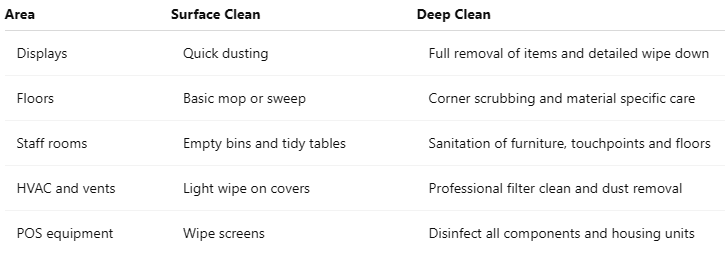
A proper deep clean reaches what routine cleaning misses.
Holiday cleaning “don’ts” to avoid
These common mistakes can undo your efforts:
-
Cleaning while customers are on the shop floor
-
Forgetting to schedule high areas like vents and ceiling fittings
-
Ignoring small areas like skirting and corner joints
-
Starting a clean during peak promotions
-
Relying only on surface wipes
Careful planning ensures your effort pays off.
Simple cleaning planner template
Use this table to map out a cleaning plan that fits your store’s calendar:
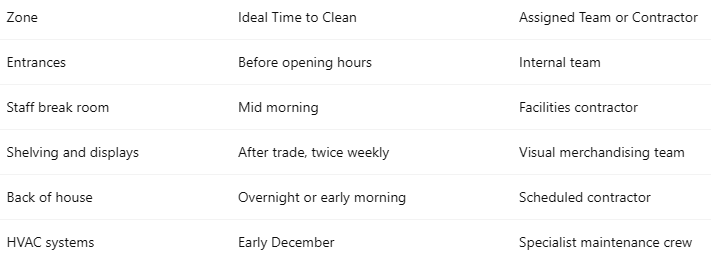
This structure helps you stay organised and proactive. Use it as part of your seasonal cleanliness checklist.
How to measure results from a mid season clean
Track performance using simple data points. A deep clean should produce visible and behind the scenes improvements.
Metrics to watch include:
-
Drop in complaints about cleanliness
-
Higher staff morale in check ins or surveys
-
Reduced short term sick leave
-
Longer dwell time and increased transaction values
Even modest gains matter during the busiest weeks of the year. A well timed clean supports your holiday hygiene plan and overall sales uplift.
What should retailers do next?
Mid season cleaning is one of the most effective ways to maintain high standards. Done well, it improves staff experience, customer trust and overall store performance.
Look ahead. Plan early. Prioritise your high impact zones. A little preparation now helps your store stay sharp all season. For retail ops teams planning their holiday downtime, this is a key move that improves hygiene and protects store appearance across the busiest weeks.