

Does a visible guard at reception mean your office is genuinely secure?
No. A visible guard can improve deterrence, manage visitors and support access control, but reception security on its own does not make an office fully secure. Real office entry safety depends on how people, procedures, technology and oversight work together throughout the building, not simply on who is sitting at the front desk.
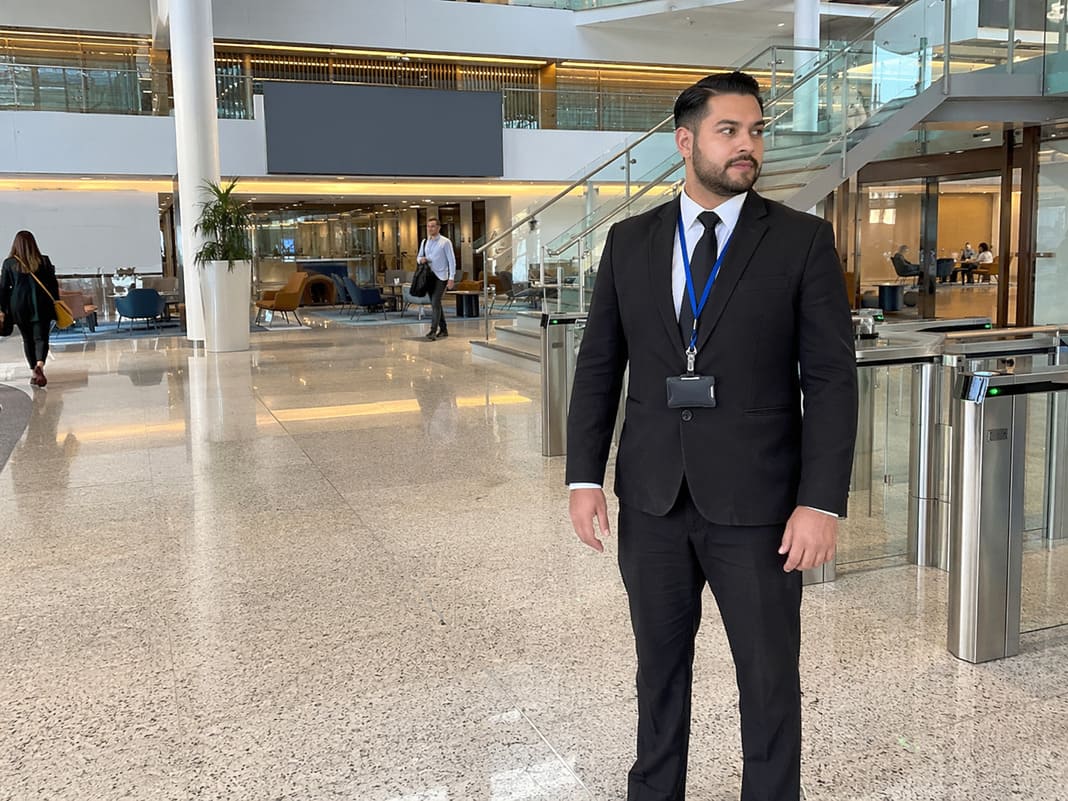
Corporate Reception Security Services In A Modern Office Lobby – sample image
What Do We Cover In This Article?
Reception Security in Daily Practice
You walk into an office on a weekday morning. A uniformed guard is at reception, someone signs in ahead of you, and the space feels orderly before a word is spoken.
That first impression matters. A visible security guard signals visible authority, gives staff reassurance and tells visitors that entry is being observed. In many offices, that brief moment shapes the whole perception of safety. People assume someone is in charge, someone is watching, and someone would step in if anything looked wrong.
Daily practice is usually more ordinary than dramatic. The guard may greet arrivals, confirm names, issue passes, direct contractors, keep an eye on the entrance and help with basic visitor management. In some buildings, the desk also sits close to building management or facilities management functions, which means that reception can become a shared point for security, service and information.
Yet formality is not the same as functional security. A polished sign-in process can look convincing even where access control is loose, internal doors are unsecured or staff routinely wave unfamiliar people through. The presence of a guard tells you something useful, but it does not tell you everything you need to know.
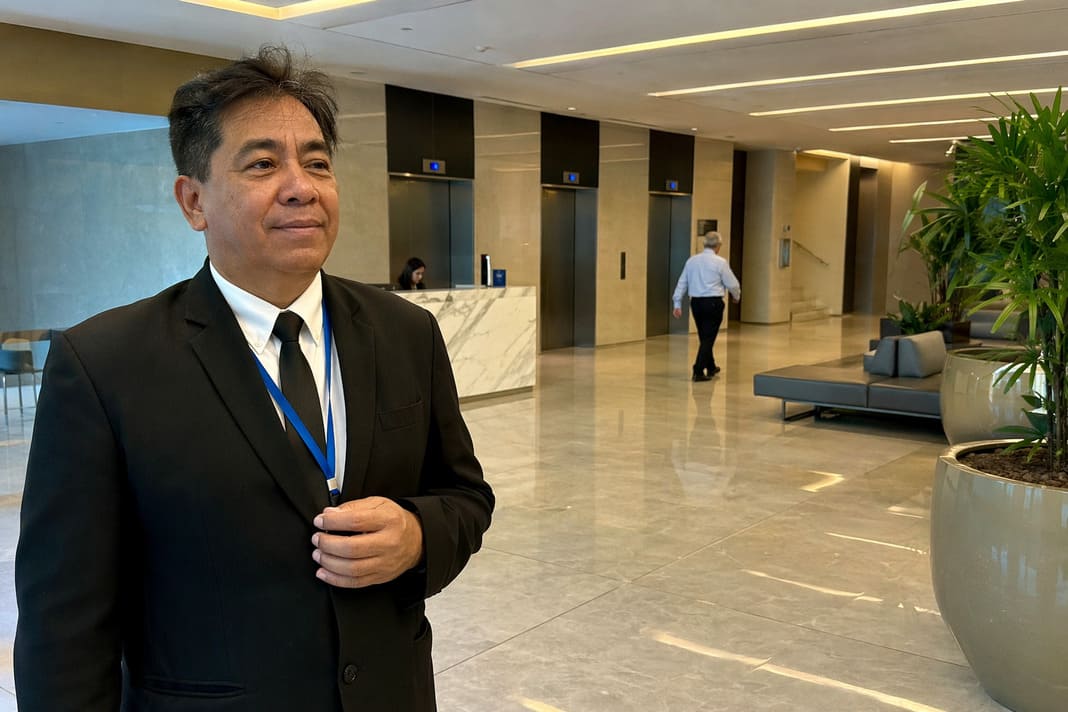
Corporate Reception Security Services In A Modern Office Reception Hall – sample image
The Guard’s Role and Its Limits
A reception guard has a defined role, and that role is usually narrower than people imagine.
In the UK, many guards working in front-of-house environments hold the relevant SIA licence, which confirms a baseline of training and legal compliance. That matters, but licensing does not mean every site is run in the same way. Duties depend on the brief, the building, the client’s expectations and the site induction protocols in place.
One office may expect the guard to verify visitors against a booking list, monitor entry points and respond to incidents within clear procedures. Another may use the same position mainly for greeting, pass issue and general oversight. Both arrangements can look similar from the other side of the desk.
A simple scenario shows the limit. A visitor arrives saying they are meeting someone from finance. The guard checks the name, phones upstairs and gets no answer. If the site policy is strict, the visitor waits. If the culture is relaxed, a staff member passing through reception may recognise the company name and escort them in. At that moment, security has shifted from screening to assumption.
Some tasks also sit outside the guard’s remit. Reception staff are not always authorised to challenge senior employees, search bags, review technical faults in access control systems or investigate a missing key trail without support. Supervision, incident response and escalation often depend on a wider team, especially on larger sites or in multi-tenant buildings.
Standards such as the SIA Approved Contractor Scheme and ISO 9001 can improve consistency in how providers recruit, train and manage people. Even so, a well-presented guard cannot compensate for a weak brief, vague reporting lines or a reception desk that has quietly become a catch-all customer service point.
Beyond the Uniform: Security as a System
Office security works best as a system, not a symbol.
A guard on reception is one layer. Access control systems, CCTV, alarm response procedures, visitor rules, key management and internal reporting all form part of the same picture. If one layer is weak, another may need to carry more weight than it should.
Consider a common sequence. A visitor is signed in by reception and given a pass. The lift requires card access, CCTV covers the lobby, and a host is expected to collect the visitor promptly. That arrangement is much stronger than a reception desk alone, because the guard is supported by process and technology at each stage of movement through the building.
Gaps appear where those parts do not connect. A smart reception area can still be vulnerable if side entrances are left propped open, if contractors move through the building without clear supervision, or if expired access cards are not reviewed. Multi-layered security depends on the joins between systems, not just the systems themselves.
Professional operators tend to treat reception security as one part of integrated office security rather than as a complete answer. In practice, providers such as Double Check Security Group structure services around risk assessment, procedural oversight and coordination with facilities management, so that front-of-house staff are linked to wider site controls instead of working in isolation.
That approach matters most on ordinary days. A receptionist notices unfamiliar behaviour, CCTV confirms movement, access records show where a card was used and alarm response procedures define who acts next. Security becomes practical when those threads are already connected before anything goes wrong.
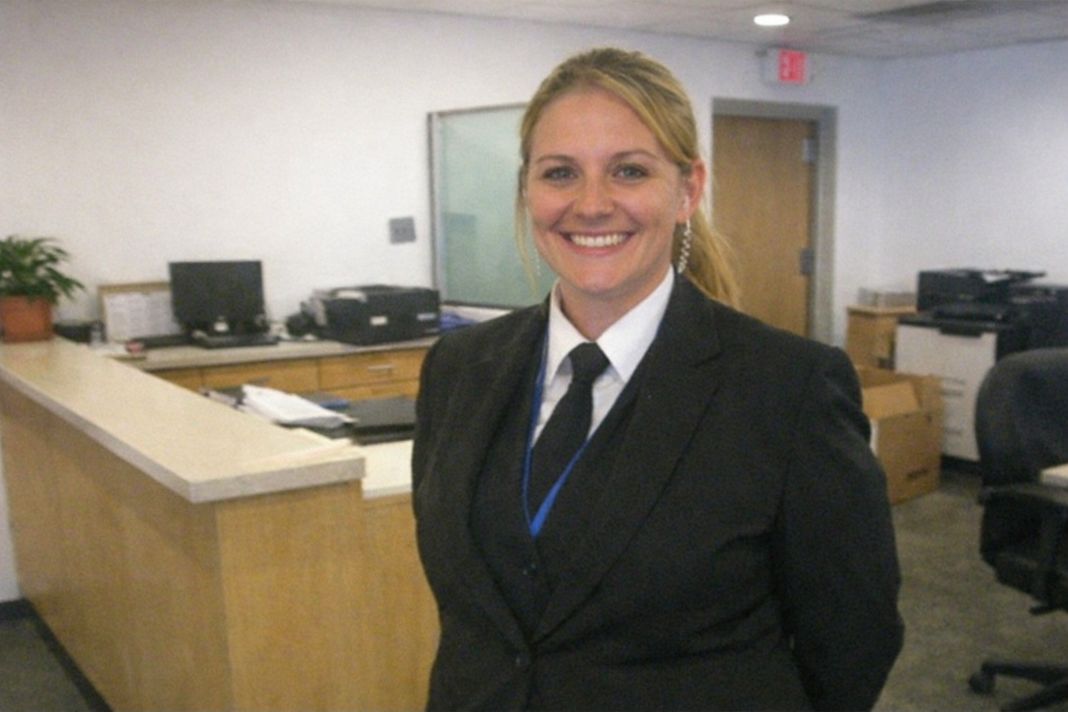
A photo of a corporate security guard in an office reception area – Sample Image
Operational Oversight and Compliance
Visible presence is easy to spot. Oversight is usually what tells you whether the operation is actually being run well.
A site may have a guard on the desk every day, yet standards can drift if nobody checks incident logs, visitor records, handovers or response times. Regular supervision, site visits and operational audits bring those details into view. They test whether the written procedure is still the live procedure.
Compliance has a place here, although it should not be mistaken for a guarantee. ISO 9001, SIA requirements and SAFEcontractor frameworks can support quality management, accountability and documented processes. Those standards matter because they push providers and clients to define who is responsible for what, how issues are reported and how performance is monitored over time.
An audit in practice is rarely glamorous. A supervisor may review the assignment instructions, check whether licences are current, look at incident reporting, confirm that site induction records are up to date and compare expected duties with what is happening on shift. If the desk is meant to control visitor access but temporary staff have never been briefed on pass procedures, the paperwork has already parted company with reality.
Well-run oversight also feeds back into daily operations. If repeated reports show that delivery drivers are bypassing reception at the loading bay, the answer may involve new signage, revised staffing hours or a change to entry controls rather than another reminder email. That is the difference between ticking a box and using information to tighten a weak point.
Across the sector, the strongest security quality control tends to come from routine visibility into the service itself. Double Check Security Group, for example, sits within the kind of operating model where auditing, performance monitoring and incident review are treated as working disciplines, not occasional admin exercises.

Corporate Reception Security Services In A Premium Office Entrance Lobby – sample image
Changing Risks and the Future of Reception Security
Reception security is changing because offices are changing.
Hybrid working has altered who belongs in a building on any given day. Fewer people at fixed desks, more visitors using shared spaces and more contractors moving through flexible workplaces have made old assumptions less reliable. A guard who once recognised most employees by sight may now see a rotating mix of staff, guests and service teams, which places more pressure on accurate access control and current occupancy information.
Social engineering is also a growing concern at reception level. Someone who looks confident, carries a laptop bag and follows a small group through the barrier may attract little attention in a busy lobby. Tailgating, borrowed passes and plausible cover stories all exploit routine, especially in offices where front-of-house service and security are expected to blend smoothly.
Legislative pressure is sharpening the conversation as well. Martyn’s Law has already changed how many organisations think about public protection, preparedness and site-specific risk assessment, even before every detail affects every workplace in the same way. Guidance associated with Action Counter Terrorism has pushed more businesses to consider hostile reconnaissance, suspicious behaviour reporting and evacuation planning as part of normal site management rather than as specialist concerns.
Over the next 12 to 24 months, the offices that feel most secure are likely to be the ones that treat reception as a live control point linked to occupancy data, access permissions, incident reporting and site risk reviews. The uniform at the desk will still matter, but the real test will be whether the building behind that desk can adapt as quickly as the risks at its door.
