The Best Place To Start Searching For a Retail Security Guard Company
Any search for a retail security guard company should begin with the SIA register of approved contractors. These are vetted, insured and certified security guard providers who you can search for by region and contact any of them to know that they have been checked and any security service you use them for will meet British Standards and ISO standards. If you have a temporary guarding requirement over the peak trading period from Black Friday through to the January Sales then you can contact Double Check Security Group who cover the whole of the United Kingdom.
What Do We Cover In This Article?
When should you book retail security guards for December?
Booking early helps you avoid stress and inflated prices. The most effective approach is to begin enquiries in August and confirm your provider by September. This gives suppliers time to plan shift patterns, assign deployment dates and allocate staff.
ACS approved contractors typically run busy schedules. Waiting until late November means fewer options and higher premiums. When you book early, you get more flexibility and peace of mind about December guard availability.
A simple timeline can help keep you on track:
- August: Start contacting suppliers
- September: Confirm agreement
- November: Finalise induction and shift planning

Free Guard Planning Support
What type of security guard do you really need for retail?
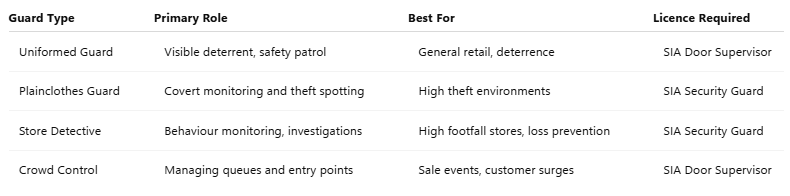
The type of guard you choose should depend on your store’s layout, the usual customer behaviour and any past security incidents. Consider these roles:
- Uniformed guards: Present a clear deterrent and reassure customers.
- Plainclothes or covert guards: Blend into the crowd to identify suspicious activity.
- Store detectives: Work proactively in high footfall areas to prevent theft and support retail loss prevention.
- Crowd control staff: Manage queues and entry points during sales or promotions.
Guard Role Comparison Table
Choose based on your risk level and operating environment.
What are the licensing and compliance rules for hiring retail security?
All security guards must hold a valid SIA licence. This is not optional. Hiring someone without one puts your business at legal and financial risk.
You also need to check:
- Right to work documents
- BS7858 background screening
- Liability and employer insurance certificates
Keeping a checklist ensures you cover everything before deployment. It also protects your reputation and team. For extra clarity, use a store security planning checklist to tick off key items before contract signing.
How much should you expect to pay for security guards in December?
December rates are higher due to seasonal demand. You can expect to pay between £15 and £25 per hour depending on region, time of day and the guard’s experience.
Additional costs often include:
- Bank holiday fees
- Weekend or overnight cover
- Overtime for longer shifts
- Late cancellations
Regional Price Differences
Rates vary across the country. Central London stores often pay around £25 an hour. Rural outlets may see costs closer to £18-£22 per hour. Higher crime areas and busy city centres can push prices up. Always compare regional quotes and factor in security shift planning.
Lock In Your Holiday Guard Team
Get fully vetted, SIA licensed guards ready for your December trading dates.
How do you choose a trustworthy security supplier?
Working with a reputable retail security supplier makes a real difference. Prioritise security companies with ACS accreditation and a background in retail. Look at reviews on Trustpilot and verify business details through Companies House.
Useful questions to ask:
- Do you have experience in similar retail settings?
- How do you assign guards to each store?
- What happens if a guard is unavailable?
- Can I review your insurance documents?
- What retail training do your guards receive?
A good supplier will answer openly and supply evidence.
What contract terms should retailers look for when hiring guards?
A clear contract helps avoid misunderstandings. Make sure it covers:
- Minimum hours per shift
- Cancellation terms
- Service levels
- Training or induction plans
- Steps to take if a guard is not performing
Also ask what contingency plans are in place for missed shifts or increased demand. Including deployment dates and backup rotas helps avoid confusion later.

How can guards integrate smoothly with your existing store team?
Security works better when everyone is on the same page. Begin each shift with a team briefing. Set out roles and expectations.
Use shared communication tools like radios or daily logs. Keep things simple and friendly. Guards who feel part of the team do a better job.
Why Staff Training Matters
Even a quick training session can help. When your staff understand how to work with guards, it reduces friction and improves outcomes. Topics to cover include how to report an issue, when to escalate and the best way to communicate during a busy day.
When everyone understands the process, the team works more effectively.
What red flags should you watch for and what is your backup plan?
Things can still go wrong. Stay alert to early signs of problems such as:
- No ID or incorrect uniform
- Missed patrols or late arrivals
- Poor responses from your supplier
Have a backup in place. Keep details of a second provider and build flexibility into your plan. A short red flag checklist can help assess performance during the first few days

What should be in your December retail security toolkit?
Your December toolkit should include:
- A checklist for hiring: licences, checks and insurance
- A timeline for booking and confirmations
- A contract review guide
- A staff rota for extended hours
- A red flag reference sheet for early monitoring
- Mention of SIA retail guard UK licence verification
Suppliers may offer downloadable templates. Keeping a summary on the staff noticeboard also keeps everyone aware.
Final thoughts: Don’t leave retail security to chance
Security for your store should be a key part of your December planning. Book early, hire trained professionals and keep everything clear with checklists and timelines. When your security works, your team feels supported, your customers feel safe and your stock stays protected.