What makes car parks especially vulnerable to theft, break-ins, and vandalism, and how can businesses reduce these risks?
Car parks face specific risks due to open layouts, frequent public access, and inconsistent oversight, which means that they often become targets for vehicle crime. Businesses can reduce these risks with a mix of structured assessment, practical barriers, visible presence, and ongoing procedural improvements.
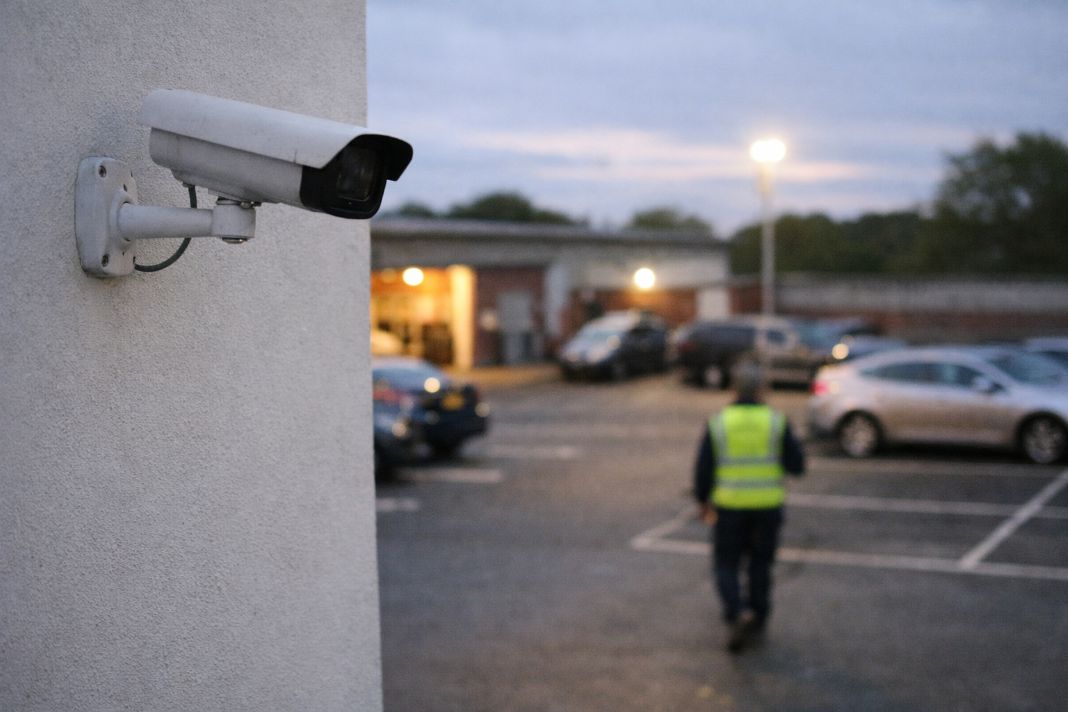
An illustrative image of a CCTV camera mounted on a plain wall overlooking a business car park,
What Do We Cover In This Article?
Understanding the Risks: Why Car Parks Are Vulnerable
Business-operated car parks, whether attached to offices, retail, or mixed-use premises, often present an open invitation for unauthorised access. This stems from design choices such as multiple entry points, limited surveillance, and lighting blind spots. In many cases, even well-meaning property owners may underestimate the appeal such environments hold for opportunistic offenders.
Consider a small retail site with an unmonitored rear parking area. It appears low-risk by day, but security weakens after hours. Lights may not cover every bay, leaving vehicles hidden from sight. Entry and exit are available to the public, and no staff monitor the area in real time. Such gaps attract petty vandals, but also organised groups seeking valuable assets or targeting specific high-value vehicles.
Common car park vulnerabilities include:
- Unrestricted vehicle and pedestrian access points
- Insufficient or poorly designed lighting
- Limited or outdated CCTV coverage
- Infrequent on-site staff presence
- Failure to clearly define public versus private areas
Car park crime disrupts business continuity but also affects insurance costs, staff and visitor confidence, and the company’s public image. Assessing these realities allows for a structured response rather than a reactive one.
Pro Tip: Update staff inductions annually and after any significant incident for consistent awareness on evolving security procedures.
Book a Car Park Security Assessment
Arrange a specialist evaluation of your car park to identify risks and recommend practical solutions.
Assessing Your Car Park: Site Surveys and Risk Profiling
Every effective security strategy begins with a clear understanding of the present state. Conducting a thorough site survey forms the foundation for targeted improvements, supporting decisions that address true risk rather than assumptions.
Key components of a car park security assessment typically include:
- Site walk-throughs: Observing daily use, noting patterns, access routes, and potential blind spots.
- Security risk profiling: Weighing threats such as vandalism, theft, or trespass based on likelihood and potential impact.
- Compliance and governance checks: Reviewing security measures against standards like the SIA Approved Contractor Scheme or ISO 9001.
- Documentation and audit trails: Keeping records to inform future audits and insurance requirements.
In practice, firms such as Double Check Security Group conduct these assessments with clarity and structure, enabling facilities managers to see both compliance requirements and practical improvement points side by side. Site surveys should be scheduled regularly and after significant incidents, addressing new vulnerabilities as business activities evolve.
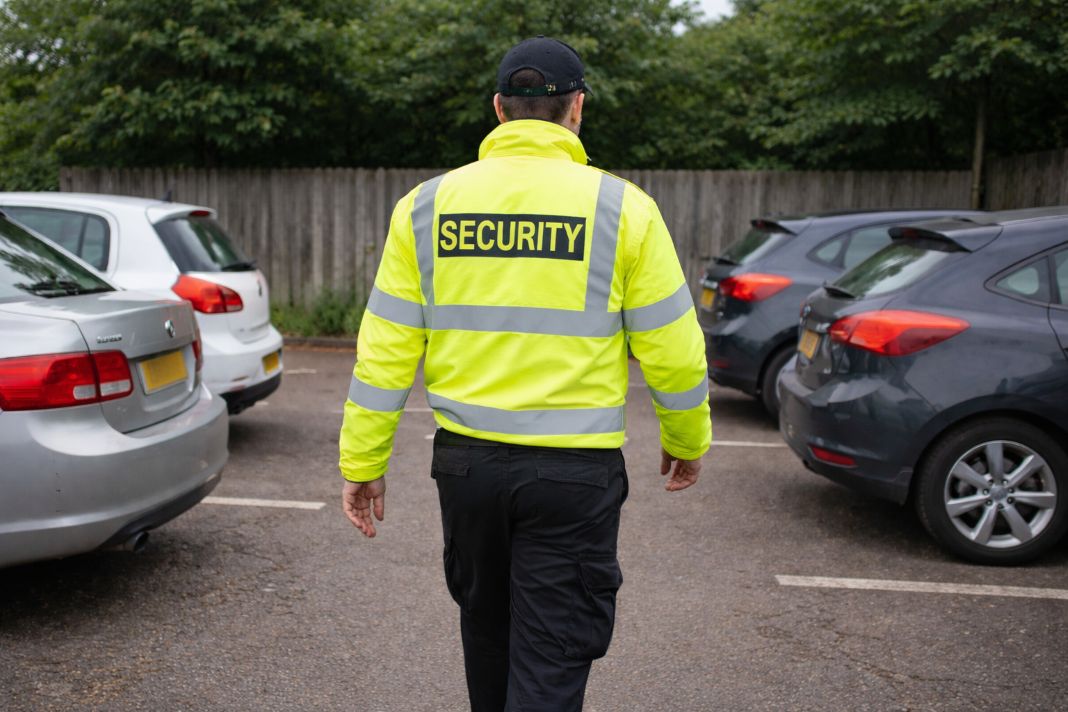
An illustrative image of security patrolling a small car park
Physical Security Measures: Barriers, Lighting and Access Control
A practical approach to physical security addresses both immediate threats and the way assets and people move through the car park.
Barriers and fencing Physical divisions such as automatic gates, rising bollards, or sturdy perimeter fences define the allowed space. These discourage unauthorised vehicles while supporting smoother management of flows for permitted users.
Lighting Well-designed LED security lighting deters criminal activity by improving visibility throughout the car park. Consistent lighting levels, especially at entry and exit points and around payment terminals, significantly reduce hiding places.
Access control Installing access systems, such as keypads, cards, or ANPR, limits access to authorised users only. Integration with barriers ensures a layered approach, where perimeter and access systems reinforce one another.
Regular maintenance is important. Faulty gates or broken lights weaken the effectiveness of security upgrades, which means that checks and fast repairs should be built into operational schedules. Facilities teams should periodically review how each measure integrates into the wider business environment, making adjustments where required.
Pro Tip: Regularly review camera placement during both day and night hours to spot blind spots and ensure clear coverage.
Surveillance and Monitoring: CCTV and Remote Oversight
Modern surveillance provides a strong deterrent as well as a means of evidence collection. However, effectiveness relies on both the quality of footage and the ongoing management of systems.
CCTV surveillance falls into two categories:
|
Live Monitoring |
Recorded Surveillance
|
|---|---|
|
Operators watch feeds in real time |
Footage is stored for review later |
|
Supports immediate response |
Useful for investigations after events |
|
Higher ongoing staffing costs |
Lower interaction day to day |
For many businesses, a blend works best. Professionally monitored CCTV systems allow swift intervention, especially where access is 24-hour. Remote monitoring centres can alert police or on-site security teams as soon as suspicious activity is observed.
Businesses must also address data protection and privacy. Compliance with GDPR and ICO guidance is required. Key considerations include:
- Clear signage notifying users of surveillance
- Secure data storage and limited access
- Defined retention periods for footage
- Training staff on proper use and escalation procedures
Using a provider such as Double Check Security Group, which integrates surveillance with incident response protocols and compliance oversight, often supports smoother operations and reduces risk of regulatory breaches.
Upgrade Surveillance and Access Control
Enhance your security with integrated CCTV and robust access systems tailored for your site.
Security Personnel: Guarding, Patrols and Visible Presence
While technology plays a major role, human presence remains an effective deterrent against both opportunistic and targeted crime.
The role of security personnel can be divided as follows:
|
Mobile Patrols |
Static Guarding
|
|---|---|
|
Officers move through site |
Officers stationed at entry or reception |
|
Covers wider area |
Suitable for dense or high-risk sites |
|
Responsive to incidents |
Provides continuous monitoring |
Consistent SIA licensing, active patrol logging, and regular reporting help ensure that these teams deter crime and respond quickly. Uniformed officers offer high visibility, reducing the temptation for opportunists and reassuring genuine car park users.
Professional firms will often supplement human deployment with routine site reviews, technology integration, and clear procedures for reporting incidents. This cooperation ensures that the human element operates as part of a larger system, rather than an isolated deterrent.
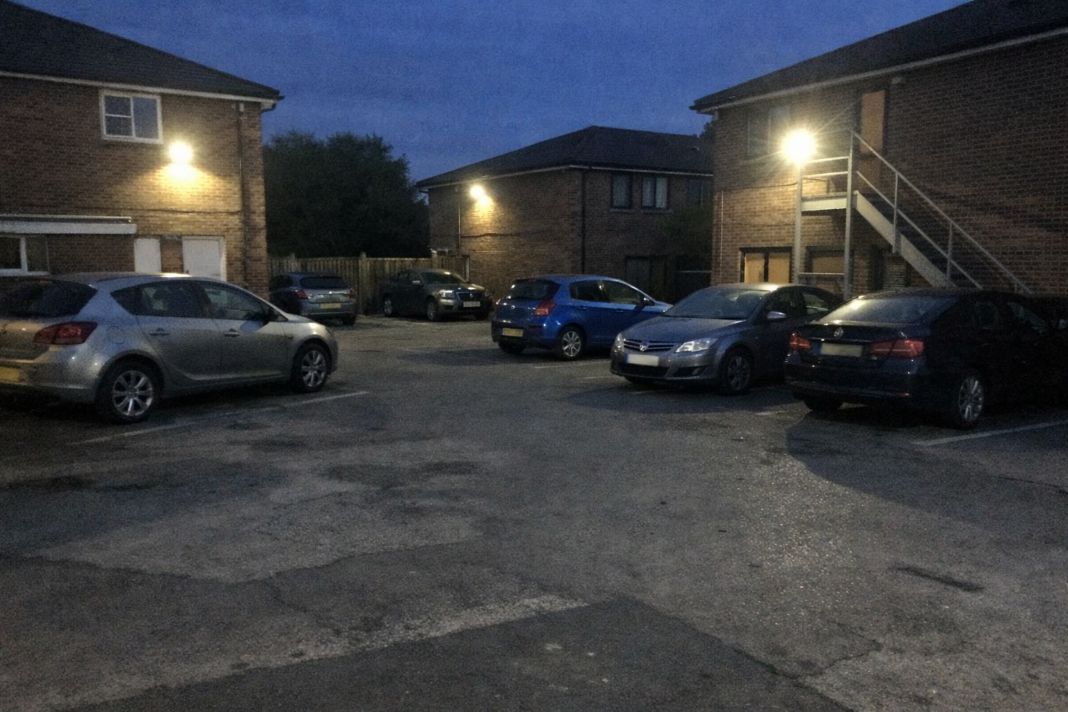
An illustrative image of a business car park in the early evening with visible security lighting
Policies, Procedures and Staff Training
Even the best infrastructure and personnel require a clear backdrop of well-documented policies and ongoing training. Trusted security providers and property managers invest in written procedures that guide both everyday activities and crisis response.
Key policy areas include:
- Access control management and visitor validation
- Incident reporting protocols and documentation standards
- Regular reviews of security inductions and refresher sessions
- Clear escalation chains for urgent matters
- Accountability measures for both in-house and contracted staff
Staff awareness supports successful implementation. New joiners should receive induction training focused on car park safety and response, with refresher modules scheduled annually or after incidents. Engagement exercises, such as scenario walk-throughs or feedback forums, help keep staff invested in the culture of security.
Training Tips:
- Use practical scenarios to make content relevant
- Reinforce lines of responsibility
- Review key policies after every incident
A strong policy and training framework reduces reliance on reactive fixes and supports long-term confidence in car park security systems.
Responding to Incidents: Reporting, Investigation and Recovery
Even in well-managed environments, incidents may happen. Clear action in the immediate aftermath supports control and minimises disruption.
A typical post-incident response framework may include:
- Ensure safety: Secure the area and protect people before property.
- Record details: Complete an incident log with clear, factual information.
- Gather evidence: Preserve CCTV footage, photographs, or witness accounts.
- Notify authorities: Contact police and insurers according to policy requirements.
- Conduct root cause analysis: Review what happened and why.
- Implement lessons learned: Adapt procedures or infrastructure as needed.
Coordination between managers, security staff, facilities teams, and external partners such as police or insurance companies ensures a smooth investigation and recovery process. Each incident provides valuable insight to refine future prevention measures, closing the loop between response and continuous improvement.
Continuous Improvement: Auditing, Feedback and Compliance
Security management does not end at installation or incident response. Sustained protection relies on routine review, learning, and adaptation.
Practical steps to drive ongoing improvement include:
- Schedule regular security audits with structured checklists
- Collect feedback from users and staff through surveys or suggestion channels
- Monitor regulatory updates, including changes to SIA standards or GDPR
- Implement corrective actions promptly, with responsibility clearly assigned
- Hold periodic performance reviews for systems and personnel
Staying ahead of new threats and compliance needs protects business interests and reassures employees and clients alike. Businesses that treat car park security as a continuous process, informed by evidence and open to adaptation, will be best placed to deter crime and ensure operational confidence over time.