Why can an office smell stale even when it looks clean?
An office can look spotless and still smell stale because visible cleaning and fresh air are different things. Surfaces may be wiped, bins emptied and floors vacuumed, yet odours can remain in soft furnishings, ventilation systems, damp areas and shared spaces. Workplace air quality depends on cleaning, airflow, moisture control and daily habits working together.
A freshly cleaned desk, polished floor and sanitised kitchen worktop can create the impression that the whole office is clean. That impression is often accurate in visual terms, but smell works differently. Air holds on to odours that surfaces do not show.
Clean and fresh are closely related, although they are not identical. Surface disinfection deals with germs on touchpoints. Air circulation affects how a room feels over the next few hours. Odour masking may make a space smell pleasant for a short time, but it does not always remove the source.
Facilities managers often run into this gap between appearance and atmosphere. An office may meet routine cleaning protocols and still feel heavy by mid-afternoon, especially in sealed buildings or busy shared areas. Guidance from the British Institute of Cleaning Science and the Health and Safety Executive (HSE) points in the same broad direction: hygiene standards and workplace air quality both matter, and one cannot fully stand in for the other.
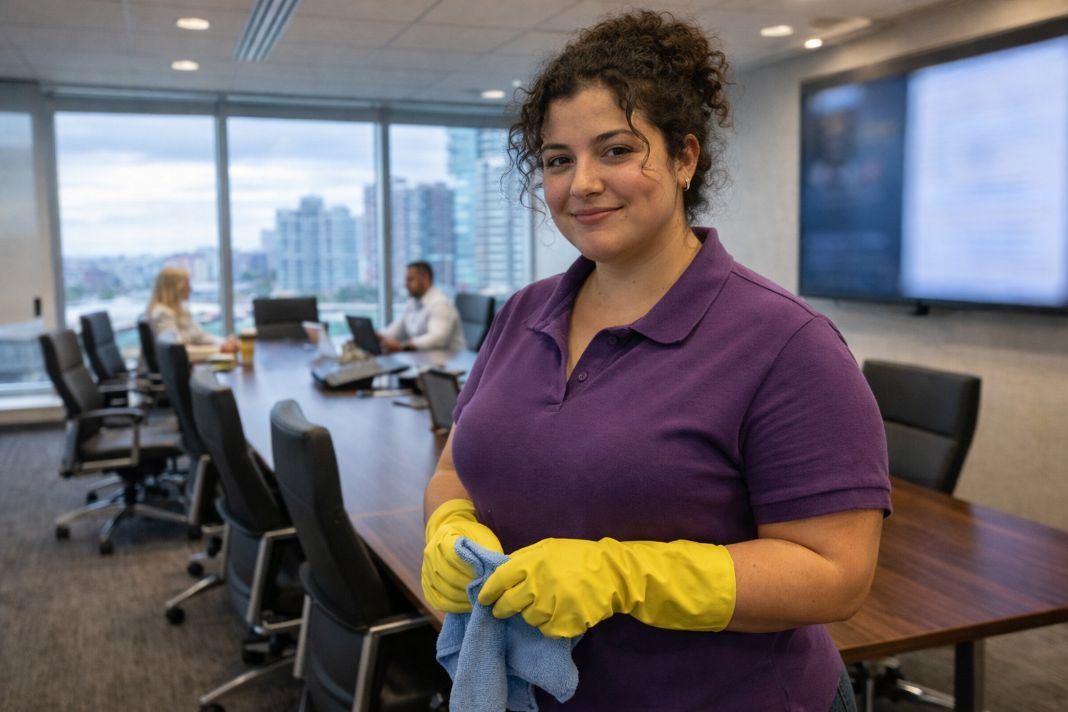
A representative image of a cleaner cleaning offices
What Do We Cover In This Article?
Hidden sources of stale odours in office environments
A common example is the meeting room that smells musty every morning despite being cleaned each evening. The table may be spotless, but the smell may be sitting in fabric chairs, closed blinds, carpet fibres or poorly moving air.
Several office odour sources stay out of sight:
- Soft furnishings, including carpets, upholstered seating and acoustic panels, can hold food smells, moisture and general use over time.
- HVAC systems and air ducts can circulate stale air if filters are overdue for attention or if airflow is uneven.
- Bins and waste storage points, especially in communal kitchens, can retain smells even after liners are changed.
- Dampness around window seals, service risers or poorly ventilated corners can create a persistent stale note.
- Shared spaces, such as print areas, breakout zones and locker rooms, often gather odours from heavy daily use.
Building age can play a part as well. Older materials sometimes retain smells more readily, and some offices have layouts that trap air in corners or internal rooms. Newer buildings can have their own issue if they are tightly sealed and depend heavily on mechanical systems that are not adjusted well.
Communal kitchens deserve special attention. Fridge spills, food left overnight, coffee grounds in sink traps and overflowing recycling can create an odour that drifts far beyond the kitchen itself. By the time staff notice the smell near the reception desk, the source may be two rooms away.
Pro Tip: Use scheduled deep cleaning of soft furnishings and carpets to address stubborn odours that routine surface cleaning cannot reach.
The role of ventilation and airflow in office freshness
An office works a bit like a closed container if the air inside does not move properly. Cleaning can remove dirt and residues, but trapped air still carries yesterday’s lunch, damp fabric and stale background smells.
Natural ventilation relies on openings such as windows or vents that let indoor and outdoor air exchange. Mechanical ventilation relies on HVAC systems to move, filter and replace air. Both approaches can work well if they are suited to the building and maintained properly.
Poor airflow usually shows up in familiar ways. Internal meeting rooms smell stuffy after short use. Air conditioned areas feel cold but still seem stale. Rooms with sealed windows hold odours for longer because there is little natural air exchange.
The HSE expects employers to provide a reasonable supply of fresh or purified air in enclosed workplaces. Building regulations and system design also shape how much air movement a space gets in practice. The technical side can become detailed, but the practical point is simple: if air is not being replaced or circulated properly, smells settle and linger.
Good ventilation tends to dilute odours before they build up. Weak ventilation allows them to collect in fabrics, corners and shared spaces. That is why a well-cleaned office can smell worse on a warm afternoon than it did first thing in the morning.
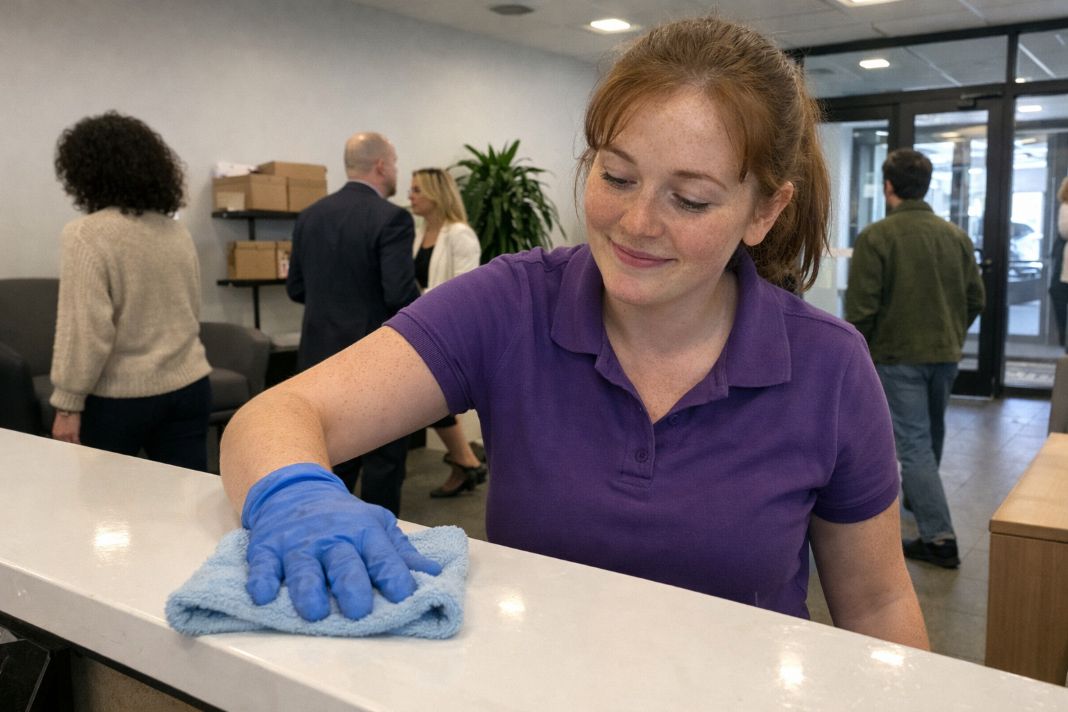
A representative image of a cleaner dusting a reception desk
Cleaning products and methods: are they enough?
Cleaning products do different jobs, and office odour removal depends on using the right method for the right problem. A pleasant fragrance after cleaning does not always mean the source of the smell has gone.
Three distinctions matter here:
- Cleaning removes visible dirt, dust and some residues from surfaces.
- Sanitising or disinfecting reduces contamination on touchpoints, depending on the product and method used.
- Deodorising deals with smell, either by neutralising it or by covering it temporarily.
Air fresheners and fragranced products can make a room seem fresher for a while. If the actual source sits in a carpet, drain, bin housing or ventilation unit, the smell often returns once the fragrance fades. Deep cleaning can help in some cases, especially where soft surfaces or hidden residues are involved, but deep cleaning alone cannot correct poor airflow or recurring damp.
Standards-led cleaning is useful because it brings consistency. The British Institute of Cleaning Science promotes clear methods, correct product use and attention to areas that are often missed in quick routines. In practice, structured providers such as Double Check Security Group tend to approach cleaning schedules with that kind of discipline, which means that the work is less likely to focus only on visible surfaces.
Frequency matters too. A nightly clean may be suitable for desks and washrooms, yet communal kitchens, break areas and bins may need checks during the day. One office may need periodic carpet extraction, while another may need closer attention to washroom ventilation and floor drains. The method has to match the building and how people use it.
Pro Tip: Regularly review HVAC system maintenance records to ensure ventilation units and filters are supporting healthy airflow.
The impact of occupant behaviour and office culture
By lunchtime, even a well-maintained office can start to smell tired if daily habits pull in the other direction. Food eaten at desks, half-emptied mugs, gym bags under tables and overloaded bins all affect the atmosphere long before the evening cleaning team arrives.
Office odour causes often sit in routine behaviour rather than neglect. Staff may leave leftovers in the fridge for a few days without thinking much of it. Recycling bins may contain rinsed containers one week and sticky takeaway packaging the next. Shared equipment, including microwave handles and fridge doors, can stay hygienic enough on the surface but still collect smells from repeated use.
A few common habits usually have the biggest effect:
- Eating hot food at desks or in enclosed meeting rooms
- Leaving rubbish in personal bins overnight
- Storing damp coats, umbrellas or sports kit indoors
- Using shared kitchens without wiping spills or clearing food waste promptly
Workplace culture shapes whether these habits become normal. Facilities management can provide bins, cleaning schedules and hygiene reminders, but staff behaviour determines what happens between cleans. A calm policy on desk dining, kitchen use and waste disposal often does more for office freshness than another spray fragrance in the corridor.
The most effective offices tend to treat freshness as part of shared responsibility, in the same way they treat meeting room etiquette or clear walkways.
Book a Professional Office Assessment
Get an expert evaluation of your workplace to address persistent odours and improve air quality.
When to consider professional assessment and remediation
Some odours stay in place no matter how often the office is cleaned. That is usually the point where routine measures stop being enough and a more structured assessment becomes worthwhile.
Persistent signs are often fairly clear:
- The smell returns within hours of cleaning.
- One room or zone always smells worse than the rest.
- Staff notice the issue more strongly during warm weather or after the heating or cooling system starts.
- Nobody can identify a clear source from normal housekeeping checks.
A professional site cleaning survey can separate surface issues from building issues. That may involve reviewing cleaning schedules, inspecting washrooms and kitchen areas, checking waste handling, looking at ventilation performance and noting signs of damp or trapped moisture. In some cases, the answer is a cleaning adjustment. In others, the source sits in maintenance, layout or air handling.
Integrated facilities management can be useful here because odours rarely belong to one department alone. Cleaning, HVAC maintenance, waste arrangements, compliance checks and building use all overlap. Providers with structured systems, including those operating under ISO 9001 or SAFEcontractor standards, often assess the problem in that wider context instead of treating it as a simple fragrance issue.
Double Check Security Group is one example of a provider working within that compliance-led model, where cleaning and facilities services are handled through clear scopes, regular oversight and site-based review. That kind of approach is less about quick fixes and more about identifying why the smell keeps returning in the first place.
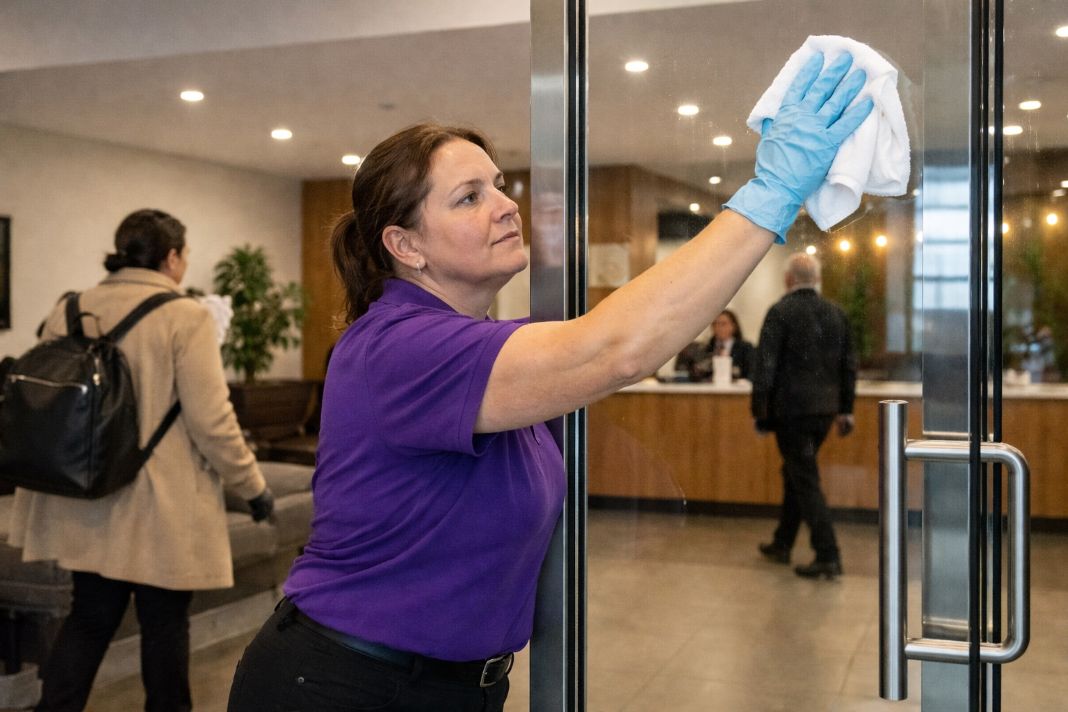
A representative image of a cleaner polishing a building door
Rethinking office freshness: beyond cleaning alone
A fresh office is usually the result of several ordinary things being managed well at the same time. Cleaning matters, although airflow, moisture control, waste handling and office habits matter just as much.
Quick fixes can change the smell of a room for an hour or two, but office freshness tends to come from steady attention. Facilities management frameworks, Once that idea is clear, stale air becomes easier to deal with. The issue stops looking like a mystery or a failure of the cleaners and starts looking like what it often is, namely a building and behaviour problem with practical answers.