

How do you brief your cleaning team so the building is cleaned to the standard you actually expect?
You brief a cleaning team properly by defining outcomes, not vague tasks. A useful brief explains what good looks like in that building, which areas matter most, what standards apply, how often work should happen, and how performance will be checked over time.
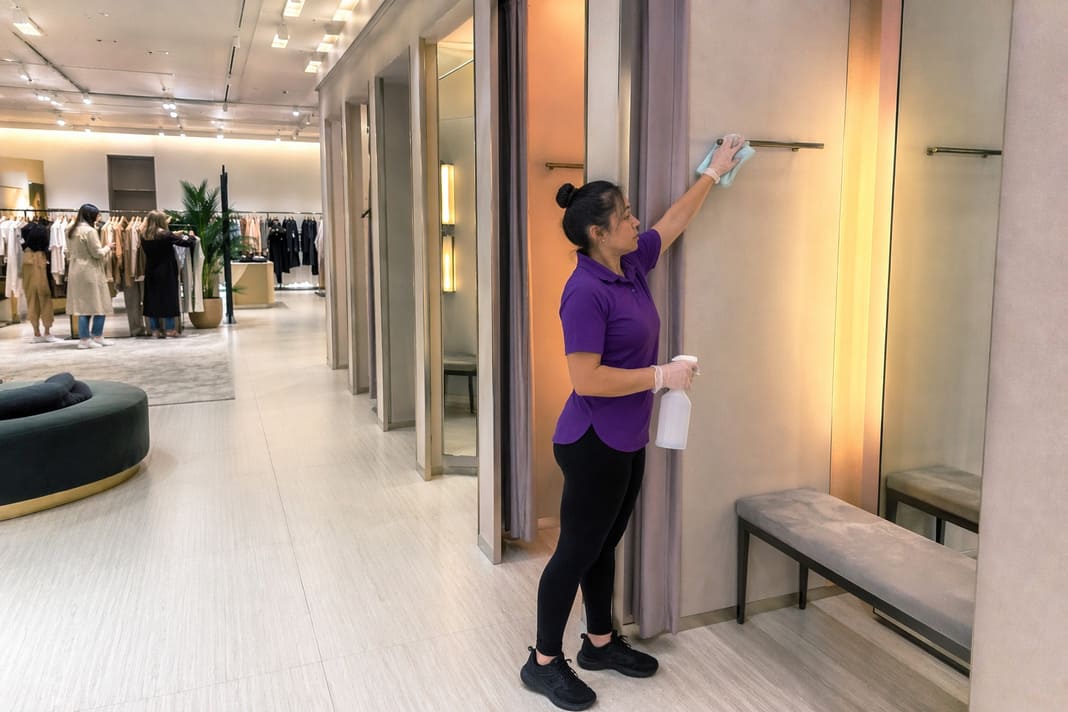
Retail Cleaning Services In A Luxury Fitting Room Area – sample image
What Do We Cover In This Article?
The Real Difference Between Instructions and Outcomes
You ask for the toilets to be cleaned twice a day, the reception floor to be mopped, and the meeting rooms to be reset before 9am. The team follows the list. By lunchtime, the building still feels wrong.
Reception smells of stale rainwater because the entrance mat was left saturated. Finger marks remain on the glass doors. A bin in a client-facing corridor was emptied, yet the lid was not wiped and the surrounding skirting was dusty. On paper, the cleaning instructions were completed. In practice, the cleaning outcomes missed the mark.
That gap usually has less to do with effort than with briefing gaps. A generic checklist tells people what to touch, but it rarely explains the operational context. A front-of-house area in a corporate building has a different standard from a back-of-house storage room. A washroom used by visitors needs a different level of attention from one used occasionally by staff. If those differences stay in someone’s head instead of going into the brief, expectation and reality drift apart very quickly.
Common sense also gets overstated. One supervisor may think a floor is clean once it is visibly dry. A facilities manager may expect edges, thresholds, lift buttons and door plates to be addressed as part of the same task. Unless building cleaning standards are defined clearly, both sides can believe they are being reasonable and still end up talking about different results.
Organisations that work to recognised frameworks, including British Institute of Cleaning Science guidance or ISO 9001 style quality processes, tend to reduce that ambiguity by documenting standards instead of relying on memory. That is usually where more consistent delivery begins.
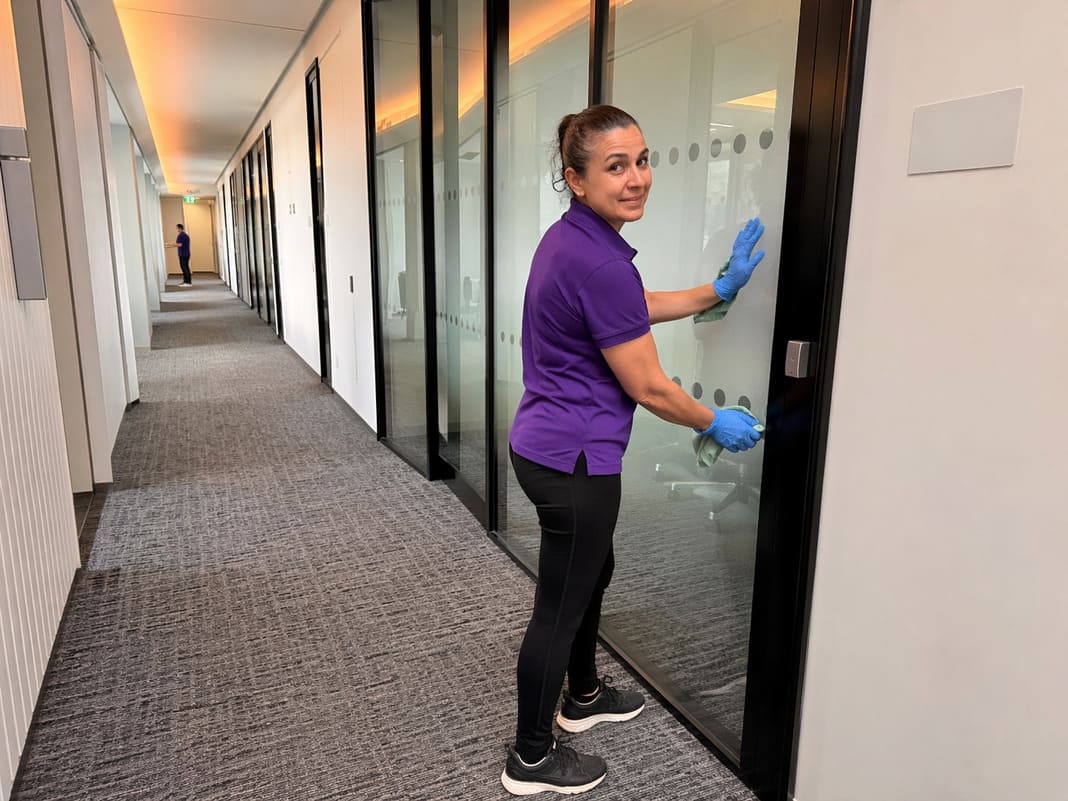
Office Cleaning Services In A Commercial Corridor – sample image
The Problem with Assuming Cleaning is Self-Explanatory
Commercial cleaning is often treated as if it were obvious. The trouble starts the moment two rooms that look similar have different hygiene requirements, different occupancy patterns, or different rules on access and waste handling.
A shared kitchenette offers a simple example. One site may need a basic daily clean. Another may require food-contact surfaces to be treated in a particular way, spill response to happen immediately, and waste to be removed before odour becomes an issue in an enclosed office environment. A brief that says “clean the kitchen daily” leaves too much open to interpretation.
Compliance sits in that space between assumption and detail. Health and Safety Executive expectations, internal facilities management protocols, and building hygiene standards all depend on tasks being carried out in the right way, at the right time, in the right areas. Missed touchpoints, poor product selection, or incomplete records can create problems that are operational before they become visible.
Site-specific cleaning also carries risks that do not announce themselves. A medical consultation room, a gym changing area, a loading bay, and a luxury reception all have different cleaning challenges. Treating them as variations of the same chore weakens standards long before anyone raises a formal complaint, and that is often how cleaning risk management slips into reactive mode.
The Role of Scope, Standards and Site-Specific Briefs
A reliable cleaning brief starts with scope. That means defining exactly what is included, how often it is cleaned, what standard applies, and which parts of the building carry greater risk or visibility.
Generic wording creates generic results. If a brief says “clean all floors”, one team may vacuum open areas and leave under desks untouched. Another may spot clean stains but skip edges and corners. A site-specific cleaning scope would separate carpeted offices from hard-floor entrances, note peak traffic times, identify weather-related issues at access points, and state whether furniture movement is included. The difference is not administrative fussiness. The difference is whether the building cleaning requirements can actually be delivered in a consistent way.
Building type shapes the brief just as much as square footage. A residential block may need close attention to lift interiors, bin stores and entrance glazing. A retail unit may prioritise trading hours, customer-facing washrooms and fast response to spillages. An industrial site may place more emphasis on welfare facilities, dust control and safe cleaning around operational areas. Once usage and risk profile are built into the documentation, the brief starts to reflect the site instead of a template.
Formal standards help here because they create a repeatable way to define and review work. ISO 9001, for example, is often associated with quality management because it pushes organisations to document processes, monitor delivery and correct drift. In practice, that can mean cleaning schedules that match actual occupancy, written descriptions of expected results, and recorded checks against agreed standards. Providers such as Double Check Security Group commonly formalise cleaning scope in that way so site teams, supervisors and clients are working from the same version of the job, not three slightly different interpretations.
Documentation also protects the relationship. Ad hoc requests have a habit of becoming permanent expectations, even when nobody has updated the scope of works. A written brief makes it easier to distinguish between routine delivery, periodic tasks and one-off requirements, which is especially important in mixed-use buildings where standards vary from floor to floor.
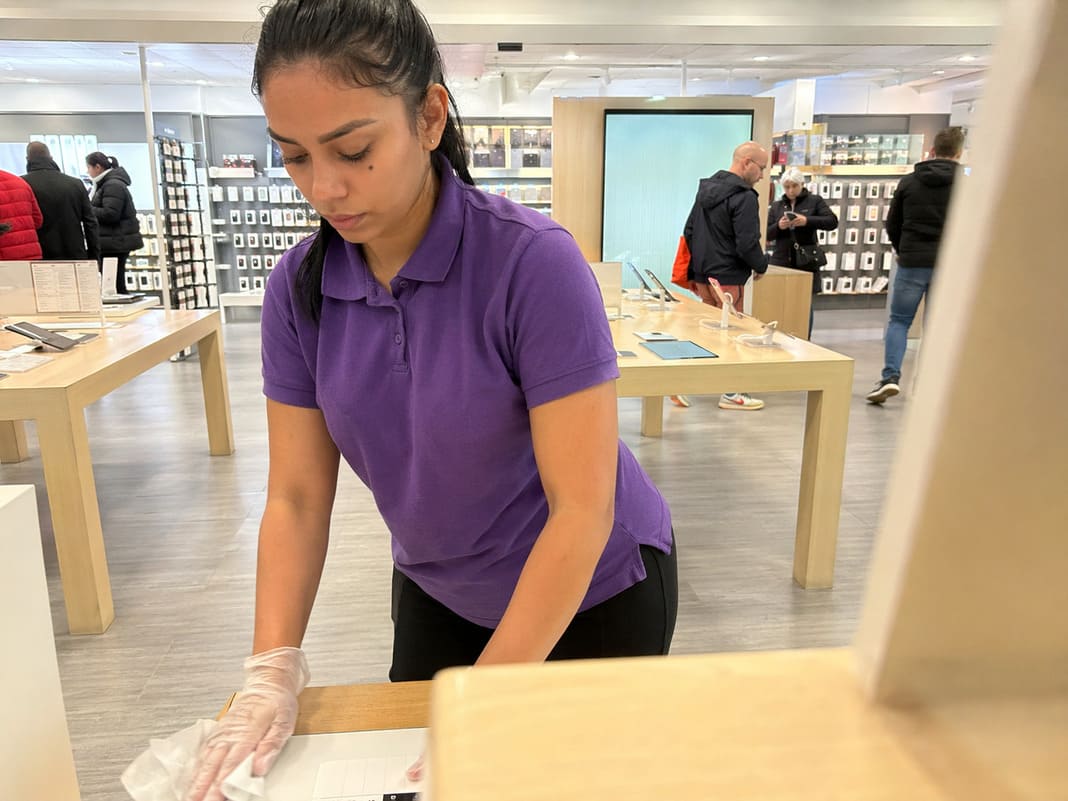
Retail Cleaning Services In A Store Display Area – sample image
The Importance of Communication, Induction and Ongoing Oversight
A new cleaning team arrives on site with the right schedule, the right products and a detailed specification. Even then, the first week can go off course if nobody explains how the building actually runs.
One entrance may be technically accessible at 6am, yet unsuitable for noisy floor work until tenants arrive because deliveries stack up there first thing. A washroom may need checking after a specific meeting cycle rather than at evenly spaced times. A meeting suite may look low priority on paper, but senior visitors may use it without notice. Site induction turns a written brief into a workable one because it adds the local knowledge that documents often miss.
Communication should then continue after day one. Supervisors need a route for clarifying instructions, reporting issues and flagging recurring obstacles such as locked areas, damaged dispensers or unrealistic timings. Facilities managers need a way to feed back on standards before frustration builds. Oversight works best as an operating rhythm, not as a burst of attention after complaints.
That rhythm usually includes spot checks, manager walk-rounds, performance notes and brief review meetings. Where cleaning sits inside a wider contracted service model, the same disciplines seen in regulated service environments, including audit trails and documented supervision, often produce steadier results. The point is accountability, not suspicion. Standards are easier to maintain when people can see what was expected, what happened on site, and what changed after feedback.
Over time, those feedback loops sharpen the brief itself. A recurrent issue with washroom consumables may show that frequency is wrong, not that staff are careless. Repeated concerns about dust in reception may point to HVAC patterns, footfall or timing of cleans. Once supervision captures those patterns, cleaning performance monitoring becomes far more useful than a simple pass or fail check.
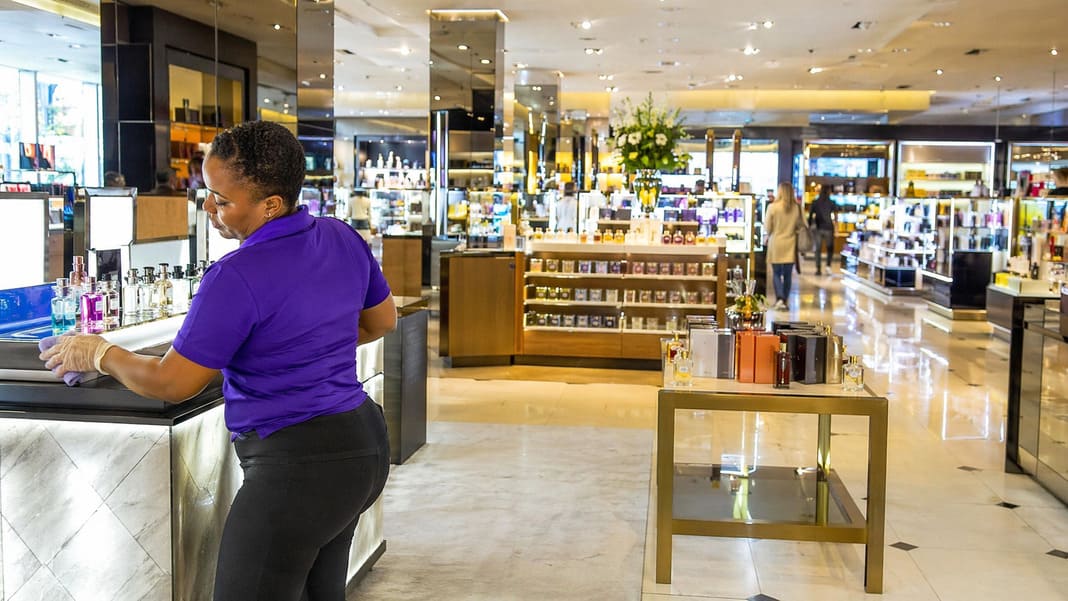
Retail Cleaning Services In A Modern Store Interior – sample image
The Shift Toward Measurable Outcomes and Continuous Improvement
Cleaning management is moving steadily toward measurable outcomes. Clients increasingly want evidence that standards are being met, not a signed sheet that says tasks were attempted.
That shift changes the way briefs are written. A stronger brief does not stop at “clean daily”. It identifies the expected condition of a space, the response time for visible issues, the inspection method, and the record that shows whether standards were achieved. Measurable cleaning standards can include presentation, hygiene, replenishment, periodic work completion and issue resolution, depending on the site.
Auditing is becoming more prominent as well. ISO 9001 style quality systems, SAFEcontractor expectations, and wider compliance cultures have pushed service providers to keep clearer records and review performance more formally. In some settings, broader security and resilience concerns also influence building operations, which means that access, incident logging and site discipline sit closer to cleaning delivery than they once did. Action Counter Terrorism awareness, for instance, has encouraged many organisations to think more carefully about what routine site activity should look like and how exceptions are noticed and reported.
Over the next 12 to 24 months, facilities managers are likely to place more weight on traceable cleaning outcomes, cleaner audit trails and briefs that can adapt quickly as occupancy, compliance requirements and building use change. The teams that perform best will usually be the ones working from precise site briefs, documented standards and a review process that keeps pace with the building itself.
