

What is keyholding and alarm response, and does your business need it?
Keyholding means a trusted security provider securely controls access keys or access devices for your premises. Alarm response means an authorised person attends after an alarm activates. Your business needs it when staff attendance would be unsafe, unreliable, poorly recorded or out of line with monitored alarm requirements.
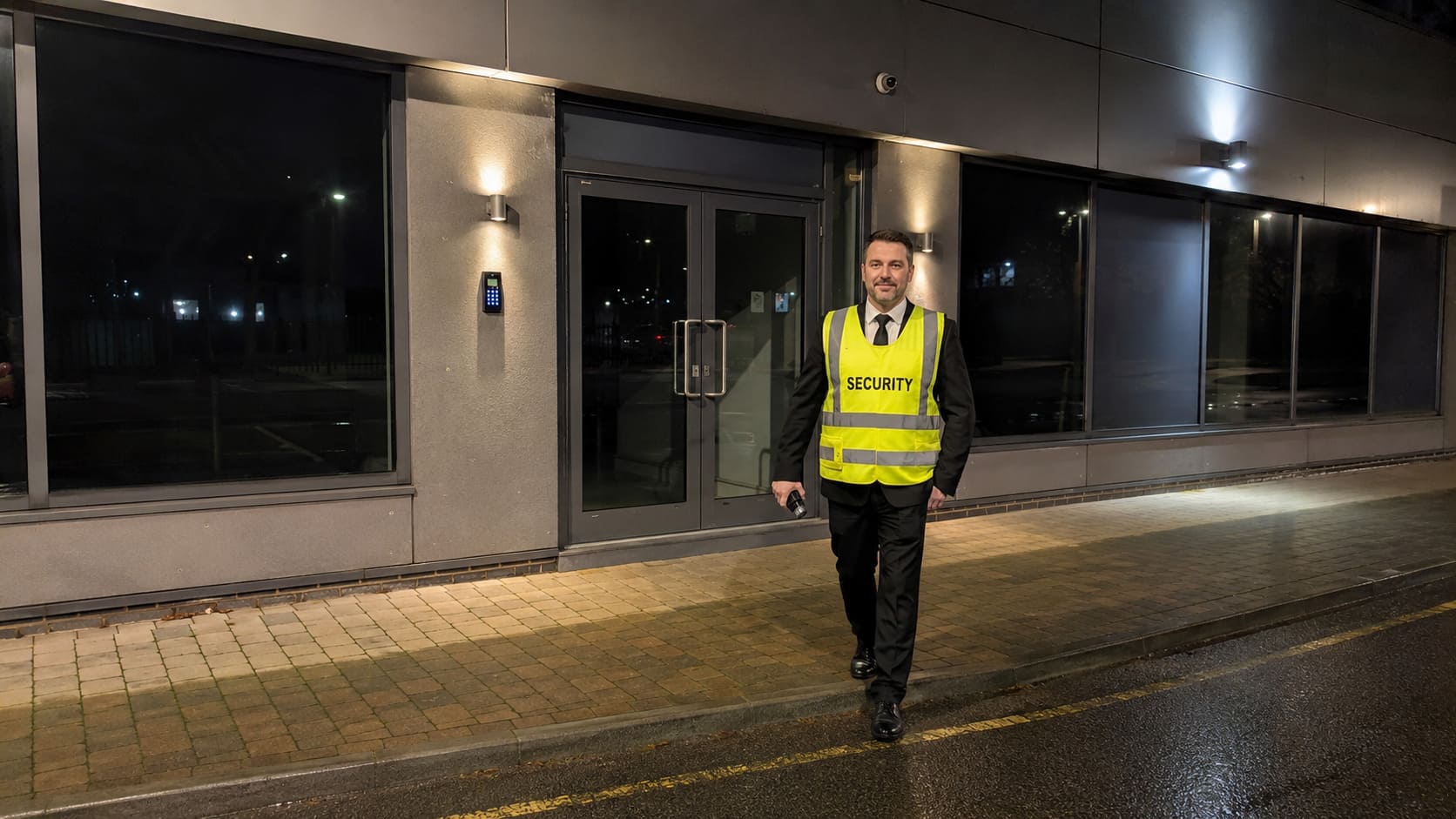
Security officer outside a commercial building at night – Illustrative Image
What Do We Cover In This Article?
Keyholding, alarm monitoring and police response are separate jobs
Most businesses buy an alarm and assume the problem is solved. The device detects an event, but the real operational question is who attends, what they are allowed to do, and what record is made afterwards.
Alarm monitoring is the signal-handling part. An Alarm Receiving Centre, or ARC, receives alerts from a monitored alarm system and follows agreed call procedures. That does not automatically mean a trained person will attend your premises with keys.
Keyholding is different. The Security Industry Authority, or SIA, describes keyholding as security work involving “keeping, or controlling access to, any key or device for operating a lock”. In plain terms, the provider has controlled access and can act as the nominated keyholder under the contract.
Alarm response is the attended part. A responder goes to site after an activation, checks what has happened within their instructions, secures the premises where needed and reports back. An alarm can alert; it cannot attend.
Police response sits in a separate lane again. Under National Police Chiefs’ Council, or NPCC, guidance, Level 1 police response will normally be immediate, but it still depends on demand, priorities and resources at the time. Level 3 means no police attendance and keyholder response only. That distinction matters when you are deciding whether staff, police, an alarm company or a professional keyholding provider is actually covering the risk.
A key safe may give access in some arrangements, but it is not the same as an accountable responder who is trained, authorised and recorded. Double Check Security Group treats monitoring, access control, keyholding and attended response as linked parts of one response chain, which is the right way to think about the service if you manage a commercial site.
How the alarm response chain actually works
An alarm activates after closing, the ARC receives the signal, and the nominated responder is contacted. From that point, a good alarm response service follows the instructions agreed before the alarm ever sounded.
A weak arrangement leaves a manager working it out at midnight. A controlled one gives the responder the site access details, alarm reset rules, escalation contacts and authority limits before they arrive.
The monitoring trigger
The first trigger is the alarm signal. The ARC handles the alert and works through the agreed call route. Depending on the alarm type and contract, that route may involve a nominated keyholder, a security officer, an escalation contact or emergency services.
Good instructions avoid delay at this point. The ARC needs correct contact details, and the responder needs a clear match between the alarm location and the access arrangements. On a multi-site portfolio, vague site naming alone is a common cause of confusion, especially where units share entrances, yards or service corridors.
The attendance decision
Attendance is where keyholding moves from administration into risk control. The responder needs to know where to enter, what areas can be checked, how to treat signs of damage and who authorises further action.
BSI says BS 7984-1:2016 covers recommendations for keyholding and response services, including attendance requests, site attendance, locating causes of security and safety alarms, making premises secure and preserving possible evidence. That wording shows why the service is wider than keeping keys in a cabinet.
Double Check Security Group’s control centre support and site instruction process are relevant here because the value lies in pre-agreed decisions. If a responder finds an open door, a damaged lock or a fault that will not reset, the contract should tell them who gets told and how the incident is recorded.
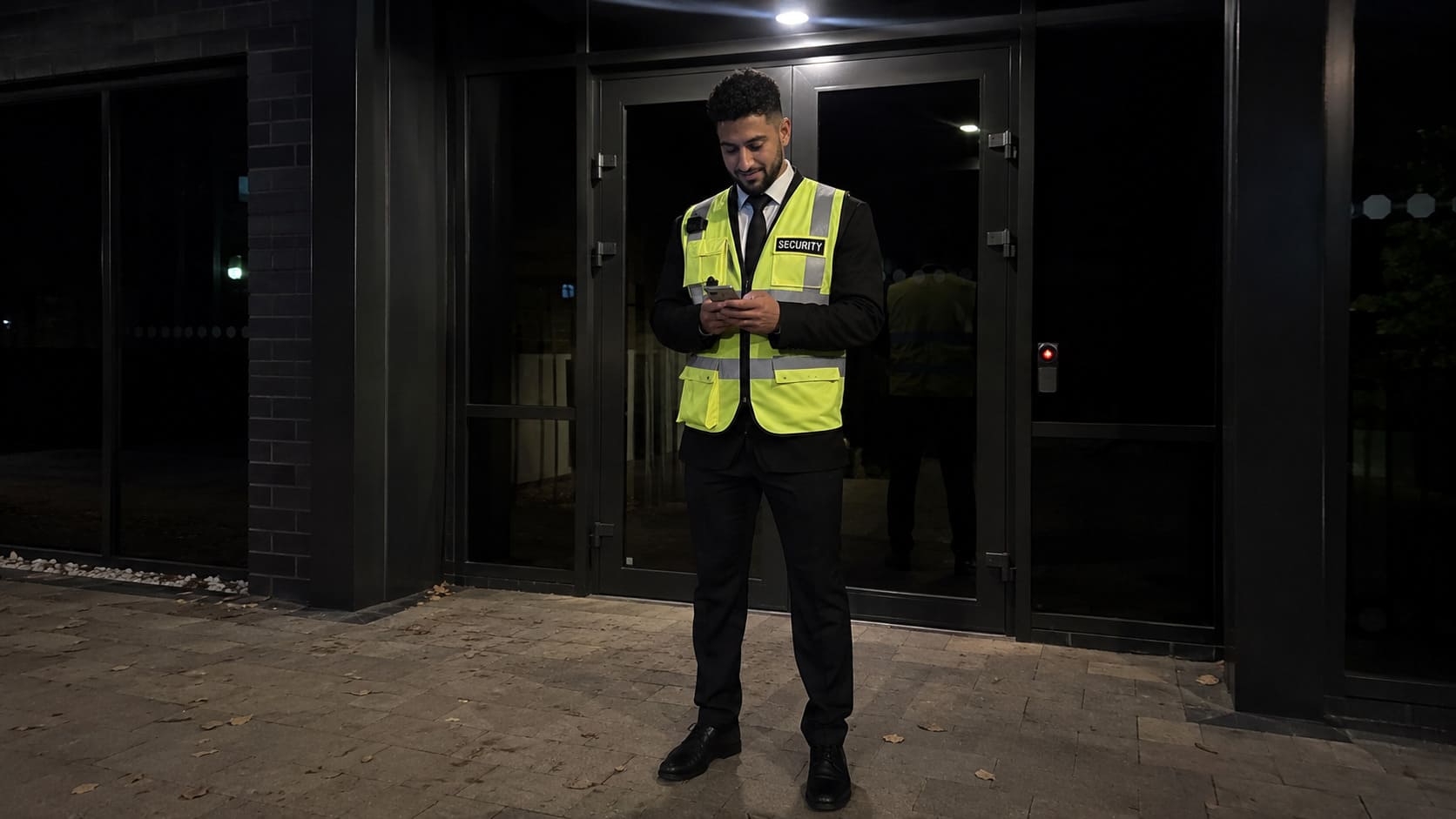
Security officer monitoring a commercial entrance at night – Illustrative Image
The clearest signs your business needs professional response
Ask one blunt question first: would the person attending your alarm be safe, close enough, properly authorised and able to leave a useful record? If the answer is weak on any of those points, professional keyholding and alarm response deserves serious attention.
The level of need varies by site. A low-risk premises with reliable internal cover has a different profile from a retail unit with stock, a residential block with shared access, or a vacant site where nobody is nearby after hours.
| Situation | What it means | Likely level of need |
|---|---|---|
| Staff or directors attend alone out of hours | The person is walking into an unknown situation without support | High |
| Monitored Type A alarm system | NPCC rules place clear demands on named keyholders | High |
| Multiple premises or changing occupiers | Access details, contacts and alarm instructions drift unless managed | High |
| Vacant unit or site with limited daily oversight | Small faults can sit unnoticed after an activation | High |
| Regular out-of-hours contractor access | Keys, permissions and lock-up records need control | Medium to high |
| Simple site with reliable trained internal cover | Internal keyholders may be enough if records and attendance are dependable | Lower |
For NPCC Type A systems, premises must have at least two keyholders whose details are maintained by the monitoring centre. Those keyholders are expected to be contactable by phone, have transport, have access to the relevant parts of the premises and attend within 20 minutes of notification. NPCC guidance also says a keysafe is not an acceptable alternative for this purpose.
False alarms need the same discipline. Repeat false calls can affect whether police keep responding to an intruder alarm system, so the person attending needs to do more than silence a panel. They need to help identify what happened, report it clearly and feed the right information back to whoever maintains the system.
Insurance belongs in the conversation, but it should not be turned into a sales myth. Some policies or brokers may expect clear response arrangements. The sensible move is to align the service with those expectations and keep the paperwork clean.
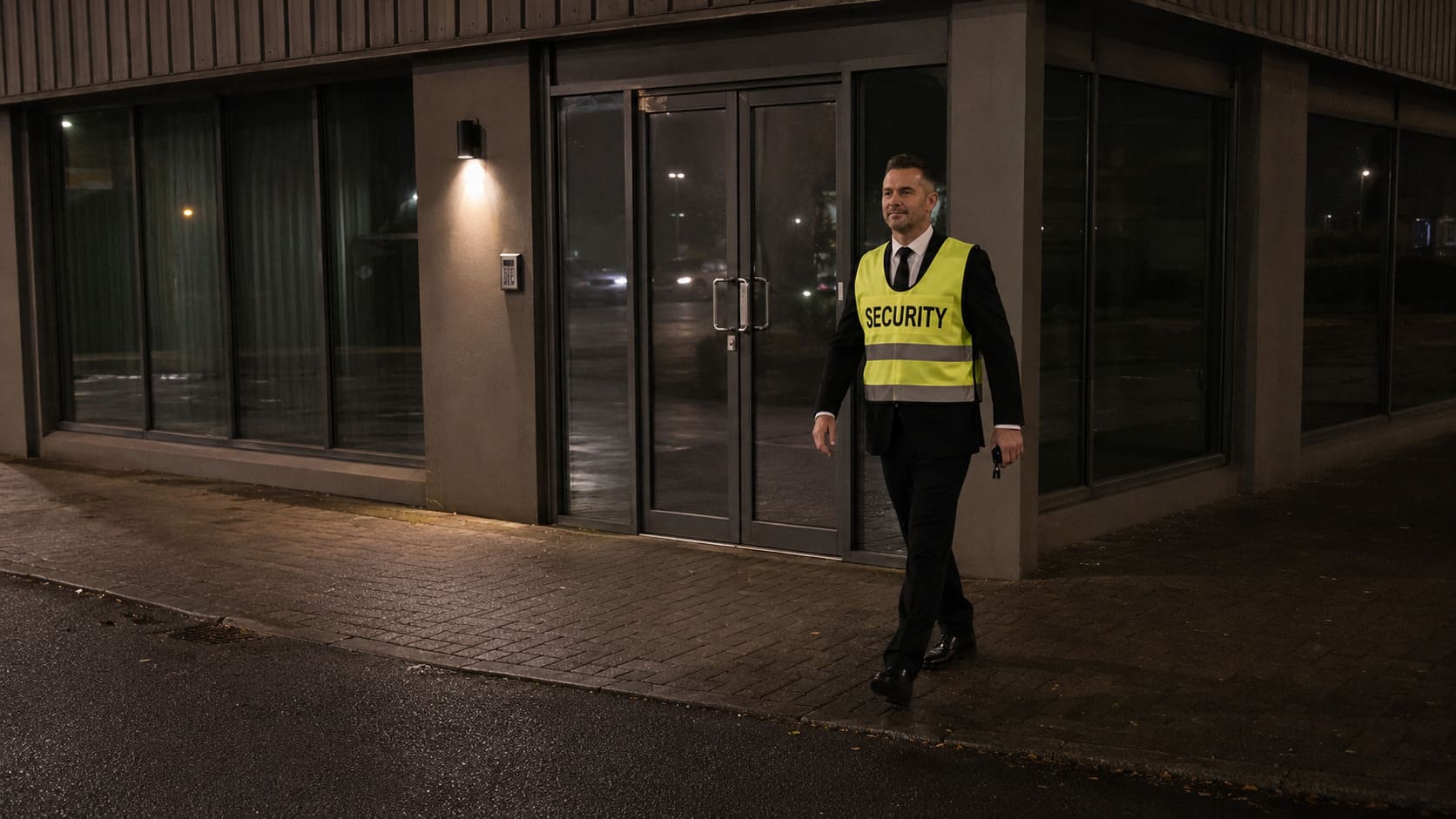
Security officer attending a closed building after dark – Illustrative Image
A good provider leaves an audit trail
The service is only as strong as the control around it. If keys move without a clear record, site instructions sit out of date, or incident reports arrive as vague notes, the business has bought activity rather than control.
A competent keyholding provider should be able to show the records and instructions that sit behind attendance. Look for practical controls such as:
- Key register and issue controls. Keys and access devices need a recorded chain of custody, with clear rules for access and return.
- Site instructions that explain entry points, alarm reset rules and areas that can be checked.
- Escalation contacts. The responder needs named contacts for security issues, building faults and urgent site decisions.
- Incident reports that record what activated, what was checked and what follow-up is needed.
- Contractor access permissions, especially where cleaning, maintenance or facilities work happens outside normal hours.
- Evidence handling instructions where damage, forced entry or suspicious activity is found.
Licensing and standards should also be read properly. Contracted private security work generally needs an SIA licence where it involves a licensable activity, and keyholding is listed as one. BS 7984-1:2016 gives recommendations for how keyholding and response services are managed and operated, but it should not be blurred with SIA approval or any other accreditation.
Good paperwork is not bureaucracy for its own sake. It is how a property manager proves what happened at a site when nobody from the business was there to see it.
The long-term test is resilience, not convenience
Over the next 12 to 24 months, informal alarm response arrangements will look weaker as businesses connect more systems and expect cleaner records across security, facilities, access control and CCTV. The issue is moving from who has the spare keys to who owns the response process.
Staff rotas change. Sites are added, vacated or refurbished. Access codes are replaced, locks are changed and contractor patterns shift. A response model built around one reliable manager can work for a while, then fail quietly when that person is unavailable or the site no longer matches the old instructions.
Professional keyholding is worth paying for when it gives your business a repeatable answer to three questions: who attends, what authority they have and what record comes back. That test will matter more as premises security becomes more connected and less forgiving of gaps between systems, people and paperwork.
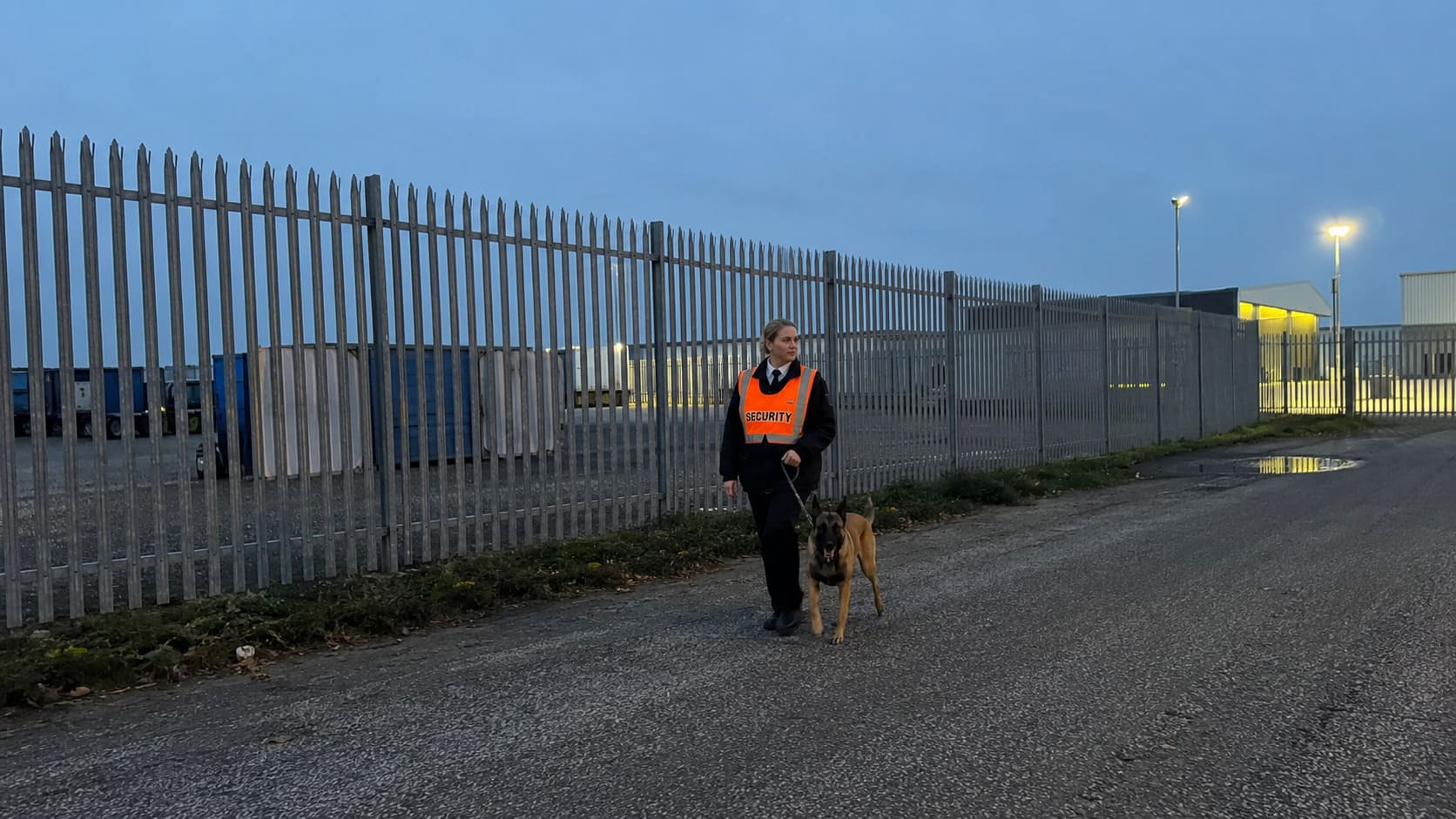
Security officer checking an industrial site perimeter – Illustrative Image
Common questions about keyholding and alarm response
Is keyholding the same as alarm response?
Keyholding means secure control of keys or access devices. Alarm response means attending the premises after an activation, so the two services are linked but separate.
Do you still need keyholding if your alarm is monitored?
A monitored alarm means an ARC receives the signal and follows the agreed call route. You still need a named, workable attendance arrangement if someone has to access, check or secure the site.
Can police respond to a business alarm?
Police response depends on the alarm system status and the circumstances at the time. It should not be treated as a replacement for a reliable keyholder or professional alarm response arrangement.
Is a key safe enough for a commercial alarm response plan?
A key safe can support access in some practical situations, but it does not replace a trained responder with authority, instructions and reporting duties. For NPCC Type A systems, a keysafe is not accepted as an alternative to the required keyholders.
What should an alarm response report include?
A useful report should state the time of attendance, what triggered the callout, what was checked, what action was taken and what follow-up is needed. The report should be clear enough for someone who was not on site to make the next decision.
This is general information, not professional advice.
