

What mistakes in a cleaning specification usually cause poor results?
Poor results usually come from vague standards, task lists with no clear outcome, copied templates that ignore the building, weak accountability, and specs that are either too rigid or too loose. A good cleaning specification sets shared expectations, defines what success looks like, reflects site risks, and leaves no doubt about who checks performance and how changes are managed.

Retail Cleaning Services At A Store Counter Display – sample image
What Do We Cover In This Article?
Disrupt Assumptions About Cleaning Standards Early
Many cleaning specifications go wrong before a contractor has even started. The main reason is simple: people assume everyone means the same thing by “clean” when they do not.
An office manager may expect desks to look presentable by 9am. A facilities management team may focus on washroom hygiene, touchpoints, and documented routines. Staff may notice fingerprints on glass before they notice dust on vents. In a healthcare, retail, or mixed-use setting, those differences become even sharper.
Regulatory minimums matter, but they do not settle every practical question. Sector-specific guidance, internal policies, and recognised approaches from bodies such as the British Institute of Cleaning Science can support consistency, yet they still need translating into site-level performance standards. A specification that says “maintain high cleaning standards” sounds acceptable until one stakeholder reads it as visual tidiness and another reads it as infection control support.
Older documents often make the problem worse. A spec copied from a previous contract may carry vague phrases, outdated frequencies, or assumptions that no longer match the building. Once that language sits in a contract, misinterpretation turns into argument, and argument usually arrives after standards have already slipped.
Specify What Success Looks Like, Not Just Tasks
A task-only spec often sounds organised on paper and feels chaotic in practice. If the instruction says “clean desks daily”, one operative may give each desk a quick wipe, while a manager expects every surface to be free from dust, smears, and visible debris throughout the working day.
That gap matters because tasks describe activity, whereas outcomes describe the standard you expect to see. A performance specification gives inspectors, supervisors, and cleaning operatives the same target. Without that shared target, monitoring becomes subjective and complaints become repetitive.
A stronger line in a spec might say that desk surfaces must be free from visible dust, spills, crumbs, and marks at the agreed inspection time. That wording gives facilities managers something they can check, and it gives the cleaning team a result they can work toward.
Measurable cleaning standards also support service reviews, internal audits, and any wider quality systems linked to frameworks such as ISO 9001. Once outcomes are defined, performance indicators can sit alongside frequencies and methods instead of being treated as an afterthought.
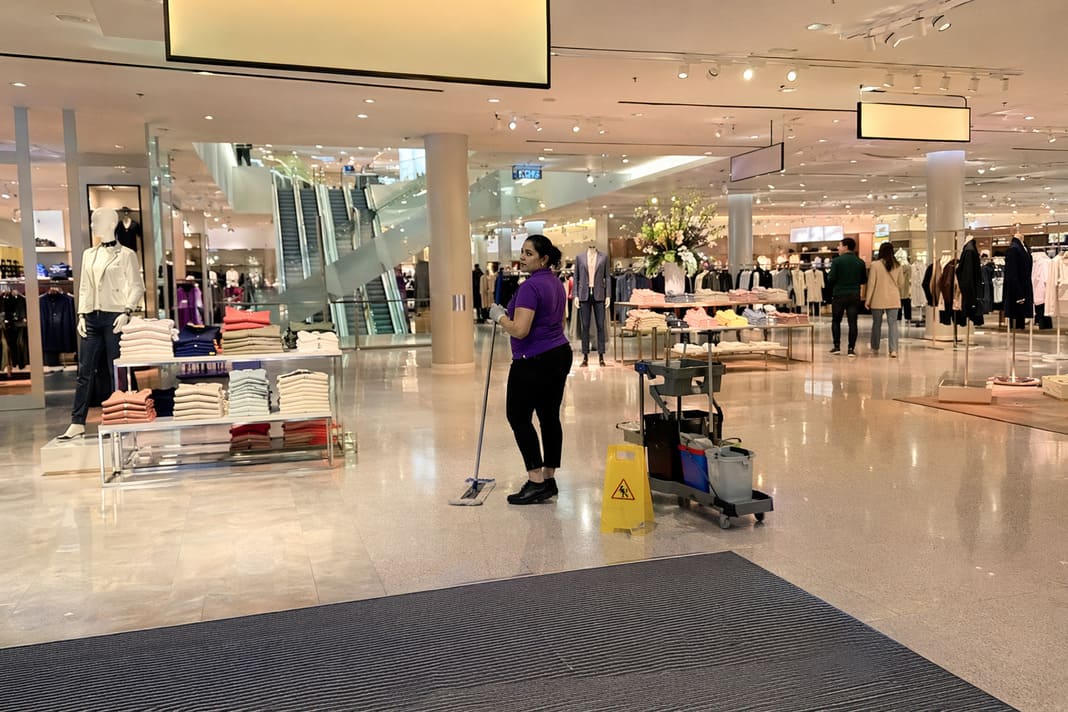
Retail Cleaning Services In A Department Store – sample image
Audit Your Building’s Unique Risks and Needs First
A common mistake looks harmless at first. An office block and a busy retail site end up using almost the same cleaning spec, even though one has predictable weekday occupancy and the other faces changing footfall, weather-related debris, and public-facing washrooms under constant pressure.
That kind of copy-and-paste thinking ignores the operational context that shapes cleaning outcomes. Building layout, traffic flow, opening hours, waste streams, shared amenities, storage space, vulnerable finishes, and health and safety duties all affect what should be cleaned, how often, and to what standard. A proper site audit turns those variables into a usable specification instead of leaving them buried in assumption. Providers with a structured, site-led approach, including Double Check Security Group, tend to build specifications from that audit process rather than from a generic template.
Building-specific factors often include:
- occupancy peaks and quiet periods
- public access, deliveries, and circulation routes
- washroom demand, food areas, and touchpoint density
A document written after walking the site usually reads very differently from one built at a desk, which leads directly to the next issue: who owns the standard once it has been written.

Retail Cleaning Services At A Storefront Entrance – sample image
Define Who Is Accountable, And How They Will Be Measured
A recurring washroom issue can drag on for weeks when nobody owns it properly. The cleaning team says the schedule was followed, the site supervisor says complaints were informal, and the facilities manager assumes someone else is checking quality between monthly reviews.
Shared responsibility sounds collaborative, but it often creates a gap wide enough for poor standards to sit in plain view. A sound specification names roles clearly. It should state who delivers the service, who supervises it, who inspects it, who signs off corrective action, and what happens if standards are missed repeatedly.
Measurement matters just as much as ownership. Ad hoc inspections tend to reflect whoever happens to be looking that day. A better system uses agreed audit points, reporting intervals, escalation triggers, and documented service reviews. Contract management teams do not need legal language on every page, but they do need enough structure to connect performance failures with action.
Some issues also need a faster route than a routine monthly meeting. Overflowing sanitary bins, missed touchpoint cleaning, or a persistent consumables problem should have an escalation process tied to response times and named decision-makers. Otherwise, the same fault can move round the building like a low-level nuisance that never quite gets fixed.
Build In Flexibility for Change, But Don’t Leave Gaps
One spec is so rigid that a building refit throws it off course within days. Another is so loose that changing use of meeting rooms becomes an excuse for lower standards and fewer visits.
Both approaches fail for different reasons. Buildings change. Occupancy patterns shift, fit-outs happen, events increase demand, and emergency protocols can alter access or priorities at short notice. A cleaning spec needs room for change, but that room must be controlled.
Structured flexibility usually means planned review points, a clear amendment process, and a written method for temporary variations. If a floor closes for works or a reception area becomes a high-traffic event space, the spec should show what can be adjusted, who approves it, how long the change lasts, and how performance will still be checked.
Loose wording creates loopholes. Tight wording with no review cycle creates friction. The stronger option sits in the middle: stable core standards, formal review dates, and contingency measures that reflect business continuity policies rather than improvised decisions on a busy afternoon.

Office Cleaning Services In A Corporate Building Lobby – sample image
Contrast Short-Term Fixes With Long-Term Operational Thinking
A hurried spec usually appears after a complaint, a failed audit, or a change in contractor. The document is written to stop one immediate problem, so it focuses on visible pain points and misses the wider pattern.
A long-term operational spec starts somewhere else. It treats cleaning as an ongoing building function with changing demands, trained staff, induction requirements, review cycles, and gradual improvement based on what the site actually shows over time.
That difference affects people as much as paper. Reactive specifications often lead to constant adjustments, frustrated supervisors, and operatives who are judged against standards nobody has defined properly. A more stable brief supports site familiarity, smoother onboarding, and more useful audits because the baseline is clear from the start.
The contrast is easy to spot in practice. One approach rewrites the schedule every time a complaint lands and measures success by whether the noise dies down. The other sets a site-specific standard, reviews it at planned intervals, and improves it with evidence from inspections, feedback, and operational changes. The first may calm a problem for a week. The second usually produces steadier service, better accountability, and fewer unwanted surprises six months later.
