

How much does construction site security cost in the UK?
Construction site security cost in the UK is usually driven by the cover model: manned guarding by the hour, patrols by visit, and monitoring or response by the scope. Indicative market prices put standard guards around £20 to £25 per hour, with full 24/7 single-guard cover far higher.
A site that needs overnight cover has several possible answers. One option is a guard on site. Another is mobile patrols, closed-circuit television, or CCTV, with a response plan. Security dog handling may suit higher-risk periods. Key holding and alarm response may support the plan, but they do not protect a site by themselves unless attendance and escalation are clear.
Indicative UK market guide prices give a useful starting point, although a real construction security quote still needs the site details behind it. Value added tax, or VAT, is excluded where noted below.
| Service type | Typical use on a construction site | Indicative cost context |
|---|---|---|
| Manned guarding | Fixed presence, access control, patrols, handover, incident reporting | Around £20 to £25 per hour for standard non-specialist guarding. Standard guarding is also listed at £19 per hour excluding VAT, or £300 to £500 per day |
| Mobile patrols | Checks during closed periods, smaller sites, support for alarms or CCTV | Around £35 per visit excluding VAT |
| CCTV monitoring | Remote viewing and alarm-led escalation where coverage and lighting suit the site | Priced by site coverage, monitoring needs and response arrangements |
| Security dog handling | Higher-risk guarding where a dog team is appropriate | Around £55 per hour excluding VAT |
| Key holding and alarm response | Managed access and attendance after an activation | Priced by the agreed response scope and attendance model |
| 24/7 single-guard rota | Continuous cover where a site cannot be left unattended | Around £13,000 per month excluding VAT |
Those numbers explain why a cheap hourly guard rate is only one line in the budget. Cover hours, response, supervision and the work the guard is expected to do decide whether the number is useful.
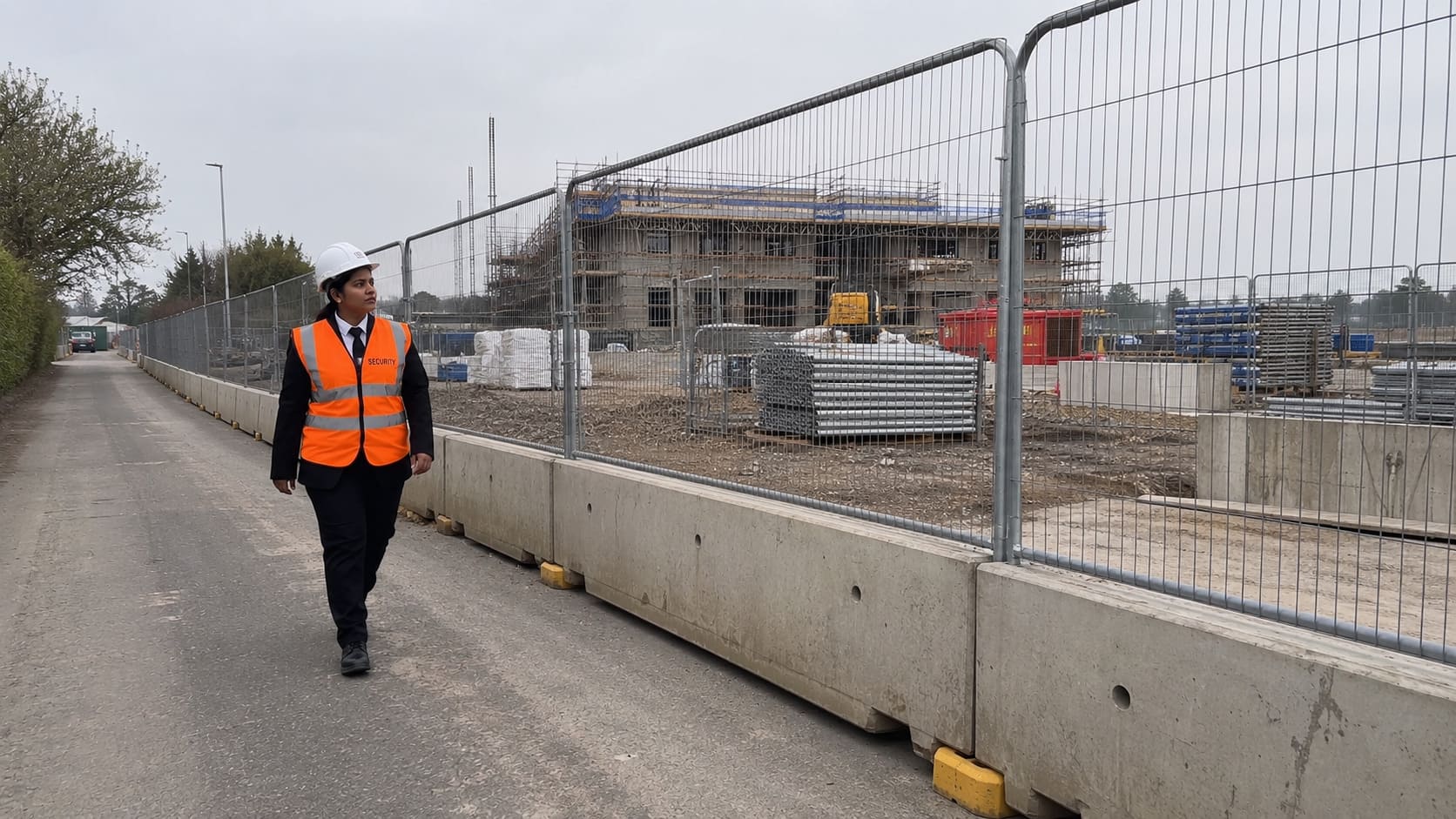
Security officer patrolling a fenced construction perimeter – Illustrative Image
What Do We Cover In This Article?
Site hours drive the rota
The same address can need a very different security budget at different times of day. A live site during working hours, a locked site overnight and a project needing continuous cover all carry different staffing and response demands.
Live daytime sites
During working hours, security often overlaps with access control. People, vehicles, deliveries and plant movements all need to be handled without slowing the job down. A guard may check who enters, record visitors, manage gate rules and report incidents, but the scope must match how the site actually runs.
The British Security Industry Association says guard force arrangements can vary by site size, with larger sites using permanent guards and smaller sites using a patrol or a designated person with security responsibility among other duties. That matters because a site with one gate and low traffic does not price like a busy multi-access project.
On construction work, Double Check Security Group scopes cover around the risk hours, the assignment instructions and review points instead of treating a site as a generic guarding shift. That approach makes the quote easier to test because the buyer can see what the guard is doing, when cover applies and where responsibility sits.
Dormant overnight sites
After the workforce leaves, the risk changes. Fewer legitimate people are on site, so every movement matters more. Overnight construction site security may need a static guard, mobile patrols, CCTV monitoring, alarm response or a mix of those options.
CCTV can reduce the need for a person to stand on site for every hour, but only if cameras see the right areas, activations go somewhere useful and a response can be sent when needed. Poor lighting, blind spots and vague escalation turn a lower monitoring price into a weak plan.
The best question here is simple: what happens after detection? A camera activation, a patrol finding damage or an alarm sounding has little value unless somebody has clear authority to act.
Continuous cover
Continuous cover is a rota and management issue. A 24-hour site security cost must account for people, handovers, absence cover, supervision and reporting, because one person cannot simply be stretched across every hour of the week.
Larger or higher-risk sites may need a permanent guard presence because access, plant, materials or public interface make gaps unacceptable. Smaller or lower-risk sites may suit a patrol-led model, especially where physical delay measures and alarm response support it.
Security planning should combine deterrence, detection, delay and response. If one of those parts is missing, the quote may still look tidy on paper, but the site has a gap in how incidents are handled.
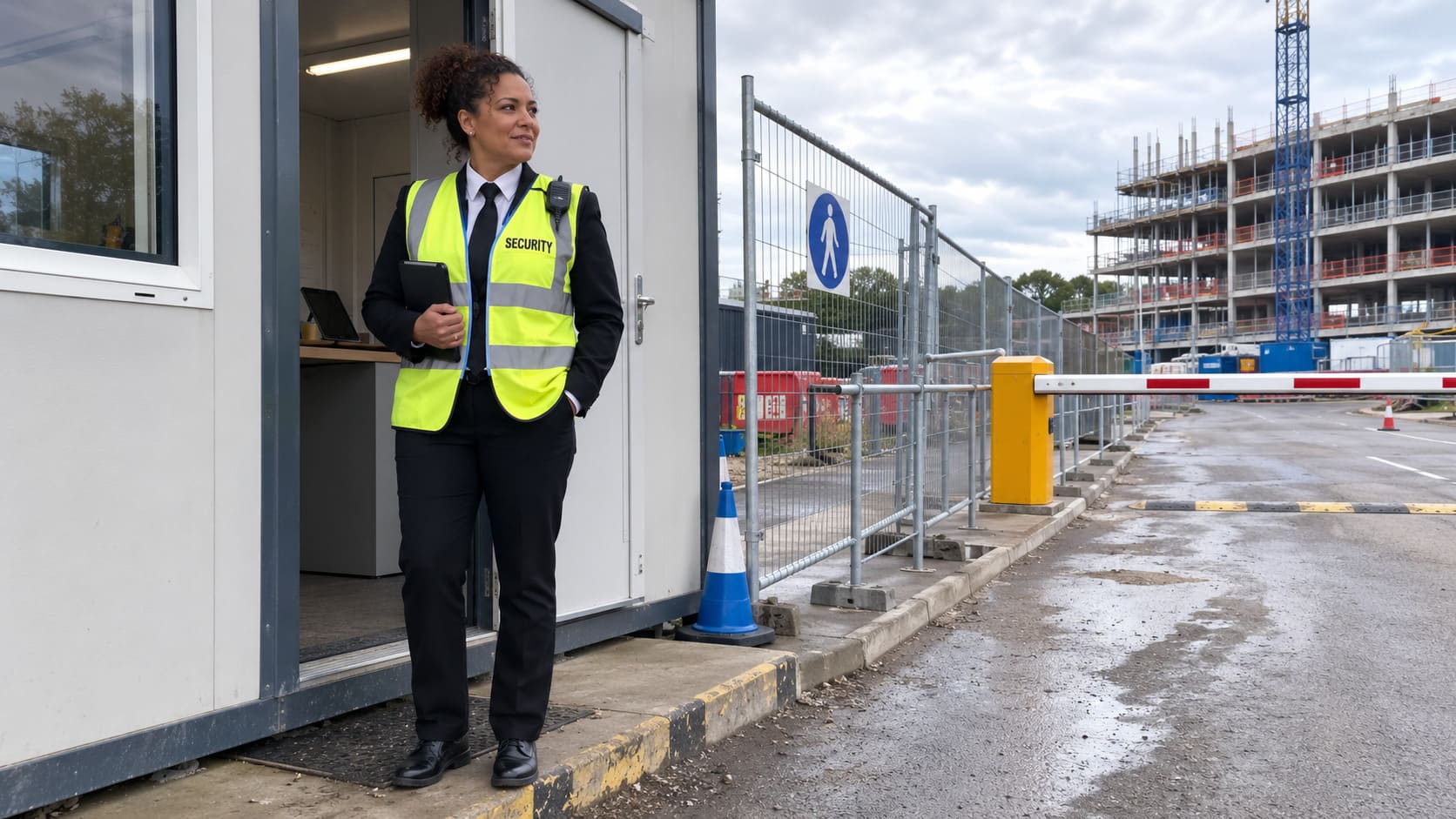
Security officer controlling access at a construction gate – Illustrative Image
Scope creates the real cost
Two quotes can show similar hourly rates and still buy very different services. One may include clear duties, supervision, incident reporting and escalation routes; the other may simply promise a guard at the gate.
A proper scope answers practical questions. Where does the guard patrol? Who can enter? What gets recorded? What happens after an incident? Who reviews missed issues or repeated activations? Price rises when those answers are built into the service, because management time and accountability sit behind the person on site.
A Site Security Policy gives the service a structure. The British Security Industry Association says site security operations should follow a policy owned by the site manager or operator, covering access requirements, guard force powers, responsibilities and acceptance of the policy as a condition of site access. In plain terms, the site rules need to be written down and used.
Licensing also belongs in the price, not as an optional extra. The Security Industry Authority, or SIA, regulates private security licensing, and contract guarding staff deployed on site must hold a current SIA licence. Buyers can also look at the SIA licence register and, where relevant, whether a company holds approval under the SIA Approved Contractor Scheme for the activity being supplied.
Standards may appear in a more developed proposal, especially where guarding, CCTV, access control or alarms are part of the scope. Names such as BS 7499:2007 for static site guarding and mobile patrol services, BS 8418:2010 for remotely monitored and detector-activated CCTV systems, and BS 7958:2009 for CCTV management and operation can signal that the provider is working to recognised disciplines. You do not need to become a standards expert, but you should expect the provider to explain what applies in plain language.
Scope also decides whether CCTV is a sensible saving. A camera tower watching the wrong angle is cheaper than a guard for a reason. Monitoring needs coverage, evidence quality, false alarm handling and a response route, otherwise it is a recording device with a monthly cost attached.
Clear inputs produce clearer quotes
When a provider receives vague site details, the quote has to carry assumptions. Some suppliers price those assumptions high; others leave them out and let the gap appear later.
Before comparing building site security prices, prepare the details that change the plan:
- Site layout and access points. A plan showing gates, boundaries and shared access tells the provider where control is needed.
- Working hours and closed periods. Daytime access control, weekend closure and overnight cover price differently.
- Plant, tools, materials and high-risk areas, especially where loss or interference would stop work.
- Existing alarms, CCTV, lighting and physical barriers. The provider needs to know what already works and what simply looks present.
- Expected response after an alarm, patrol concern or camera activation. A named escalation route avoids guesswork.
- Reporting and review. Daily reports, patrol logs and incident records make it easier to compare what each supplier is actually offering.
A structured quote from Double Check Security Group would usually separate the service type, cover hours, duties, reporting and escalation arrangements so the buyer can compare substance as well as price. That matters because two quotes with the same manned guarding cost can place different levels of responsibility on the provider.
Clear inputs also stop the cheapest supplier from hiding behind vague wording. If the quote says “patrols included”, it should say what kind of patrol pattern is being priced. If alarm response is included, it should say how that response is managed. If a guard is supplied, the assignment instructions should state the duties clearly enough for the site team to hold the service to account.
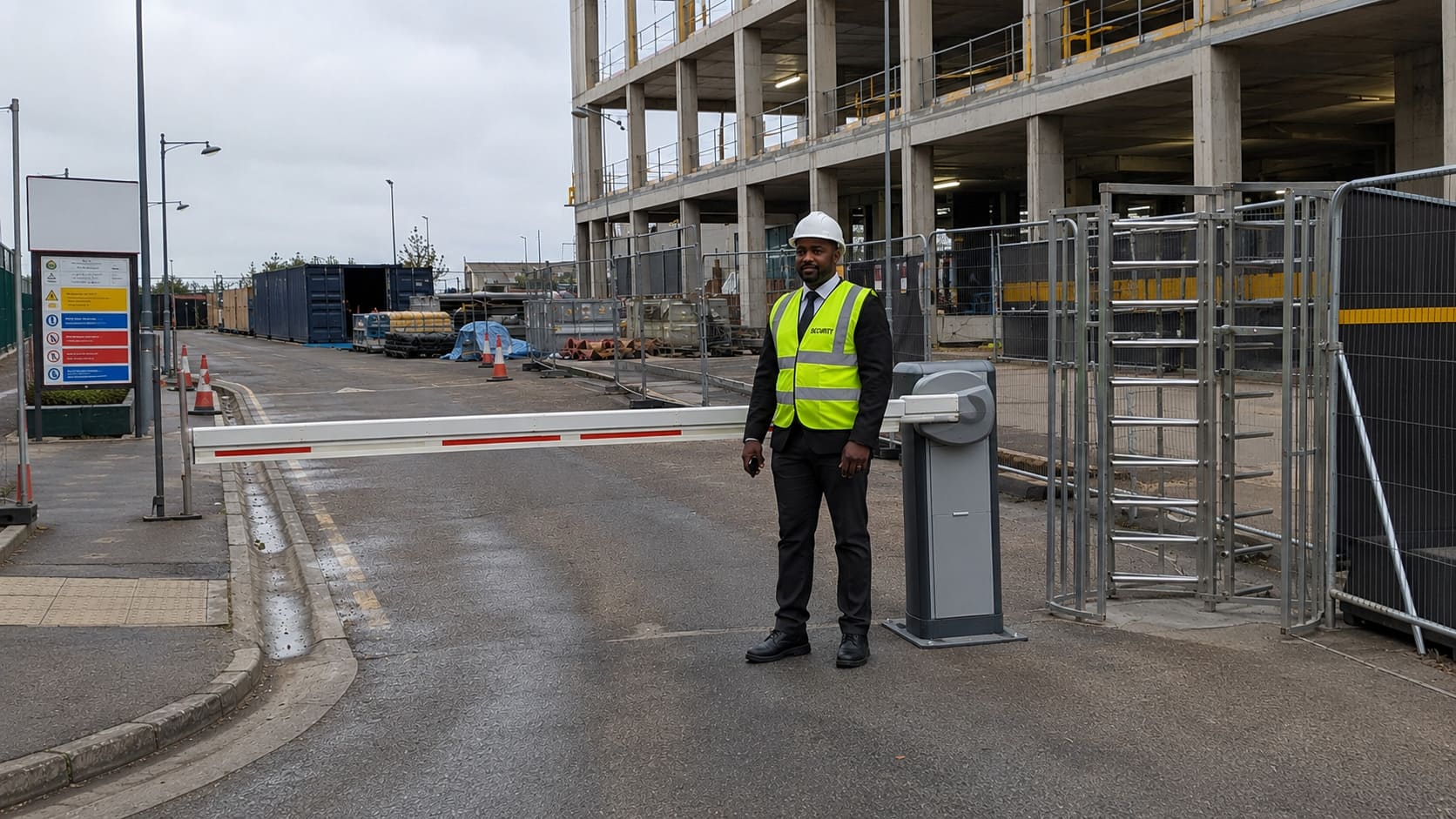
Security officer monitoring a construction site entrance – Illustrative Image
Cheap quotes hide missing cover
The common misconception is that the lowest guard rate is automatically the cheapest way to secure a construction site. That assumption fails as soon as the quote leaves out supervision, useful reporting, realistic response or clear duties.
A low-cost site security quote can be perfectly valid for a low-risk site with limited hours and a simple access point. Trouble starts when the price looks low because the supplier has not allowed for the actual cover pattern. A missed patrol, an unsupported alarm call-out or unclear incident evidence can cost more in disruption than the saving on the hourly line.
Good value in construction security comes from a plan the site can rely on during the hours that matter. The safest saving is rarely the lowest number on the rate card; it is the quote that leaves the fewest assumptions for you to find later.
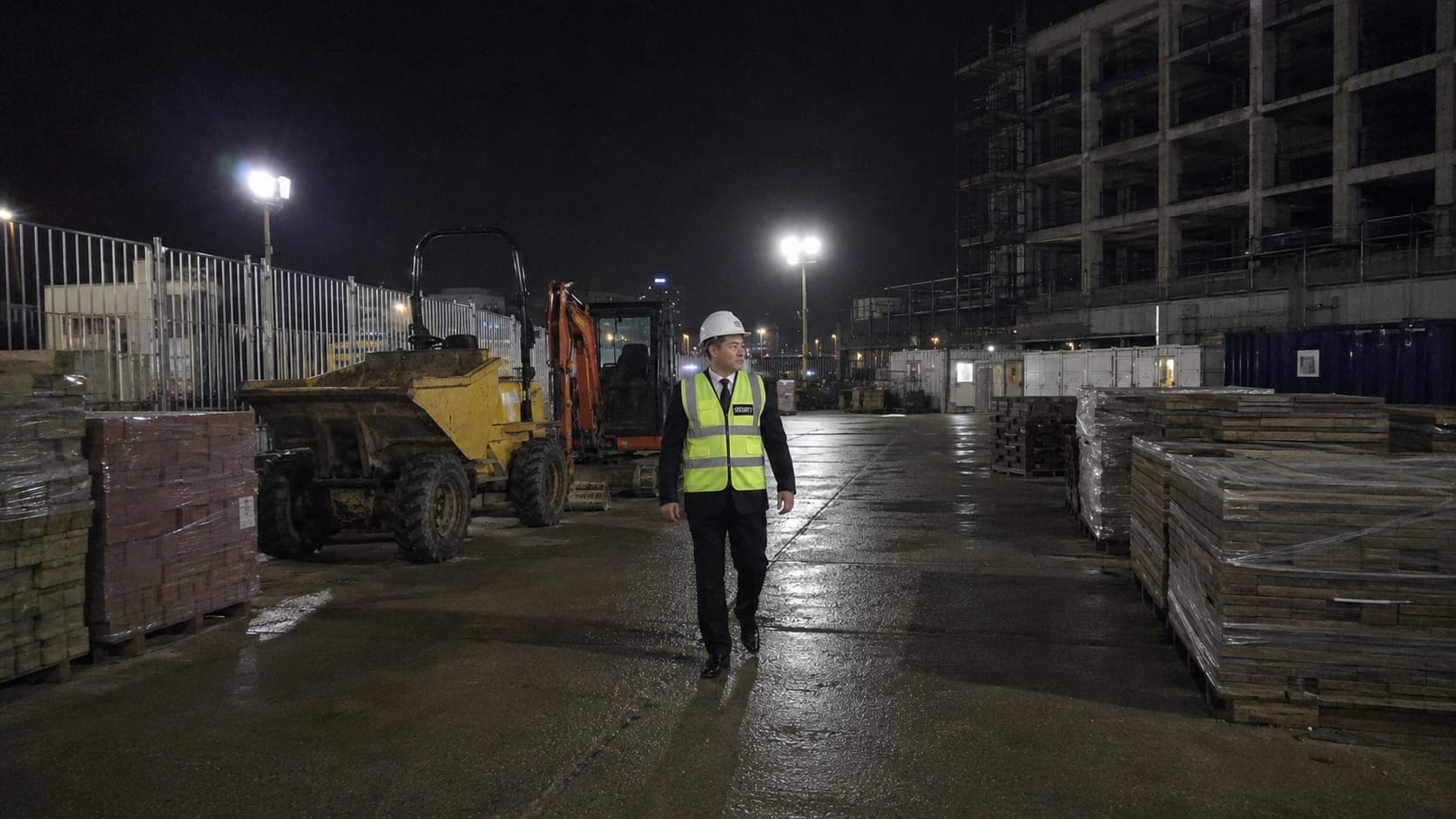
Security officer patrolling a construction site at night – Illustrative Image
Common questions about construction site security costs
Is CCTV cheaper than hiring a security guard?
CCTV can be cheaper than full-time guarding where the site has suitable coverage, monitoring and response. It is a poor substitute where blind spots, weak lighting or slow attendance leave incidents unresolved.
Are mobile patrols enough for a construction site?
Mobile patrols can work for smaller or lower-risk sites, especially during closed periods. Sites with high-value plant, frequent access points or repeated incidents may need a stronger mix of guarding, monitoring and response.
Do construction site security guards need an SIA licence?
Contract security guards working on site need the right Security Industry Authority licence for the role they perform. The licence position should be checked before a provider deploys staff.
What should appear in a construction site security quote?
A useful quote should state the service type, cover hours, duties, reporting, response process and any supervision included. Vague phrases such as “site patrols” or “monitoring included” need plain detail.
Why is 24-hour security so much more expensive?
Continuous cover needs a rota, handover, supervision and cover for absence, so it costs far more than a single shift. The buyer is paying for managed continuity, not one guard stretched across every hour.
This is general information, not professional advice.
