How can you spot the difference between a low-cost cleaning company and one that offers genuine value?
A cheap cleaning company usually wins on headline price. A good value cleaning company earns its place through dependable service, clear scope, trained staff, proper compliance and fewer costly problems over time. The lowest quote can look attractive at first, but missed tasks, weak supervision and hidden extras often make it more expensive in practice.
A low cleaning price can feel like a bargain in the same way a very cheap printer can. The machine looks affordable until the ink, repairs and poor output start adding up. Cleaning works much the same way. A quote can be small on paper, yet still leave you with patchy standards, complaints from staff or tenants, and extra work for your own team.
Price matters, of course. Most organisations work to a budget. Still, the difference between cheap and value cleaning is usually found in what happens after the contract starts. Reliability, performance standards, contract terms and hidden costs shape the real picture far more than an opening figure.
Here is a simple way to frame the difference between cheap and value cleaning:
- Cheap cleaning often means a low starting price, a vague task list, limited supervision and reactive problem solving.
- Good value cleaning usually means a fair price, clear service quality measures, defined responsibilities and steady performance over time.
- Cheap providers may leave out important details at quoting stage, namely consumables, specialist tasks, cover for absence or out-of-hours work.
- Good value providers tend to make those points visible from the start, which means that comparisons are easier and surprises are fewer.
That distinction matters across the facilities management sector, where cleaning affects presentation, hygiene, safety and day-to-day operations. Standards linked to bodies such as the British Institute of Cleaning Science or systems such as ISO 9001 are often part of that wider value story, even if they are not the first thing a buyer sees.
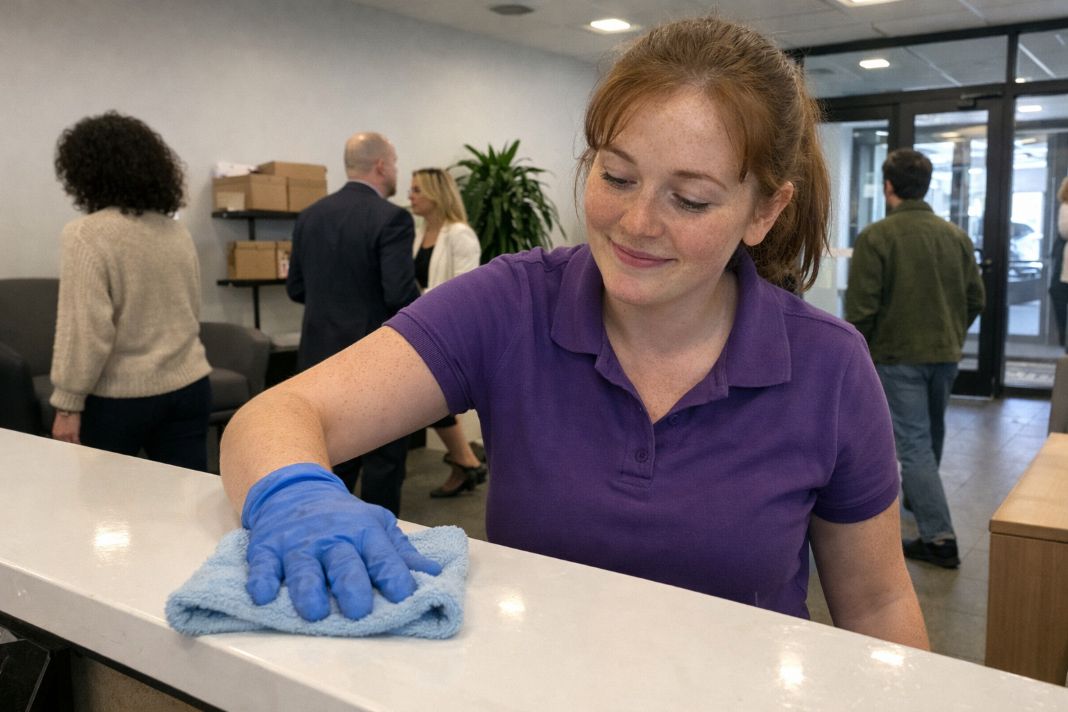
A representative image of a cleaner dusting a reception desk
What Do We Cover In This Article?
Assessing service standards and compliance
Service standards are one of the clearest dividing lines between affordable versus good cleaning and cleaning that simply looks cheap. A provider may offer an attractive monthly figure, yet if health and safety procedures are weak or staff training is informal, the risk sits with the client as much as the contractor.
Accreditations do not guarantee perfect service, but they can show that a company works within recognised systems. In practical terms, those systems affect recruitment, training records, incident reporting, auditing and quality management.
- ISO 9001 suggests that the company follows a documented quality management process, including review and improvement.
- SAFEcontractor points to attention to health and safety management, which is relevant where cleaners work in busy or higher-risk premises.
- British Institute of Cleaning Science membership or training links can indicate a structured approach to cleaning methods and staff development.
- SIA Approved Contractor Scheme is mainly associated with security services, but if a wider service provider also delivers guarding or access-related support, it may signal a broader compliance culture across operations.
Verification matters as much as the badge itself. Buyers can ask whether accreditations are current, whether insurance is in place and whether training records are reviewed. A provider that answers plainly and provides documents without fuss often looks very different from one that leans on price and avoids specifics.
Good value in accredited cleaning services is often quiet and procedural. It appears in safer working methods, more consistent outputs and fewer compliance gaps in the background of everyday service.
Pro Tip: A transparent itemised quote makes it much easier to compare offers and avoid hidden extras later.
Evaluating staff training, supervision and retention
Cleaning quality is carried by people long before it appears in a report. Even a sensible contract can underperform if the team on site has had little induction, receives no supervision or changes every few weeks.
High turnover is expensive for everyone involved. New starters need time to learn the building, understand site rules and work to the expected standard. If that cycle keeps repeating, standards drift. Washrooms, touchpoints, kitchens and shared spaces are usually the first places where inconsistency shows.
Well-run facilities management companies tend to treat training as part of service delivery, not as an extra. That can include site-specific induction, safe use of chemicals, colour coding, infection control where relevant and refresher sessions over time. Links with the British Institute of Cleaning Science can support that approach, especially where method and consistency matter.
Supervision is the next piece. A cleaner who receives clear instructions and periodic checks is more likely to work accurately than someone left alone with a vague brief. Operational oversight also matters when shifts need covering, access changes or client priorities move during the contract.
A few signs are worth noting when assessing cleaning team quality:
- Staff know the site requirements rather than relying on generic routines.
- Supervisors or managers carry out visible checks and follow up issues.
- Absence cover is planned, so service does not dip during holidays or sickness.
- Retention is reasonably stable, which often points to better management and clearer expectations.
Imagine two office contracts with similar prices. One provider rotates staff so often that each month begins with fresh mistakes, missed bins and uncertain keyholding arrangements. The other keeps a settled team, records tasks properly and sends a supervisor who knows the building. The second arrangement is usually where good value starts to become visible.

A representative image of a cleaner changing the liner in a waste bin beside a modern office
Transparency in pricing and scope of work
Some of the biggest differences between cleaning company pricing options are hidden in the wording, not the total. A quote can look lean simply because large parts of the work have not been fully described.
An itemised proposal gives you something solid to compare. Without that detail, one company may be pricing daily cleaning only, while another has included periodic deep cleans, washroom consumable checks, cover for staff absence and management time. Those are not equal offers, even if they sit in the same inbox side by side.
When reviewing transparent cleaning quotes, look for:
- A clear scope of work by area, frequency and task
- Hours on site and times of attendance
- Details of consumables, equipment and specialist materials
- Service level agreements, if they apply
- Extra charges for periodic work, emergency callouts or out-of-scope tasks
- Terms around sickness cover, holidays and temporary replacement staff
Contract clarity matters just as much after appointment. Facilities management contracts with vague language can lead to awkward debates later about who expected what. A company with a structured operating model, such as Double Check Security Group in broader service environments, will often set out scope definition and reporting lines more plainly because the service is being managed as an ongoing operation rather than a loose arrangement.
Good value tends to look transparent before it looks cheap. If the scope is easy to read and the billing is itemised, you are in a much stronger position to judge what you are actually paying for.
Pro Tip: Check whether the cleaning company provides clear documentation of insurance, training records, and site-specific procedures before appointing them.
Monitoring, feedback and continuous improvement
A cleaning service should not run on autopilot. Standards slip when nobody checks outcomes, visits the site or acts on recurring feedback.
Regular monitoring gives a client more than reassurance. Site visits can catch issues before they turn into complaints, audits can show whether standards match the agreed scope, and service reviews can reset priorities when building use changes. That is especially useful in offices, mixed-use sites and residential blocks, where occupancy patterns can shift across the year.
Feedback systems matter because cleaning is experienced by the people who use the building every day. Reception teams, facilities managers, tenants and staff often notice service gaps early. If those comments are logged and resolved through a clear process, performance improves in a visible way. If feedback goes nowhere, dissatisfaction tends to build quietly until the contract is under pressure.
Some providers are reactive. They respond once a formal complaint arrives. Others use performance monitoring, client feedback systems and operational audits to review work before small issues become entrenched. In service-led organisations, including Double Check Security Group where cleaning sits within a wider managed framework, that oversight is often built into the contract rather than treated as an occasional favour.
Picture a shared office where kitchen cleaning starts slipping on Fridays. A reactive contractor waits for three complaints and then sends an apologetic email. A proactive one notices the pattern during a review, adjusts staffing or timing, and checks the result the following week. One approach chases problems. The other manages them.
Request a Tailored Cleaning Assessment
Book a consultation to review your site’s specific cleaning needs and receive a transparent quote.
Common pitfalls when choosing based on price alone
Choosing on cost alone can create problems that are easy to miss at tender stage and awkward to fix later. Most of them stem from assuming that every quote covers the same level of service.
Common cleaning company pitfalls include:
- Overlooking exclusions in the contract, such as periodic cleans, window work or consumables checks.
- Ignoring compliance and insurance details, which can expose the site to avoidable risk.
- Underestimating the effect of poor supervision on consistency and staff conduct.
- Accepting vague staffing arrangements with no clear cover plan for absence.
- Switching providers too often in search of savings, which can disrupt routines and reset standards each time.
Insurance requirements deserve close attention. If a contractor carries inadequate cover, uses poorly trained staff or falls short on health and safety procedures, the practical consequences can land on the client site very quickly. In the facilities management sector, those issues can affect operations as much as appearance.
Another trap is assuming that service gaps will be easy to correct after the contract starts. Some issues can be fixed with clearer communication. Others reflect the provider’s underlying model, namely low pay rates, weak management layers or unrealistic staffing levels. In those cases, the original low price was never built to support consistent delivery.
A cheap monthly rate can therefore become a false economy, especially if complaints rise, internal teams spend time chasing standards or provider switching becomes routine.
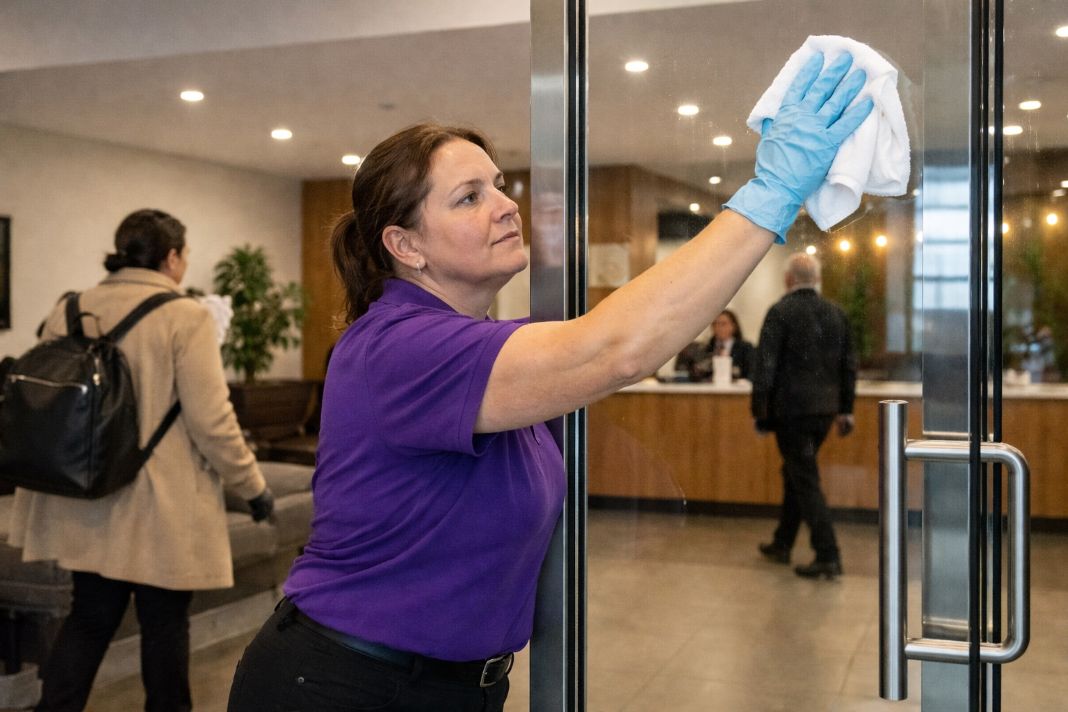
A representative image of a cleaner polishing a building door
Looking beyond price: What real value looks like in cleaning services
Real value in cleaning services is usually steady rather than dramatic. It shows up in floors that are consistently cared for, washrooms that stay stocked and hygienic, teams that arrive when expected, and managers who notice changes before they become problems.
That kind of value rests on a few practical features:
- A clear scope that matches the building and how it is used
- Staff who are trained, supervised and likely to stay
- Compliance systems that support safe, consistent delivery
- Honest pricing with no fog around extras or exclusions
- Ongoing reviews, feedback and adjustment as needs change
Buyers sometimes assume value for money means finding the lowest acceptable number. A better definition is finding the service that performs reliably at a fair cost over the life of the contract. Trust, adaptability and sound operational frameworks usually matter more than a narrow saving in month one.
Seen that way, the difference between cheap and good value cleaning becomes much easier to judge. The strongest decision is rarely based on price alone. It is based on whether the service can hold its standard when the building is busy, the schedule shifts and ordinary pressures begin.