

What should your hard facilities management contract include before you sign it?
A hard facilities management contract should name the assets being maintained, the responsibilities attached to them, the evidence required after work, the service standards for response and repair, and the exclusions that affect cost or risk. A service list alone is too weak for a commercial building contract.

Maintenance technician inspecting rooftop ventilation equipment – Illustrative Image
What Do We Cover In This Article?
Start with the contract’s real job
A service heading such as “mechanical maintenance included” does not tell you enough. A hard FM contract has to work as a control document, with enough detail to prove what is covered, what has been done, and what happens when something slips.
Hard facilities management, or hard FM, covers fixed building elements that cannot easily be removed. GOV.UK Facilities Management Standard 001, under GovS 004: Property, separates hard services from soft services and gives examples such as repairing a leaking roof and servicing a boiler. Soft services cover areas such as cleaning, reception and security, but the line should not be oversimplified because some soft services also carry serious contractual duties.
For a hard facilities management contract, the test is simple: can you manage the building from the contract when a problem occurs? ISO 41001 and ISO 41011, the International Organization for Standardization facilities management standards for management systems and vocabulary, support the same practical point. Facilities management needs defined responsibilities, not loose promises.
A proposal can look strong because it contains a long list of trades. That list still leaves gaps if it does not connect each service to assets, inspection evidence, response rules and named responsibilities.
| Vague service list | Measurable contract control |
|---|---|
| “Boiler maintenance included.” | The contract identifies the boiler, its location, planned maintenance duties, access requirements and records due after each attendance. |
| “Emergency callouts available.” | The contract states how calls are raised, who attends, what response means, how repair progress is escalated and what evidence is logged. |
| “Compliance covered.” | The contract separates provider tasks from duty-holder accountability and states what certificates, logs and remedial actions must be reported. |
| “Fabric maintenance included.” | The contract defines which building fabric items are covered and which works fall outside the agreed price. |
Before you compare price, test whether each proposal gives you control over delivery.
Use the asset register as the checklist
A boiler behind an access-controlled plant room can appear in a service promise and still be missing from the working scope. If the asset register does not name it, locate it and link it to a maintenance requirement, the contract already has a weak spot.
The asset register is the contract’s working map. SFG20, the building maintenance standard published by BESA Publications Ltd, says an up-to-date asset register is the starting point for facilities management compliance. That matters commercially because the register affects scope, pricing, planned preventative maintenance and the evidence you expect back.
A good hard FM asset register does not need to bury you in engineering language. It needs enough detail for a provider to price the job properly and for you to challenge a missed item without arguing over assumptions.
- Asset identity and location. The contract should identify each relevant item and where it sits, especially where access affects attendance.
- Maintenance requirement. Each asset should link to a planned preventative maintenance schedule, a reactive maintenance route, or a stated reason why it is excluded.
- Importance to the building should be clear. A plant item serving a public trading area does not carry the same operational risk as a low-use back-of-house fitting.
- Access and isolation needs. The scope should say where keys, permits, shutdowns or tenant access affect the work.
- Evidence due after attendance. Records should be tied to the asset, not left as general service notes.
- Exclusions should be visible at asset level where possible, especially for replacement parts, specialist works or items owned by tenants.
Computer-aided facilities management systems and computerised maintenance management systems can help hold this data, but software does not fix a poor scope. Clean data does the real work.
For tendering, the asset register also keeps bidders honest. When every provider prices the same defined list, you are comparing delivery approach and risk allocation rather than hidden assumptions.

Maintenance technician inspecting commercial plant room equipment – Illustrative Image
Specify compliance and maintenance responsibilities
Task completion and compliance control are different things. A contractor can attend site and complete an inspection, but the contract still needs to say who tracks the record, who approves remedials and who remains accountable as landlord, tenant, client or duty holder.
Evidence proves compliance
A hard FM compliance checklist should be written into the contract as a record requirement, not treated as paperwork to chase later. Certificates, inspection dates, remedial works logs and overdue actions need a clear home, because a missing record causes the same management problem as a missed task when you need to prove control.
GOV.UK says an estate compliance plan should make responsibilities clear when compliance work is delivered through the supply chain. That principle belongs in commercial contracts too. The provider may manage inspections and coordinate specialists, but appointing a provider does not automatically remove the client’s retained responsibilities.
Good wording separates the parties cleanly. The contract should state which tasks the provider manages, what the client or landlord must supply, how tenant responsibilities are handled and how unresolved risk items are escalated. Lease issues, staff transfer points or duty-holder questions can sit around the contract, but they should not be allowed to blur who does what day to day.
Schedules keep maintenance current
Planned preventative maintenance is the scheduled work intended to keep assets in working order. Corrective maintenance deals with faults after they appear, risk based maintenance adjusts attention according to operational risk, and condition based maintenance responds to the actual state of an asset.
Those terms matter because a fixed spreadsheet can become stale. SFG20 says its standard is updated monthly, so a contract that refers to a maintenance schedule should also say how that schedule is reviewed against current guidance and site changes. Treat SFG20 as a recognised way to structure maintenance, not a magic shield.
Remedials deserve separate wording. If an inspection finds a fault, the contract should state how the issue is logged, who prices the work, who approves spend and how the action remains visible until closed. Without that chain, “inspection completed” can hide a growing backlog.
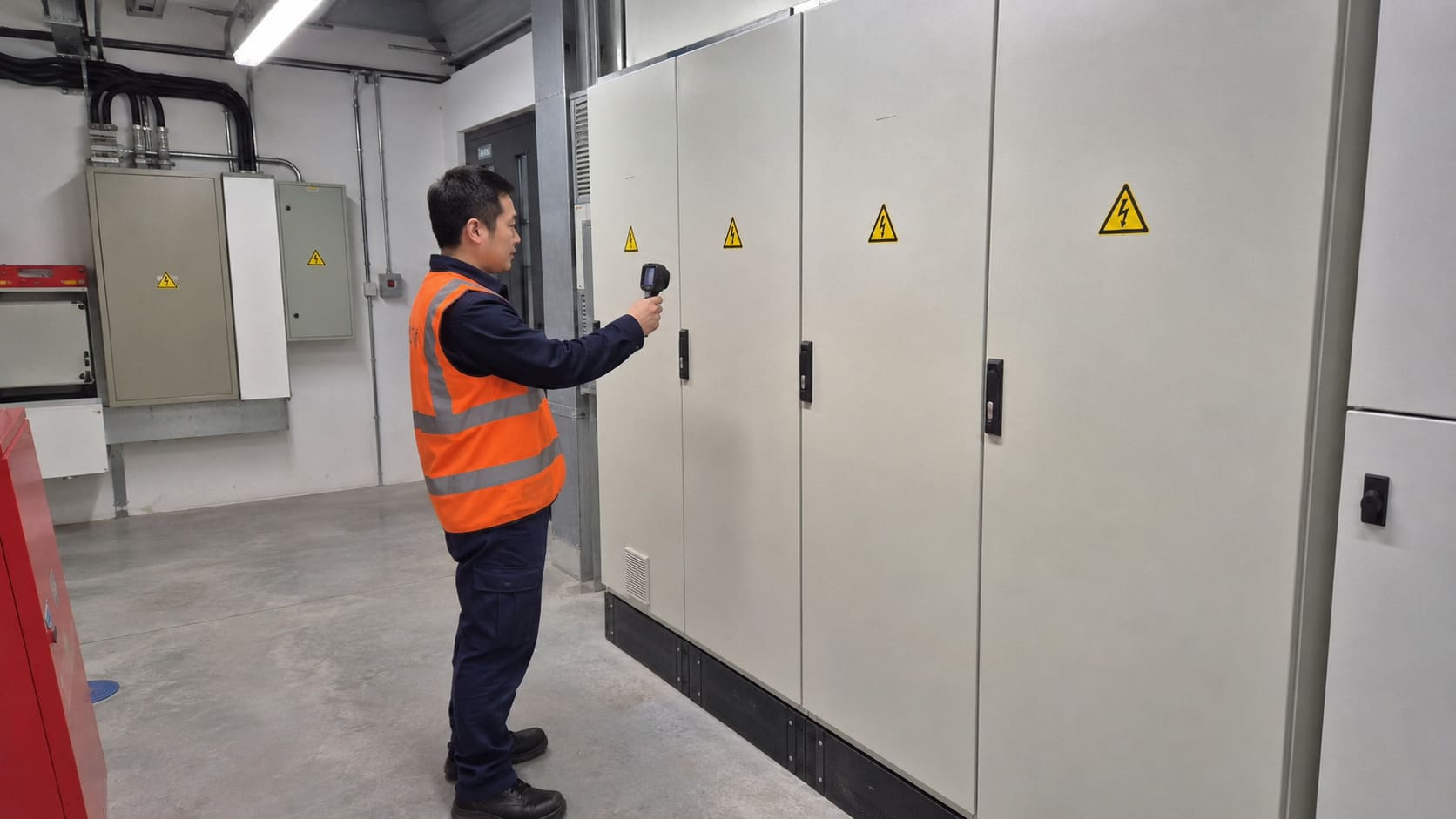
Technician checking electrical panels during planned maintenance – Illustrative Image
Control callouts, contractors and access
A response time can look impressive while the actual repair remains unresolved. Attendance is not performance. Controlled resolution is performance.
Hard FM reactive maintenance needs service level agreements that go beyond arrival on site. The contract should define what counts as acknowledgement, attendance, temporary make-safe work, repair completion and escalation. Parts availability also needs plain wording because a contractor cannot complete every repair on the first visit if the contract does not cover parts, suppliers or specialist attendance.
Access is where many neat service promises fail. A contractor arriving after hours still needs keys, alarm instructions, access control permissions and any permit to work required for the job. If those steps sit outside the hard FM contract, the response clock can look fine on paper while the building stays stuck with the fault.
The Health and Safety Executive is clear that organisations using contractors must retain an understanding of the service being supplied and remain mindful of responsibility for safe operations. In practice, that means contractor competence, site induction, supervision and coordination belong inside the contract conversation, not in a procurement folder that nobody opens again.
Security and facilities overlap here. Double Check Security Group operates across facilities management, key holding, alarm response and access control, so its working view of hard FM has to include who gets a contractor through the door, who confirms attendance and how issues are escalated outside standard hours. That interface is easy to miss if hard FM is bought as a trade list.
Business continuity and disaster recovery plans should also be tied to callout handling. The contract does not need to turn every fault into a crisis plan, but it does need a route for building risks that affect occupation, trading or safe access. A leak above an electrical cupboard and a failed non-urgent fitting do not deserve the same escalation path.
Close the gaps before signature
Some exclusions make buyers nervous because they look like the provider is stepping away from responsibility. In a mature hard FM contract, exclusions do the opposite. They show where risk, cost and approval sit before pressure arrives.
Common grey areas include consumables, replacement parts, statutory remedials, tenant damage, out-of-hours access, project works and lifecycle renewals. Each one can turn into a dispute if the contract only says “maintenance included”. Clear exclusions let you budget, approve works faster and avoid arguing about whether a repair was inside the monthly fee.
Reporting deserves the same treatment. Facilities management reporting should give you certificates, inspection dates, remedial works logs, overdue tasks, asset condition notes and trend reporting. Key performance indicators should measure completion quality and evidence, not just whether someone turned up.
Forward maintenance planning is the long-view test. GOV.UK says a forward maintenance register should show short, medium and long-term maintenance and renewal works, with asset data supporting lifecycle maintenance priorities for at least five years. For commercial buildings, that turns asset data into budget visibility, not just a servicing record.
A structured operator treats that discipline as normal contract management. In Double Check Security Group’s facilities work, the same logic runs through scope, oversight, reporting and escalation. The contract has to be usable by the people managing the building on an ordinary day and under pressure.
The strongest hard FM contract is rarely the longest one. The one thing to prioritise is named responsibility backed by evidence requirements, because every other promise depends on knowing who owns the task and how completion will be proved.

Maintenance technician inspecting commercial plant room equipment – Illustrative Image (2)
Common questions about hard FM contracts
What is the difference between hard FM and soft FM?
Hard FM covers fixed building elements such as plant, building fabric and systems attached to the premises. Soft FM covers services such as cleaning, reception, concierge and security, although some soft services can still carry serious contractual duties.
Does a hard FM provider take over all compliance responsibility?
No. A provider can manage tasks, coordinate inspections and supply evidence, but the contract should still state where client, landlord, tenant and duty-holder responsibilities sit.
Should SFG20 be written into a hard FM contract?
SFG20 can be a useful recognised standard for building maintenance schedules, but it should be used carefully. The contract still needs site-specific assets, records, responsibilities and review points.
What makes a hard FM service level agreement useful?
A useful service level agreement defines more than response time. It covers acknowledgement, attendance, escalation, completion, evidence after attendance and how remedial works are approved.
Why are exclusions important in a facilities management contract?
Exclusions show what is outside the agreed scope, price or responsibility. Clear exclusions reduce disputes around parts, tenant damage, project works and lifecycle renewals.
This is general information, not professional advice.
