Why do shared office kitchens often escape hygiene scrutiny?
Shared kitchens in office environments frequently operate outside formal cleaning structures, which means that hygiene risks build silently over time. Despite being a high-traffic area where food is stored, prepared and consumed, these spaces often lack the cleaning rigor found in washrooms or production zones.
This disconnect arises from how shared kitchens are perceived. They feel informal, like a break area rather than a managed facility. Responsibility for cleanliness is rarely clear, with expectations spread loosely across staff. The result is a space that appears tidy on the surface but may conceal more detailed issues such as bacteria build-up, spoiled food and pest attractants.
Several contributing behaviours are routinely overlooked:
- Assumed cleanliness: A wiped counter does not equate to a sanitised space.
- Inconsistent ownership: Cleaning is often left to whoever notices the mess first.
- Tolerance: Containers of leftover soup or open milk cartons may go unchallenged for days.
- No enforced schedule: Without a rota or contract, cleaning tends to be ad hoc or forgotten entirely.
From a facilities perspective, this grey area creates cumulative risk. Hygiene responsibilities need recognition, not by increasing pressure on individuals, but by embedding shared kitchens within broader workplace standards.
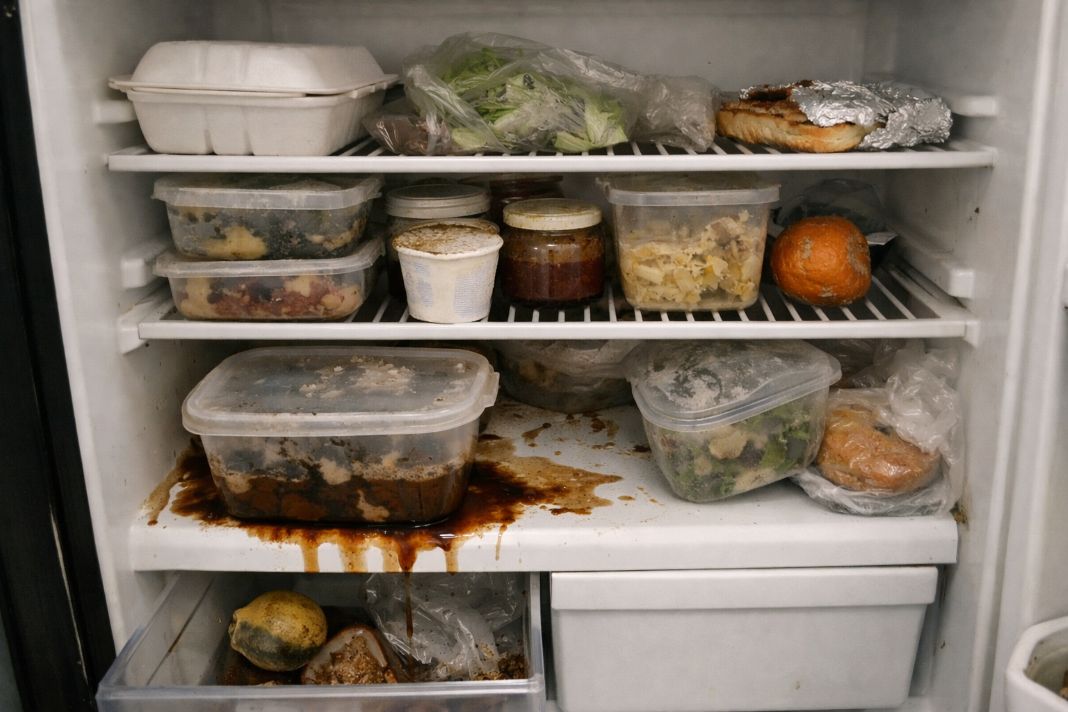
A representative image of a filled office fridge with unlabelled containers and items past their expiry date, including a leaking container on the bottom shelf
What Do We Cover In This Article?
How shared appliances become contamination risks
Most shared kitchens include a set of well-used appliances: a microwave, fridge, kettle and often a toaster. Each serves a basic purpose, yet their use far surpasses their cleaning frequency. Because ownership is distributed informally, no person or system is responsible for maintaining these shared assets.
High-touch zones and hidden recesses become hotspots for microbial growth:
- Microwave handles and buttons are often sticky or greasy, with exploded food left uncleaned.
- Fridge door seals and shelves may hold drips or crumbs, fostering bacteria.
- Toasters collect crumbs that never get emptied, posing both hygiene and fire risks.
- Kettle handles and lids are touched continuously, yet rarely sanitised.
These areas are also common points of allergen transfer. Residues from peanut butter, dairy or egg-containing products can be left behind, putting allergy-sensitive colleagues at risk. A common belief that microwaving kills all bacteria causes complacency but overlooks the survival of heat-resistant contaminants or issues on external surfaces.
Appliance hygiene should be treated as structured maintenance, with clear protocols on who cleans what and when. Facilities teams or professional cleaners can incorporate appliance cleaning into standard routines, which helps ensure thresholds do not lapse.
Pro Tip: Place clear signage above kitchen appliances that lists the last cleaning date to provide accountability and transparency.
Improve Your Cleaning Protocols
Work with our expert team to develop structured cleaning schedules tailored to your facilities.
Food storage mistakes that quietly spread risk
Shared fridges often lack the oversight they require to remain safe. Unlike commercial kitchens, where rotation and disposal are regulated, office fridges rely on goodwill and sporadic tidying. Over time, these minor lapses become sources of unpleasant odours and potential food safety breaches.
Some common storage issues to watch for include:
- Unlabelled containers left indefinitely, with no expiry guidance.
- Expired foods like yoghurt or meat spoiling undetected.
- Perishable items stored above safe temperature thresholds due to overloading.
- Cross-contamination from leaking containers or uncovered items.
- Minimal cleaning of interior shelves and bins, allowing spill residue to build.
These conditions create an ideal environment for mould growth, bacteria and foodborne illnesses. Temperature fluctuations during weekends or holidays further reduce safety, especially when fridges are opened infrequently but densely packed.
The practical solution lies in structured management. Label policies, weekly disposal checks and clear accountability reduce risk. Facilities partners can support this by aligning fridge maintenance with waste protocols and hygiene schedules already in place.
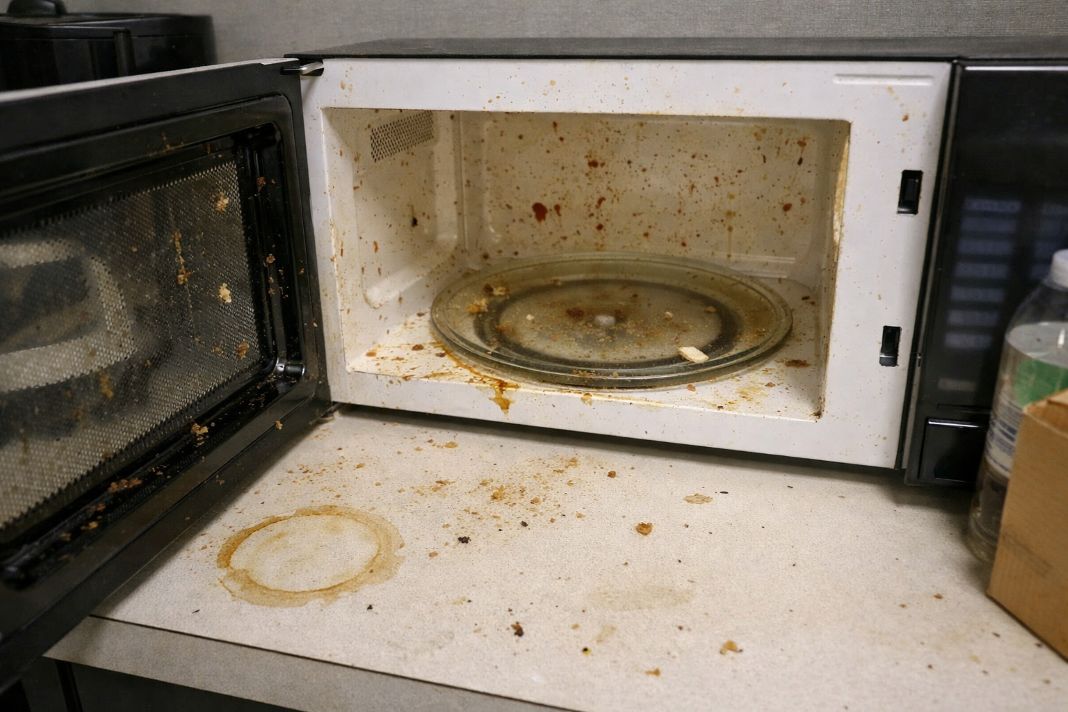
A representative image of photo of an office kitchen microwave with food splatters inside, a neglected countertop showing coffee stains and crumbs
Why ad-hoc cleaning fails to protect shared kitchens
Office kitchens often fall between two approaches: formally scheduled cleaning and informal user tidiness. The gap between these can leave areas like counters, sinks and appliances in a state of sporadic care, especially when cleaning standards are not visible or enforced.
Informal cleaning tends to focus on surface appearances. A full bin might be emptied, or coffee grounds wiped up, but sinks go unflushed, fridges uncleaned and floors forgotten. The assumption that ‘someone’ will take responsibility leads to unreliable hygiene coverage.
Structured oversight changes this active. With consistent routines and visible standards, hygiene is no longer dependent on personal initiative but becomes part of the operational baseline. Professional providers, working under accreditation frameworks such as those governed by the British Institute of Cleaning Science or tied to ISO 9001, bring discipline to this process.
For example, organisations supported by companies like Double Check Security Group often maintain formal cleaning schedules, supported by on-site logs, routine inspections and aligned feedback channels. This approach ensures coverage even during shift changes or staff absences and reduces ambiguity about responsibilities.
Pro Tip: Assign a member of the facilities team to check the fridge weekly using a simple expiry and labelling checklist.
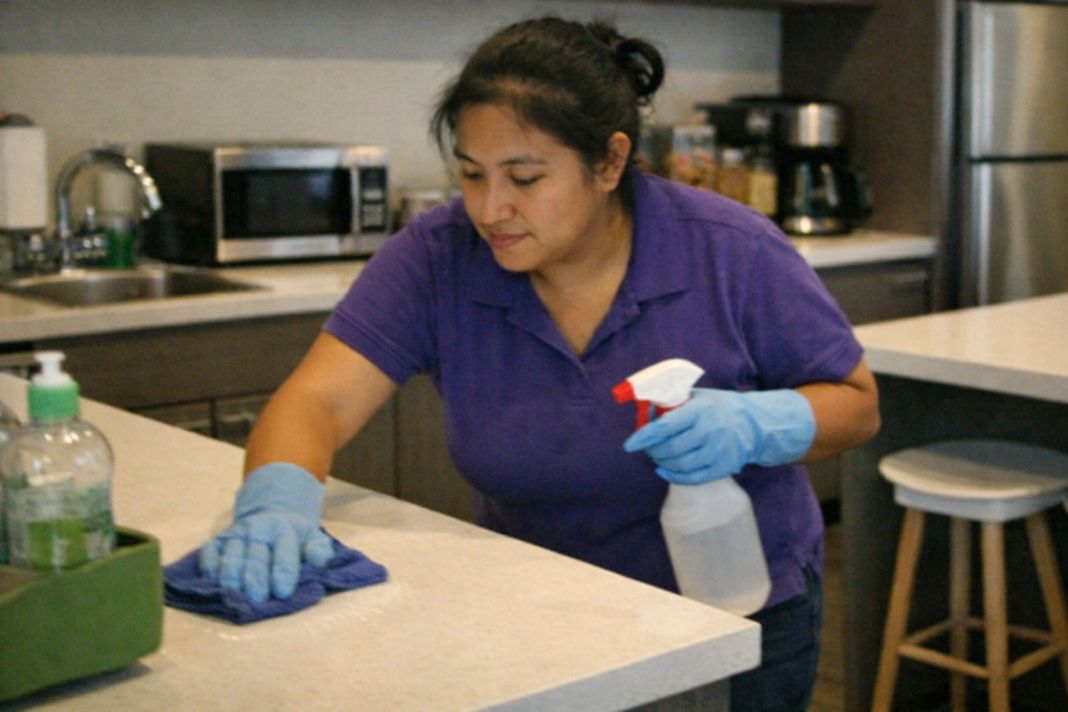
A representative image of an office cleaner cleaning a modern shared office kitchen
How hygiene lapses invite pest activity
Even subtle oversights in cleanliness and maintenance can create hospitable conditions for pests. Food waste and neglected infrastructure are a predictable recipe for infestation, especially when organic residue accumulates in low-visibility areas.
Key attractors include:
- Crumbs in toaster trays or under appliances
- Spilled liquids around bins or fridges
- Clogged sink drains and standing water
- Cardboard packaging left on floors or counters
Early signs of pest activity, droppings, material gnawing or strange smells, often go unnoticed until a larger issue emerges. By the time rodents or insects are spotted, intervention becomes reactive rather than preventative.
Effective pest prevention blends cleanliness with infrastructure oversight. Regular drain checks, airtight bins and sealed food storage reduce attractants. Maintenance teams should respond quickly to leaks, blocked vents or waste collection delays.
When hygiene is treated as a facilities issue rather than a standalone task, pest risks are significantly reduced. Kitchens remain clean through surface tidiness but by removing the environmental cues that pests seek.
Prevent Pest Risks at Work
Find out how a preventative maintenance plan can help reduce the chances of infestation in shared spaces.
What responsibility do employers have for kitchen hygiene?
Employers carry a duty of care to ensure safe working conditions across all shared spaces. Hygiene is included within this scope. While kitchens are not ‘workstations’ in the traditional sense, they are part of the daily environment and affect staff wellbeing.
Regulations such as the Workplace (Health, Safety and Welfare) Regulations require that rest facilities, including kitchens, are kept in a clean and hygienic condition. Risk assessments should incorporate this area, especially where food is prepared or allergens could be present.
This duty includes:
- Assessing hygiene risks as part of routine health and safety planning.
- Providing adequate cleaning standards through contracts or internal teams.
- Ensuring that shared facilities are maintained with the same rigour as other workplace areas.
Facilities providers play a key role in helping employers meet these obligations. Providers with compliance-led models, like Double Check Security Group, typically include shared spaces in their site inspections and induction protocols, ensuring hygiene is fully embedded in service delivery.
How to encourage hygiene-conscious behaviour in shared spaces
Systems and standards are only half the solution. The other half lies in fostering behaviours that support long-term cleanliness. Culture shapes whether people rinse their mugs after use, wipe spills or leave their leftovers behind.
Small, visible cues help reinforce hygiene expectations:
- Clear signage prompting fridge labelling or microwave cleaning
- Simple hygiene checklists posted by bins or sinks
- Onboarding messages that outline shared kitchen etiquette
- Support from supervisors who role model expected habits
- Mechanisms for reporting issues without blame
While rules keep operations in check, habits sustain the cleanliness between formal cleans. When hygiene is seen as a shared priority and supported by visible structures, the workplace feels more respectful and better maintained.
By uniting operational consistency with human behaviour, organisations build kitchens that are clean but cared for.