

What does hospitality security actually include for your venue?
A hospitality security service covers trained people, clear procedures and monitored areas, not just a guard at the entrance. You can expect guarding, front-of-house support, access control, patrols, closed-circuit television where agreed, incident response, key holding, alarm response and reporting, shaped by your venue’s layout, hours and risks.
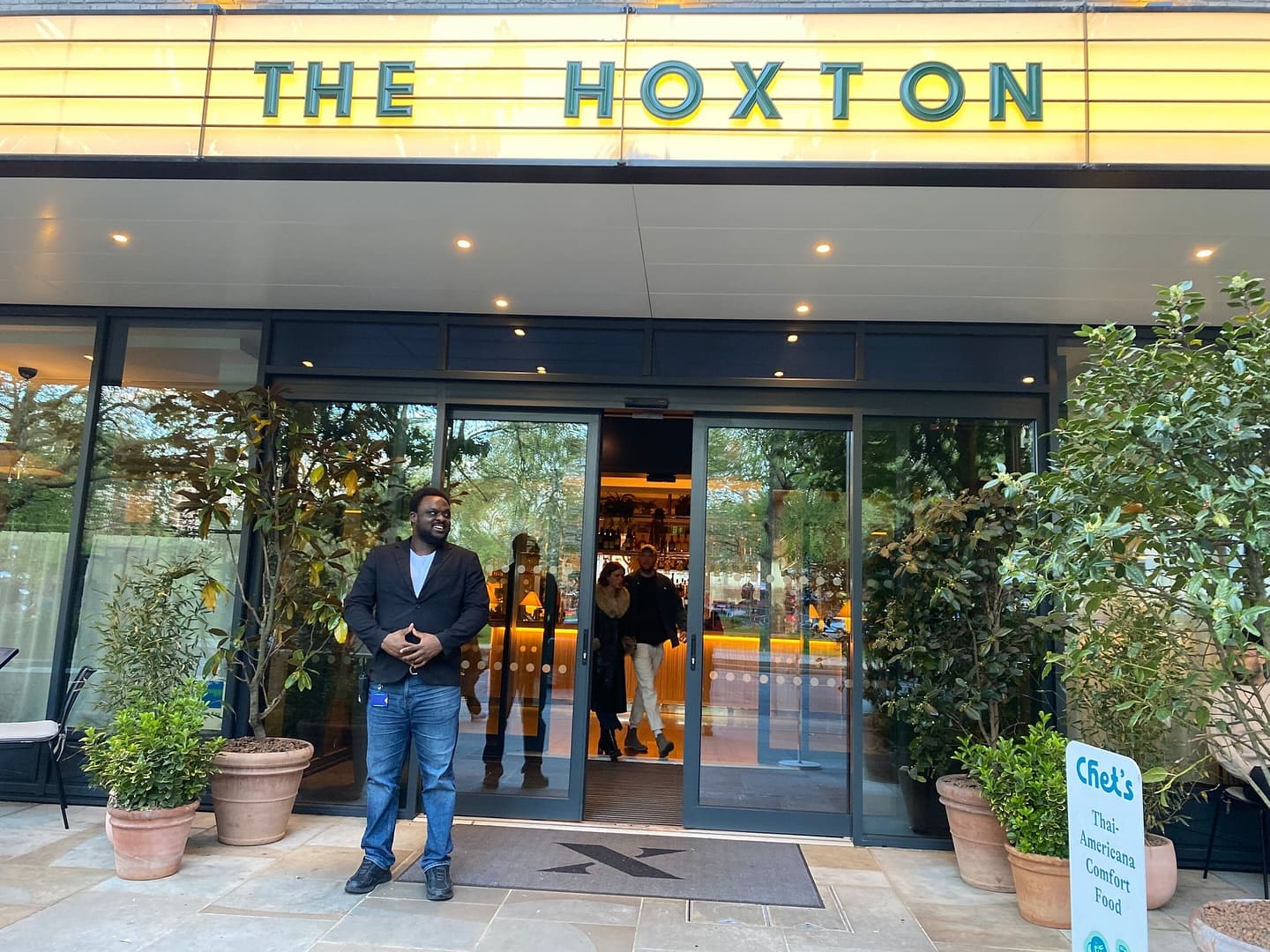
Hospitality security officer providing professional door supervision outside luxury hotel entrance safely.
What Do We Cover In This Article?
Hospitality security covers people, premises, monitoring and response
Most people still picture hospitality security as someone standing by a door. That view misses the real work. A useful hospitality security service gives management a planned way to protect guests, staff, property and trading without turning the venue into a controlled site that feels hostile.
Hotel security guards and restaurant security guards may be visible at reception, near an entrance or around a late event, yet much of the value sits behind that presence. Someone needs to know which areas are checked, who deals with an aggressive guest, what happens after a theft report, and how the shift handover records anything management needs to know the next morning.
Closed-circuit television, usually called CCTV, supports that picture when monitoring is part of the agreed service. It does not replace trained staff, clear instructions or a route for decisions. A camera may record a problem, but a person still needs to decide what action fits the venue policy, guest safety and staff protection.
Good outsourced hospitality security joins these pieces into one working arrangement. The exact balance changes once you look at how the venue trades.
Cover changes with the way your venue operates
A hotel on a busy evening has guests arriving, residents moving through corridors, staff handling service areas and a private function running in the background. A restaurant closing shift has a different pressure point, because entry, alcohol service, payment disputes and staff leaving at the end of the night matter more than resident areas.
That difference is why a single standard package is weak. Security for hotels, restaurants and licensed venues has to follow how people use the building, when risk rises and where management needs support.
Hotel cover follows the guest journey
Hotel security service work often starts at the public edge of the building. Reception areas, entrances, lifts, corridors, car parks and back-of-house routes each create different control points. A guard might support reception, watch movement through the lobby, complete patrols or respond when staff need another trained person present.
Hotel functions add another layer. A wedding, conference or private event changes the pattern of access, because guests may be unfamiliar with the site and staff may be focused on service delivery. Security for hotel events works best when the team already knows where guests are allowed to go, which doors stay controlled and who from management takes decisions if a problem escalates.
Overnight cover has its own logic. Fewer managers may be on site, so the brief needs to make response duties clear, especially around alarms, welfare concerns, unauthorised access and incident reporting.
Restaurant cover follows trading pressure
Restaurant security service work usually concentrates around entrances, bookings, queue behaviour, closing routines and staff safety. Alcohol-led service can change the tone of a shift quickly, so hospitality door supervisors may need to handle refusal of entry, conflict de-escalation and support for managers applying venue policy.
Private dining, late-night trading and regulated entertainment can also move a restaurant into a different security need. The point is not the size of the venue alone. Opening hours, guest volume, alcohol licence conditions, staff movement at close and the layout of the entrance all shape what cover makes sense.
A service that fits your trading pattern will feel proportionate. A service sold by job title alone will leave gaps at the exact moment the venue gets busy.
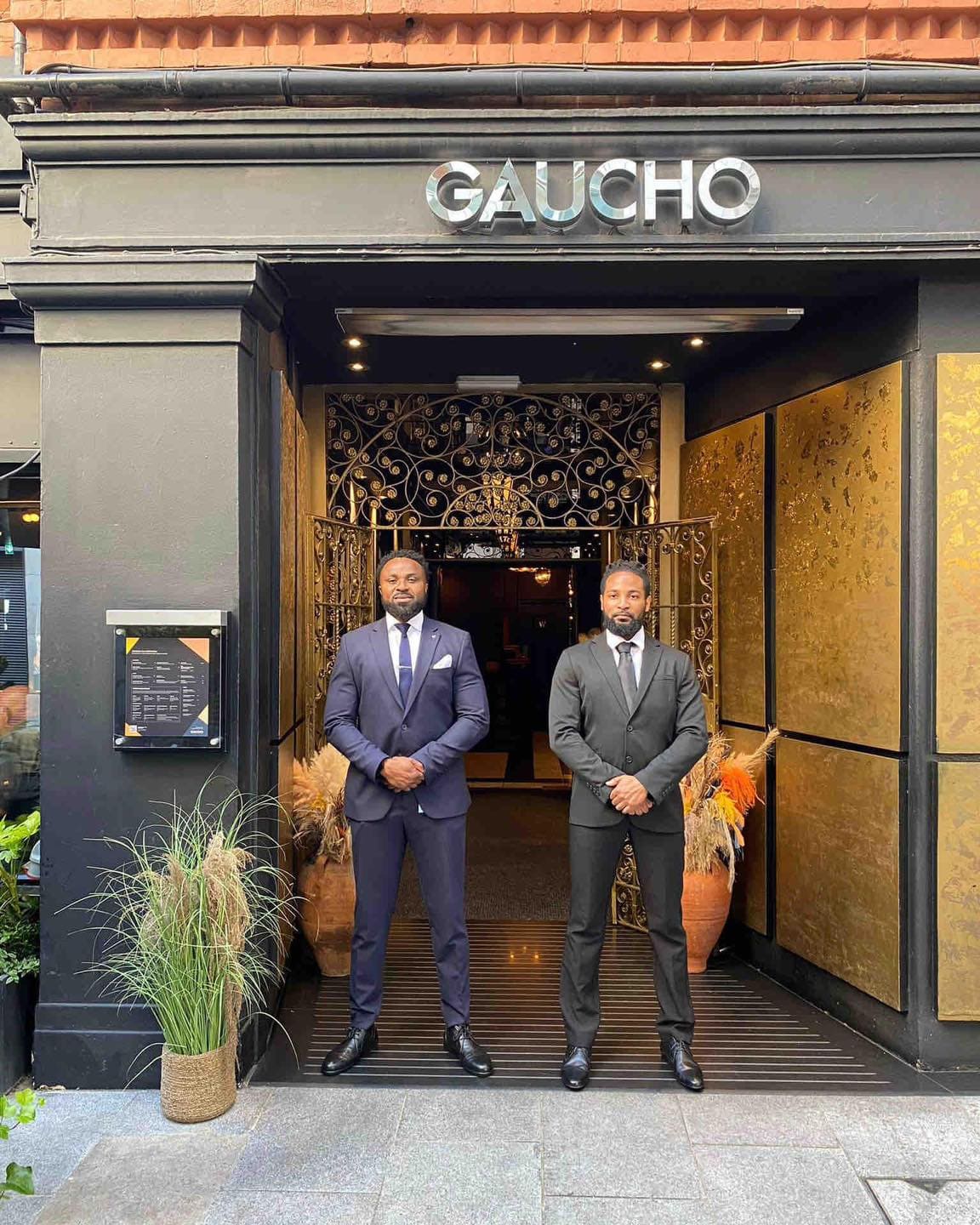
Two SIA licensed door supervisors working at Gaucho Restaurant in London
The role determines the licence and the compliance checks
The licence question starts with the duty being performed. A vague promise of SIA-approved staff is weaker than proof that the person assigned to the role holds the right licence for that role.
The Security Industry Authority, known as the SIA, says a person working as a security operative may need a front line licence where contracted work involves a licensable activity. In hospitality, the distinction matters because guarding, door supervision, public space surveillance CCTV and key holding can sit close together in one contract, yet they are not the same task.
| Service area | Typical hospitality use | What the buyer should check |
|---|---|---|
| Security guarding | Protecting premises, property or people, including patrols and access duties | The assigned role matches the security guarding licence requirement |
| Door supervision | Guarding licensed premises against disorder, unauthorised access, theft or damage | Licensed venue duties are covered by a door supervision licence where required |
| Public space surveillance CCTV | Monitoring people or activity for security purposes, including recorded footage used that way | CCTV operators have the correct licence where the monitoring activity requires it |
| Key holding | Holding or controlling access to keys or lock devices for security work | Lock, unlock, alarm response and emergency access duties are clearly included |
Licensed premises need particular care. A door supervision licence is required where someone guards licensed premises against damage, theft, unauthorised access or disorderly behaviour, and a door supervision licence also permits the holder to perform the licensable activity of a security guard. For a hotel bar, restaurant with alcohol service or venue offering regulated entertainment, that distinction can affect who should be deployed.
CCTV also needs plain governance. The Information Commissioner’s Office says organisations using surveillance systems need to identify and document a lawful basis under Article 6 of the UK General Data Protection Regulation, known as UK GDPR. Signs should be visible and readable, footage retention should match the purpose, and audio recording needs strong justification because it is more intrusive than video alone.
Counter-terror preparedness now sits on many hospitality agendas. Martyn’s Law, formally the Terrorism (Protection of Premises) Act 2025, received Royal Assent on 3 April 2025. The Home Office has said the implementation period is expected to be at least 24 months and that there is no legal requirement to comply until the legislation comes into force. Relevant venues should treat it as a planning issue rather than an immediate enforcement duty.
In practice, an operator such as Double Check Security Group uses role matching across guarding, CCTV and key holding to keep the service aligned with the work being done. That is the level of checking a buyer needs, without having to interpret licensing law alone.
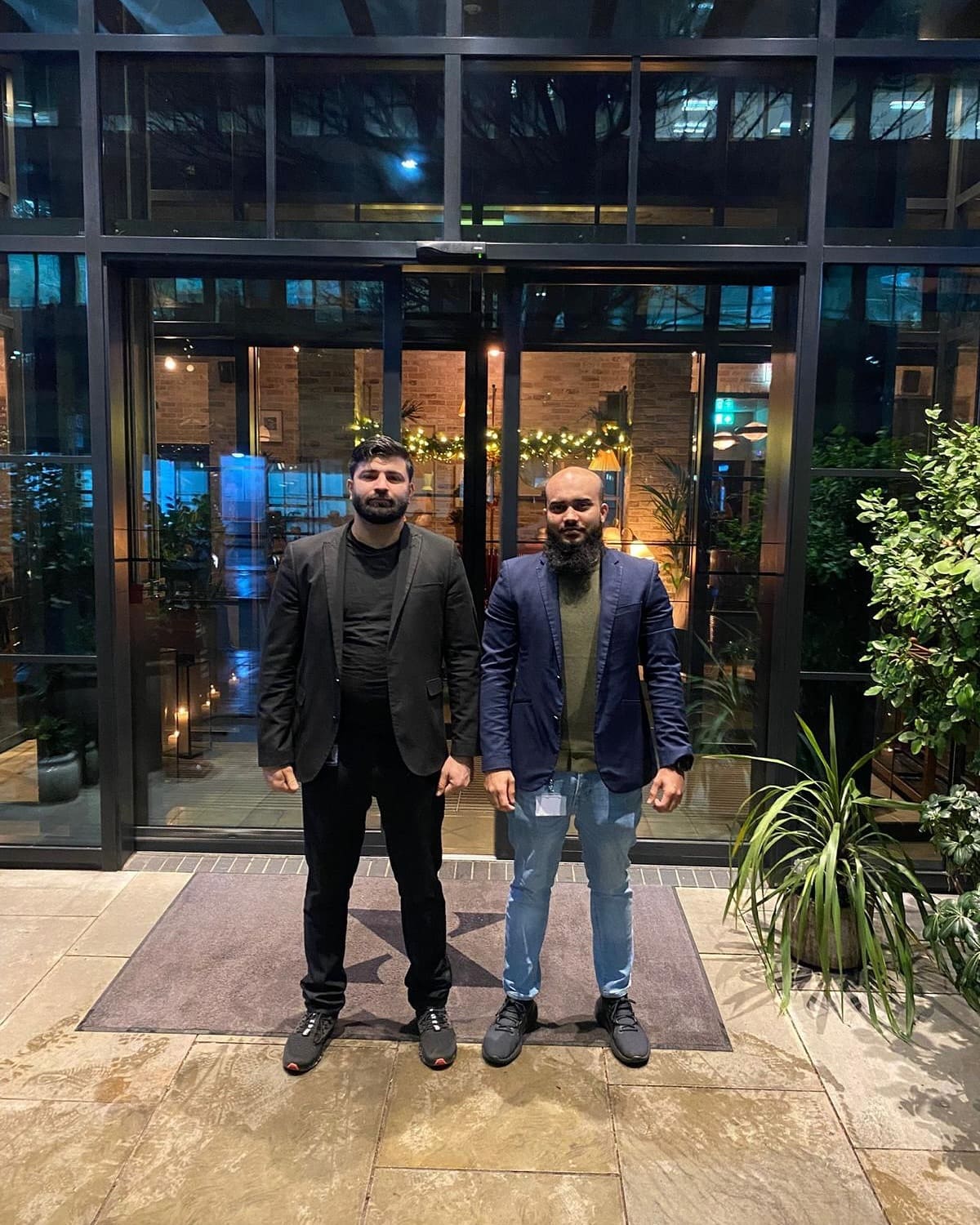
Experienced hospitality security team delivering trusted door supervision for busy hotel entrance.
The written scope turns security from cover into control
A guard arriving without clear instructions creates risk for everyone. The person may be trained, but the venue still needs to say where they go, what they can decide, what they record and when management gets involved.
A proper hospitality security contract should turn the venue’s actual pressures into operating instructions. That means the service scope needs more than shift times and uniform requirements.
- Start with the site and trading pattern. A site survey should look at entrances, service doors, loading access, staff routes, public areas and the times when pressure rises.
- Define the duties in plain language. Assignment instructions or post instructions should explain patrol routes, access rules, front-of-house conduct, reporting duties and handover expectations.
- Match people to roles. The provider should assign staff whose licence and training fit the work, especially where door supervision, CCTV monitoring or key holding is involved.
- Write the response procedure. Incident reports, escalation routes and management handover points need to be agreed before the first pressured shift.
- Review what is working. Supervisor visits and service reviews give both sides a way to correct drift as events, opening hours or guest patterns change.
Some items should be written in as separate duties because they are easy to assume and easy to miss. Event cover, lock and unlock, alarm response, overnight patrols, CCTV monitoring, concierge-style front-of-house duties and facilities support all need clear wording if you expect them to happen.
Security also has boundaries. Guards do not replace management decisions, rewrite venue policy, act with police powers or fix a poor building layout. A good service makes those limits clear, then works inside them with consistency.
For venues that want one planned model across guarding, concierge-style presence, CCTV, key holding and facilities support, Double Check Security Group is a useful example of how those service lines can sit under one structured scope. The important point for your procurement decision is simple: if the duty is not written down, you should not assume it is covered.
The final decision rests on daily usability
Uniforms, cameras and headcount are easy to judge from the outside. The harder test is whether the service will still work when the restaurant is closing, the hotel has a function running, a guest complaint escalates or the night team needs support.
Professional hospitality security should fit your venue’s risks, trading hours and management structure. Guest-sensitive delivery matters because security staff are part of the public face of the venue, even when their main job is control. Clear incident reporting matters because a messy record after a difficult shift leaves management guessing.
Strong cover is controlled, accountable support that your team can work with every day. The single priority is clarity of scope before you judge visibility, technology or price, because a clear scope is what holds the service together when the venue is under pressure.
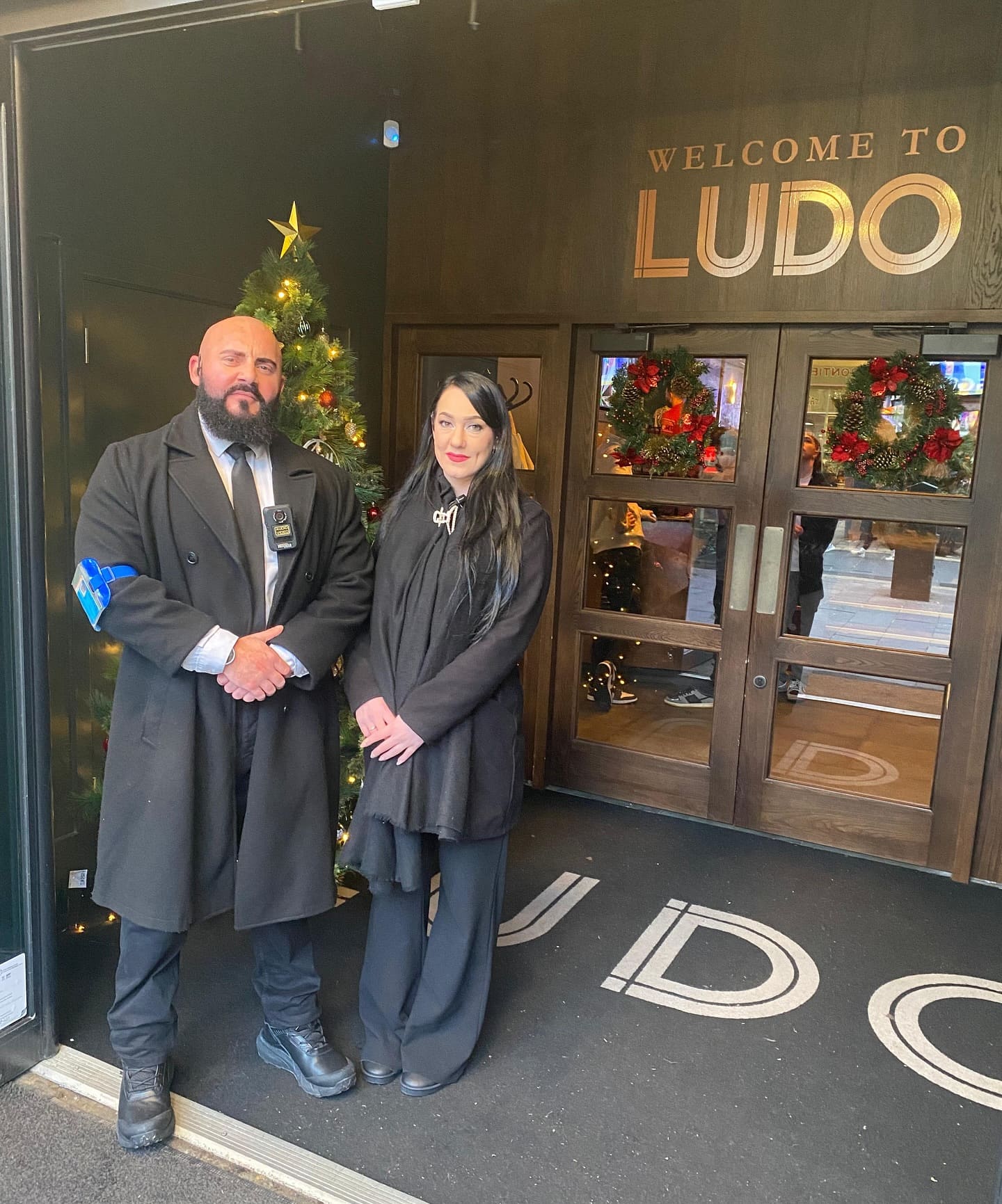
Professional SIA licensed door supervisors protecting venue entrance while delivering exceptional customer service standards.
Common questions about hospitality security
Do hotels legally need security guards?
No single rule says every hotel must have security guards. The need depends on the hotel’s risk profile, layout, trading hours, events, guest volume and management arrangements.
Can restaurant security staff check ID?
Restaurant security staff can carry out entry checks where that duty is part of the venue policy and the role is properly covered. Licensed premises duties may require a door supervision licence, so the licence needs to match the work.
Is CCTV monitoring enough for a hotel or restaurant?
CCTV monitoring is only one part of hospitality security. A complete service also needs trained response, access control, reporting and clear escalation to management.
What should happen after an incident with a guest?
The security officer should follow the venue procedure, support staff safety, record the incident and escalate it through the agreed route. Management still decides the venue response under its own policy.
Should event security be included in a normal hospitality security contract?
Event security should be stated clearly if you need it. Functions, private dining and late-night events can change access, staffing and response needs, so they should not be left as an assumption.
This is general information, not professional advice.
