What is the best way to create a cleaning schedule with a commercial cleaning service provider?
To create a commercial cleaning schedule that works, identify your workplace cleaning needs, define responsibilities with your provider, and document everything in a structured plan. The schedule should allow for seasonal changes and be reviewed regularly. This approach supports workplace hygiene, shared accountability, and service consistency.
What Do We Cover In This Article?
Understand Your Cleaning Needs Before You Plan
Start with a clear workplace hygiene assessment. Outline your cleaning priorities and note how they vary across different parts of your premises.
Cleaning requirements differ depending on your business type, occupancy levels, and foot traffic. For example, public-facing areas such as reception or toilets experience higher usage and need more frequent attention. Consider the following:
-
The occupancy and frequency of use in each space
-
Regulatory cleaning requirements for your industry
-
High-risk or high-contact zones
-
Seasonal fluctuations or periods of peak activity
Avoid unclear phrases. Instead of saying “clean as needed”, define how often each task should be completed.
Example Cleaning Needs Checklist:
-
Toilets and washrooms: Disinfect twice daily
-
Meeting rooms: Clean tables after each use
-
Kitchens: Clean surfaces daily and deep clean weekly
-
Reception: Disinfect touchpoints twice per day
Use guidance from the Health and Safety Executive, workplace hygiene regulations, and any sector-specific requirements to support your plan.
Regular workplace hygiene assessments help identify gaps before they affect staff or visitor experience.
Pro Tip: Always review your cleaning schedule after layout changes or shift updates.

Get a Custom Cleaning Plan
Let us build a cleaning schedule around your space, your hours, and your team’s needs.
Work with Your Cleaning Provider to Define Roles and Zones
Once your needs are outlined, clarify cleaning zones and assign responsibilities. Shared cleaning duties improve accountability and ensure complete coverage.
Divide your workspace into functional zones:
-
Reception
-
Washrooms
-
Kitchens and staff areas
-
Meeting and conference rooms
-
Storage and back-office spaces
Then assign tasks:
-
The cleaning provider handles mopping, bin emptying, and disinfecting public areas.
-
Internal staff are responsible for keeping desks clear and managing personal kitchen use.
Document all commercial cleaning roles in writing. Do not rely on assumptions. Many providers follow standard commercial contract structures, but your site-specific needs may differ.
Use a zone map or table to visualise responsibilities. Refer to guidance from the British Institute of Cleaning Science (BICS) or COSHH role expectations.
Example Zone Responsibilities Table
This sample layout divides cleaning tasks clearly and can be adapted for your business:
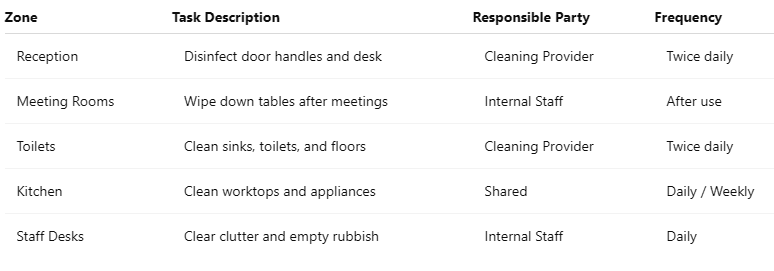
This table ensures everyone knows their responsibilities. It also supports task verification and consistent coverage across all cleaning zones.
Build a Flexible Cleaning Schedule That Actually Works
Your commercial cleaning schedule should be dependable while remaining adaptable to operational shifts.
Structure tasks by frequency:
-
Daily: Empty bins, clean washrooms, disinfect door handles
-
Weekly: Clean kitchen appliances, mop internal floors, tidy meeting rooms
-
Monthly: Deep clean carpets, clean internal windows and vents
-
Occasional: Clean up after events or provide reactive deep cleans
A flexible cleaning plan allows your provider to respond to changing usage patterns or seasonal needs.
Ask whether your provider can review the schedule monthly or quarterly. This helps monitor changes in cleaning priorities as business activity shifts.
A cleaning frequency chart or checklist makes the schedule easier for your team to follow.
Pro Tip: Assign one internal contact to manage feedback and communication with your provider.
Speak to a Cleaning Contract Specialist
Our team helps you raise hygiene standards with professional, reliable service.
Finalise the Schedule and Set Clear Expectations
Once the cleaning plan is agreed, document everything clearly. This improves accountability and aligns expectations between you and your provider.
Your cleaning schedule document should include the following:
-
A list of zones with associated tasks
-
Task timing and frequency
-
Assigned responsibilities
-
Instructions for reporting missed or delayed tasks
Avoid vague terms like “as appropriate”. Use exact times. For example, say: “Reception touchpoints cleaned at 10 a.m. and 4 p.m. daily.”
Incorporate the plan into your cleaning contract agreement or attach it as a Scope of Work (SOW) or Service Level Agreement (SLA). These formats provide contractual clarity and are widely used in the UK cleaning sector.
Ensure the schedule is easy to access, whether as a shared file or printed document.
Refer back to the scope of work cleaning document whenever tasks or schedules change to maintain alignment.
Keep Communication Open and Monitor Performance
Open communication and monitoring tools help maintain cleaning quality without requiring constant supervision.
Effective monitoring tools include:
-
Paper-based cleaning logs
-
Shared digital checklists
-
QR code task verification
Establish a clear feedback process:
-
Collect observations from staff
-
Hold monthly check-ins with your provider
-
Track performance using basic logs or spreadsheets
Assign one team member to manage communication and handle any issues. If needed, explore cleaning audit apps or CAFM systems for larger setups.
Using a cleaning log template or cleaning checklist template improves consistency and simplifies task tracking.
Keeping clear records supports accountability and helps your team identify recurring gaps.
Know When to Review and Adjust the Schedule
Even a strong cleaning schedule should evolve. Plan regular reviews to keep it relevant.
Schedule reviews:
-
Quarterly
-
After receiving feedback or complaints
-
Following operational changes, such as staffing or layout adjustments
-
During high-traffic periods or busy seasons
Use change request forms or update the contract to keep your provider-client cleaning plan accurate.
Adapting your plan as part of regular service revision and operational change management helps maintain effectiveness.
Regular reviews also help prevent schedule fatigue and promote continued attention to cleaning standards.
Next Steps: Make Your Cleaning Schedule a Lasting Success
To keep your schedule effective over time:
-
Assign a team lead to oversee cleaning
-
Display the schedule where staff and providers can access it
-
Confirm a recurring review cycle
-
Acknowledge good performance by your provider
-
Adjust the schedule when your business changes
These practices make it easier to maintain workplace hygiene and ensure shared responsibilities are met.
Quick Cleaning Success Checklist:
-
Cleaning schedule agreed and circulated
-
Zones, roles, and tasks defined
-
Feedback and reporting processes set
-
Monitoring tools ready and working
-
Review schedule confirmed
A good commercial cleaning schedule supports safety, improves day-to-day operations, and creates a more pleasant environment for everyone.