What is a security guard incident report?
A security guard incident report is a formal document used to record specific events that occur on site. It is not a general note or daily log. Instead, it is operational documentation reviewed by clients, managers, investigators, or insurers. These reports outline what happened, what actions were taken, and help build a reliable audit trail.

What Do We Cover In This Article?
What a Security Guard Incident Report Is (and What It Isn’t)
An incident report is written for someone who was not present. It avoids opinions, assumptions, or storytelling. Instead, it gives a straightforward account based on what was seen, heard, or directly communicated.
Some officers may see reports as paperwork. In reality, they are professional tools that protect the officer, the client, and the company. Reports become part of site records and may be used in audits or investigations.
Stick to facts from first-hand observation. Use neutral language, avoid emotion, and focus on clear descriptions.
When Should a Security Guard Write an Incident Report?
Write a report if an event:
-
Poses a risk to safety, property, or operations
-
Requires you to respond or take action
-
Could be reviewed later by a manager, client, or authority
Even small incidents such as access attempts, damage, or unusual behaviour may be reportable. Knowing what qualifies ensures consistency across shifts and reduces uncertainty.
Pro Tip: Use exact times and actions, not summaries or impressions.
Need Reliable Security Reporting Across Sites?
Our guards are trained in structured, compliant incident reporting tailored to your business.
Who Reads Security Incident Reports and Why It Matters
Incident reports may be read by clients, HR teams, legal departments, auditors, or insurers. This can happen weeks or months after the event.
If the report is vague or unclear, it causes confusion. Write with the assumption that the reader is unfamiliar with the site. Clarity supports effective governance and contributes to the site’s compliance records.
How Should a Security Guard Prepare to Write an Incident Report?
After an incident, take a moment. Fatigue or stress can blur the details. Pause to gather your thoughts.
Make brief notes on the key points: what happened, when, who was involved, and what actions were taken. Then write a clear, sequenced report. Keep the tone neutral. Avoid copying notes directly.
Whether you write immediately or at the end of your shift, accuracy is essential.
How to Structure a Security Incident Report for Clarity
Use a simple chronological format:
- Time, date, and location
- What was reported or observed
- What actions were taken
- What outcomes occurred
- Any follow-up or handover
Use subheadings if your template allows. Maintain order. Avoid jumping between times or topics. Clear structure supports audits and internal reviews.
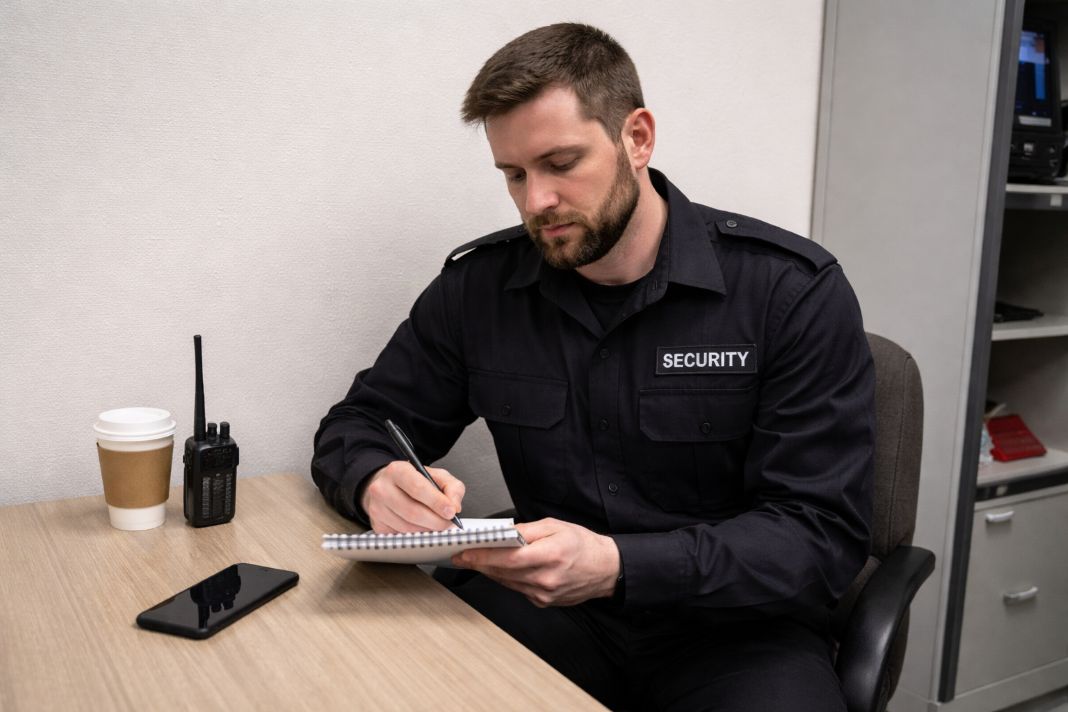
How Can Security Guards Write Factual Incident Reports?
Use only what you directly saw or heard. Do not guess or include intent.
-
Correct: “At 21:30, the person raised their voice and stepped forward.”
-
Incorrect: “The person became threatening.”
Include exact times. Use adjectives only when quoting or supported by evidence. Objectivity helps prevent misinterpretation.
How to Record Security Actions and Report Outcomes
List your actions in order:
-
What you did
-
Who you informed
-
What procedures were followed
-
What the result was
Avoid defending your actions. Describe them plainly. Clear reporting shows professionalism and attention to procedure.
How to Include Evidence and Witnesses in a Security Report
If others were involved or evidence was collected:
-
Name or describe individuals involved
-
Mention any statements taken
-
Refer to CCTV or logs, without describing their content
Explain where evidence was stored or who took responsibility for it. This ensures traceability.
Firms such as Double Check Security Group follow structured protocols to manage evidence securely.
Pro Tip: Always write as if someone with no site knowledge is reading your report.
Upgrade Your Incident Documentation Standards
We build reporting systems that support audits, risk management, and client trust.
What Should Not Be Included in an Incident Report?
Leave out:
- Opinions or assumptions
- Emotional language
- Irrelevant details
- Unverified information
If a detail cannot be confirmed or was not observed, do not include it. This reduces liability and maintains professional standards.
What Should Be Checked Before Submitting an Incident Report?
Before submitting, ask yourself:
- Is the order logical?
- Are the details complete?
- Is the tone professional?
- Are there any spelling or grammar errors?
A short review improves report quality and avoids unnecessary revisions.
What Happens After a Security Guard Submits an Incident Report?
Reports may:
- Be reviewed by management or clients
- Support legal or insurance proceedings
- Be used during audits or investigations
At organisations such as Double Check Security Group, incident reports support quality control and legal compliance. Reports may also be archived for reference in accordance with ISO 9001 and Martyn’s Law.
A well-written report continues to provide value long after submission.
Final Thought
A strong incident report is clear, neutral, and factual. Whether it is read tomorrow or six months from now, it should tell the story accurately. Solid reporting supports security operations and protects everyone involved.