

How has hybrid working changed what good office security looks like?
Hybrid working has changed office security because buildings no longer follow a steady daily pattern. Access, occupancy, visitor flow and after-hours use can shift from one day to the next, which means that systems built for a full office every weekday may leave gaps when desks are empty, teams arrive at odd times, or parts of the site sit unstaffed for long periods.
What Do We Cover In This Article?
The New Reality: Hybrid Working and Shifting Security Risks
An office used to have a rhythm. People arrived in waves, reception stayed busy, managers could spot who was on site, and empty periods were easier to predict. Flexible working has broken that rhythm, and many buildings now move between busy mornings, quiet afternoons and near-empty floors within the same day.
Fewer people in the building does not automatically mean lower risk. Sparse occupancy can make unauthorised access harder to notice, especially if nobody questions an unfamiliar face in a corridor or near a meeting room. Lone working can also become more common, particularly early in the morning, later in the evening, or on quieter office days.
Common changes in hybrid office use include:
- uneven occupancy patterns across the week
- more ad hoc use of meeting rooms and shared areas
- longer unstaffed periods in parts of the building
- less certainty about who should be on site at any given time
Facilities managers often focus first on desk allocation, cleaning schedules and staff booking systems. Security needs the same level of review. Building access, alarm settings and response arrangements may all need adjusting once office use stops following a fixed timetable.
That shift matters because changing workplace security is rarely about one visible weakness. More often, it is about several small assumptions no longer matching how the office actually operates.
Identifying the Gaps: Where Traditional Office Security Falls Short
Many offices still rely on measures set up for a predictable, fully occupied workplace. Those measures can remain useful, but hybrid working exposes weak points that once stayed hidden.
A simple example is access control. A card system may record entry perfectly well, yet the access permissions behind it may be out of date if staff now work irregular days, teams have moved floors, or contractors attend outside normal office hours. Visitor management can also become patchy if reception is staffed only part of the day or if employees expect deliveries and guests without logging them properly.
Old assumptions and current risks often look like this:
- Full reception cover every weekday becomes part-time front desk cover, which leaves visitor oversight weaker at certain hours.
- Fixed office hours become staggered attendance, which can create more after-hours incidents and more system overrides.
- Manual checks of who is present become unreliable once occupancy changes daily.
- CCTV that once covered busy entrances may miss quieter side access points that matter more during low occupancy periods.
Alarm response protocols deserve close attention as well. If a building is used unevenly, an alarm activation at 7.15 pm may no longer be unusual, but it still needs a clear process. Without key holding services or agreed call-out procedures, staff can end up making risky judgement calls from home or travelling back to site without proper support.
In practice, a structured gap analysis often reveals ordinary problems rather than dramatic failures. Double Check Security Group, for example, works in environments where access control, guarding, cleaning and building management need to line up with actual occupancy rather than old floor plans or inherited routines. That kind of review often brings up issues such as unmonitored entry points, weak visitor logs or confusion over who can authorise temporary access.
Most office security gaps are mundane, which is precisely why they persist.
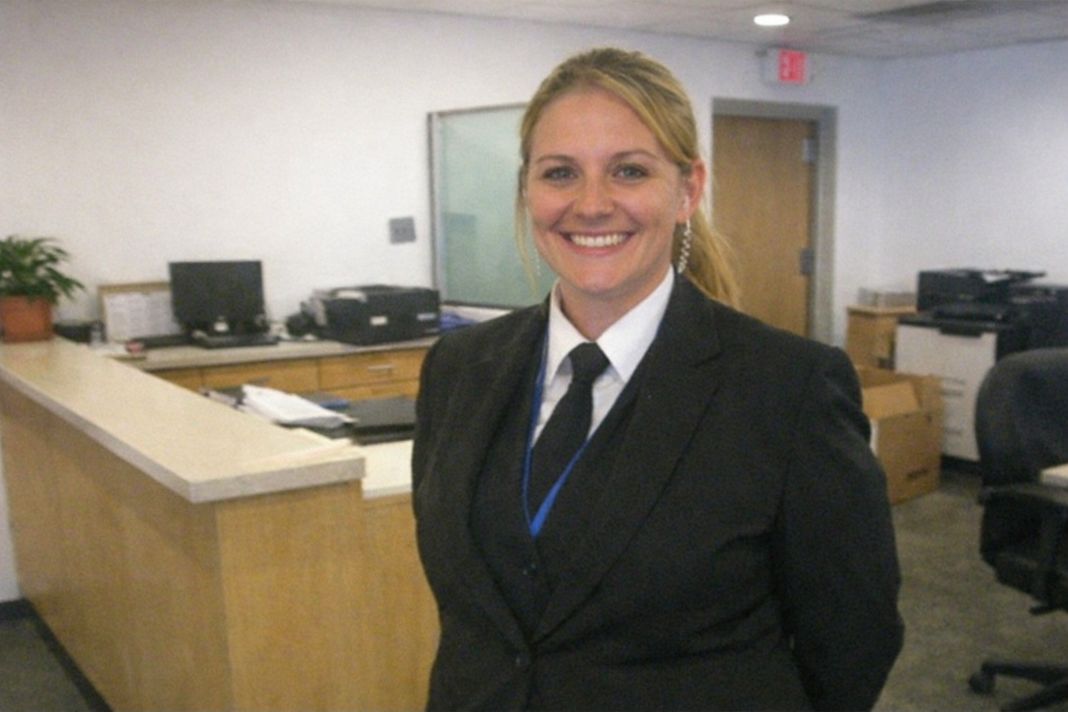
A photo of a corporate security guard in an office reception area – Sample Image
Compliance, Accreditation and the Role of Professional Oversight
Hybrid office security is not just an operational matter. It also sits within a framework of compliance, staff vetting, documented processes and regular review.
Accreditation can sound abstract until something goes wrong. If an incident takes place outside standard hours, or if a visitor gains access without proper logging, the organisation may need clear audit trails, trained personnel and evidence that its security arrangements were being managed properly. That is where recognised standards become practical rather than procedural.
Key markers of professional oversight include:
- SIA Approved Contractor Scheme, which relates to the management and delivery of security services
- ISO 9001, which focuses on consistent quality management and documented processes
- SAFEcontractor, which supports health and safety assurance in contractor delivery
- British Institute of Cleaning Science standards, which matter where cleaning teams work across sensitive or access-controlled areas
- Action Counter Terrorism awareness, which supports vigilance and staff awareness in public-facing or higher-risk settings
Consider the difference between two evening incidents. In one office, a vetted officer follows a defined procedure, logs the issue properly, escalates it through an agreed chain and leaves a clear record for the next day. In another, an unstructured arrangement relies on informal messages and memory. The immediate event may look similar, yet the operational quality behind it is very different.
Accredited providers tend to bring more than manpower. They bring documented training, policy updates, site instructions and a process for checking whether service delivery still matches the risk profile of the building. Double Check Security Group sits within that accredited end of the market, which means that oversight is tied to standards rather than left to chance.
For hybrid workplaces, that matters most when routines change quietly, because policy drift often starts long before anyone notices it.
Integrating Security, Facilities and Cleaning: The Case for Joined-Up Management
A hybrid office can create problems in the gaps between teams. Security may know which floors are quiet, facilities may know which doors keep failing, and cleaning staff may notice rooms being left unlocked after late meetings. If those details stay in separate silos, the building loses visibility.
Joined-up management gives those observations somewhere to go. A cleaner who repeatedly finds a side entrance propped open after delivery windows has seen a security issue. A facilities supervisor who notices occupancy sensors and access logs telling different stories may have spotted misuse of shared space. Those signals are easy to miss when providers work on separate schedules with separate reporting lines.
A simple joined-up workflow often looks like this:
- Cleaning, security and facilities teams follow shared site protocols for access, locking and reporting.
- Daily or weekly updates capture repeated issues such as blocked doors, failed readers or unexpected room use.
- Site management reviews those patterns against occupancy data and incident reports.
- Action is assigned clearly, whether that means a repair, a policy reminder or a change to staffing coverage.
That kind of coordination also improves hygiene and security at the same time. Sensitive rooms, storage areas, server spaces and executive offices all depend on who can enter, when they enter and how that access is recorded. A cleaning schedule that does not align with access permissions can create delays, workarounds and unnecessary system overrides.
Integrated service models do require effort. Shared protocols need to be written clearly, and communication channels need ownership. Yet the payoff is practical: one team notices an issue, another verifies it, and the site responds before the problem becomes routine. In a hybrid office, those handovers can matter as much as the cameras on the wall.
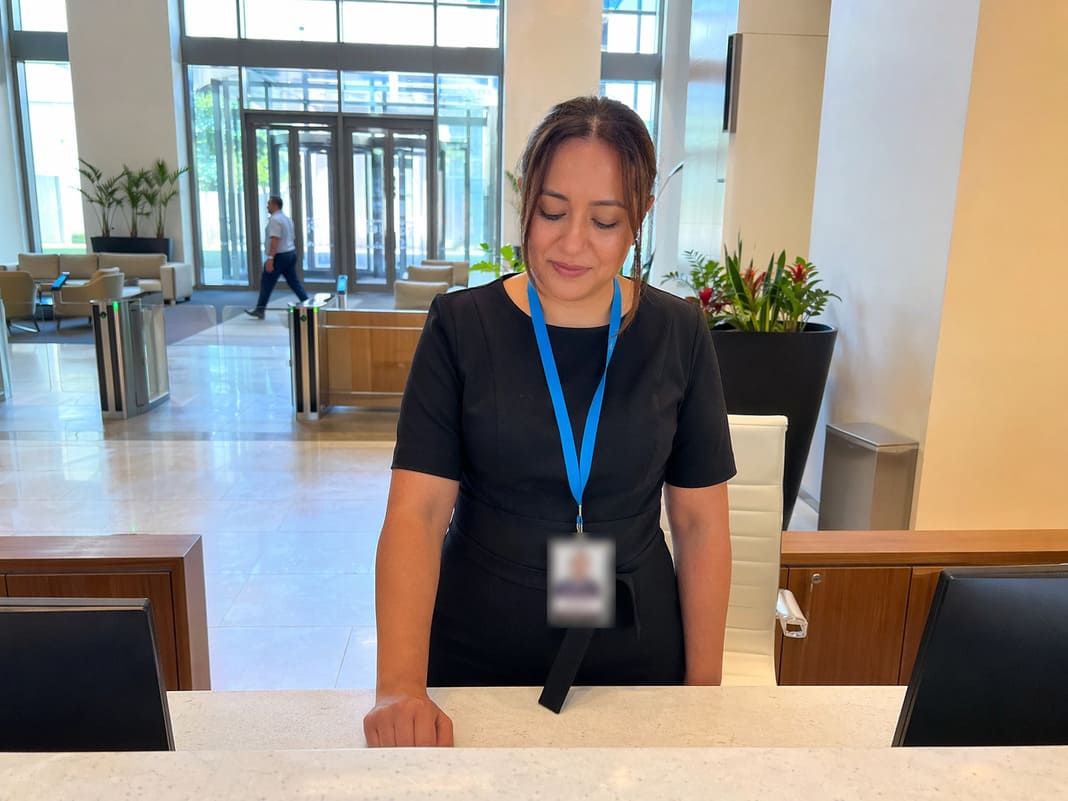
Corporate Reception Services At A Front Of House Reception Desk – sample image
Rethinking Security Strategy: Moving from Reactive to Proactive
Reactive security often starts with an incident, a complaint or a near miss. In hybrid offices, that approach can leave organisations permanently one step behind.
A proactive strategy looks at patterns before they become problems. Site audit protocols, regular reviews of access rights, control centre oversight and feedback mechanisms all help build a clearer picture of how the building is really being used. That does not remove risk, but it does reduce reliance on guesswork.
One useful way to think about the difference is this. A reactive model asks what happened after an alarm, access breach or policy failure. A proactive model asks what conditions made that event possible. Once teams start reviewing occupancy trends, response times, repeated overrides and weak points in physical coverage, security planning becomes more disciplined.
Technology has a place here, but it is not a complete answer. Access management systems, remote monitoring and reporting tools work best when someone reviews the output and acts on it. If a side door generates repeated exceptions on quiet days, the value lies in noticing the pattern and changing the process, not merely storing the data.
Continuous improvement in security tends to be unglamorous. It lives in site notes, updated instructions, small procedural changes and regular follow-up. Over time, those habits create a building that responds better to flexible working because its security setup keeps pace with the way people actually use the space.
Beyond the Obvious: Overlooked Risks and Emerging Threats
Some of the biggest hybrid work vulnerabilities are easy to miss because they sit between physical security and day-to-day behaviour. A member of staff may enter legitimately, then let someone else follow through a door without challenge because the office feels quiet and familiar. A remote worker may return to site after weeks away and use a shared room without noticing that sensitive materials were left in plain view.
Insider risk also looks different in a dispersed workforce. It does not always involve malicious intent. Sometimes it appears as poor habits, outdated permissions, borrowed access cards or casual assumptions about who belongs in a space. Social engineering works particularly well in buildings where occupancy changes often, since unfamiliar faces attract less attention when nobody is sure who is meant to be there.
Areas that deserve a fresh look include:
- storage rooms and archive areas opened infrequently
- data rooms or comms spaces with legacy access permissions
- shared meeting areas used by different teams across the week
- remote access arrangements that do not match current HR protocols
Policy drift is another quiet problem. Security rules written for a fixed office pattern may remain on paper long after the workplace has changed. If desk booking systems, contractor visits, lone working arrangements and remote entry procedures have all shifted, policies need to reflect that reality. Cyber-physical security frameworks and access management systems are most effective when they align with current working practices, line management and HR processes.
A hybrid office rarely fails because of one dramatic oversight. More often, risk gathers in overlooked corners, where an old permission, an unused room or an informal habit no longer fits the way the business now operates.
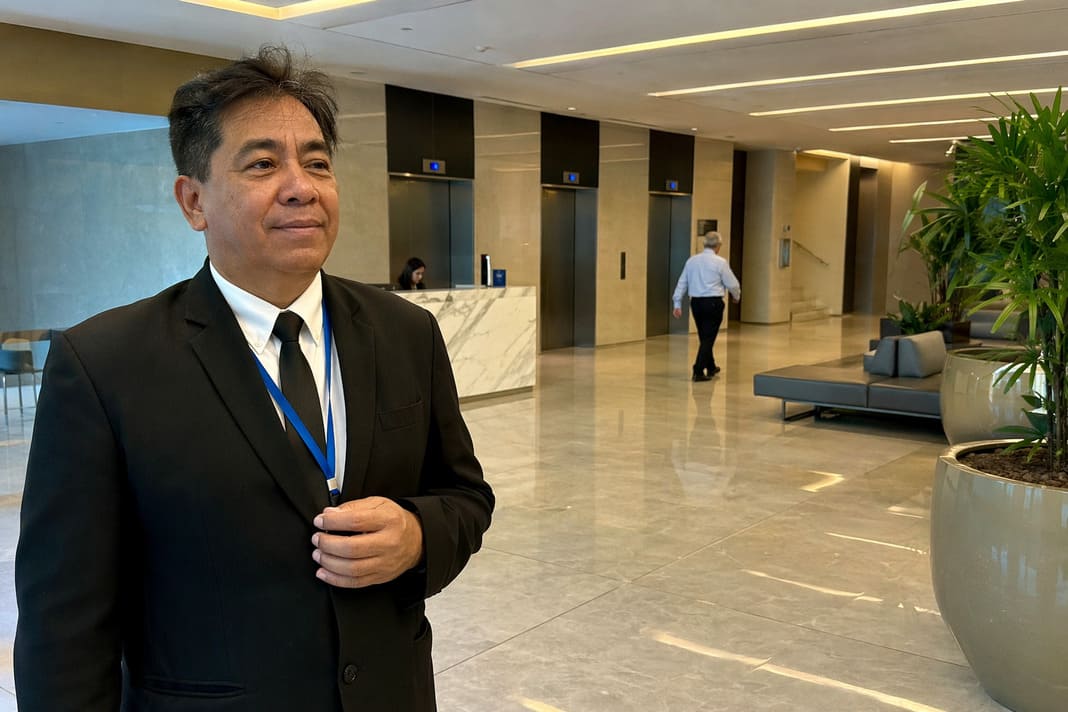
Corporate Reception Security Services In A Modern Office Reception Hall – sample image
Reframing Office Security for the Hybrid Era: What Really Matters Now
The question is no longer whether an office has security in place. The better question is whether that security is fit for the way the office is actually used.
Hybrid office security strategy depends on adaptability, operational trust and clear planning. Buildings need access rules that reflect real occupancy, reporting lines that work outside standard hours and review processes that keep pace with change. Good security in a hybrid workplace is usually structured, visible and regularly tested, even if much of that work happens quietly in the background.
A few points matter more than they once did:
- good enough security is often based on old assumptions about presence and supervision
- fewer people on site can create different risks instead of fewer risks
- integrated building services often spot problems earlier than isolated teams
- accreditation and oversight support consistency when routines stop being predictable
- regular review matters because hybrid working patterns can shift again without much warning
The strongest office security arrangements now tend to be the ones that accept uncertainty as normal and plan for it carefully. That mindset leaves room for flexibility without leaving room for complacency.
