How does pollen and allergy season impact office cleaning and air quality in the UK?
Pollen and allergy season introduces unique challenges for UK office environments by increasing airborne allergens, which can compromise air quality and employee wellbeing. Targeted cleaning and maintenance are important to reduce pollen accumulation and support staff health during this period.

What Do We Cover In This Article?
Understanding Pollen and Allergy Season in UK Workplaces
Each year, UK offices face heightened levels of airborne pollen from late spring through early autumn. Grass, tree, and weed pollens are particularly prevalent, with peak times varying across the country. Indoor environments often provide a false sense of safety, yet pollen easily enters through windows, doors, ventilation systems and on employees’ clothing.
Key facts about UK office pollen exposure:
- Grass pollen is most common between May and July, while tree pollen peaks earlier in spring.
- Airborne allergens persist indoors without proper cleaning and ventilation.
- Hay fever affects up to one in four people, often leading to respiratory discomfort and increased absenteeism.
Offices with inadequate cleaning or ventilation risk accumulating pollen and dust, which may trigger allergic reactions among staff. Contrary to some assumptions, air conditioning or closed windows alone do not fully prevent pollen infiltration. As a result, allergy season in offices has direct consequences for staff comfort and productivity.
Pro Tip: Schedule deep cleaning for soft furnishings and air vents before peak pollen months to minimise allergen buildup,
Speak to Facilities Experts
Enhance your office’s allergy management with proven cleaning protocols and certified equipment from experienced teams.
Key Cleaning Priorities for Allergy Season
Addressing allergen build-up during peak pollen months requires focused action and clear routines. Cleaning priorities should centre on preventing pollen accumulation, especially in high-traffic areas where exposure risk is greatest.
High-frequency touchpoints such as door handles, shared desks, and keyboards often harbour settled dust and pollen. Daily cleaning and disinfecting of these surfaces can significantly reduce allergen presence.
Soft furnishings, including upholstered chairs, carpets, and blinds, require special attention. Pollen binds to fibres easily and is released into the air with movement. Weekly vacuuming with equipment fitted with HEPA filters, combined with periodic deep cleaning, is recommended by industry bodies like the British Institute of Cleaning Science.
Cleaning schedules must adapt to the demands of allergy season. In addition to daily routines, plan for weekly and monthly deep cleans to address less obvious locations such as air vents, skirting boards, and window frames.
A common misstep is using feather dusters or dry cloths, which can redistribute pollen rather than remove it. Professional cleaning teams, such as those from Double Check Security Group, frequently use damp microfiber cloths and certified vacuums to capture airborne allergens without dispersal.
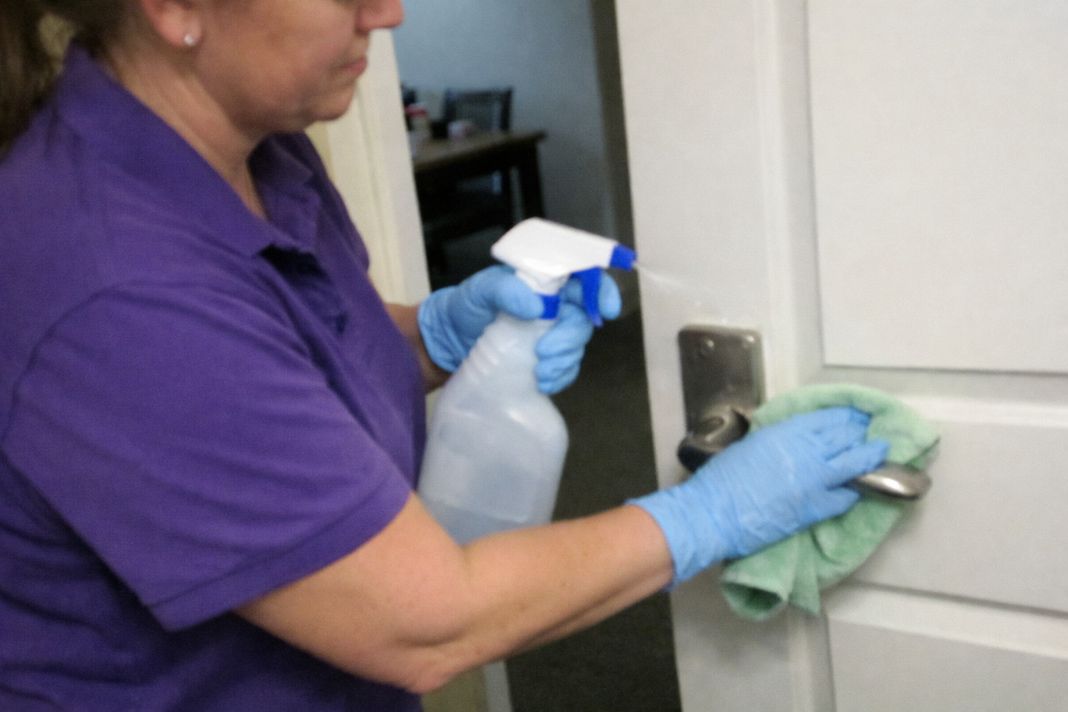
A representative photo of an cleaner in a purple polo t shirt and appropriate gloves cleaning a high-touch surface with disinfectant
Ventilation and Air Filtration: Improving Office Air Quality
Effective ventilation and air filtration play a important role in reducing indoor allergens. Offices configured for natural ventilation must balance fresh air intake with controlling pollen ingress. Window management is key: on high pollen count days, limit window opening and rely more on mechanical ventilation where possible.
Mechanical ventilation systems, such as HVAC setups, can help filter airborne pollen if fitted with appropriate filters. HEPA filters are especially beneficial for trapping small particles, including many pollen types. Schedule regular maintenance for all ventilation and air conditioning units, focusing on timely filter changes and system cleaning.
For locations without integrated HVAC systems, portable air purifiers equipped with certified HEPA filters offer practical supplementary protection. Air quality monitors can indicate when action is needed, supporting building management teams in maintaining safe conditions.
Ventilation Checklist
- Review current ventilation type (natural, mechanical, hybrid).
- Inspect and replace HVAC filters regularly.
- Monitor indoor air quality for allergen spikes.
- Adjust window opening based on daily pollen alerts.
- Clean and dust air vents as part of weekly routines.
These practical actions ensure that cleaning efforts are supported by building systems working in tandem, ultimately improving indoor air quality throughout allergy season.
Pro Tip: Provide regular training updates for cleaning teams to ensure protocols stay effective and compliant with industry standards.
Selecting Cleaning Products and Equipment for Allergen Control
Choosing the correct products and equipment makes a tangible difference in allergen control. The British Institute of Cleaning Science recommends hypoallergenic and fragrance-free cleaning agents, reducing the risk of irritating sensitive individuals.
Certifications matter, especially for vacuums and filter systems. HEPA filter vacuums excel at trapping pollen and fine dust, avoiding the recirculation of allergens. Regularly servicing and cleaning this equipment prevents diminished performance.
When selecting cleaning products and equipment, consider the following:
- Look for labels indicating hypoallergenic or allergy-safe properties.
- Select fragrance-free or low-scent formulations to reduce chemical sensitivities.
- Ensure vacuum cleaners meet HEPA or similar filtration standards.
- Choose equipment that can be easily cleaned and maintained.
Avoid products containing strong fragrances or harsh chemicals that may trigger additional sensitivities. Steer clear of basic dry dusting tools, as they can disperse rather than capture allergens.
By scrutinising product labelling and specifications, offices can ensure cleaning routines actively contribute to healthier air, not compound the problem.
Upgrade Office Cleaning Standards
Enhance your office’s allergy management with proven cleaning protocols and certified equipment from experienced teams.
Training and Communication: Supporting Staff During Allergy Season
Structured induction and refresher training for cleaning operatives support effective allergen control. Teams need to understand not just how, but why, certain protocols are in place. This maintains high standards and ensures that cleaning routines address real risks.
Clear communication with all staff is equally important. Inform employees of cleaning schedules, the products in use, and any adjustments during pollen season. Encourage employees to share feedback on perceived air quality and any allergy symptoms, enabling a prompt operational response.
Practical practices include:
- Providing written cleaning protocols in staff handbooks.
- Issuing regular updates during allergy season, including schedule changes.
- Creating feedback loops so staff can report issues easily.
- Accommodating known sensitivities in cleaning routines or workstation arrangements.
Companies like Double Check Security Group exemplify how operational transparency and ongoing staff engagement support workplace wellbeing. Such measures reduce misunderstandings and build confidence in allergen management strategies.

Monitoring, Compliance and Continuous Improvement
Maintaining healthy air quality during allergy season is grounded in ongoing oversight. Air quality monitors help identify spikes in pollen or other airborne irritants, enabling timely interventions. Align practices with standards set by the HSE and British Institute of Cleaning Science, using compliance checklists and documented protocols.
A structured review process supports continuous improvement:
- Monitor air quality regularly using reputable devices.
- Conduct scheduled cleaning audits and record performance.
- Gather feedback from staff after intervention periods.
- Adjust cleaning and ventilation routines as needed.
- Review compliance documentation to ensure regulatory alignment.
This continuous cycle helps facilities management teams maintain standards, respond to feedback, and ensure that cleaning outcomes align with health and safety obligations.
Professional Cleaning Services: When and Why to Engage Experts
Deciding when to involve professional cleaning providers often comes down to scope, capacity, and compliance needs. In-house teams can manage daily routines, but challenge increases during allergy season, especially for larger or high-risk properties.
Professional providers bring several advantages:
- Accredited operators adhere to rigorous standards such as ISO 9001 and SIA Approved Contractor status.
- Service level agreements clarify performance metrics and operational expectations.
- Site audits, compliance documentation, and ongoing support ensure consistency.
In contrast, in-house cleaning may lack the resources for deep cleaning, scheduled audits, or emergency cover. When requirements outstrip internal capacity, or regulatory documentation becomes important, external support offers a strong framework. Providers such as Double Check Security Group can integrate routine cleaning with advanced services, supported by continuous training and oversight.
What to expect from a professional provider:
- Transparent documentation of accreditations and compliance.
- Structured cleaning schedules aligned with risk assessments.
- Access to certified equipment and trained operatives.
- Regular site reviews and performance reporting.
- Flexible support for seasonal or emergency requirements.
Partnering with qualified experts can improve outcomes and reduce risk, particularly during periods of high allergen exposure.
Building a Resilient Office Cleaning Strategy for Allergy Season
A successful response to allergy season in offices relies on clear planning, ongoing review, and structured practices. By prioritising targeted cleaning, maintaining effective ventilation, and selecting the right products, facilities teams can significantly improve air quality and support staff wellbeing.
Key actions for office managers and cleaning teams:
- Establish and communicate clear cleaning protocols.
- Schedule and document routine and deep cleans.
- Maintain and monitor ventilation and air filtration systems.
- Invest in staff training and feedback mechanisms.
- Regularly review outcomes and adjust practices as needed.
A proactive, systematic approach allows organisations to create cleaner, healthier environments during allergy season and throughout the year. Structured management, not just reactive fixes, remains the foundation of resilient office cleaning strategies.