

What do we assess before recommending dogs, guards, or both?
We start with the risk your site needs to control, then match the deployment to that risk. Guards, dog-handler teams and combined cover all solve different problems, so the right answer depends on access, layout, asset value, operating hours, public contact and how the service will be supervised.
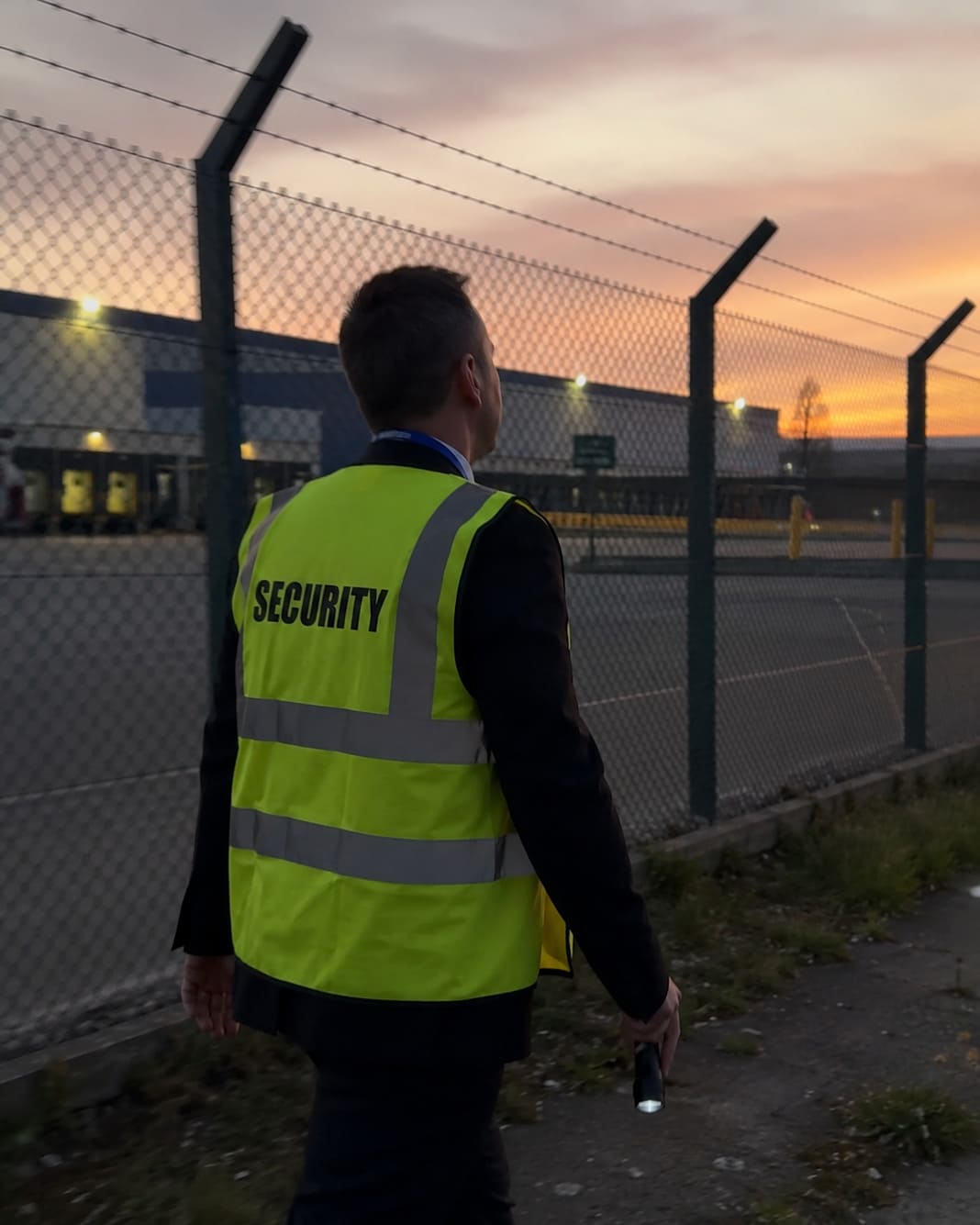
A manned guard patrolling the perimeter of the site
What Do We Cover In This Article?
The deployment follows the risk profile
People often assume a dog unit is simply a stronger version of a guard. In practice, that is the wrong starting point. We begin with what could realistically go wrong on your site and what kind of presence would control it.
Unauthorised access is a different problem from visitor management. Theft from an exposed yard calls for different cover from disorder at a public entrance. Lone working risk, alarm response, contractor access and emergency escalation all change the answer before anyone discusses dogs, guards or both.
During a site security assessment, we look at how the premises actually work. Open perimeters, blind spots, shared gates, vacant areas and high-value storage all matter. Trading hours matter as well, because a closed site at night creates a different risk picture from a busy customer-facing site during the day.
Incident history helps, but it does not decide the answer on its own. A site with previous trespass still needs its current layout tested. A site with no recorded incidents can still have weak access points or poor handover notes. Good physical security provision is proportionate, which means you avoid paying for theatre and you avoid leaving a real gap because the quote looked tidy.
Guards, dog-handler teams and combined cover do different jobs
Neither security dogs nor security guards are automatically better. A guard, a dog and handler team, and a combined deployment all bring different value, and the correct choice depends on what your site needs people to do.
At Double Check Security Group, we do not treat this as a strength contest. We look at the duties first. If the job involves speaking to visitors, managing a gatehouse, checking contractors in and keeping incident logs, a guard is usually central to the plan. If the risk sits around exposed areas, out-of-hours patrols or perimeter movement, a dog-handler team may be worth assessing.
Here is the practical comparison we use with clients who are weighing security dogs versus security guards.
| Option | Best use | Main limit |
|---|---|---|
| Security guard | Access control, visitor handling, reception security, contractor checks, incident reporting and on-site judgement | A single fixed post can leave wider areas exposed if the site is large or awkwardly laid out |
| Dog and handler team | Controlled patrol presence around suitable perimeters, vacant zones, construction areas or out-of-hours locations | It is unsuitable where close public contact, poor welfare conditions or the wrong environment would create avoidable risk |
| Combined deployment | Sites that need both a human interface and wider patrol capability | It only works when roles, patrol routes and escalation procedures are clearly set out |
A dog unit cannot replace every public-facing duty. Equally, a lone guard on a large exposed site may struggle to cover a fixed access point and patrol the perimeter properly. The useful question is which risk needs which capability, and whether the operating plan lets each role do that job without confusion.
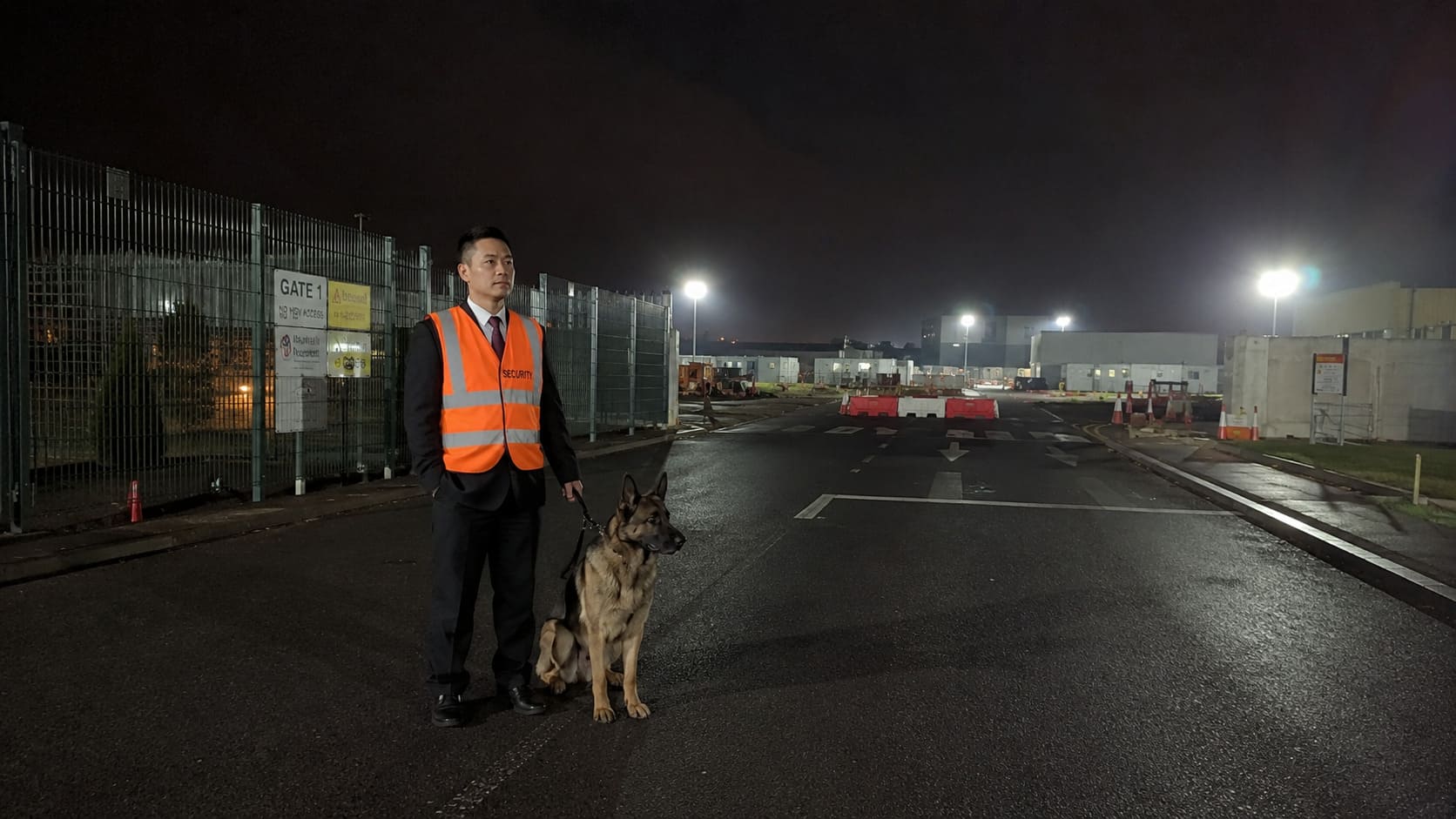
Security dog handler conducting a night time site patrol – Illustrative Image
Dog units make sense only in the right environment
A closed industrial yard at night and a public-facing venue during operating hours are not the same security problem. The first may point us toward a handler-led patrol. The second needs much closer thought before any dog deployment is considered.
Dog units are most likely to enter the discussion where the site has exposed perimeters, vacant buildings, construction zones, industrial yards, stored plant, materials or out-of-hours trespass risk. Even then, the dog is part of a controlled service. The Guard Dogs Act 1975 requires a guard dog to be under the control of a capable handler while being used at premises, unless the dog is secured so it is not free to go around the premises.
Public contact changes the assessment. Retail, hospitality, residential buildings, venues and events can involve customers, residents, visitors, accessibility needs and emergency routes. In those settings, the fact that a dog might look useful for deterrence does not settle the matter. We test whether it fits the site, the people using it and the instructions staff would need to follow.
Patrol dogs and detection dogs are also different decisions. A general patrol dog supports a security presence in suitable areas. A detection dog is used for a specific search purpose, such as drugs, explosives or pyrotechnics, where that type of deployment is appropriate for the site and event plan. Mixing those two up leads to bad buying decisions.
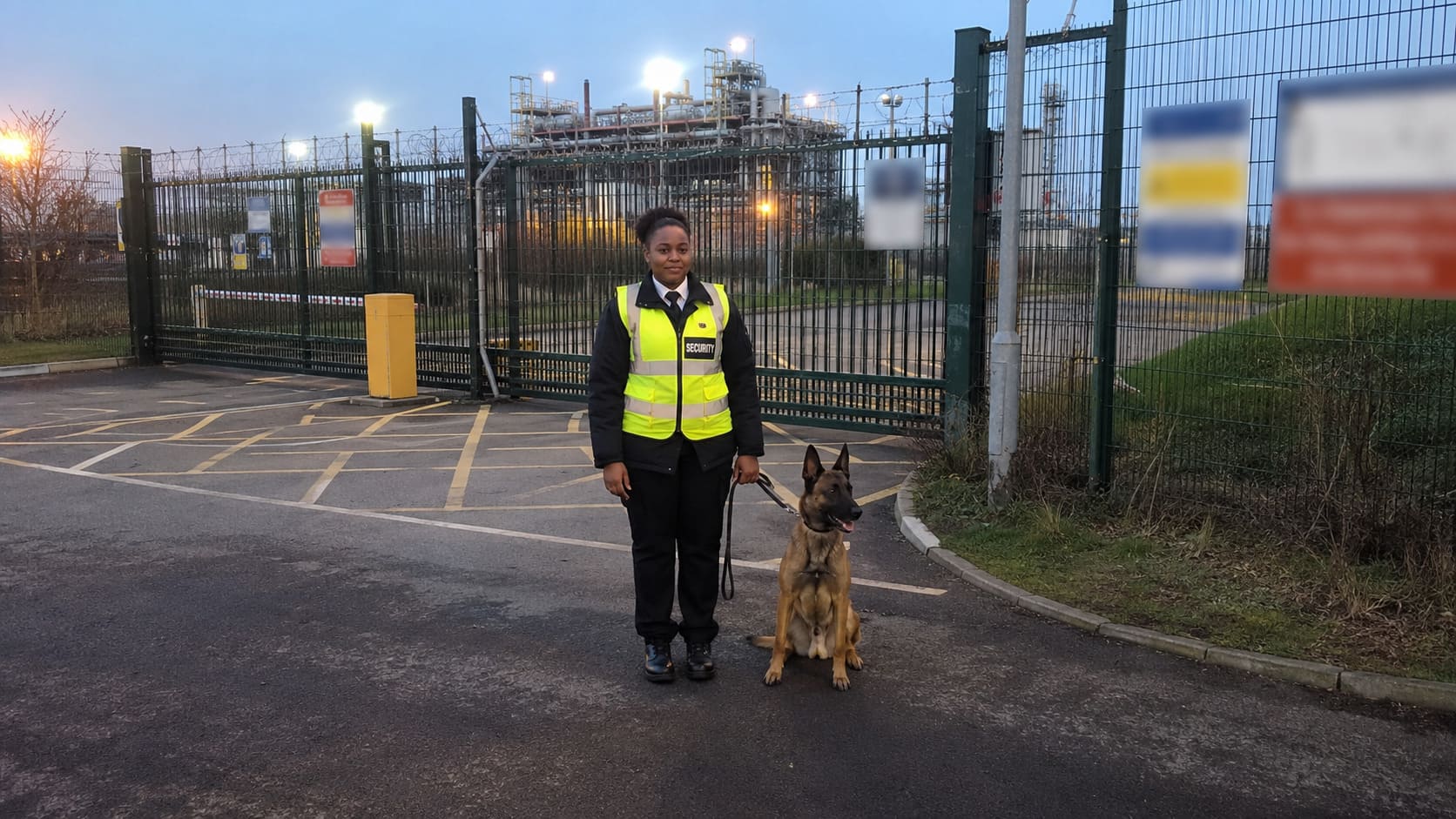
Security dog handler checking an industrial site boundary – Illustrative Image
Combined deployment works when the roles connect
Some sites need a human post at the front end and patrol strength at the edges. A logistics yard may need gate control and contractor checks during one part of the operation, then a different focus after hours. A venue may need public-facing security at access points and separate support around restricted areas. One role can become stretched when the site asks it to do two very different jobs at once.
At Double Check Security Group, we look at how the roles connect, and we also check whether both services are available. A combined security guards and dogs deployment has to sit inside one operating plan, with clear instructions for patrols, reporting, alarm response and control room support.
Each role needs a clear job
Guards should own the duties that depend on judgement and communication. That includes access control, reception security, visitor flow, contractor checks and reporting. The dog-handler team should have a defined patrol purpose, with routes and areas set out in the assignment instructions.
Blurred roles create problems. If the guard thinks the dog-handler team is covering an area, and the handler thinks the guard is watching it on closed circuit television (CCTV), nobody truly owns the risk. Clear job ownership matters more than adding bodies to a rota.
Escalation must be built in
Layered site security works when CCTV, alarms, key holding, patrols and the control room all support the same plan. If an alarm activates, the team needs to know who checks it, who records it and who escalates it. If a patrol finds damage to a fence line, the issue needs somewhere to go beyond a line in the occurrence book.
Public-access premises and events also need to prepare for Martyn’s Law, the common name for the Terrorism (Protection of Premises) Act 2025. The Home Office frames it around organisational preparedness and protective security, so dog deployment should never be treated as the answer on its own. The stronger plan is the one where each layer knows its job.
Proportionate deployment depends on checks after mobilisation
The decision does not finish when the first shift starts. We keep the deployment proportionate by checking licensing, site instructions, handler control, logs, patrol records and review evidence once the service is live.
For a buyer, the practical checks are straightforward:
- Check that any person carrying out licensable guarding activity has the relevant Security Industry Authority (SIA) licence. The Security Industry Authority does not issue a separate dog handler licence, but a dog handler carrying out licensable manned guarding still needs the right SIA licence for the activity.
- Guard dog warning notices must be clear at each entrance to premises where a guard dog is used. That is a legal requirement under the Guard Dogs Act 1975, not a nice-to-have sign.
- Assignment instructions need to say what the guard does, what the handler does and how the control room is used.
- Patrol records and incident logs should be reviewed against real activity. If the risk changes, the deployment should change with it.
- Provider governance matters. The SIA Approved Contractor Scheme is one useful check when you are judging whether a supplier treats compliance as part of normal delivery.
After mobilisation, the evidence starts to tell you whether the plan fits. Alarm activations, attempted access, repeated fence damage, staff feedback and missed handovers all give useful information. We would rather adjust a deployment because the site evidence has changed than leave an expensive arrangement in place because it sounded convincing at the start.
The common misconception is that choosing a dog unit is a shortcut to stronger security. It is not. A dog-handler team can be the right answer, a guard can be the right answer, and both can be justified, but only when the site risk, public contact, supervision and compliance checks support that choice.
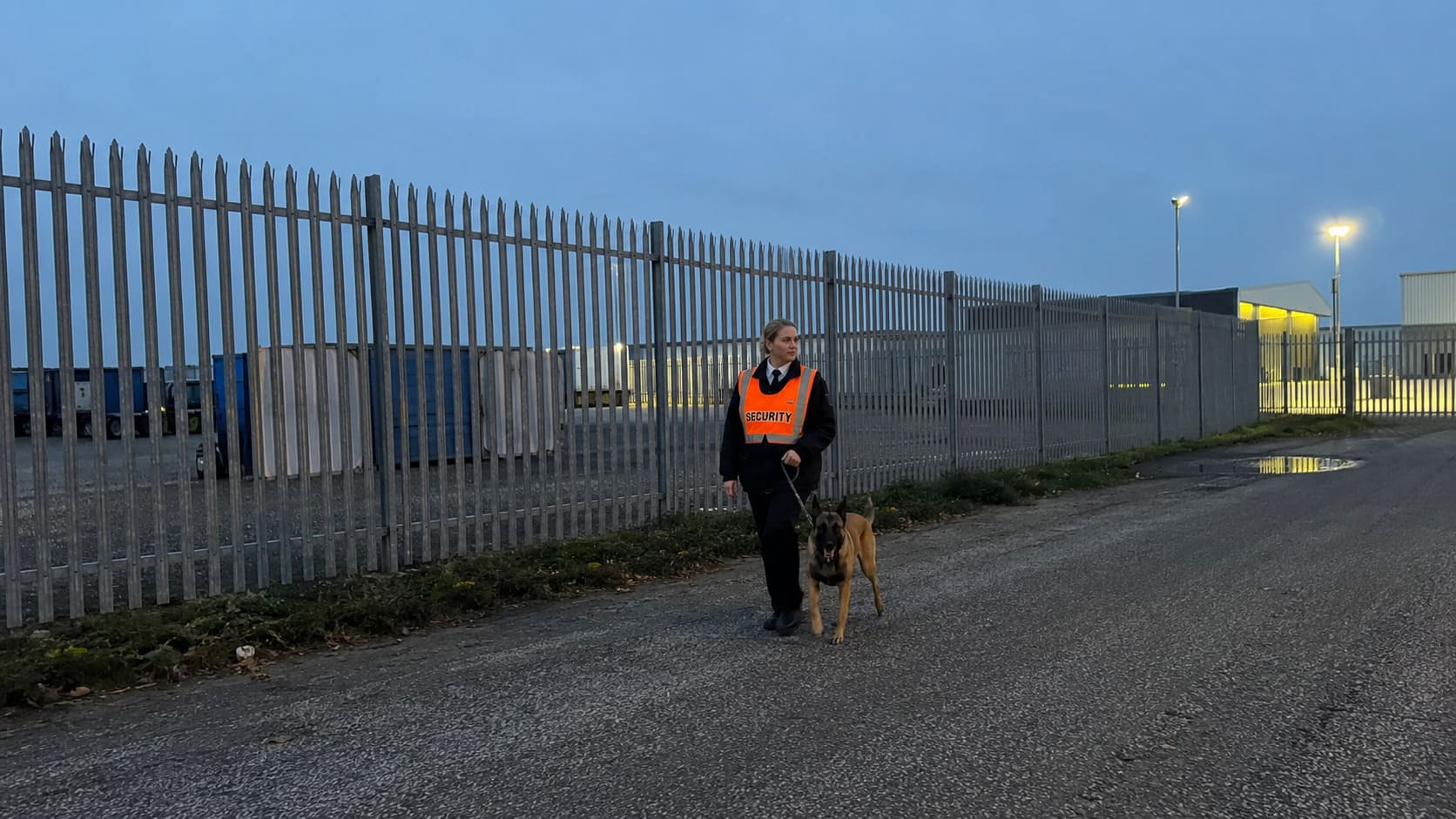
Security officer checking an industrial site perimeter – Illustrative Image
Questions we get asked about dogs, guards and site security
Can a security dog be left on site without a handler?
A guard dog must be controlled by a capable handler while being used at premises, unless it is secured so it cannot move freely around the premises. In normal security planning, we treat dog deployment as a handler-led service, not an unattended shortcut.
Do security dog handlers need an SIA licence?
The Security Industry Authority does not issue a separate dog handler licence. A dog handler who carries out licensable manned guarding still needs the relevant SIA licence for the activity, such as security guarding or door supervision.
Are security dogs suitable for events?
Security dogs can be suitable for some event roles, but the event layout, public access, accessibility, emergency routes and welfare conditions must be assessed first. Detection dogs and patrol dogs serve different purposes, so the required role has to be defined clearly.
Do you always need warning signs if a guard dog is used?
A site using a guard dog must clearly display a warning notice at each entrance to the premises. We treat signage as part of the deployment plan, alongside handler control and written site instructions.
What security suits a vacant property or building site?
A vacant property or building site needs a risk-led mix of access control, patrols, alarm response and reporting. A dog-handler team may be proportionate where there are exposed areas or out-of-hours trespass risks, but the site conditions decide the answer.
This is general information, not professional advice.
