What is a spring deep cleaning checklist for UK workplaces?
A spring deep cleaning checklist is a planned, zone-by-zone list of tasks that takes your workplace beyond day-to-day cleaning. It targets the hidden build-up that affects comfort, hygiene and safety, such as dust in vents, grime under furniture, worn entrance matting and neglected washroom details. In UK workplaces, a well-run spring deep clean also supports your legal duty to keep premises suitably clean and safe for staff and visitors.
What Do We Cover In This Article?
Why spring deep cleaning still matters in UK workplaces
Picture the first mild Monday of spring. You open the blinds, the light hits the window ledge, and you suddenly see what winter hid: a line of dust on the vent grille, fingerprints on the meeting room glass, and a dull patch where the carpet gets ground down by wet shoes.
That moment is why spring cleaning still earns its place in facilities management. A tidy office can still feel stale. Bins can be empty while allergens sit in soft furnishings and vents. The aim is not cosmetic perfection. The aim is a workplace that feels healthier, runs smoother, and stands up better to audits and client visits.
Daily cleaning versus a spring deep clean
Daily cleaning keeps the place presentable and reduces obvious hygiene risks. It usually covers:
-
Bins, light vacuuming, basic mop work
-
Wipe-down of visible touchpoints
-
Quick washroom resets
A spring deep clean is different. It picks up what daily routines miss:
-
Under and behind furniture, skirting lines, chair bases
-
Vent grilles, diffusers, high ledges and light fittings
-
Upholstery, carpets, entrance matting and corners
-
Build-up inside kitchen cupboards, around appliances and on extractors
You can feel the difference in the air and the look of surfaces, even if you cannot name exactly what changed.
Hybrid working makes dirt harder to spot
When occupancy is uneven, patterns of wear do not look “normal”. A zone might sit quiet for days, then get hit with a busy event. Dust settles. Spills go unnoticed. A rarely used meeting room becomes the one that embarrasses you when a client books it.
Hybrid patterns also affect washrooms and kitchens. A smaller group using the same kitchenette every day can create concentrated grime around sinks, taps and coffee points, even while other areas barely get touched.
People notice cleanliness before they realise it
Visitors rarely walk in and announce, “Your indoor air quality is poor.” They just feel it. A workplace can feel heavy, slightly stale, and oddly tired, even when it is not visibly messy.
Staff notice too. When surfaces feel sticky, the washroom smells linger, or the break area looks worn, people do not always complain. They disengage. Then the complaints arrive later, usually after a trigger like an illness spike or a senior visit.
The real cost of getting it wrong
Poor cleanliness has costs that show up in different budgets:
-
Sickness absence and lower energy, especially when dust and allergens build up
-
More complaints, more reactive call-outs, and more “can you sort this today?” requests
-
Reputational risk when a client spots grime in reception or a washroom
-
Harder compliance conversations when cleanliness and safety issues overlap
Spring is a smart moment to align cleaning with maintenance
Spring sits naturally alongside other facilities tasks. It is a good time to line up cleaning with your planned maintenance calendar, such as carpet care, vent checks, minor repairs and signage refreshes. Treat the deep clean as part of routine building care, not a panic response.
Pro Tip: Schedule your inspection walk before staff arrive so drying carpets and missed edges are easier to spot. Fresh eyes work best in empty spaces.
Simplify Cleaning and Security in One Plan
Coordinate deep cleaning with security, access control, and FM oversight through one joined up service.
Planning a spring deep clean: scope, stakeholders and timing
A spring deep clean goes best when you run it like a small project. You are coordinating people, access, risks, budget and expectations. That is more “whiteboard and schedule” than “send the cleaners in”.
Map your zones
Start by walking the building with a notepad. Move slowly. Look up, down and underneath. Mark out zones that are:
-
High visibility: reception, meeting rooms, customer areas
-
Higher risk: kitchens, washrooms, loading routes, stairwells
-
Prone to neglect: store cupboards, comms rooms, quiet floors
If you manage multiple sites, build a basic zonal template you can reuse. A zonal cleaning plan makes scoping and inspection far easier.
Agree what “deep clean” means in your contract
Many cleaning contracts assume deep cleaning is extra. Before you book dates, check:
-
What is included as routine cleaning
-
What is excluded by default (IT equipment is a common one)
-
What needs specialist methods (carpet extraction cleaning, upholstery cleaning, high level dusting)
Write a short scope document that lists tasks by zone and by finish. Clarity now prevents disputes later.
Pick dates that match how your site actually operates
Timing is your biggest lever for reducing disruption. Common options include:
-
Evenings for small areas that can be isolated
-
Weekends for full floors or front-of-house refreshes
-
Phased cleans by floor, department or zone
Think about Easter, school holidays, trading peaks and project deadlines. In multi-let buildings, check building rules for noisy work, access and waste disposal.
Identify stakeholders early
Deep cleaning touches more teams than people expect:
-
Facilities and estates: scope, supervision, sign-off
-
HR and internal communications: staff messaging and expectations
-
IT: rules for cleaning devices, access to comms rooms
-
Security: access control, alarms, keyholding and lone working checks
-
Landlord or managing agent: shared areas, permits and loading arrangements
-
Cleaning providers and any specialist contractors
A single named coordinator makes the job easier. Without one, tasks drift and people make up their own rules.
Build a schedule with realistic access windows
A simple Gantt-style plan helps, but it does not need to be fancy. It should show:
-
Zones, dates and start and finish windows
-
Who is doing the work (in-house, contractor, specialist)
-
Access needs (keys, passes, escorts)
-
Dependencies (IT shutdowns, deliveries, waste collections)
Add contingency. A deep clean can overrun because of sickness, a late delivery, or weather disrupting external work.
Keeping deep cleaning safe and compliant in the UK
Deep cleaning creates risks that routine cleaning avoids. You have more chemicals in use, more equipment moving, more awkward lifting and sometimes work at height. A safe deep clean protects people and helps you demonstrate good practice.
Chemicals and COSHH
Cleaning chemicals fall under COSHH, which means you need a risk assessment and controls for hazardous substances. That includes correct dilution, labelling and storage. It also means not mixing products casually because “it cleans better”.
Practical checks that reduce risk:
-
Use manufacturer guidance and keep Safety Data Sheets available
-
Label decanted bottles and avoid unmarked containers
-
Confirm dilution methods and provide measuring tools
-
Check ventilation in small rooms, especially during disinfection work
Slips, trips and wet floor controls
Deep cleaning often involves wet processes. Slips and trips remain one of the most common risks in cleaning. Control it with basics that people actually follow:
-
Clear, visible signage and barriers
-
Defined routes around wet areas
-
Staged cleaning so entrances and stairs are never left as a hazard
-
Drying time built into the plan rather than guessed
Manual handling and moving furniture
Spring deep cleans involve chairs, pedestals, screens and sometimes bulky kit. Encourage safe movement:
-
Use team lifts for heavy items
-
Use trolleys and glides, not brute force
-
Plan where items will be staged so fire routes stay clear
Working at height
High dusting, vent cleaning and window work can bring in step equipment, platforms or specialist access. Agree limits in advance:
-
What can be done safely from steps or small platforms
-
What needs trained specialists
-
Whether any permits are required for external window cleaning or roof access
Fire routes and emergency access
Deep cleaning can accidentally block exits with bins, equipment or moved furniture. Build fire route checks into the plan:
-
Mark routes on the zonal plan
-
Keep exits and call points accessible at all times
-
Do an end-of-shift walk to confirm nothing has drifted into escape routes
A good mental test is to imagine an auditor walking in the morning after the clean. Are exits clear, chemicals stored correctly, and signage removed once floors are dry?
Pro Tip: Photograph problem areas before and after the deep clean to support sign off and reduce repeat issues next year
Book a Managed Spring Deep Clean
Get a properly scoped deep clean that fits around your operations, access rules, and safety requirements.
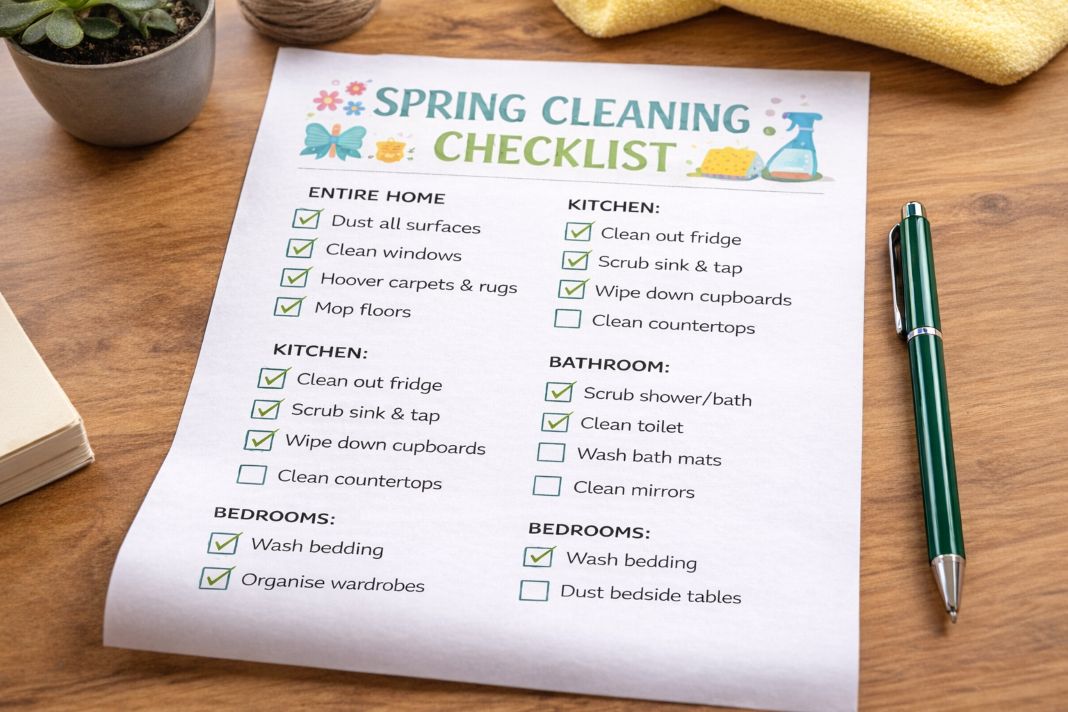
Zone-by-zone spring deep cleaning checklist for offices
Use this section as your office deep cleaning checklist UK style, with tasks set out by zone. Each list focuses on spring-only tasks that sit beyond daily cleaning.
Workstations and open-plan areas
- Vacuum under desks and behind pedestals, including cable trays where accessible.
- Clean chair bases and castors, removing hair and debris that affects movement.
- Wipe desk legs, skirting boards and low ledges where dust collects.
- Clean monitor stands, docking stations and phone handsets where included in scope.
- Spot clean walls around desks, especially near bins and printers.
Often missed: under-desk cable nests, the back edge of desks against walls, and the underside of chair arms.
Daily versus spring: daily cleaning hits surfaces you can see; spring cleaning gets under and around where dust and grime build up.
Meeting rooms and collaboration spaces
- Clean tables thoroughly, including edges, undersides and cable ports.
- Wipe touch panels, switches and handles using suitable products for electronics.
- Clean whiteboards and markers trays, removing old residue.
- Dust and wipe AV screens, speaker grilles and wall-mounted equipment, using IT-approved methods.
- Spot clean marks on walls around chairs and doorways.
- Upholstery clean fabric chairs where needed, focusing on arm rests and seat fronts.
Often missed: remote controls, chair backs, and fingerprints on glass partitions.
Kitchens, canteens and break areas
- Deep clean fridges inside, including seals, shelves and handles, and dispose of expired items in line with your policy.
- Clean microwaves inside and out, including vents and turntables.
- Degrease splashbacks, extractor hoods and cupboard tops.
- Clean cupboard interiors, paying attention to crumbs, tea stains and spills.
- Descale sinks, taps and kettle bases where appropriate.
- Clean bins thoroughly, including lids and surrounding floor edges.
Often missed: the gap behind appliances, sticky cupboard handles, and the underside of draining boards.
Toilets and washrooms
- Descale taps, urinals and bowls, following product instructions.
- Clean grout lines and joints where build-up makes surfaces look dull.
- Clean behind sanitaryware where access allows.
- Dust and clean vents and high ledges to reduce odour and dust.
- Clean doors, locks and cubicle edges, focusing on high-touch points.
- Deep clean baby change areas where present, including hinges and surrounding walls.
Often missed: behind toilet pans, the lower edge of cubicle doors, and extractor vents.
Reception, lobbies and front-of-house
- Clean entrance glass inside and out, including frames and push plates.
- Deep clean entrance matting and check whether mats still perform well in wet weather.
- Clean reception desks, visitor seating and skirting areas.
- Wipe signage, door hardware and handrails.
- Spot clean scuffs on walls near entrances and lifts.
Often missed: the lower half of glass doors, corners behind seating, and the dull build-up on stainless steel trims.
Practical sign-off tip
Add a simple line at the end of each zone list for “Date” and “Initials”. That small habit makes later inspections and contract reviews much easier.
Using the checklist in warehouses, retail and industrial workplaces
The method stays the same, but the risks and priorities change. The floor and the routes matter more. Public areas behave differently. Equipment and plant can move the boundary between cleaning and maintenance.
Warehouses and logistics hubs
In warehouses, the biggest issues are often floors, dust, and traffic routes. Adapt your warehouse deep cleaning checklist UK site-wide by focusing on:
-
Aisle floors, picking areas and loading routes, including oil and dust build-up
-
Mezzanines and stair edges where debris collects
-
Pallet racking bases and end frames, avoiding unsafe climbing on racking
-
Loading bays and dock edges, keeping visibility and grip in mind
-
Welfare areas, lockers and canteens, which can be overlooked during busy periods
Plan around forklift movement. A phased clean, aisle by aisle, reduces disruption and improves safety.
Retail units and customer-facing sites
Retail spring cleaning is about first impressions and touchpoints. Use a retail store spring cleaning checklist that prioritises:
-
Front glass, signage and entrance mats
-
Fitting rooms, mirrors and door hardware
-
Till points, card machines and counter edges
-
Back-of-house stockrooms where clutter can hide grime and pests risks
Timing matters. Early mornings, late evenings, and quiet trading windows are usually better than mid-day work that frustrates staff and customers.
Light industrial and production environments
In industrial workplaces, dust, oils and process residues create different hazards. An industrial workplace deep clean needs coordination with production:
-
Shutdown periods or planned maintenance windows
-
Lock-off and isolation for machinery cleaning where required
-
Suitable floor cleaning machines, such as scrubber-driers, matched to floor type
-
Clear separation between cleaning tasks and maintenance tasks
If you used the office checklist here, you would miss the controls that keep people safe around plant and traffic.
Deep cleaning IT equipment, ventilation and air quality
Some of the most complained-about issues are low visibility. People may not see the dust, but they feel it as irritation, odour, or a space that always seems stuffy.
IT equipment: clean without causing damage
Agree a method with your IT team, especially where devices are shared. Many organisations exclude IT peripherals from cleaning by default, so spell it out.
A safe approach usually includes:
-
Power down where needed and avoid spraying liquids directly onto devices
-
Use anti-static wipes or lightly dampened cloths approved for electronics
-
Clean keyboards, mice, headsets and docking stations as high-touch items
-
Empty printer trays and clean exterior panels without blocking vents
Keep a simple rule: if the cleaning method could risk damage or data access, involve IT.
Ventilation and air grilles
Vents and diffusers collect dust that becomes obvious in spring light. They also affect how a space feels. Cleaning what you can safely reach helps, but do not push beyond your scope.
Practical tasks you can plan:
-
Vacuum and wipe accessible vent grilles and diffusers
-
Dust ceiling tiles and high ledges around air handling points
-
Log any persistent draughts, noise or odour so maintenance can investigate
Where ductwork or fan coil units need specialist work, book a qualified contractor. Deep cleaning is a good trigger for fixing long-running “this room always feels off” complaints.
Indoor air quality and allergens
Dust and indoor allergens can irritate eyes and airways, and symptoms can be confused with colds. Improving ventilation and reducing dust reservoirs in soft furnishings and vents helps staff comfort. This is also one reason spring deep cleaning benefits are felt quickly, even if the workplace already looks tidy.
Co-ordinating in-house teams and external FM, security and cleaning providers
A deep clean can feel calm and controlled, or it can feel like everyone is working around each other with no shared plan. Coordination makes the difference.
Clarify responsibilities and sign-off
Start with a simple “who does what” list:
-
Cleaning team: tasks, methods, start and finish windows
-
FM lead: supervision, snagging, sign-off and reporting
-
Security: access, alarms, keys, contractor management
-
IT and estates: rules for comms rooms, plant rooms and sensitive areas
A joint walk-through before work starts helps. So does a short debrief at the end of each shift.
Access control, alarms and keyholding
Out-of-hours deep cleaning often means locked rooms and active alarm systems. Plan:
-
Temporary passes or escorted access for contractors
-
Which alarms need isolating, and who is authorised to do it
-
Lone working checks and escalation routes
-
Keys, codes and handover rules to avoid last-minute scrambling
Standards, governance and provider selection
If you use external providers, ask for evidence of competence and control:
-
Written risk assessments and method statements before work starts
-
Training standards aligned with recognised cleaning bodies
-
Clear service levels and re-clean expectations For multi-site operations, integrated providers can simplify delivery, especially when cleaning needs to fit around security access and keyholding. For example, Double Check Security Group often works in environments where security operations and facilities tasks must be coordinated under one plan.
Where security provision is involved, the SIA Approved Contractor Scheme is a useful quality marker for companies carrying out specific security activities, and ISO 9001 certification can indicate structured quality management in service delivery.
Keep communication simple
Good coordination is rarely complicated. It is usually:
-
One shared schedule
-
One named point of contact per team
-
A clear place to report issues and snags
-
A short end-of-shift update that confirms what is done and what is next
How to communicate the spring deep clean and get staff on board
A deep clean affects people’s personal space, especially in offices. Without clear communication, you risk the classic complaint: “Who moved my stuff?”
Tell people early, and be specific
Give dates, zones and likely disruption. Keep it plain. Staff need to know:
-
When cleaning will happen
-
Which areas will be affected
-
What they need to do before the clean
-
Who to contact if they have concerns
Useful subject lines for email or Teams posts:
-
“Spring deep clean dates and what you need to do by Friday”
-
“Meeting room and kitchen deep cleaning schedule”
Set clear desk expectations
If you have a clear desk policy, link to it. If you do not, state the minimum:
-
Remove personal items from desks and floors by a set time
-
Clear away loose papers and confidential waste appropriately
-
Label anything that cannot be moved
Be respectful. People can be sensitive about personal items. A short note about how items will be handled reduces worry.
Help hybrid staff avoid surprises
Hybrid workers can miss notices on walls. Use multiple channels:
-
Email or intranet posts
-
Teams or Slack messages
-
Posters at entrances, kitchens and printer points
If desks are booked, update the desk booking system so people do not reserve areas mid-clean.
Share results so it feels worth it
A short follow-up helps staff see the value:
-
A thank-you message
-
A couple of before and after photos of high-impact zones
-
A reminder of small daily habits that keep standards up
Done well, the deep clean becomes a reset of expectations, not a one-off burst of effort.
Inspecting the deep clean and building it into your annual FM plan
Inspection is where a spring deep clean stops being a nice idea and becomes a repeatable process.
Walk the building with fresh eyes
Inspect early, before the site is busy. Carry a simple scoring sheet and work zone by zone.
Look for:
-
Missed edges, vents, high ledges and underside areas
-
Smears on glass and sticky touchpoints
-
Washroom details that look clean but feel neglected, such as grout and vents
-
Carpets that still show traffic lines because extraction was rushed
Snag, re-clean, and record what happened
A snagging list keeps conversations factual. Record:
-
The issue
-
The zone and location
-
The expected fix
-
Who owns it
-
The deadline for re-clean
Photos help. They also protect you from the “we did that” debate.
Build spring deep cleaning into your planned maintenance cycle
Treat spring deep cleaning as part of your planned preventive maintenance schedule. That makes budgeting and booking easier.
In many sites, an autumn deep clean also makes sense, especially where wet weather increases wear at entrances and on carpets.
Learn and improve year on year
A short “lessons learned” review with your provider saves time next spring:
-
Which zones took longer than planned
-
Where access was awkward
-
Which tasks were unclear in the scope
-
What staff feedback revealed
Future you will thank you for good records when budgets or contracts are reviewed.