Why is proof of insurance important when hiring cleaning contractors?
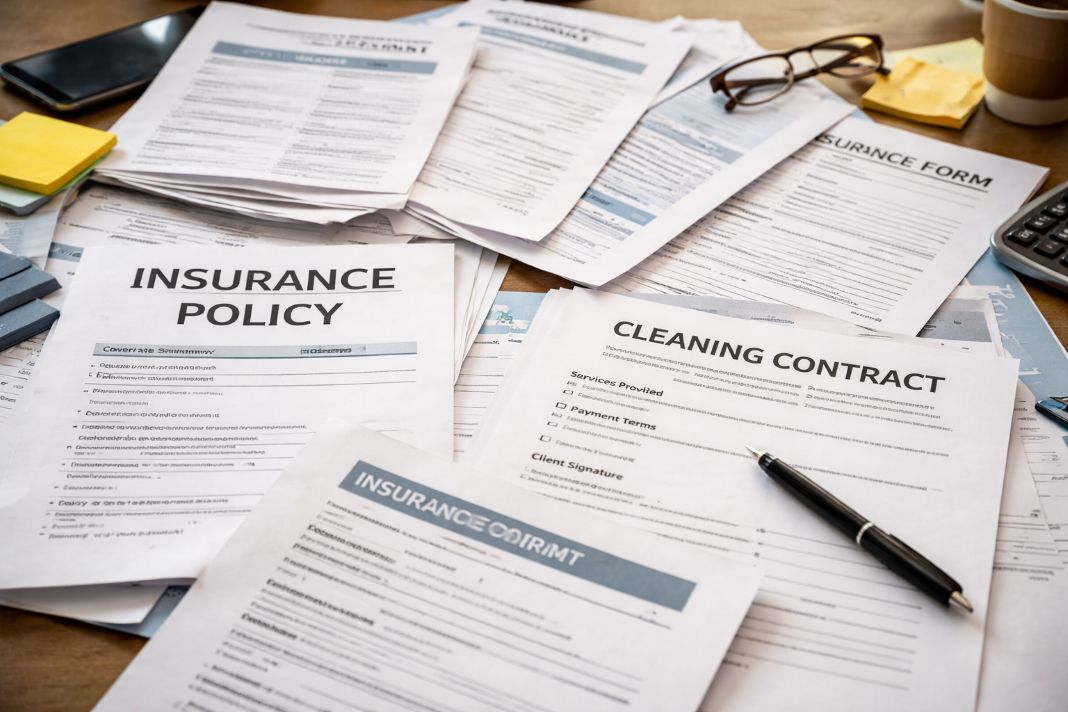
Checking for proof of insurance when hiring cleaning contractors is a safeguard against business liability cleaning contractors can unknowingly create. Without up-to-date and appropriate cover in place, your business could be left carrying the risk if something goes wrong. That includes liability for injury, accidental property damage, or claims made by third parties.
A certificate shown once does not guarantee ongoing protection. Verifying insurance closes the gap between what is assumed and what actually protects you.
What Do We Cover In This Article?
Cleaning Contractors and Hidden Operational Risk
Cleaning may appear low-risk, but it involves regular interaction with your premises, assets, and security infrastructure. These tasks often occur during out-of-hours shifts, with limited supervision. This makes oversight more difficult and increases exposure.
Cleaners handle substances regulated under the Control of Substances Hazardous to Health (COSHH). They move through areas where slips, trips, and falls can occur. Some may carry keys, deactivate alarms, or enter restricted zones.
One poor choice of cleaning agent might damage a high-value fixture. Improper access could cause false alarms or even breach internal controls. These failures are not uncommon. They tend to be subtle and accumulate over time. These cleaning operational risks strengthen the case for firm contractor compliance management.
Why Liability Doesn’t Stay with the Contractor
Many businesses assume that cleaning contractors are fully liable for their own actions. However, under the Occupiers’ Liability Act 1957, the organisation responsible for the premises holds a duty of care to anyone lawfully on-site—including contractors.
If a cleaner causes an accident, and the business did not carry out proper checks or ensure a safe environment, liability may be shared. In some cases, the business could bear the full financial burden if the contractor’s insurance is missing or inadequate.
Vicarious liability becomes relevant here. It applies when a third party’s actions affect your business, but responsibility does not clearly belong to them alone. Without active proof of insurance, your business may be held responsible. This is a key consideration in understanding business responsibility for contractors.
Pro Tip: Include insurance verification as a standard item on your contractor onboarding checklist. Small steps prevent big disruptions.
Secure Your Site with Professional Oversight
Our managed facilities services come with full compliance built in. No gaps, no guesswork.
What Really Happens When a Cleaning Incident Becomes a Claim
A cleaning-related incident sets off a chain of procedural steps. It begins with an internal report. Then follow insurer notifications, evidence gathering, and sometimes prolonged discussions between insurers.
Disputes over responsibility are common. Your team may be asked to retrieve CCTV footage, provide access logs, or supply site policies. Managers often find themselves tied up in administration while their core duties are put on hold.
If the contractor’s policy is ambiguous, expired, or poorly matched to the work performed, the delays will multiply. Claims may stretch out for months, creating stress and hidden costs. Understanding the cleaning insurance claims process helps clarify where exposure can occur.
The Risk of Assuming Insurance Exists
Insurance certificates expire. Policies change, get cancelled, or shrink in scope. Cover limits may no longer match the scale of operations. Some policies exclude certain types of work or locations.
Relying on a certificate provided years ago is risky. Assumptions like that weaken your risk management efforts.
Contractors might operate under a different name, or they may sub-contract tasks to others not covered by the original policy. Without routine checks, these gaps go unnoticed. Reviewing cleaning contractor insurance routinely helps prevent avoidable verification failures.
Why Contracts and Trust Alone Don’t Protect the Business
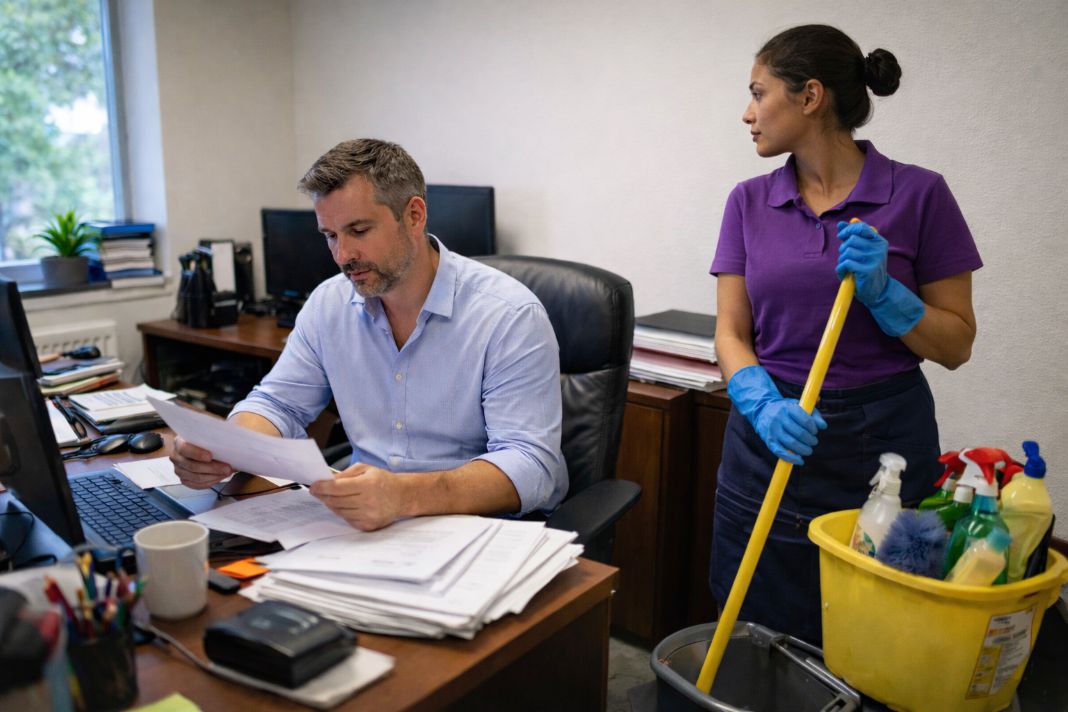
Contracts often include insurance clauses, but they are only as strong as their enforcement. Longstanding relationships can lead to shortcuts. Renewals become verbal. Documents go unchecked.
Even responsible contractors are at risk of gaps. Their insurance might lapse without notice. New services might be added informally but not reflected in their cover. Without documentation to confirm coverage, your business could end up exposed.
This is how contract misalignment and assumed compliance become operational weaknesses.
Proof of Insurance as Part of Professional Facilities Governance
Facilities management runs on structure and predictability. Insurance verification should be part of that framework. It brings consistency to contractor oversight and strengthens your wider compliance posture.
Double Check Security Group, for example, includes insurance checks in its onboarding of service providers. These checks sit alongside safety inductions and access control setup. This treats verification as normal business discipline.
These checks do not imply distrust. Instead, they reflect professionalism. They help create a stable environment where expectations are consistent.
Pro Tip: Never assume a contractor’s insurance is valid just because you saw a certificate once. Always check for current, specific, and adequate cover.
Partner With a Professional Contractor
We manage cleaning, security and facilities under one accountable framework. Let’s reduce your risk profile.
Making Insurance Verification Standard Practice
Verifying insurance does not require elaborate systems. Assign a team member to collect certificates. Use calendar reminders to track expiry dates. Keep all records in a single accessible location.
Basic Contractor Insurance Verification Checklist
- Ensure the certificate is in the name of the company you hired.
- Confirm the policy is current and not due to expire during the contract term.
- Check indemnity limits are appropriate for the type of work carried out.
- Review the scope of cover for exclusions that could affect your site.
- Store copies centrally and set reminders for annual renewals.
Set a yearly review point for all contractor documents. Align this with contract renewal or compliance audits. This prevents unnoticed lapses.
Whether you run a single site or manage multiple locations, the principle stays the same. This habit protects against liability, supports operational discipline, and keeps governance visible.
Treat it as part of your standard insurance verification process. It is a simple yet reliable step in ensuring long-term contractor compliance.