Why can a workplace look clean one moment and tired again by the next day?
A workplace can lose that freshly cleaned look very quickly because people keep using it. Foot traffic, shared kitchens, reception areas, toilets, meeting rooms and entrances all collect wear throughout the day, and some hygiene issues are less visible than everyday mess. In many cases, the problem is not poor cleaning. The real issue is that cleaning schedules, products, oversight and workplace habits do not always match how the building is used.
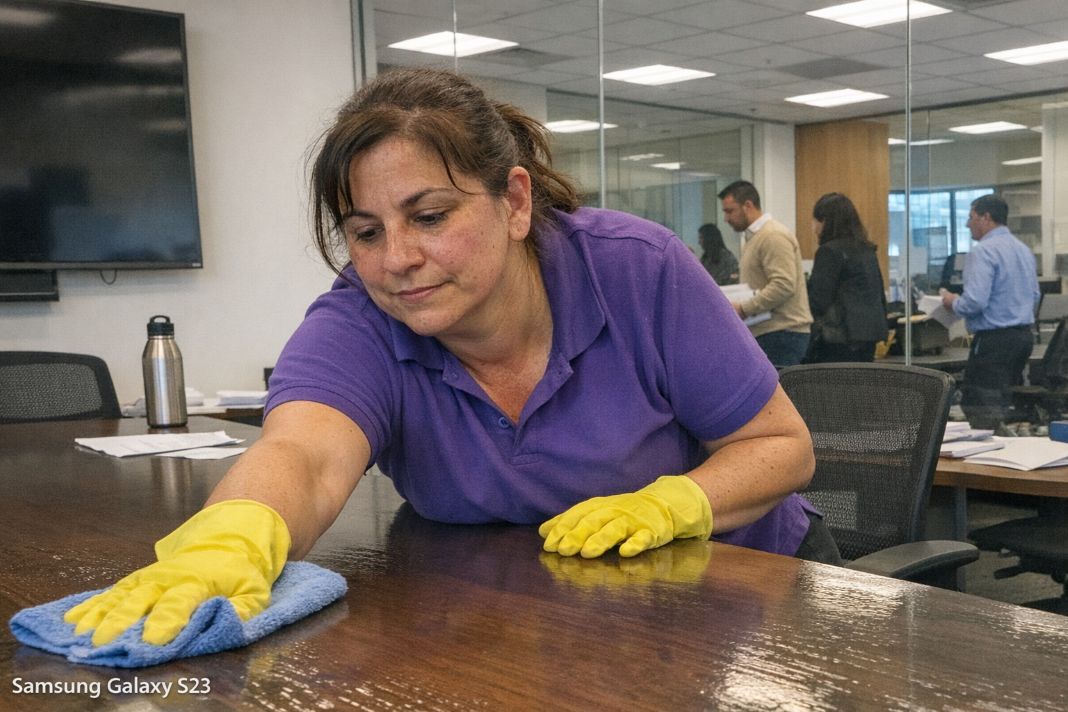
A representative image of a cleaner wiping down a large meeting room table
What Do We Cover In This Article?
The realities of high-traffic environments
By 10 am, a polished entrance can already show muddy marks, fingerprints and bits of debris brought in from outside. A kitchen that looked spotless at the end of the previous evening can feel untidy again after one busy breakfast run.
That pattern is common in offices, schools, retail units, residential blocks and mixed-use buildings. High foot traffic changes the pace of cleaning needs because communal spaces do not stay still for long. Lifts, corridors, washrooms, break areas and touchpoints are used repeatedly, which means that visible dirt can return quickly even when hygiene standards are being maintained.
Several factors make cleaned spaces seem short-lived:
- Heavy foot traffic through entrances, corridors and shared rooms
- Constant use of communal spaces such as kitchens and toilets
- A gap between what looks untidy and what is actually unhygienic
- Confusion about what a deep clean can achieve compared with routine maintenance
A deep clean can reset a space, but it does not freeze it in time. Once normal activity resumes, the building starts collecting marks, dust and clutter again, especially in areas with poor weather protection or high occupancy. Guidance and training promoted across the cleaning sector, including by the British Institute of Cleaning Science, often separate one-off intensive work from the day-to-day discipline of maintaining a space that people continue to use.
Pro Tip: Rotate cleaning priorities according to seasonal changes such as increased mud in winter and pollen in spring to ensure consistent results.
Gaps in cleaning schedules and task allocation
Many workplace cleaning problems start with a plan that does not reflect the building’s real rhythm. A site may be cleaned regularly on paper, yet still feel inconsistent because the right tasks are not happening at the right times.
Daily, weekly and ad hoc cleaning all serve different purposes. Emptying bins, wiping touchpoints and checking washrooms may need daily or even more frequent attention in busy sites. Carpet extraction, high-level dusting or machine floor work may sit on a weekly or periodic cycle instead. Trouble starts when all tasks are treated as if they belong on the same rota.
An effective schedule usually has clear ownership. If nobody is certain who checks the tea point after lunch, who tops up consumables in the late afternoon, or who inspects a side entrance after bad weather, those areas become blind spots. Facilities management teams often see the same pattern: the building is generally cleaned, but a handful of recurring missed areas shape everyone’s impression of the whole service.
A simple comparison often reveals the issue.
- Ineffective scheduling relies on fixed visits with vague expectations.
- Effective scheduling links tasks to building use, pressure points and time of day.
- Ineffective task allocation leaves grey areas between cleaners, site teams and occupiers.
- Effective task allocation gives each routine a named owner and a review point.
Structured oversight, which may sit within wider quality systems such as ISO 9001, tends to improve consistency because scope, frequency and responsibility are recorded rather than assumed. A reception floor near the entrance may need far more attention in winter than a boardroom used twice a week, and the schedule should reflect that difference.
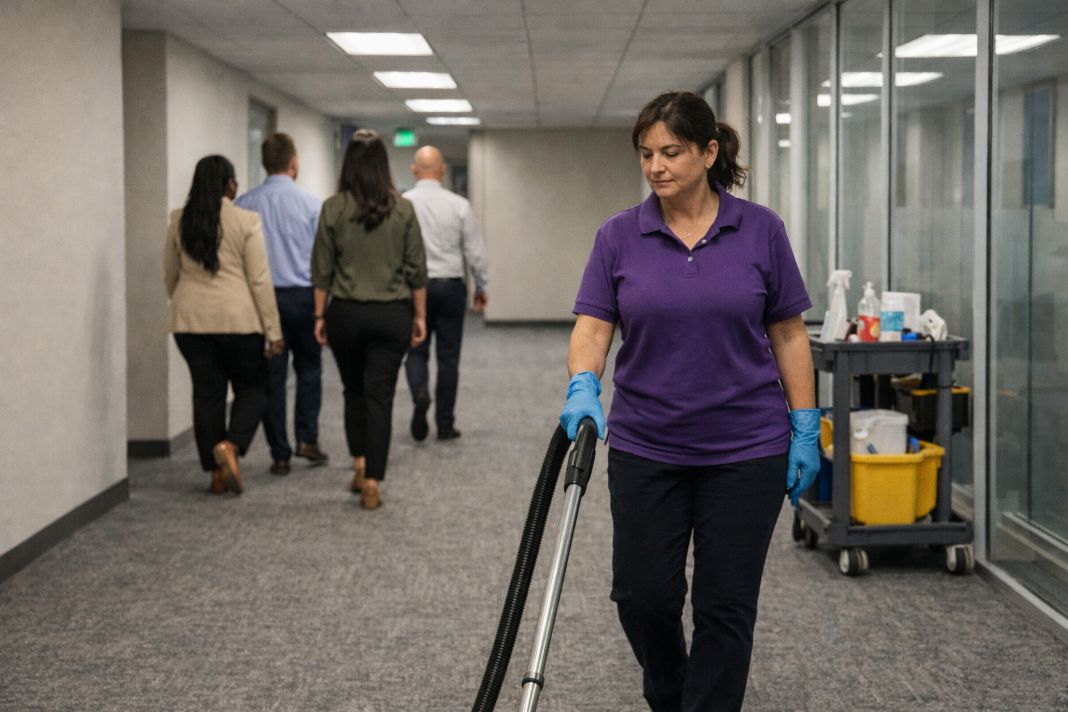
A representative image of a cleaner vacuuming a carpeted office corridor
The limits of standard cleaning products and methods
General-purpose products have their place, but they do not suit every surface or every type of dirt. A method that works well on one desk finish may leave streaks on glass, residue on vinyl, or poor hygiene results on frequently touched points.
Surface compatibility matters more than many people realise. Stone floors, carpet tiles, stainless steel, laminate, washroom fittings and touchscreen devices all respond differently to moisture, chemical strength and application technique. If products are too weak, soils remain. If they are too strong, surfaces may become dull, sticky or harder to keep clean over time.
Another common issue is the gap between visible clean and hygienic clean. A surface can look fine after a quick wipe but still fall short if the product was not left on long enough, diluted correctly or used in line with cleaning protocols. COSHH regulations also shape how chemicals should be stored, handled and applied, so the safest product choice is not always the strongest one.
Consider a few common mismatches:
- A greasy kitchenette worktop may need a method suited to food residue, not the same spray used on desks
- Entrance flooring exposed to rain and grit may need machine cleaning or more frequent agitation, not repeated light mopping
- Washroom touchpoints may require a hygiene-led process, not a quick visual tidy
In practice, product choice and technique need to match the material, the type of soil and the level of risk. Cleaning suppliers and trained operatives usually know this well, but the method can still drift if the workplace expects one routine to cover every room in the same way.
Pro Tip: Auditing your cleaning plan with end-user feedback can quickly reveal blind spots missed by routine schedules.
Inconsistent standards and oversight
Consistent cleaning rarely happens by accident. It usually comes from written standards, proper induction, regular checks and managers who know what good looks like on a live site.
Imagine two similar office buildings. Both have competent cleaning operatives and similar hours. One site has a documented scope, room-by-room expectations, supervisor inspections and a process for reporting issues. The other relies on habit and verbal instructions. The first site is much more likely to stay steady because the standard exists outside any one person’s memory.
Quality control often includes a few practical disciplines:
- Site inductions that explain building-specific risks, materials and priority areas
- Training that covers methods, safe chemical use and expected presentation
- Supervisor checks that review both appearance and hygiene-sensitive zones
- Performance monitoring that records recurring issues instead of treating them as one-offs
That kind of structure is common in well-run cleaning operations and wider facilities settings. In organisations such as Double Check Security Group, where services are managed through clear scopes, audits and operational oversight, consistency comes from systems that can be checked and repeated. British Institute of Cleaning Science guidance and ISO 9001 principles both support that same idea: standards need to be visible if they are going to hold up under pressure.
Book a Workplace Cleaning Assessment
Identify gaps in your current cleaning routine with a professional site review and tailored recommendations from our experts.
Staff behaviour and workplace culture
A freshly cleaned office can change within minutes if people leave cups in meeting rooms, overfill bins, spill food in shared kitchens or assume someone else will deal with it. Cleaning quality matters, yet everyday behaviour shapes how long results remain noticeable.
Shared responsibility does not mean asking staff to do the cleaner’s job. It means setting ordinary expectations for how a workplace is used between visits. Small habits, repeated across a large team, have a bigger effect than many managers expect. One untidy desk is rarely the issue. A whole floor of rushed habits usually is.
Leadership sets the tone here. If managers clear away after meetings, report spills promptly and treat communal areas with care, others tend to follow. If senior people ignore simple standards, written reminders often lose force.
Useful measures can be modest:
- Clear signage in kitchens, washrooms and print areas
- Sensible bin placement in spaces where waste builds up quickly
- Meeting room reset expectations at the end of bookings
- Support from HR teams and workplace policies where repeated issues affect shared areas
Culture change takes time because habits are social as well as practical. A workplace that treats cleanliness as part of everyday etiquette usually keeps its cleaned appearance longer than one that sees it as somebody else’s responsibility.
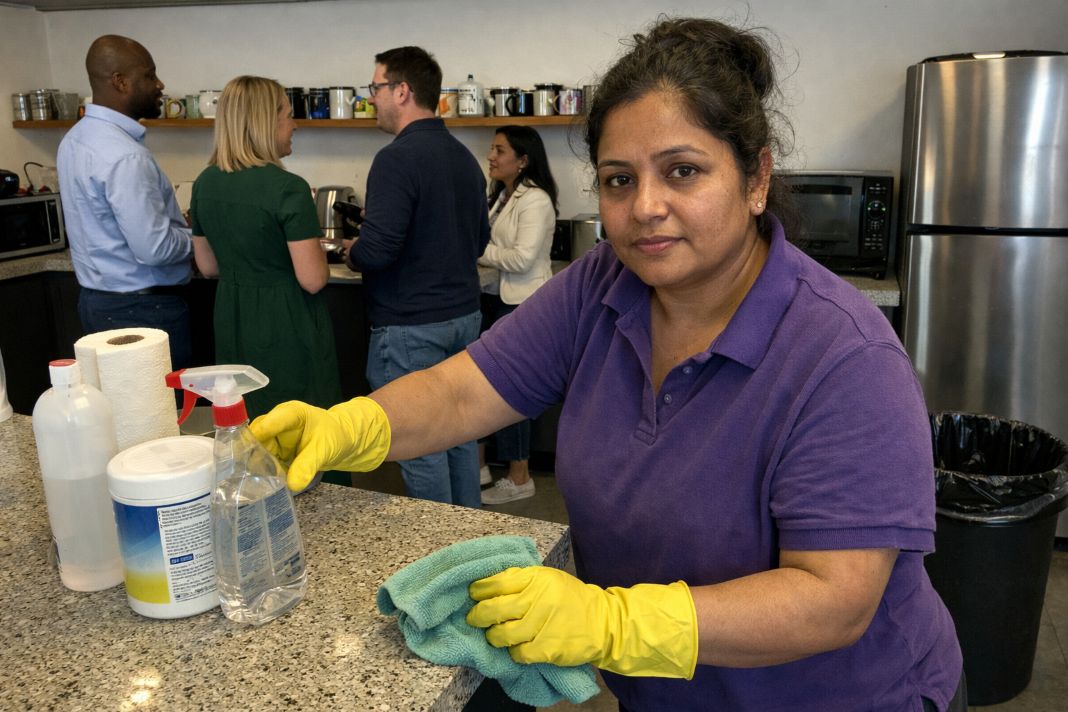
A representative image of a cleaner tidying and disinfecting a communal office kitchen
Environmental and seasonal factors
Weather has a bigger impact on workplace cleanliness than many schedules allow for. Rain, mud, leaves, grit and damp air can undo visible cleaning very quickly, especially near entrances and ground-floor circulation routes.
Building design also plays a part. A site with a short entrance mat, a poorly sheltered doorway or a direct path from outside to reception will pull in more dirt than a building with better transition space. Facilities management and building maintenance teams often have to look at these conditions alongside the cleaning plan, because cleaning alone cannot fully compensate for constant dirt ingress.
A few common UK patterns stand out. Autumn and winter bring wet footwear and more debris at entrances. Spring can increase dust and pollen in naturally ventilated spaces. Summer often means more open windows, which can affect internal dust levels and window marks. The Health and Safety Executive also keeps attention on slip risks, which makes wet floors near entrances a practical safety issue as well as a cleaning one.
Adaptation usually works better than frustration. Extra entrance matting, seasonal task changes, more frequent checks of weather-exposed areas and prompt attention to tracked-in water all make a difference. A reception lobby in January should not be judged by the same standards or schedule as that same lobby during a dry week in June.
Speak to a Facilities Expert
Discuss your cleaning and maintenance needs with a knowledgeable member of our facilities management team.
Rethinking what “clean” means in the modern workplace
Many workplaces still judge cleaning mainly by appearance. Shiny floors, empty bins and tidy desks matter, but modern expectations are broader than that. Hygiene, compliance, wellbeing and documented standards now sit alongside presentation.
That shift has changed how responsible employers think about office hygiene. A workspace may look neat and still have weaknesses in washroom checks, touchpoint cleaning, chemical handling or reporting. In the same way, a busy building may show signs of use by midday and still be operating to a sound cleaning standard.
Current practice tends to separate older assumptions from stronger ones. The older view focuses on whether a room looks freshly done. A more useful view asks whether the cleaning plan matches the building, whether audits and feedback are in place, and whether people can use the space safely and comfortably throughout the day.
Organisations that manage cleaning in a structured way, including some integrated service providers such as Double Check Security Group, tend to treat feedback loops, supervision and compliance as part of normal delivery rather than an afterthought. That approach reflects wider expectations across the sector, supported by frameworks associated with the British Institute of Cleaning Science, the Health and Safety Executive and ISO 9001.
A workplace does not need to look untouched to be well managed. In most busy environments, the more realistic aim is a space that stays safe, hygienic and presentable between visits, with cleaning plans that respond to how the building is actually used.