

What is a concierge security officer in plain terms?
A concierge security officer combines a professional welcome with defined security responsibilities at the front desk. The role matters where visitors, contractors, keys, deliveries, access permissions and incidents need controlled handling. A receptionist mainly supports welcome and administration; a concierge security officer also works to security procedures.
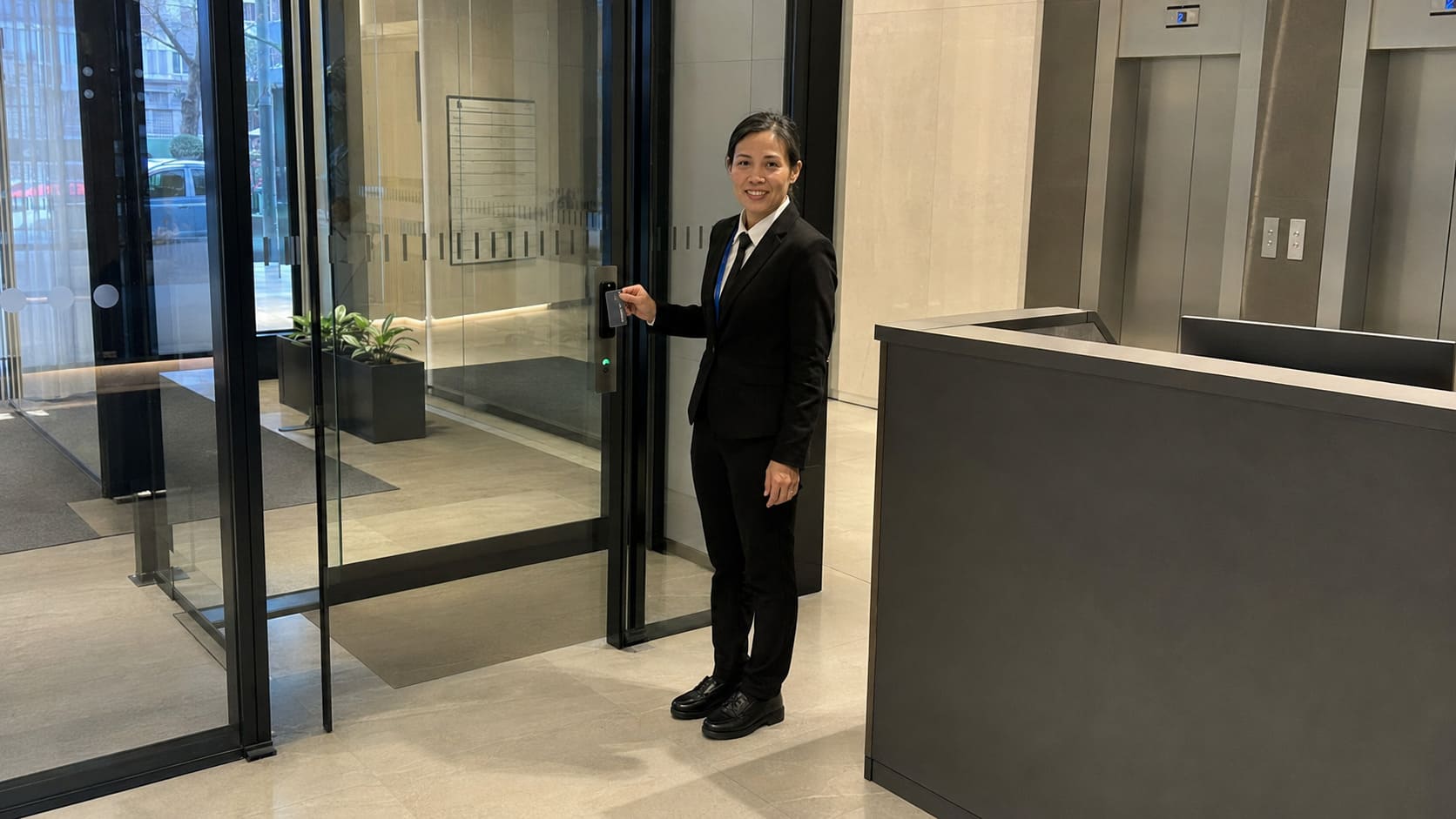
Suited security officer monitoring a commercial reception entrance – Illustrative Image
What Do We Cover In This Article?
A concierge security officer is a controlled front-of-house role
A concierge security officer is defined by authorised duties, training and written site procedures, not by the desk position or uniform. The concierge security role sits where visitor service, access control and site protection meet.
On a staffed commercial or mixed-use premises, that can mean greeting visitors, checking identity, issuing passes, managing contractor sign-in, recording incidents and escalating concerns through agreed routes. Good front-of-house security still feels orderly to visitors, but it does not leave access decisions to guesswork.
Written assignment instructions, also called site operating procedures, decide the detail. Those instructions set out what the officer can approve, what must be referred on, how keys are handled, how incidents are logged and what happens out of hours. Where security concierge responsibilities move into guarding, the Security Industry Authority (SIA) licensing position also has to be considered.
A smart desk presence is useful. The real test is whether the person at that desk has the authority and procedure to control what happens next.
Reception and concierge security differ in authority as much as duties
Reception and concierge security can look similar from the visitor side, because both roles may involve a desk, a welcome and a sign-in process. Behind the desk, the difference is usually found in authority, records, escalation and the security duties written into the scope.
| Area | Receptionist | Concierge security officer |
|---|---|---|
| Primary purpose | The role supports welcome, administration, calls and meeting support. | The role combines front-of-house service with security control. |
| Access authority | The person may issue passes or notify hosts under basic visitor rules. | The officer can apply defined access rules and escalate refused or unclear entry. |
| Contractors | The person may record arrival and tell the relevant contact. | The officer can check contractor sign-in, access permissions and handover notes under site rules. |
| Keys and access devices | The role may involve basic handover where no security control is attached. | The officer follows a key register and site procedure where key control is part of the service. |
| Incident response | The person reports problems to a manager or building contact. | The officer records incidents and follows agreed escalation routes. |
| Closed circuit television (CCTV) | The role should not be assumed to include security monitoring. | Monitoring depends on the scope, purpose and licence position. |
| Records | Notes may focus on visitors, calls and administration. | Records usually include visitor logs, incident logs and security handover details. |
| Training and licensing | Reception training focuses on service and administration. | Security duties may require suitable security training and the correct SIA position. |
A security receptionist usually sits between the two roles, but the name alone still tells you very little. If the desk controls entry, keys, incidents or security systems, your specification needs to treat it as a front desk security role, not as reception with extra tasks added later.
Receptionist standing beside an illuminated hotel front desk – Illustrative Image
A typical shift follows written site procedures
A typical concierge security shift is a controlled sequence, not a person improvising between greetings. The officer’s job is to keep the front desk moving while applying the site’s access rules and recording what matters.
A practical shift flow looks like this:
- The officer reviews the handover. The previous shift’s notes tell the officer about expected visitors, access issues, contractor works and unresolved incidents.
- Visitors are checked through the agreed process. The officer confirms who the visitor is seeing, applies the site’s visitor rules and uses the visitor management system where one is in place.
- Contractors sign in before access is given. Maintenance contractors, delivery teams and temporary workers should follow the contractor sign-in process before they reach controlled areas.
- Keys and access devices are handled under procedure. The key register records what was issued, to whom and when it was returned.
- Deliveries are logged and dealt with under the building’s policy, so the front desk does not become an informal storage point with no record.
- Incidents are recorded as they happen. Unauthorised access attempts, alarm notifications, lost property and other concerns belong in an incident log, with escalation where the procedure requires it.
- The end-of-shift report gives the next officer a clear position, including open issues and anything that needs follow-up.
Providers such as Double Check Security Group bring reception, concierge and security services under one facilities and security framework. This matters when the same front desk is expected to welcome visitors and maintain access control. Without written instructions and consistent reporting, two officers can handle the same situation in two different ways, which is where service drift starts.
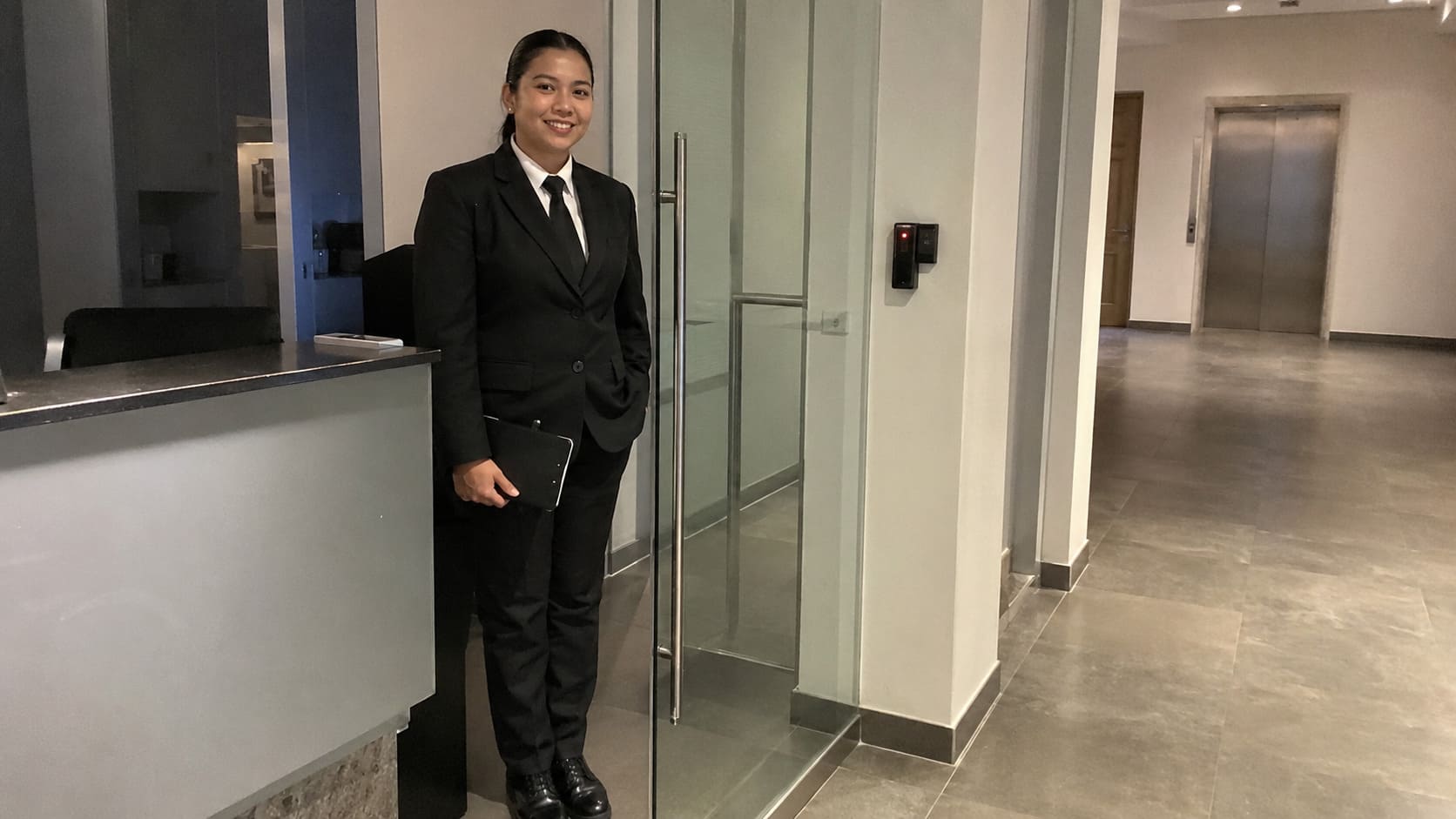
Suited security officer standing beside a corporate reception desk – Illustrative Image
SIA licensing turns on the activity being performed
A concierge security officer may need a front line SIA licence if the role is carried out under a contract for services and includes licensable security activity. The licence test turns on the activity, not the label on the rota.
Security Industry Authority guidance treats manned guarding as a licensable activity. That includes guarding premises against unauthorised access, occupation, disorder or damage, and guarding property against destruction, damage or theft. If a person at the front desk is doing that work as part of a contracted security service, the licensing question is live.
Key holding also needs care. Where the role includes controlling access to keys or locking devices as a security function, the key holding licence position should be checked at scope stage. A casual handover of a spare office key and a controlled key custody process are different operational situations.
CCTV needs the same discipline. SIA guidance distinguishes between CCTV used for security guarding purposes and public space surveillance CCTV licensing in certain situations. In plain terms, you should not assume one security guarding licence automatically covers every form of CCTV monitoring.
For a facilities manager or property manager, the practical answer is straightforward: write down the duties first, then match the licence position to those duties before the service goes live.
Your specification needs duties, authority and escalation in writing
Where the front desk controls entry, contractors, keys, incidents or out-of-hours activity, concierge security is usually the stronger fit. Reception cover works well where the role is welcome and administration; security-led concierge is the better specification where the person at the desk must make controlled access decisions.
Visitor rules need to state who can be admitted, who can approve visitors, how passes are issued and what happens when a visitor cannot be verified. Without that wording, the officer is left relying on habit, which is a poor substitute for authority.
Contractor access and key control deserve the same level of detail. Contractor sign-in, access permissions, key registers and lock-up procedures should sit in the assignment instructions, so the officer is not deciding procedure in the moment.
Incident logs and escalation routes tell the officer what must be recorded, who must be informed and when the issue needs a higher response. The best scopes avoid vague wording such as “deal with security issues” and replace it with plain instructions the officer can apply on shift.
British Standard BS 7499:2020 is useful context here because it covers recommendations for the management, staffing and operation of static site guarding services. For some public-facing premises, Home Office guidance on the Terrorism (Protection of Premises) Act 2025, known as Martyn’s Law, may also need to sit in wider planning once the relevant requirements are brought into force.
A provider such as Double Check Security Group is a practical example of how reception, concierge and guarding can be specified within one managed service, rather than treated as separate desk duties that happen to share a location.
The common misconception is that a professional receptionist can cover security by common sense alone. That assumption fails the first time someone must refuse access and make a record that will stand up later.
Receptionist standing beside a premium office reception counter – Illustrative Image
Common questions about concierge security officers
Is concierge security the same as front desk security?
The terms overlap, but front desk security is a broader description. Concierge security adds a service-led front-of-house element, while still applying access rules, reporting procedures and escalation routes.
Can a concierge security officer refuse entry to a visitor?
A concierge security officer can refuse or delay entry where the site instructions give that authority. The important point is that refusal rules must be written into the service scope, so the officer follows procedure rather than personal judgement.
Can concierge security officers monitor CCTV?
Concierge security officers can monitor CCTV only where the role, purpose and licence position allow it. CCTV duties should be specified clearly because security guarding use and public space surveillance use are treated differently in SIA guidance.
Does concierge security replace a building manager?
Concierge security does not replace building management. The officer controls the front desk security function and escalates building issues through agreed routes, while the building manager or managing agent remains responsible for wider management decisions.
What records should a concierge security officer keep?
The service scope should state which records are required. Common examples include visitor logs, contractor sign-in records, key registers, incident logs and handover notes.
This is general information, not professional advice.
