

Do you need security dogs instead of standard guards at your site?
A site needs security dogs when the risk has outgrown ordinary guarding, patrols, cameras and alarms. The usual triggers are exposed boundaries, repeat out-of-hours incidents, valuable assets, wide patrol areas or a search need that calls for a trained dog-and-handler team within a managed security plan.
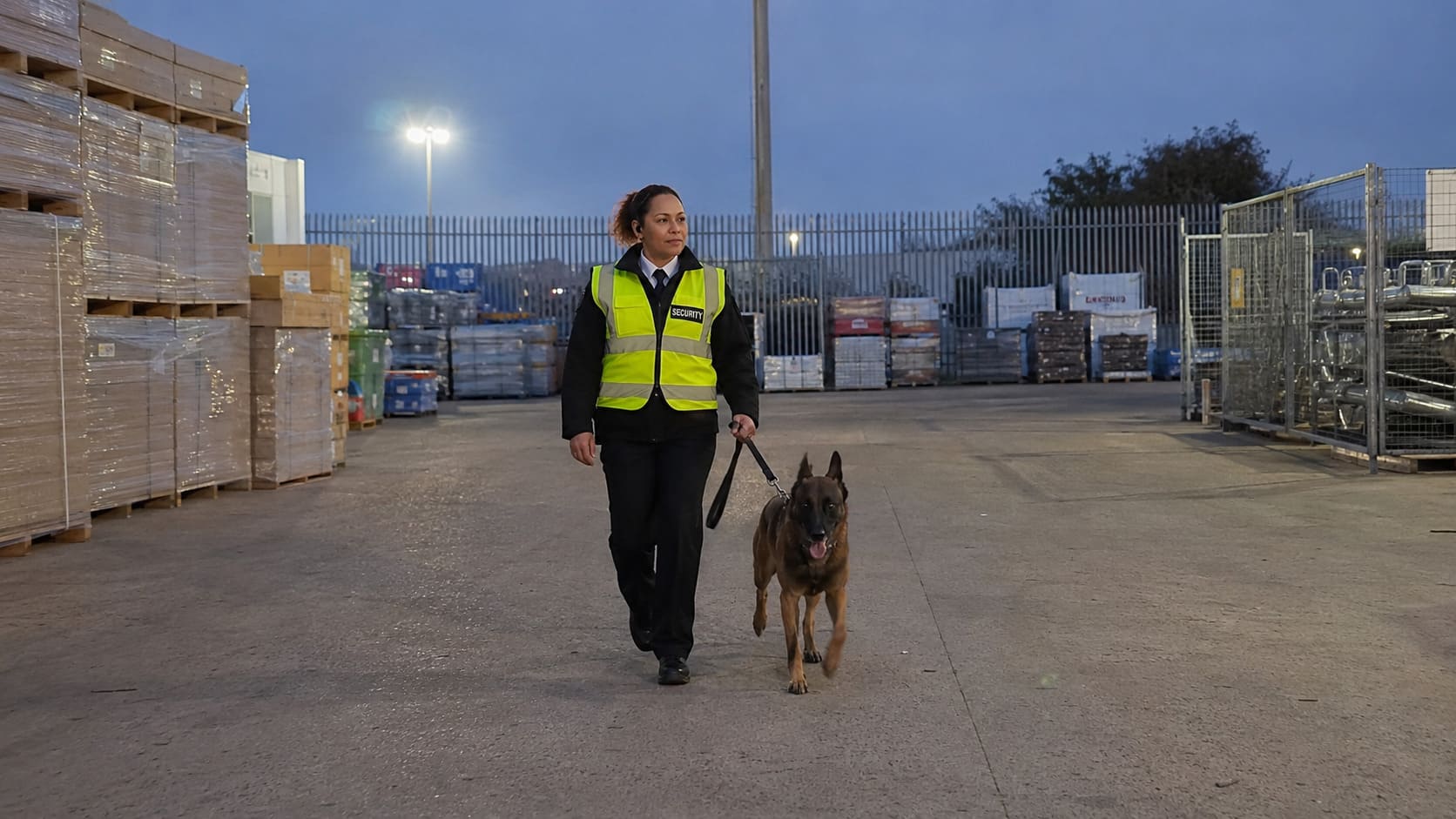
Security dog handler patrolling a construction compound – Illustrative Image
What Do We Cover In This Article?
Use security dogs for risk escalation, not routine cover
Security dogs are justified by risk, layout and operating pattern. Treating them as a routine upgrade from standard security guards leads to poor specification, unnecessary cost and awkward site management.
The wrong assumption is simple: dogs look stronger, so they must be the better option. That is a weak way to buy security. A well-run site starts with the problem: theft risk, unauthorised access, vandalism, arson risk, weak visibility after closing, or a perimeter that gives intruders too many options.
Dog unit security adds most value where deterrence and patrol reach matter more than a reception-style presence. A handler with a patrol dog can be a strong fit for a quiet yard, an empty building or a large boundary where a lone guard would spend too much time moving between blind spots. Standard guarding still suits many sites where people need to be checked in, visitors need direction, and access control needs a calm human presence.
Proportionate deployment is the test. If cameras, alarms, mobile patrols and manned guarding already deal with the risk, a dog team may add little. If the site remains exposed after those measures are in place, dog handling becomes a serious option.
Compare standard guards with dog teams on the actual job
The site task decides the resource. Security dogs vs security guards is the wrong question unless you first define whether you need access control, perimeter patrol, alarm response, detection capability or a mix of those duties.
| Site need | Standard guard | Security dog team | Best fit |
|---|---|---|---|
| Visitor access and front desk cover | Manages people, passes and site rules | Usually unsuitable for busy visitor flow | Standard guard |
| Out-of-hours perimeter patrol | Checks gates, doors and known weak points | Adds visible deterrence and wider patrol support | Dog team where risk is higher |
| Alarm response | Attends, verifies and reports | Can support response where the site is exposed | Combined plan |
| Large yard or vacant property | Works if routes are manageable | Stronger candidate where boundaries are hard to cover | Dog team |
| Search requirement | Limited unless trained for that search task | Needs the right trained dog-and-handler capability | Specialist detection team |
CCTV monitoring and alarm response support both options, but they do not remove the need for a physical response where a site has live risk. Cameras record and alert. Guards and dog handlers attend, check and report.
Stronger plans often combine resources. A site might use standard guards for daytime access control, CCTV for monitoring, mobile patrols for set checks and a dog handler for the higher-risk out-of-hours window. Buying the resource around the duty keeps the plan grounded.
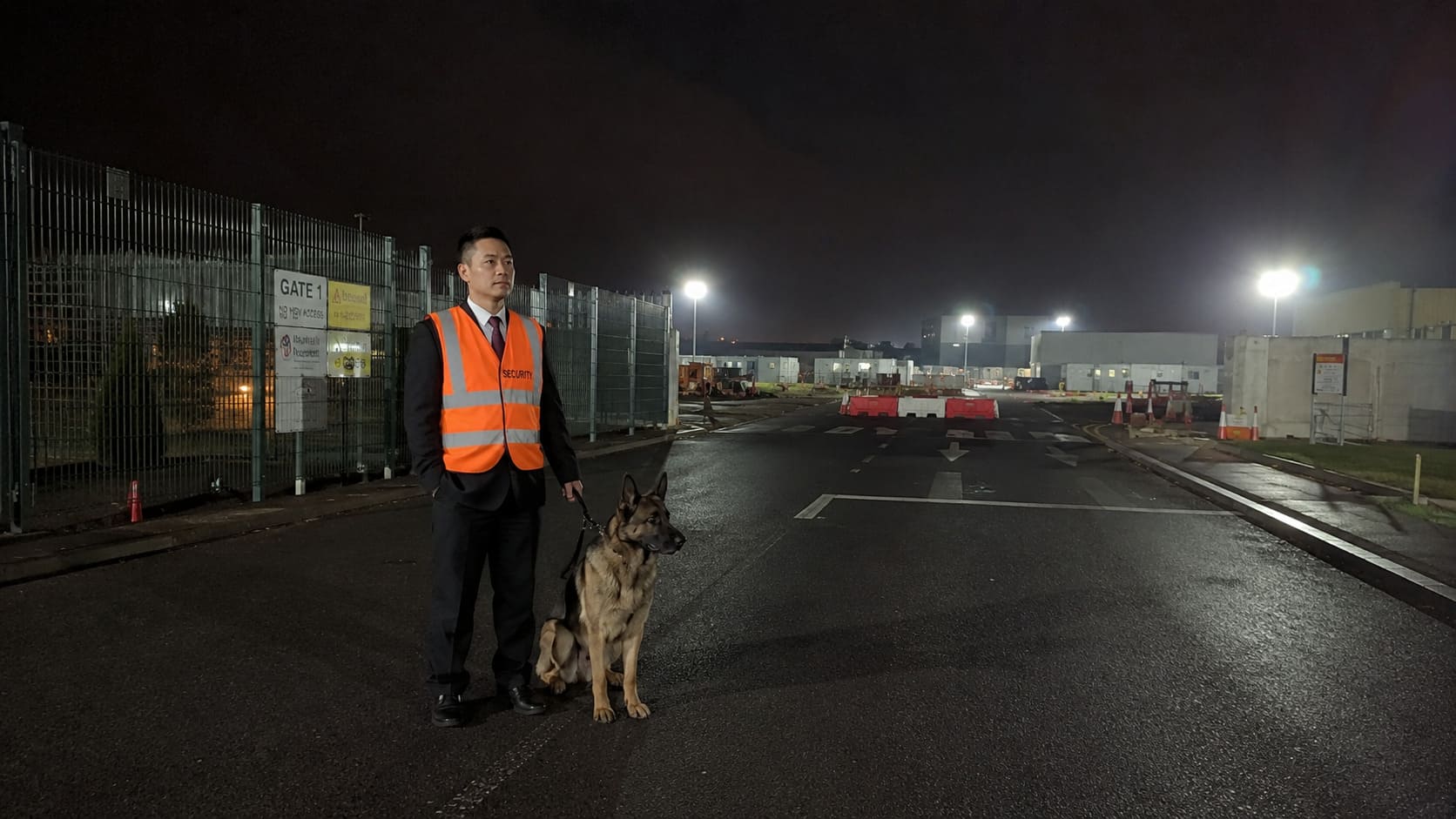
Security dog handler conducting a night-time site patrol – Illustrative Image
Match dog handling to the right site conditions
Consider a large logistics yard with valuable stock, several vehicle access points and repeated attempts to enter after closing. A standard guard can patrol it, but the size and exposure of the site may justify a security dog handler as part of the night plan.
Dog handling fits best where the site has limited public access, clear patrol routes and a risk profile that makes stronger deterrence proportionate. Construction site security dogs, warehouse security dogs and vacant property security dogs are all sensible options when the site has enough exposure to warrant them. The same logic can apply to industrial premises and logistics sites where assets, vehicles or deliveries need tighter control.
In practice, Double Check Security Group treats dog handling as one part of a structured site risk plan, assessed alongside guarding, CCTV monitoring and alarm response. That matters because the same premises can need different resources at different times. Daytime may call for access control. Night-time may need patrol strength.
Separate patrol dogs from detection dogs
Patrol dogs and detection dogs do different jobs. A patrol dog supports deterrence, patrols and controlled response with a handler. A detection dog is trained for a specific search function, such as searching areas, vehicles or deliveries for a defined threat.
Confusing those roles causes bad buying decisions. If the problem is repeated fence breaches at a quiet storage yard, patrol use may be relevant. If the issue is screening complex vehicles or bulk deliveries, the question shifts to specialist detection capability.
Treat detection dogs as specialist capability
The National Protective Security Authority, commonly called NPSA, describes explosives detection dog teams as a mobile, real-time search and detection capability for buildings, areas, vehicles and bulk deliveries, with some use in crowded places and high-footfall locations. That is a specific capability, rather than a general security presence.
NPSA also makes the key limitation clear: canine detection should not be used in isolation. Detection dogs work best inside a layered security plan, especially where large areas, abnormal loads, complex vehicles or bulk deliveries are hard to screen by other methods.
Where explosives detection is part of the requirement, the National Canine Training and Accreditation Scheme for the Private Security Industry, known as NCTAS-P, applies to the specific dog-and-handler pairing. That detail matters during procurement because capability sits with the team, not with a generic label on a proposal.
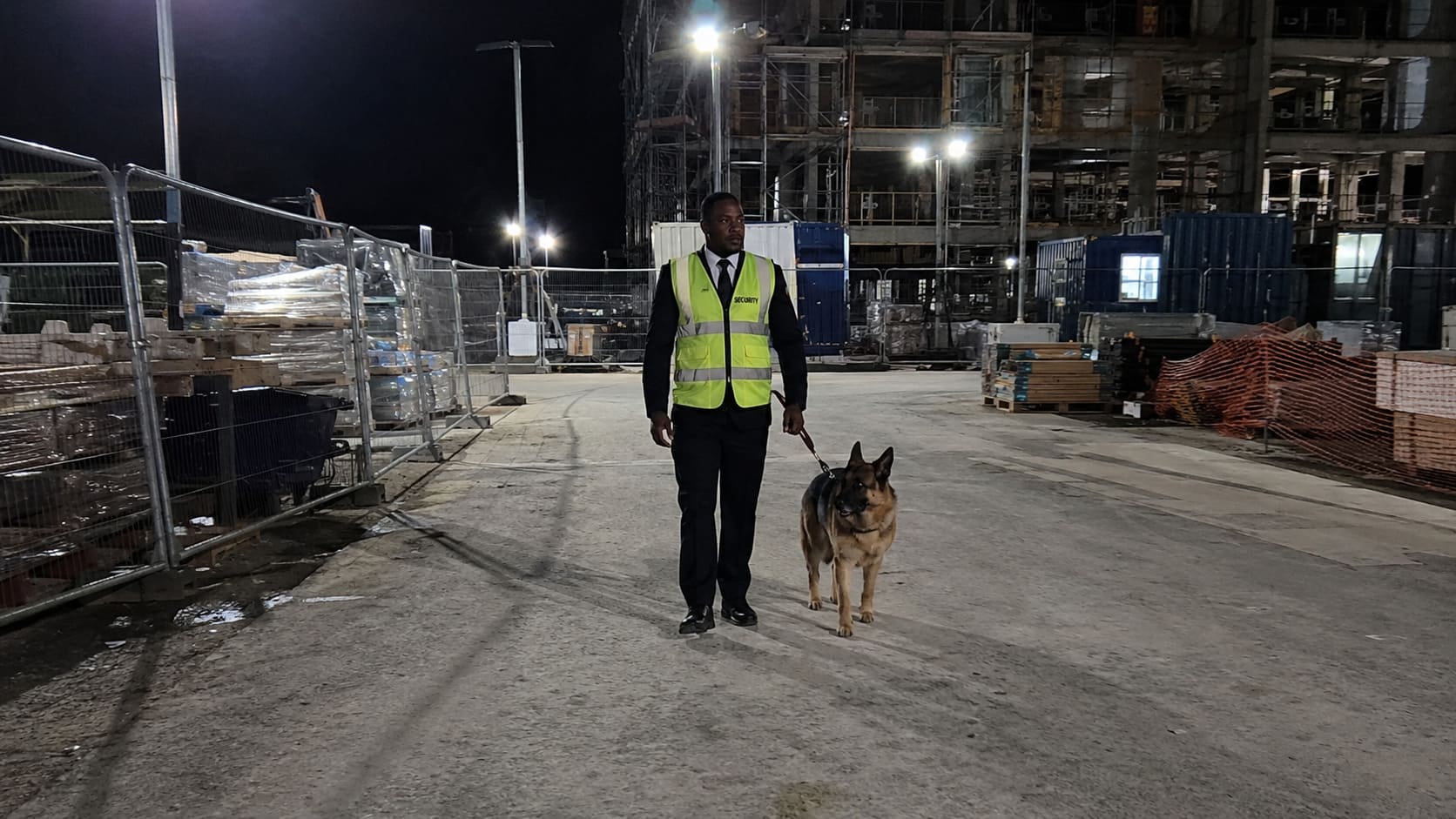
Security dog handler patrolling a construction storage yard – Illustrative Image
Rule out sites where dogs create more problems than value
Start with a blunt test: does the dog solve the site’s real problem, or create a new one? Many sites need better access control, clearer reporting or tighter alarm response before they need a dog unit.
Busy receptions, retail entrances and visitor-heavy buildings are often cleaner fits for standard guarding. People need directions, passes need checking, and staff need a security presence that supports the running of the building. A dog presence in that setting can add friction without improving the main control point.
Shared-access premises need particular care. If several tenants, residents, contractors or delivery teams use the same routes, a dog handler needs clear boundaries and a patrol pattern that does not clash with normal use. Without that, the dog becomes a management issue.
Sensitive residential settings and public-facing spaces also deserve a sober view. Security should match the risk and the way the building is used. Ruling out dogs can be the right professional answer when standard guards, CCTV, mobile patrols or alarm response will control the issue with less disruption.
Decide with compliance and integration checks
The final decision should rest on control and integration. A dog team must fit the legal position, the site layout and the wider security plan before it is added to the specification.
The Security Industry Authority, commonly called SIA, does not issue a separate dog-handler licence. A dog handler carrying out licensable manned guarding work still needs the appropriate SIA licence for the activity, such as a security guard licence or a door supervisor licence.
Under the Guard Dogs Act 1975, a guard dog must be under the control of a capable handler while being used at premises unless the dog is secured so it is not free to roam. The same Act requires warning notices to be clearly displayed at each entrance where a guard dog is used. Those points should sit inside the provider’s normal compliance checks, not appear as an afterthought.
Use this decision checklist before specifying security dogs instead of guards:
- Define the risk first. Repeat trespass, valuable plant, exposed boundaries and out-of-hours vulnerability point to a different answer from ordinary visitor management.
- Map the site layout. A dog handler needs workable patrol routes, controlled access points and a clear plan for where the team operates.
- Check public interaction. Busy entrances, shared corridors and resident access can make standard guards the better fit.
- Match the dog team to the task. Patrol support and explosives detection are different services, and detection work needs the right capability for the specific search requirement.
- Confirm licensing and control arrangements. The handler’s licensable activity, warning notices and site control measures need to be specified clearly.
- Build the team into the wider plan. CCTV, alarm response, lighting, access control and incident reporting should work with the dog unit rather than sit beside it.
For Double Check Security Group, that integration point is central: dog handling is assessed alongside guarding, monitoring and response, so the resource matches the site rather than the other way round.
Two common approaches produce very different long-term outcomes. One buys a dog unit as a dramatic add-on after incidents have already caused concern. The other specifies dog handling only where the risk, route, timing and compliance position make it proportionate. The second approach holds up better because it gives you a controlled service that can be managed, checked and adjusted as the site changes.
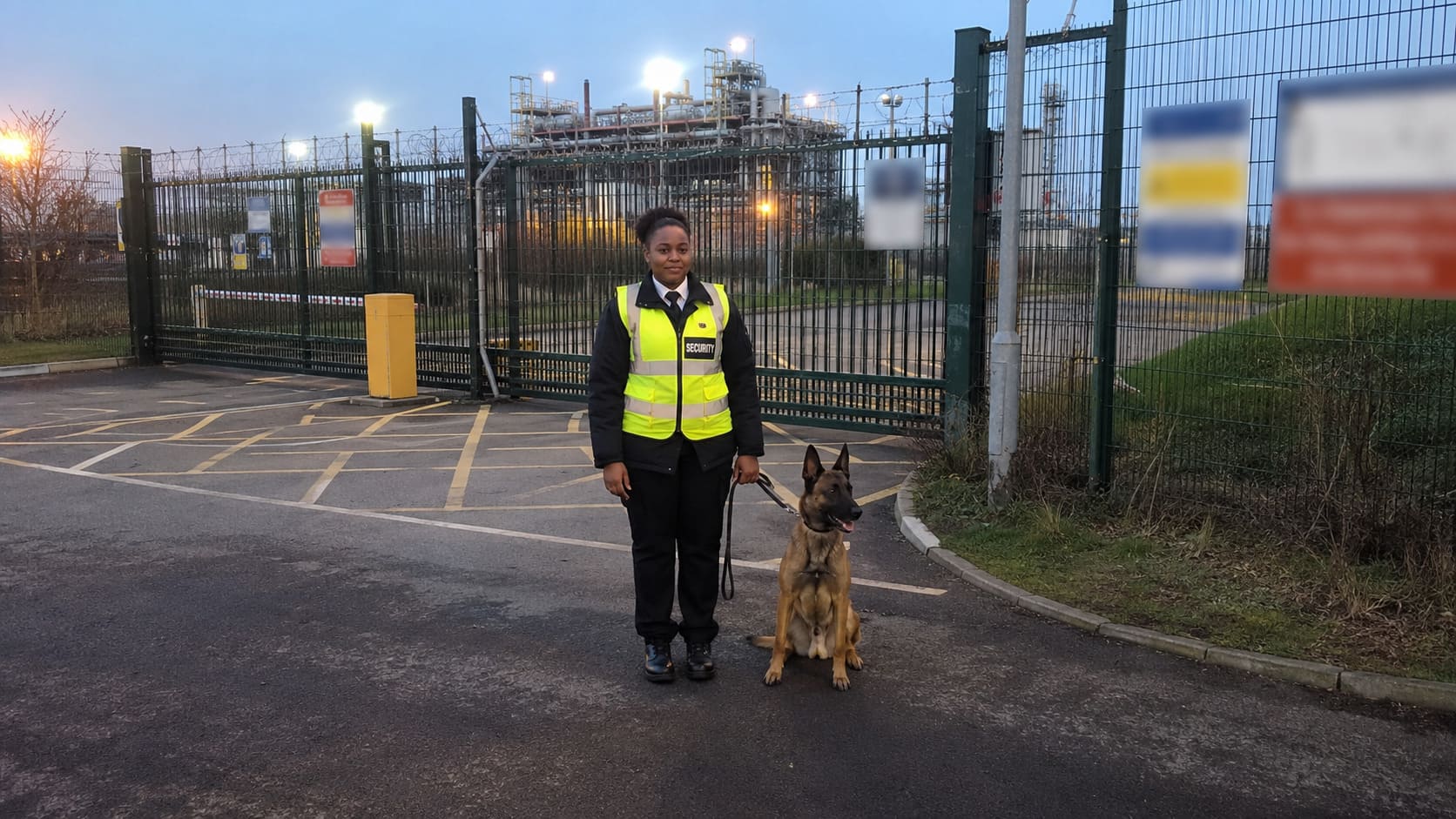
Security dog handler checking an industrial site boundary – Illustrative Image
Common questions about security dogs
Can a security dog be left alone on site?
A guard dog must be under the control of a capable handler while being used at premises unless the dog is secured so it is not free to roam. Loose, unattended deployment is not a proper substitute for a managed security service.
Are security dogs better than CCTV?
Security dogs and CCTV do different jobs. CCTV supports monitoring and evidence, while a dog handler provides a physical presence, patrol support and controlled response where the risk justifies it.
Do dog handlers need a special SIA dog licence?
The SIA does not issue a separate dog-handler licence. If the handler is carrying out licensable guarding work, the handler needs the right SIA licence for that activity.
Can security dogs be used at public events?
Security dogs can be used in some public or high-footfall settings, but suitability depends on the task, the site layout and the level of control around the deployment. Detection work needs the right trained dog-and-handler capability for the specific search requirement.
What is the difference between a patrol dog and an explosives detection dog?
A patrol dog supports deterrence and site patrols with a handler. An explosives detection dog is trained for a specific search function, and the capability should match the exact search task.
This is general information, not professional advice.
