

What does planned preventive maintenance mean for your building?
Planned preventive maintenance means scheduled checks, servicing, testing, repairs and records that keep building systems under control before faults disrupt the site. For your building, the value is lower failure risk, clearer compliance evidence, steadier budgets and safer day-to-day operation, including fire safety, access, security and core facilities systems.
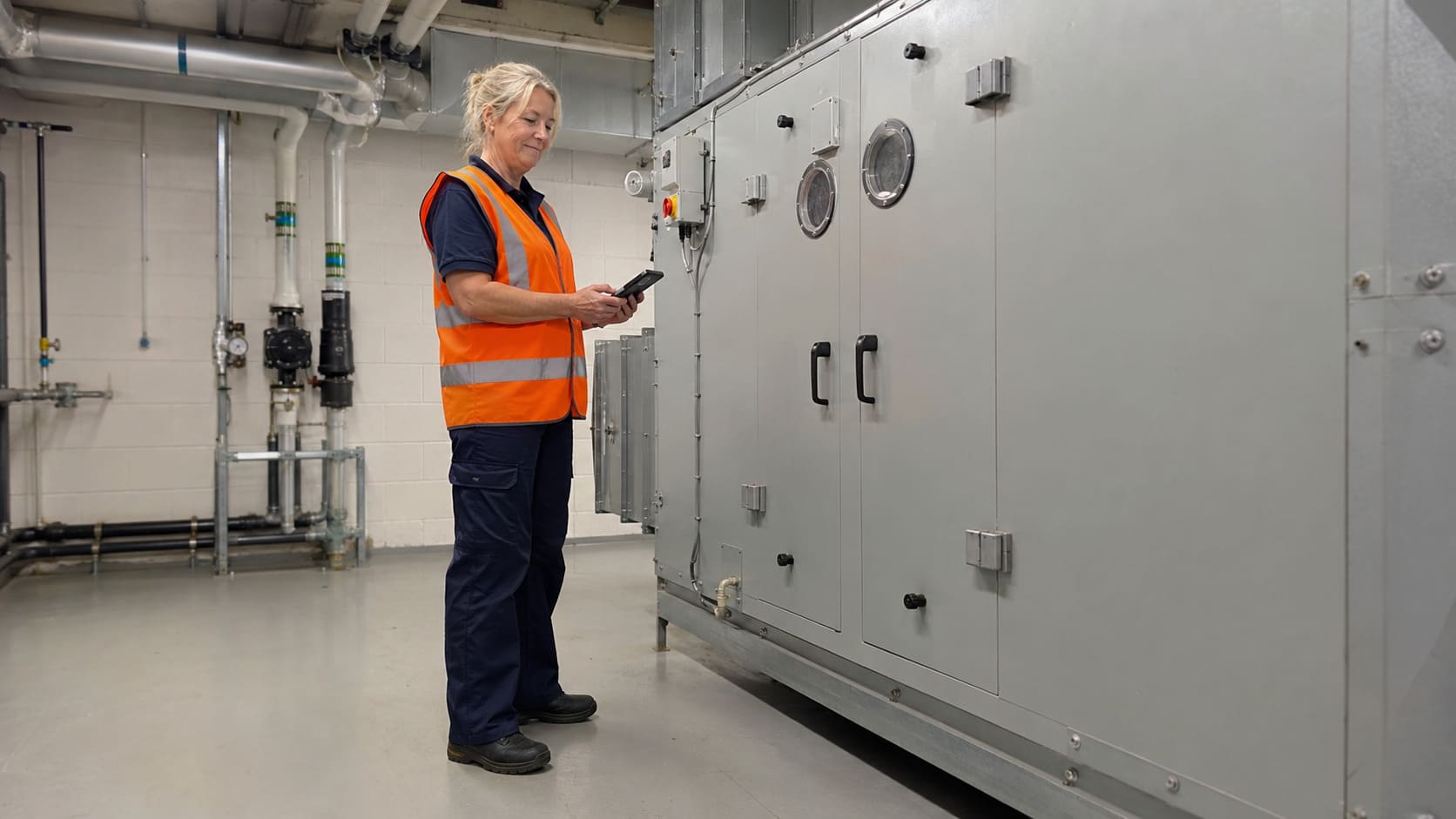
Maintenance technician inspecting commercial plant-room equipment – Illustrative Image
What Do We Cover In This Article?
Planned preventive maintenance is a managed way to control building upkeep
A common mistake is to give a building attention only once something fails, then treat the repair invoice as the maintenance issue. The repair matters, of course, but the bigger question is why the fault was missed, whether it was predictable and what record now proves it has been dealt with.
Planned preventive maintenance, often shortened to PPM, means planned inspections, servicing, testing, repairs, records and reviews. In facilities management, PPM should be based on what each asset needs, how the building is used, legal duties, manufacturer maintenance instructions and competent judgement. A diary reminder on its own is not a maintenance plan.
The Health and Safety Executive says maintenance work should be planned carefully, ideally using manufacturer instructions, with a safe system of work produced. It also states that work equipment must be maintained in an efficient state, in efficient order and in good repair, which is a useful test for any building maintenance programme.
Reactive repair deals with disruption after it happens. PPM reduces the chance of disruption becoming the normal way the building is run. A sound PPM schedule links an asset register to planned tasks, defect reporting, remedial action and a maintenance log, whether that sits in a computer-aided facilities management system, known as a CAFM system, or another controlled record.
Planned maintenance and reactive repairs play different roles
Preventive maintenance and reactive maintenance both have a place, but they give you very different levels of control. Planned maintenance lets you see what should happen, when it should happen and what evidence should exist afterwards.
This comparison shows the practical difference in management terms.
| Area | Planned preventive maintenance | Reactive maintenance |
|---|---|---|
| Purpose | Reduces predictable failure through planned checks and servicing | Responds once a fault or breakdown has happened |
| Timing | Scheduled around building use, access needs and contractor availability | Driven by urgency, fault severity and disruption |
| Cost control | Supports budget forecasting because work is visible in advance | Often harder to plan because call-outs and repairs arrive under pressure |
| Disruption | Can be arranged around occupants and site operations | Can interrupt access, safety systems, trading or daily routines |
| Records | Creates an evidence trail of inspections, findings and follow-up | Records may be limited to the fault report and repair note |
The Health and Safety Executive links an effective maintenance programme with more reliable plant and equipment, fewer breakdowns, productivity and efficiency. That matters because fewer breakdowns also mean fewer situations where people have to deal with faulty equipment under pressure.
Reactive work will still happen. A sensible building maintenance strategy keeps space for faults, leaks, damage and wear that no schedule could remove, yet it does not let emergency call-outs become the main operating model.
Facilities Management Services In An Open Plan Office – sample image
Buildings need PPM because failures cross operational boundaries
A building rarely fails in neat categories. A faulty door can affect access control, security, fire safety and occupant flow. Poor external lighting can affect patrols and arrival routes. A repeated leak can disrupt cleaning, damage finishes and create avoidable repair work.
Compliance evidence is one of the strongest reasons to formalise building preventive maintenance. In fire safety, the Home Office guidance on the Regulatory Reform Fire Safety Order 2005 says fire safety measures must be maintained regularly and suitably, kept in efficient state, efficient working order and good repair, with defects repaired as soon as practicable. Most premises with fire alarm systems, emergency lighting, fire doors and fire extinguishers need arrangements to inspect, test and service them.
Certificates matter, but they are only part of the picture. You also need to show what was checked, who checked it, what was found, which defects were raised and what happened next. For the Responsible Person in a fire safety context, that audit trail is far stronger than a folder of isolated documents.
Security assets belong in the same operational view as mechanical systems and fire safety equipment. CCTV, access control, alarms, doors, gates and lighting affect how a site works every day, so separating them from facilities maintenance planning creates gaps. Double Check Security Group is a useful example of the joined-up approach here, because its facilities, security and cleaning services sit under one structured operating framework rather than being treated as separate fixes.
A useful PPM schedule controls the asset, the task and the evidence
A good PPM schedule starts with the building as it actually exists, not with a generic building maintenance checklist copied from elsewhere. You should be able to look at the schedule and see what is being controlled, why it is being checked, who is responsible and how defects move from report to closure.
The most useful schedule will usually include:
- Asset register: A live list of the systems, equipment and building areas covered by the programme, such as fire alarm systems, emergency lighting, fire doors, CCTV, access control, alarm systems and relevant building fabric.
- Maintenance basis: The reason for each frequency, drawn from statutory duties, manufacturer instructions, risk, use, condition or competent advice. Every asset should have a reason, not a guessed interval.
- Competent delivery: The person or contractor carrying out the work must have the skills, knowledge and experience to do it safely. The HSE is clear on that point.
- Access and disruption planning: The schedule should show any access needs, safe working limits and planned downtime so work does not clash unnecessarily with normal building use.
- Evidence and defect route: Each visit should produce the right record, certificate or report, with a clear path for remedial works and defect priority.
- Review date: A schedule needs a date for review, because assets age, usage changes and repeated defects tell you something about the building.
Frequencies should not be standardised across every asset to make the document look tidy. The right maintenance frequency comes from the asset, the risk and the setting. Where machinery has a maintenance log, that log should be kept up to date, and the same discipline should apply across the wider PPM record.
For operators managing facilities, security and cleaning under one structure, the advantage is practical visibility. Double Check Security Group’s model reflects that principle: the schedule is not just a task list, because it also connects site access, safety, cleaning standards and security assets into day-to-day building management.
Facilities manager talking with a client in the lobby of a glass fronted office building
Planned preventive maintenance needs regular review
When the building changes, the schedule should change with it. Planned preventative maintenance loses value when the original document sits untouched while occupancy, site use, equipment condition or risk profile moves on.
Records show whether PPM is controlled
Good records show whether work actually happened and whether findings were acted on. A certificate without a closed defect trail leaves an obvious gap, especially where the same fault appears again on a later visit.
Maintenance records also support better decisions. If the same door hardware, alarm component or item of plant keeps appearing in reports, the issue has moved beyond routine servicing. At that point, the schedule should prompt a decision about repair, replacement or closer monitoring.
Review triggers keep the schedule current
A planned maintenance review should follow real changes in the building. Higher occupancy, new equipment, repeated faults, changed access patterns, contractor findings and updated guidance can all justify a change to the schedule.
Publicly accessible premises also need to keep security preparedness in view. Martyn’s Law, formally the Terrorism Protection of Premises Act 2025, received Royal Assent on 3 April 2025, with a government-described 24-month implementation period for preparation and adaptation. Government information refers to public premises where 200 or more individuals may be present, with further steps for larger premises and events where 800 or more people will be present.
That does not turn every PPM review into a legal project. It does mean that access control, CCTV, external lighting, door hardware and visitor-facing areas should be reviewed as part of the building’s wider operating risk, not left outside the maintenance conversation.
Good PPM proves that your building is under control
A planned maintenance schedule can look impressive and still fail in practice. The real test is whether the building has a live asset register, useful maintenance records, clear defect reports, retained certificates and an audit trail that shows remedial action through to closure.
Good PPM proves that upkeep is planned, delivered, recorded and reviewed. It gives you sharper decisions about budgets, contractor performance, asset condition and site standards because the evidence sits in one managed process.
The better question, then, is not simply what planned preventive maintenance is. The better question is whether your building can prove that its risks, assets and remedial actions are being actively controlled.
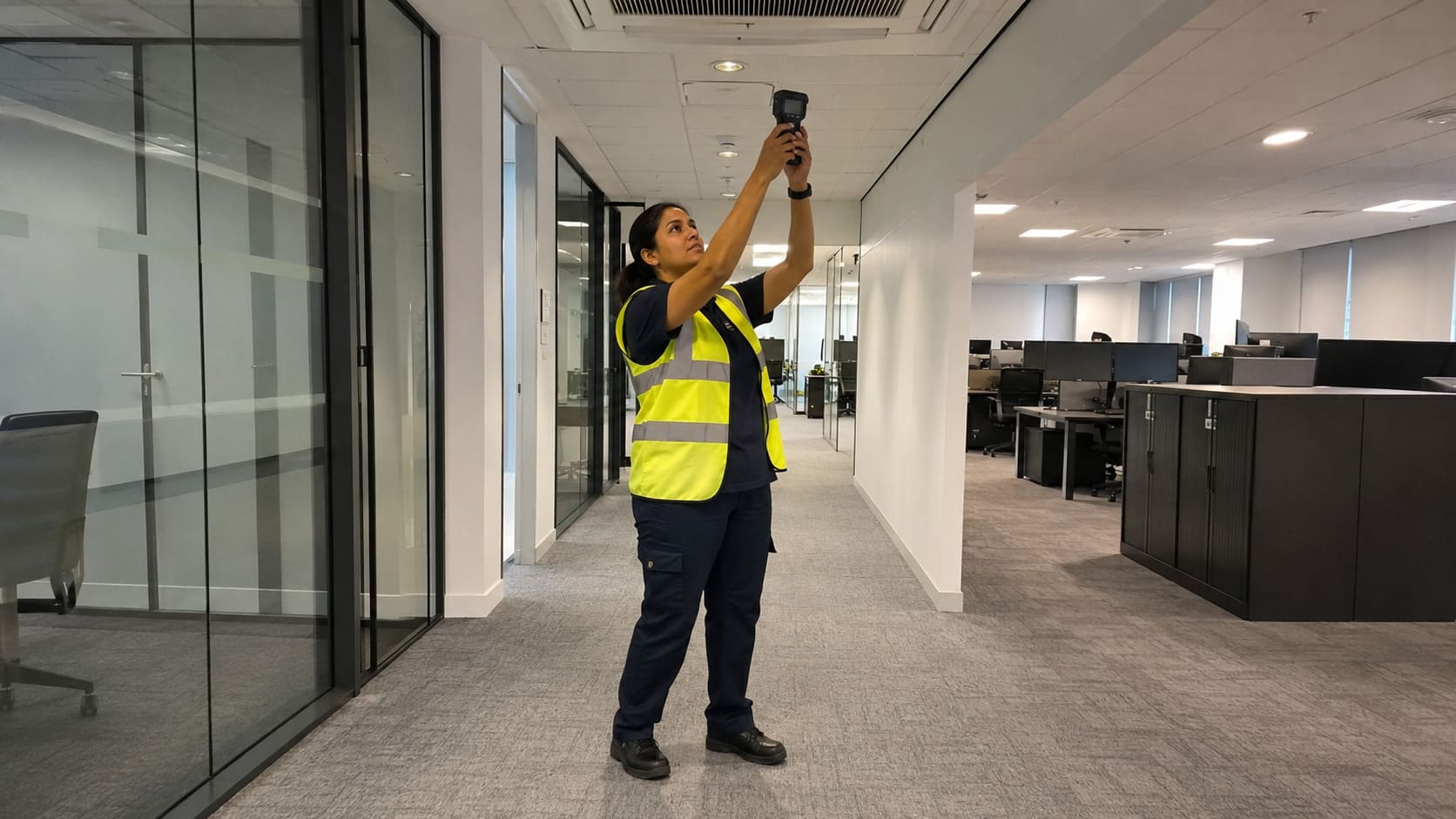
Maintenance technician checking an office ceiling system – Illustrative Image
Common questions about planned preventive maintenance
Is planned preventive maintenance a legal requirement?
PPM as a single programme is not usually the legal requirement. The duties sit around maintaining certain equipment, safety systems and premises properly, so a PPM programme is the practical way many buildings control and evidence those duties.
Who is responsible for maintenance in a commercial building?
Responsibility depends on ownership, lease terms, management contracts and statutory duties. Even where contractors do the work, the relevant duty holders still need suitable oversight and evidence.
Can PPM stop all breakdowns?
PPM cannot remove every breakdown. It reduces predictable failures, gives earlier warning of defects and makes unavoidable faults easier to manage.
What is an asset register in planned maintenance?
An asset register is the controlled list of equipment, systems and building areas included in the maintenance programme. It links each asset to its checks, service needs, evidence and defect history.
Does PPM need a computer-aided facilities management system?
A computer-aided facilities management system can make scheduling, evidence and reporting easier, especially across larger or multi-site buildings. The important point is that the system used must keep work, records and follow-up under control.
This is general information, not professional advice.
