

Does your site need an after-builders clean before reopening?
An after-builders clean is needed when building or refurbishment work has left dust, residues, marks or disrupted access routes that routine cleaning will not deal with properly. The aim is to make the site ready for handover, reopening or occupation, with clear surfaces and usable spaces.
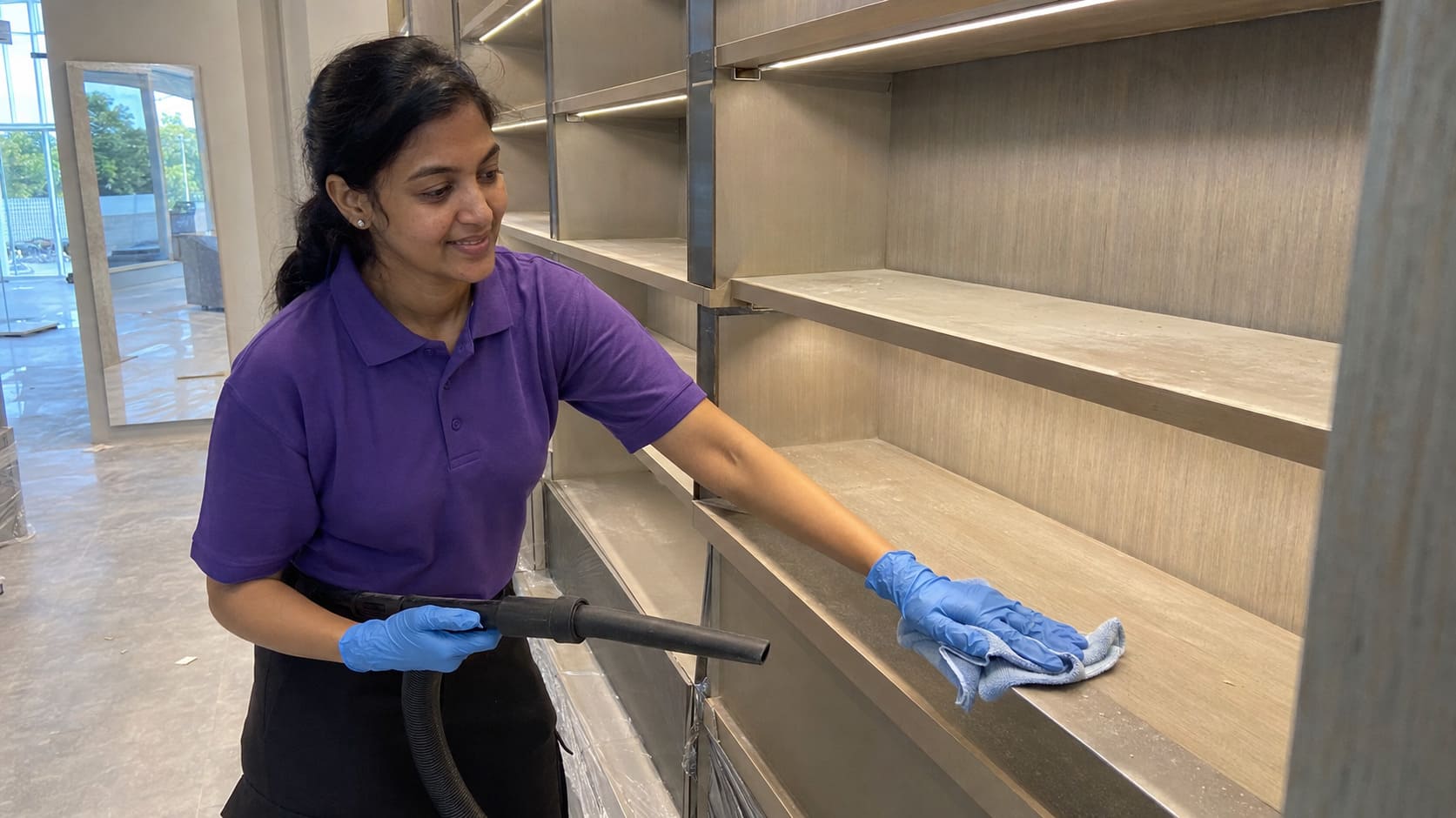
After builders cleaner removing construction dust from new retail shelving
What Do We Cover In This Article?
After-builders cleaning resets a finished-looking site for use
A refurbished office, retail unit or managed block can look close to finished while still being unready for staff, tenants or visitors. Contractors may have left the main works complete, yet fine dust keeps settling, skirting lines show residue, and welfare areas have taken the strain of the project.
After-builders cleaning, also called post-construction cleaning or post-refurbishment cleaning, deals with the dirt and disruption left by works. In plain terms, it covers dust removal, surface cleaning, floors, fixtures, sanitary spaces, welfare areas, high-touch surfaces and internal glazing where agreed. It can also include careful removal of paint splashes, plaster marks or adhesive residue, provided the surface and method allow it.
Scope matters. High-level cleaning, external glazing, duct cleaning, floor treatment, appliance interiors, specialist restoration and waste removal are not automatic parts of every after-builders clean. They need to be named before work starts, because a site manager, building manager and occupier can all mean different things by a “builders clean”.
Commercial after-builders cleaning works best when it is tied to what the site must be ready for. A tenant handover, a retail reopening and an occupied residential block all need different levels of access, sequencing and sign-off. For a commercial site, the point is readiness for use as much as presentation.
Routine cleaning is the wrong benchmark
The useful comparison is whether the site needs post-works disruption managed before use. Maintenance cleaning keeps an operational building at a steady standard; after-builders cleaning restores a building after work has disturbed surfaces, routes and shared areas.
Normal cleaners after building work may be suitable if they have the time, equipment, risk assessment and agreed scope. Many routine contracts, though, are set up for desks, washrooms, bins and floors in a live building. They are not priced or planned for plaster dust cleaning, paint marks, residue on frames or repeated dust fall from recent works.
Construction dust deserves a more careful approach than ordinary office dust. The Health and Safety Executive identifies construction dust as including silica dust, non-silica dust and wood dust, with sources including concrete, mortar, gypsum, cement, medium-density fibreboard and chipboard. The same guidance identifies dry sweeping as a high-dust method compared with controls such as vacuuming or wet brushing.
That does not mean every site needs the same equipment or method. It means the cleaning plan has to match the material left behind, the surfaces affected and whether people will be moving through the space afterwards. If dust is still being pushed from one area to another, the job has been judged by effort instead of control.
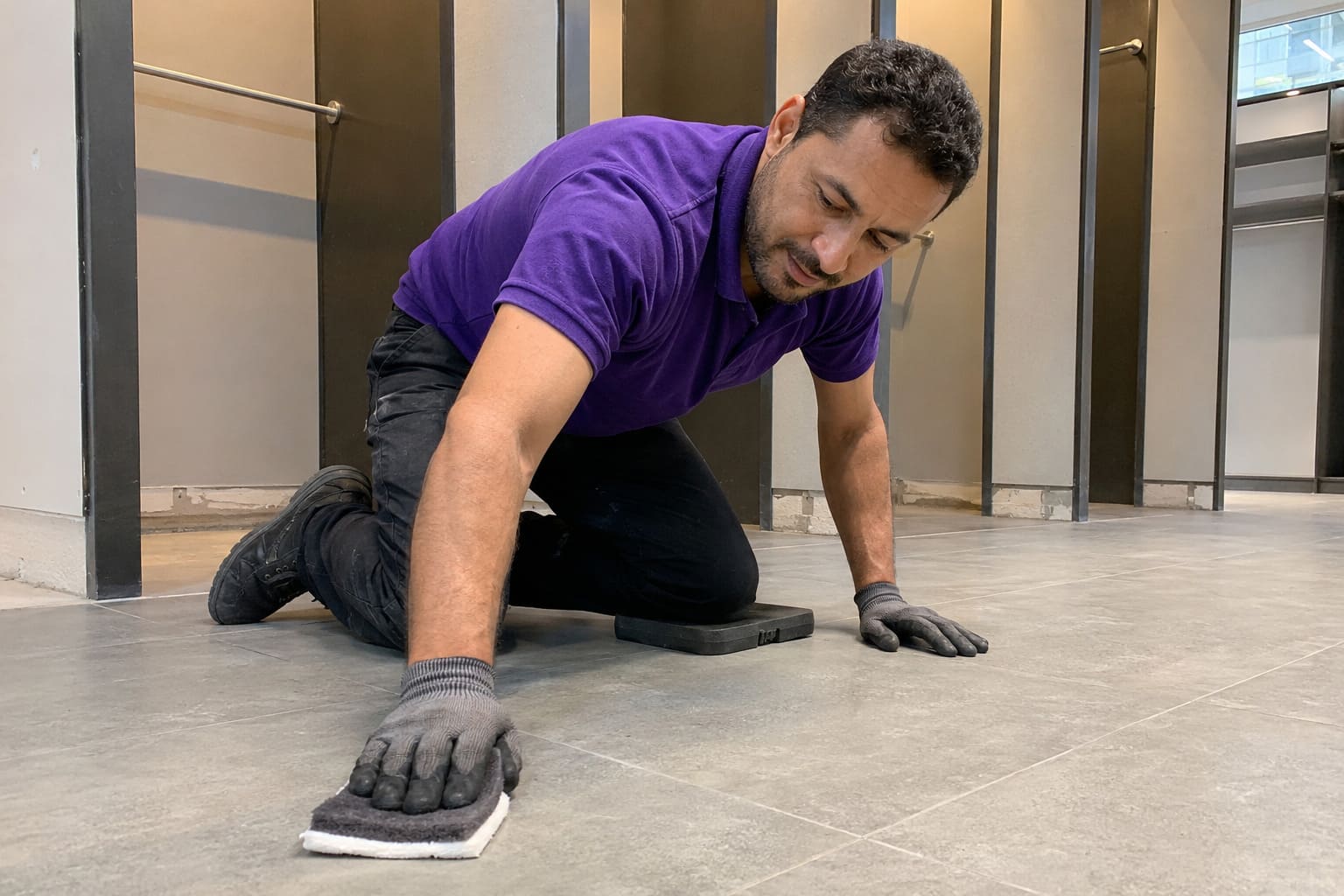
After builders cleaner removing grout residue from newly fitted store floor
A proper scope prevents missed areas
Two people can ask for a commercial after-builders clean and mean very different jobs. One expects dust removal and floors. The other assumes glazing, high-level ledges, welfare cleaning, access routes and removal of leftover protection materials will all be handled.
A proper cleaning scope protects you from that mismatch. It says what is included, what is excluded and what standard the site needs to reach before sign-off. In practice, Double Check Security Group treats that scope, access plan and sign-off route as part of managed facilities delivery, because a vague instruction leaves too much room for disagreement.
A strong scope should cover these points:
- Areas included. Name rooms, corridors, stairs, lifts, reception spaces, back-of-house areas, welfare rooms, plant rooms where access is allowed, and any external approach areas that matter for reopening.
- Surfaces and finishes. Specify floors, skirting, doors, frames, desks, counters, sanitary fittings, high-touch points and internal glazing where required.
- Specialist items. High-level cleaning, carpet extraction, floor treatment, external windows, ventilation grilles and appliance interiors need separate agreement.
- Waste expectations need plain wording. If the cleaner is only removing cleaning waste, the scope should say so. If packaging, rubble, offcuts or trade waste are involved, responsibility has to be agreed.
- Access and timing. Keys, alarms, permits, lift use, loading access and live contractor areas can affect what cleaners can complete.
- Sign-off. Agree who checks the clean, how snagging areas are recorded and whether any re-clean is included after later trade visits.
A useful after-builders cleaning checklist does not need to be long. It needs to be specific enough that the facilities manager, principal contractor and cleaning team are judging the same job.
Timing matters more than polish
A clean can be carried out well and still fail if the programme around it is wrong. Final trade visits, commissioning work and snagging can undo clean surfaces within hours, especially where dust is still being created or access routes are shared.
Snagging can undo a clean
Snagging has a habit of looking small on a programme and large on the floor. A contractor returns to adjust a door, lift a panel or touch up paint, then dust and marks appear in areas that were signed off the day before.
Good timing places the after-builders clean late enough that messy work has finished, but early enough to support handover or reopening. In phased buildings, that may mean cleaning one zone to an occupation standard while another remains under contractor control.
Sparkle cleans serve a different purpose
A builders clean, after-builders clean, sparkle clean and final handover clean are often used loosely, which causes problems. A builder’s clean usually sits earlier in the sequence and tackles heavier post-works dirt. A sparkle or final clean is closer to presentation, often after the main disruption has been handled.
Access decides whether that sequence works. Lifts, stairwells, loading bays, keys, alarms and controlled areas all affect completion. Cleaning should be planned around the building as it will be used, because a spare slot at the end rarely survives contact with a live handover programme.
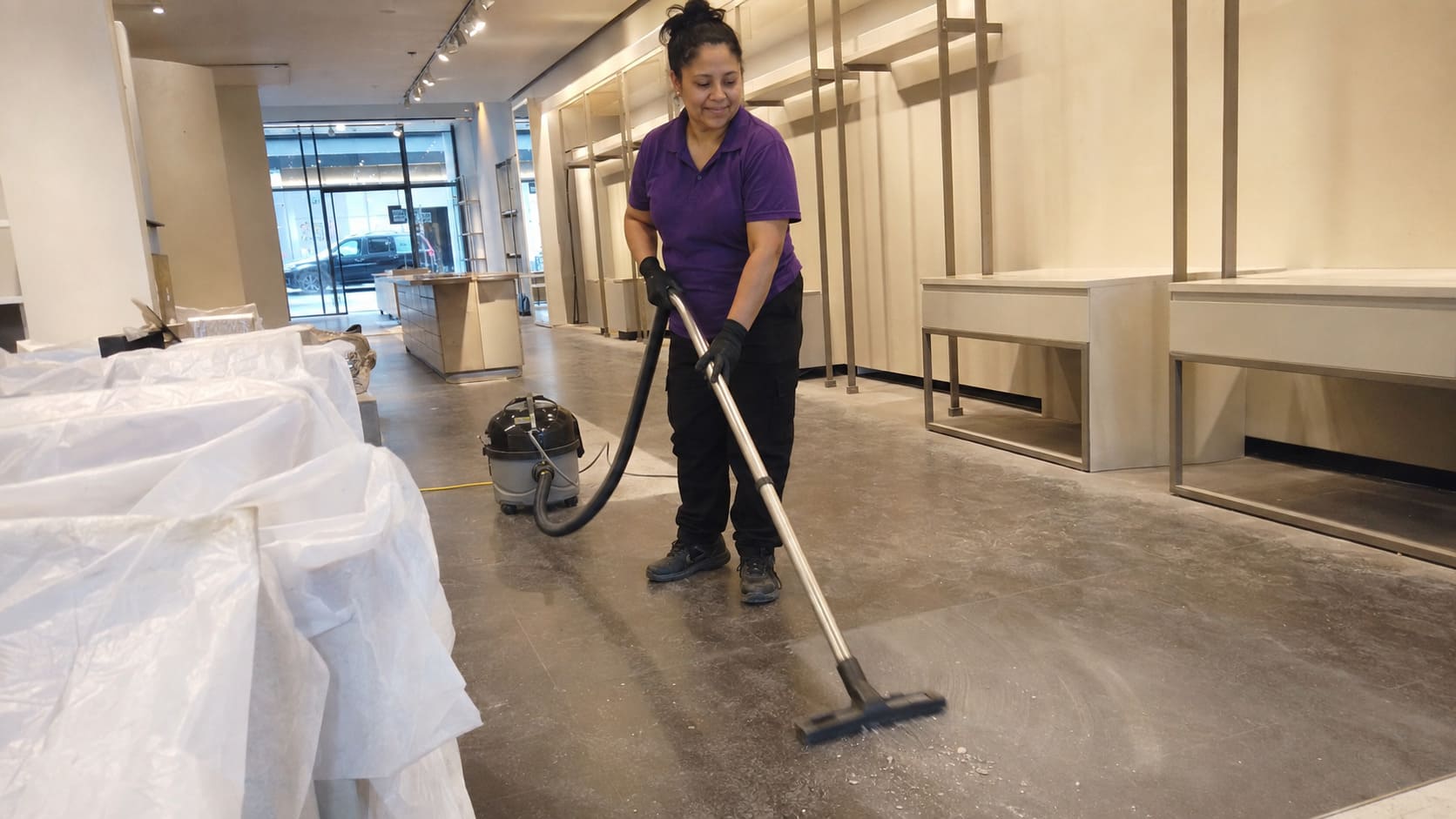
After builders cleaner vacuuming construction dust inside refurbished retail store
Waste responsibilities must be settled early
Do not assume after-builders cleaning includes removal of everything left on site. Cleaning waste, packaging, offcuts, rubble, used protection materials, adhesive containers and specialist waste are different responsibilities.
This point matters for commercial sites because waste is not just an inconvenience. GOV.UK states that waste duty of care applies to anyone who produces, carries, keeps, treats, disposes of or otherwise controls controlled waste, including private sector businesses such as shops and offices. In practical terms, authorised handling and the right paperwork need to sit with the right party.
A cleaning provider may remove some waste if the service is scoped that way. Hazardous or specialist waste is a separate matter and should never be assumed into a standard post-build site clearance. The clean runs more smoothly when waste responsibilities are visible in the scope, instead of being discovered during sign-off.
Handover-ready sites are managed, not tidied
Commercial sites usually fall into one of two approaches at the end of works. One chases visible mess after everyone else has finished. The other treats site handover cleaning as part of the programme, with scope, access and sign-off agreed before the clean begins.
| Reactive tidy | Planned handover clean |
|---|---|
| Starts after problems become visible | Starts from a defined scope and programme point |
| Focuses on what can be seen straight away | Covers agreed spaces, routes and surfaces needed for use |
| Leaves waste, access and exclusions unclear | Makes responsibilities clear before cleaning starts |
| Risks repeated re-cleans after snagging | Allows cleaning to follow the actual site sequence |
| Judges success by appearance | Judges success by readiness for handover, reopening or occupation |
Health and Safety Executive workplace guidance on the Workplace (Health, Safety and Welfare) Regulations is clear that workplaces should be kept clean and safe, with floors, corridors and stairs free from obstructions and suitable for safe movement and access. That is the better lens for a commercial after-builders clean. Can people use the site safely and properly, without avoidable dirt, residue or blocked routes getting in the way?
Facilities providers such as Double Check Security Group are used to looking at cleaning alongside access, building use and operational standards. That wider view matters after works, because the cheapest last-minute tidy can leave you with re-cleans, disputed exclusions and weak handover evidence. A planned, scoped and coordinated clean gives the site a better long-term start.
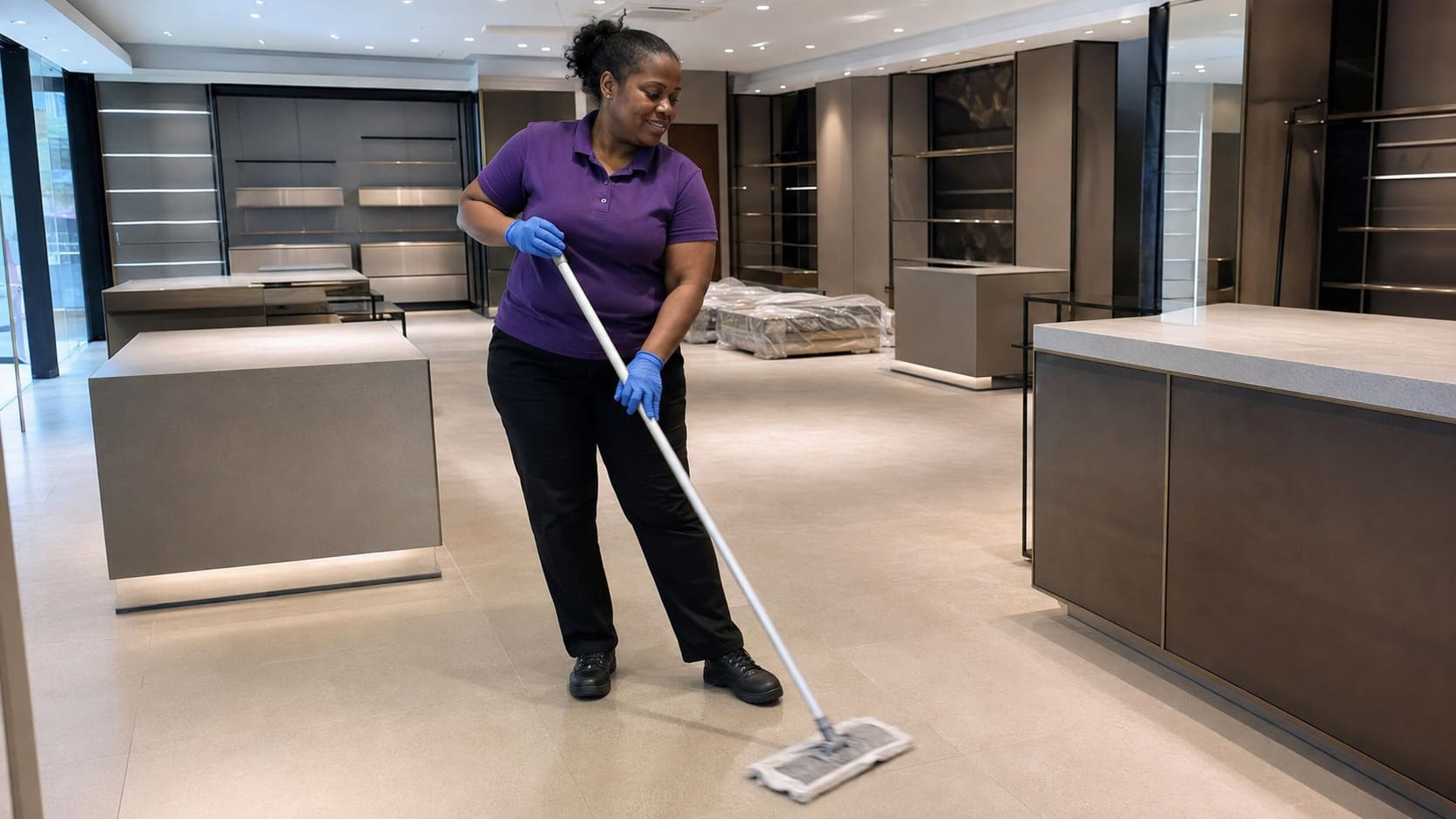
After builders cleaner mopping newly fitted retail store floor
Common questions about after-builders cleaning
Can an after-builders clean happen during phased occupation?
Yes, but the scope needs to separate occupied areas from contractor-controlled areas. Phased cleaning works best when access routes, working times and sign-off points are agreed before cleaners arrive.
Will paint splashes and adhesive marks always come off?
No, because removal depends on the surface, the product used and the risk of damage. A professional scope should state that marks will be treated where safe and agreed, rather than promising removal from every finish.
Who checks the clean before handover?
The best person is the named client representative, such as the facilities manager, building manager or site lead. That person should check against the agreed scope, since a general walk-through can miss back-of-house areas and access routes.
Can post-refurbishment cleaning be done outside normal working hours?
Yes, if access, alarms, keys, welfare facilities and building rules allow it. Out-of-hours cleaning can reduce disruption, but it needs the same scope control as any daytime clean.
Is after-builders cleaning the same as deep cleaning?
No. Deep cleaning is usually an intensive clean of an existing occupied space, while after-builders cleaning deals with dust, residues and disruption left by works. Some methods overlap, but the reason for the clean is different.
This is general information, not professional advice.
