

What cleaning schedule does your school need across term weeks and closures?
Your school needs a written daily, weekly and periodic cleaning schedule that changes between term time and closures. Daily work covers occupied areas and hygiene-risk spaces, weekly work handles planned lower-use tasks, and holidays give access for deeper periodic work that is specified, checked and recorded.
A fixed timetable for every school sounds neat, yet it fails as soon as the site becomes real. A small primary school, a large secondary school, a special school and a multi-building trust site place different demands on cleaners, stock control and access.
Most weak cleaning scopes have the same fault: they say the school will be cleaned “regularly” and leave the practical detail to be worked out later. That wording gives you little protection when toilets run short of stock, a classroom is missed, or holiday work has been assumed but never priced.
A defensible answer starts with the schedule. Once the daily routine, weekly tasks and holiday work are separated, you can judge whether the contract is realistic for the way your school is actually used.
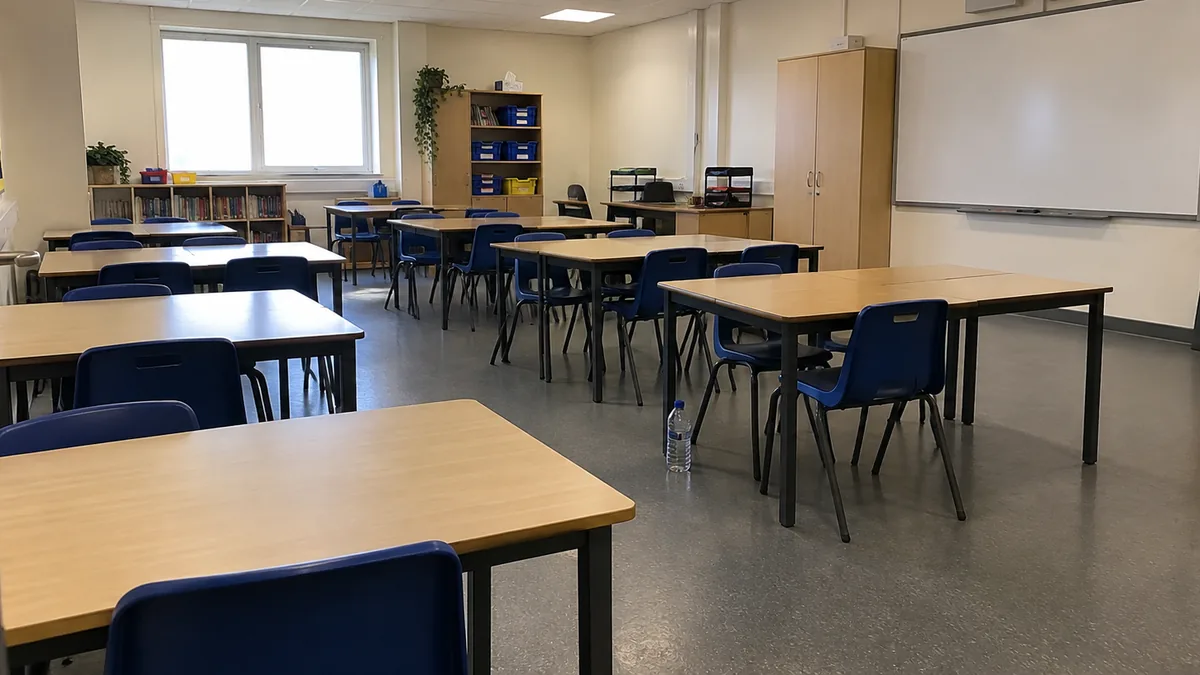
Clean school classroom after professional cleaning – Illustrative Image
What Do We Cover In This Article?
The useful baseline is daily, weekly and periodic cleaning
A practical school cleaning frequency starts with three layers: daily work during occupied periods, weekly planned work, and periodic tasks that need better access. A strong school cleaning plan uses daily, weekly and periodic layers, not one vague promise of regular cleaning.
UKHSA describes a comprehensive cleaning contract as one with daily, weekly and periodic schedules. Those schedules should set out the activity, the frequency and who carries it out. That is the detail that makes the plan usable when the site is busy.
Toilets and high-touch points need tighter routines
A toilet block used throughout the day and a locked store room need different routines. The first needs cleaning, stock checks and inspection built into the school day; the second can sit in a planned schedule unless its use changes.
High-touch point cleaning in schools deserves the same practical thinking. Door handles, taps, toilet flushes and shared desk areas receive repeated contact, so they need routine attention during term time. Areas linked to food, dirt or bodily fluids need clear cleaning and disinfection arrangements, without turning the whole school cleaning plan into a catering manual.
For school washroom cleaning, UKHSA says toilet paper should be available in each cubicle. That turns toilet checks into a stock and condition issue as well as a surface-cleaning task.
- Toilets and washrooms: Build in cleaning, replenishment and inspection. A clean-looking cubicle with missing toilet paper still fails the user.
- Classrooms: Set a daily school cleaning tasks routine for desks, bins, floors and shared touchpoints, then adjust it for room use.
- Corridors and entrances: Footfall drives frequency. Wet days, heavy movement between lessons and after-school use all increase the need for checks.
- Dining spaces: Treat these as scheduled cleaning points around use, with clear responsibility after service or shared activities.
- Staff rooms and store rooms: Match the routine to use. A busy staff room needs more attention than a low-use storage space.
Premises have to be suitable for the pupils using them, including their ages, numbers and any special requirements. Cleaning frequency should follow that same logic, because the use of the building tells you where the pressure sits.
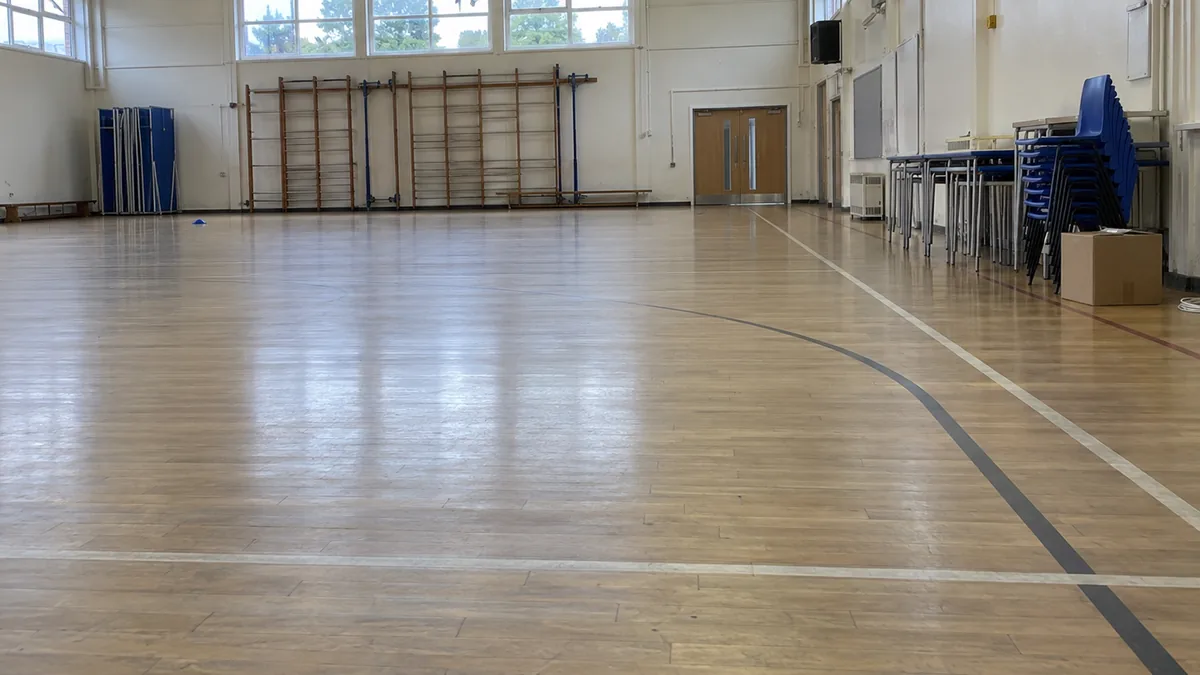
Clean school sports hall and gym floor – Illustrative Image
The holiday deep clean covers access-led tasks
During a normal school day, cleaners work around rooms being used, corridors moving, clubs running and staff staying late. Some tasks need the building to be quieter, furniture to be moved, rooms to be opened in sequence, or areas to dry without people walking straight back through them.
Department for Education guidance says periodic or non-routine cleaning may be needed during holidays or inset days, including a whole-school deep clean during the summer holiday where the site needs that level of work. Holiday cleaning should clear the larger access-led work, not replace the daily term-time routine.
A school holiday deep clean can include agreed internal areas such as floors, furniture, book shelves, corridors, staff rooms, store rooms, internal doors and internal windows. The exact mix belongs in the specification, because a blanket deep-clean label can hide very different amounts of work.
Access planning matters as much as the cleaning task. For a provider such as Double Check Security Group, holiday cleaning has to sit alongside wider site arrangements such as key holding, authorised access and out-of-hours building control. A cleaner arriving at a locked block with no agreed route through the site loses time before the work starts.
Shorter closures can be used selectively. Summer is often the cleaner window for whole-site periodic work, while half-term may be better used for targeted areas that need attention before the next stretch of term.
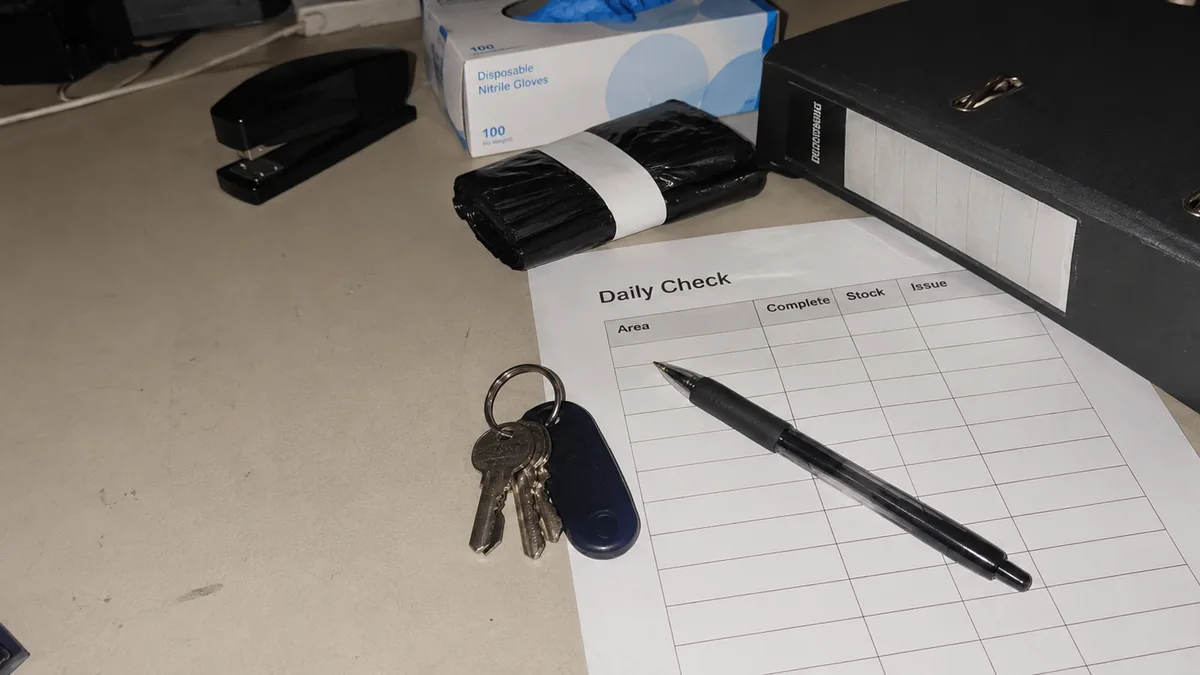
School cleaning daily checklist and supplies – Illustrative Image
Monitoring belongs in the cleaning schedule
A cleaning schedule only works when delivery is checked. Frequency on paper means little if missed rooms, low stock or attendance gaps are found by pupils and staff before anyone managing the contract sees them.
Daily checks
Daily inspections should confirm that the agreed routine has been completed and that obvious issues are logged quickly. Department for Education guidance places quality standards, daily inspections, staff timekeeping, absence management, stock levels, equipment reporting and machinery maintenance within contract monitoring.
That sounds like a long control list, but in practice it is normal facilities housekeeping. Someone checks whether the cleaner attended, whether the right areas were covered, whether stock has run low and whether equipment faults need action.
Responsibility and records
Outsourced school cleaning works best when responsibility is visible. The school needs to know who receives the issue, who responds, and how repeated misses are handled.
Within facilities management, Double Check Security Group structures cleaning checks with site visits, performance monitoring and escalation routes, so the cleaning rota is managed as part of the building operation. That approach keeps school cleaning inspections practical, because records then support the schedule instead of sitting apart from it.
Good monitoring gives you a clear view of whether the agreed school cleaning schedule is being delivered on the days that matter.
A practical specification makes the schedule easier to run
The best school cleaning specification is one that a contractor can price, staff and manage without guessing. It should state how many weeks of cleaning are needed each year, what access hours apply, and which periodic or non-routine tasks sit outside the daily term-time routine.
Morning and evening duties can differ by day, so access needs plain wording. If a hall is used before school on some days and after school on others, the schedule has to reflect that. Otherwise, the cleaner is left trying to fit the job around a timetable that the contract did not describe.
DBS checks for safeguarding, COSHH rules for safe chemical labelling and storage, and current procurement duties all belong in the operational background of an outsourced school cleaning contract. You do not need to manage the mechanics yourself, but your scope should make clear that these responsibilities sit with competent delivery.
With those lines visible, you can read your current scope quickly. The gaps show up in weeks, access, holiday tasks, named responsibility and checks before they show up around the site.
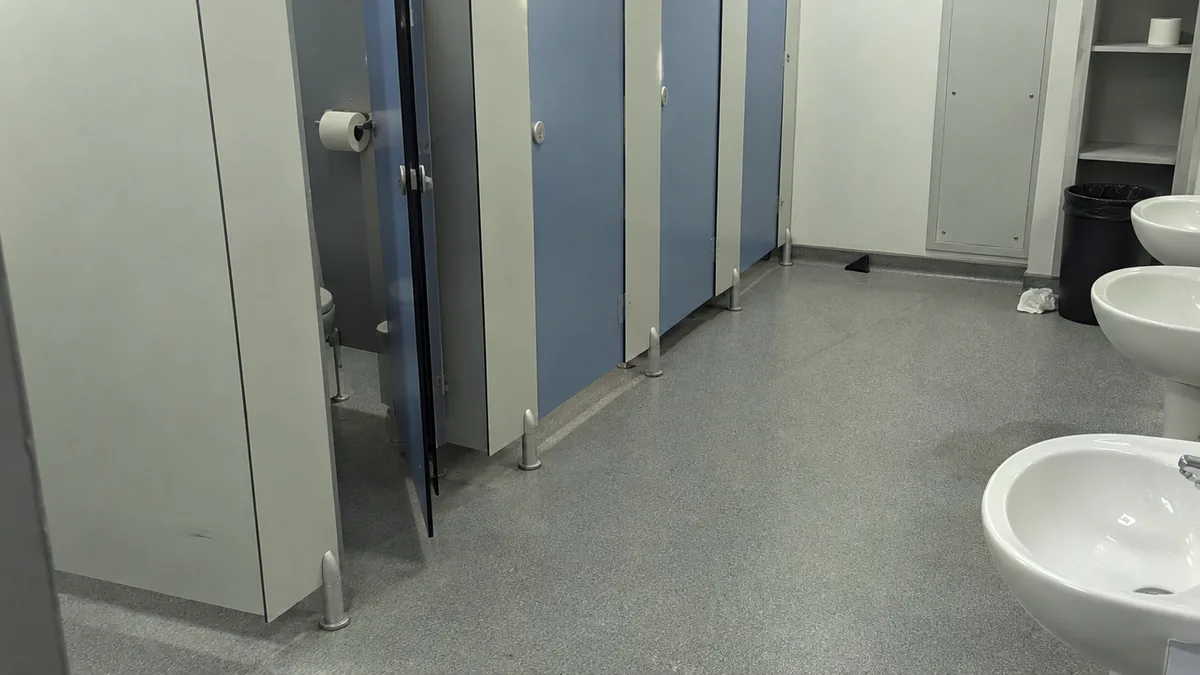
School toilet cleaning and washroom hygiene – Illustrative Image
Common questions about school cleaning schedules
Can school cleaning take place around clubs, lettings or evening use?
Yes, but the access hours need to be written into the schedule. If parts of the site stay in use after the school day, the cleaning plan should say which areas are cleaned before use, after use or during another agreed window.
Should sanitary disposal be included in the cleaning contract?
Sanitary disposal should be clearly included or clearly managed under a separate arrangement. UKHSA says suitable sanitary disposal facilities should be provided where there are children and young people aged 9 or over, so the responsibility needs to be visible.
Does colour-coded cleaning equipment have to be used in schools?
UKHSA says there is no legislative requirement to use colour-coded cleaning equipment, but it is good practice. Separate equipment for areas such as toilets, kitchens, classrooms and offices reduces the risk of equipment being used in the wrong place.
Who deals with emergency cleaning after vandalism or a spill?
The cleaning scope should state how urgent cleaning is reported and who is responsible for arranging it. Emergency work sits outside a simple daily rota, so the escalation route matters.
Are catering kitchens part of the same school cleaning schedule?
Catering kitchens may have separate hygiene duties or contractor arrangements. Your school cleaning schedule should define the boundary clearly, so general cleaners, catering staff and any separate provider do not assume the same task belongs to someone else.
