

What happens after your alarm sounds in the middle of the night?
First, the alarm route decides who is notified and who attends. A monitored system goes through an alarm-receiving company, an audible-only alarm relies on someone hearing and reporting it, and a keyholding response works from agreed instructions, authorised access and clear escalation rules.
Most weak alarm plans look acceptable during working hours. The test comes when the person named as keyholder is asleep, away, unreachable or unsure what they are allowed to do once they reach the premises.
For a commercial site, the useful question is practical: who gets called when an alarm goes off, who can access the building, who decides whether to escalate, and what record comes back afterwards. Those points are set before the activation, which is why professional keyholding is mainly a planning issue.
Treat the 3am call as a live test of the arrangement behind the alarm. Sirens, monitoring and keys each play a part, but the response only works cleanly when the handover between them has already been agreed.
What Do We Cover In This Article?
The signal path decides who acts first
Alarm activation starts the chain, but the system set-up decides where the signal or alert goes. A monitored alarm response, an audible-only alarm and a keyholding alarm response all create different first actions.
The table below compares the alarm route with what usually happens next.
| Alarm route | What usually happens next |
|---|---|
| Monitored alarm | The signal reaches an alarm-receiving company, which follows the agreed arrangement for notifying keyholders, police or another authorised contact. |
| Audible-only alarm | The alarm sounds at the premises. Police attendance depends on other supporting information that points to a genuine incident. |
| Keyholder notification | The nominated keyholder or response provider is contacted according to the site instructions and call-out route. |
ProtectUK separates monitored alarms from audible-only alarms for good reason. An alarm bell sounding at a premises does not create one automatic chain where police, staff and a security responder all move at once.
That distinction matters when you are judging your own out-of-hours cover. If the system depends on a named person answering the phone, that person must be reachable and able to attend. If the alert goes through an alarm-receiving company, the contact protocol must be correct on the night, including the right escalation route.
Instructions decide the response before attendance
Good alarm response starts with preparation. The responder needs more than a set of keys; the site file has to say what access is permitted, which doors or zones matter, who can be called, and what action is allowed if the premises cannot be secured.
A 3am response works because the instructions are settled beforehand, not because someone improvises well under pressure. For a commercial alarm call-out, those instructions are the difference between controlled attendance and a confused phone chain involving tired staff.
Double Check Security Group treats keyholding and alarm response as a managed security function, with agreed instructions sitting behind the attendance. That approach keeps the night-time call focused on the site and the agreed response, so a manager is not pulled into decisions that should already have been made.
Access and authority come first
Authorised access needs to be specific. A response officer may have keys, but the instructions still need to explain which areas can be entered, how the alarm controls are handled, and which locks, shutters or internal doors affect securing the building.
Escalation contacts also need order. One person may approve contractor attendance, another may deal with building damage, and a different contact may need the morning report. Loose contact lists fail under pressure because nobody knows which name carries authority.
The Security Industry Authority regulates private security licensing and treats contracted key control for locks as licensable private security work. That gives you a simple due diligence point: any provider handling your keys and access route needs the correct licence for the work being sold.
Attendance expectations must be realistic
A named keyholder on a form is only useful if that person can answer, travel and operate the system safely at the time the alarm activates. ProtectUK says alarm systems should have at least two keyholders, and those keyholders should be familiar with the controls, able to grant access, contactable by phone and available to attend within 20 minutes.
That benchmark exposes the weakness in many staff-based arrangements. A director who lives far away, a shop manager on annual leave, or a single employee holding the burden alone gives you a name on paper without the night cover to match it.
Professional keyholding service arrangements deal with that gap by agreeing the route before the call-out. The point to check is simple: the provider should be able to show how access, authority and escalation are recorded for your site.
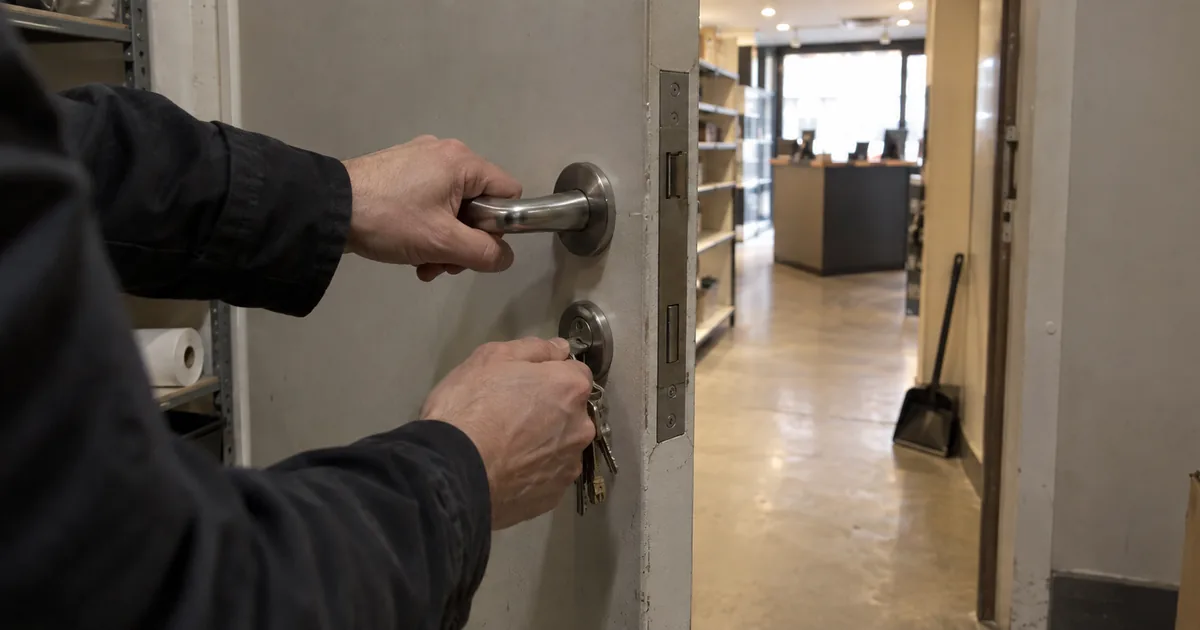
Key holding professional unlocking security door – Illustrative Image
A proper attendance follows a controlled procedure
After dispatch, the alarm response officer attends under a controlled alarm response procedure. The visit is structured around checking the premises, finding the likely cause of activation, securing the site and creating an alarm incident report.
A responder arriving at a closed retail unit after a keyholding response at night is not simply turning a key in the door. Before entry, the officer needs to make a safe external check and look for signs that change the decision, such as damage, an open door or another indicator that escalation is needed.
- Attendance is logged. The responder records arrival and follows the agreed site attendance route, including any access notes or restrictions in the instructions.
- External checks come first. The officer checks the perimeter and obvious entry points before deciding whether entry is appropriate.
- Entry follows the instructions. Once inside, the responder uses the agreed alarm controls and checks the relevant areas linked to the activation.
- The cause is recorded where it can be identified. A fault, an unsecured door, accidental activation or signs of damage all need different follow-up.
- Escalation happens when the site condition requires it. Evidence of crime, a conflict risk, damage or a premises that cannot be made secure changes the response.
- Reset and securing finish the attendance. Alarm reset and secure action may include locking, closing access points and confirming the site condition in the record.
BS 7984-1:2016 is the British Standard for keyholding and response services. It covers matters such as attendance, locating alarm causes, making premises secure and preserving possible evidence. The responder’s job is to control the site and the record, not to act as an informal investigator.
That last point matters for your staff as much as for the provider. An unprepared employee may feel pressure to enter, search or decide what happened. A trained response officer works to the agreed instructions, escalates when the condition of the site calls for it, and leaves a written record that your business can use the next morning.

Key holding officer arriving at office building – Illustrative Image
False alarms still need formal follow-up
“False alarm” sounds harmless until the same detector activates again, the panel will not reset, or an unlocked door explains why the system triggered. Nothing may have been stolen, yet the call-out has still revealed something about the building, the alarm system or the keyholder plan.
Current police security system policy material says two false calls in a rolling 12-month period should lead to notice requiring action, and further false calls can lead to police response being withdrawn. That makes false alarm follow-up a practical control issue, especially where a monitored system has police response arrangements attached.
Unattended sounding alarms also create problems beyond the premises. GOV.UK guidance allows councils to deal with intruder alarm noise where it creates a statutory nuisance or night noise issue, so a poor response plan can become a building management problem as well as a security one.
A useful incident report should tell you what the responder found, whether the system reset, who was notified and whether the alarm maintenance provider needs to check a fault. If a door could not be secured or a code failed, the report should feed straight back into updated alarm response instructions.
The weak link is usually the keyholder plan
Someone has the keys, so the site is covered. That is the misconception that causes most poor alarm response planning.
Informal staff keyholder arrangements look cheap and simple until the alarm activates out of hours. The named person may be contactable on a normal working day, but night attendance asks for something different: access to the right parts of the premises, authority to make defined decisions, and a clear record of what happened.
A competent keyholding company should make those duties explicit. Double Check Security Group’s model is built around documented instructions and a control centre that supports out-of-hours alarm response every day of the year. That is the operational structure a commercial site needs when nobody from the business is present.
Your decision filter should be plain. A business alarm keyholder arrangement needs authorised people, reliable attendance, agreed escalation and a report that stands up the next morning.
The misconception to drop is simple: a spare key equals cover. A site is covered only when the person attending has authority, access, instructions and a record to leave behind.
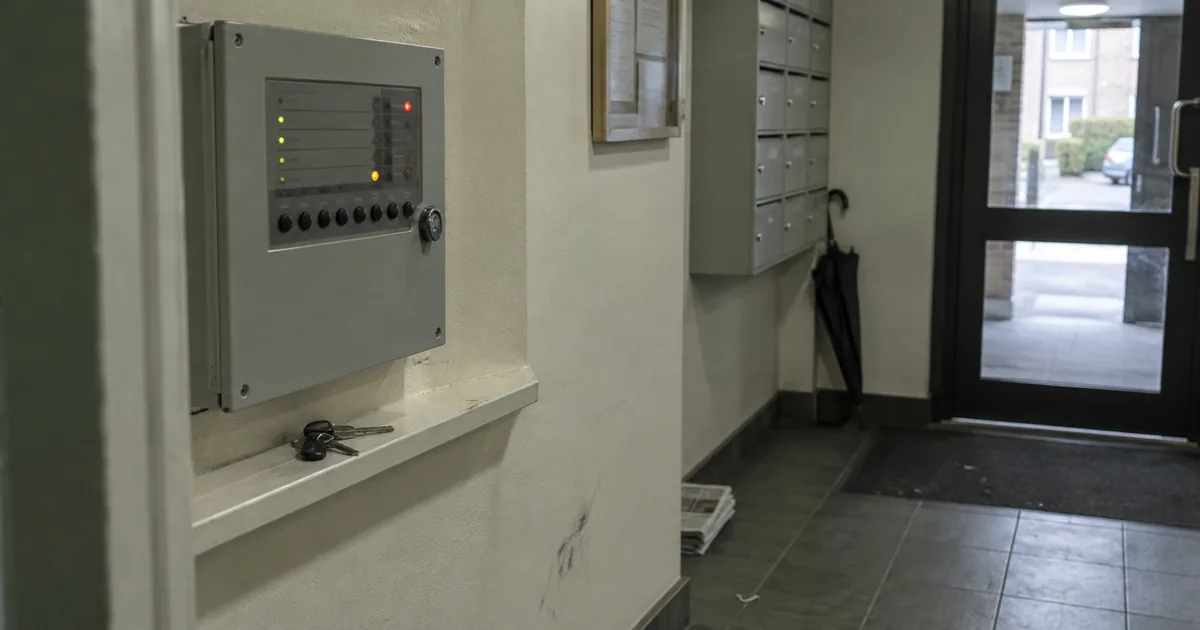
Key holding alarm panel residential block – Illustrative Image
Common questions about keyholding alarm response
Can a key safe replace an authorised keyholder?
A key safe stores access, but it does not provide a trained person who can attend, check the premises and make agreed site decisions. A keyholding response service still needs an authorised responder and clear instructions.
Does professional keyholding replace alarm maintenance?
Professional keyholding does not replace the alarm maintenance provider. If the responder finds a fault after a call-out, the useful outcome is a clear note that allows the maintenance provider or site contact to deal with the cause.
Can a response officer meet emergency services on site?
A response officer can attend and support access where the site instructions and incident conditions require that route. The officer’s role remains controlled attendance, access support and reporting, with emergency services handling their own responsibilities.
Should staff still be listed as escalation contacts?
Staff can be listed as escalation contacts where they hold the right authority for business decisions. The alarm response plan should make clear when staff are notified and what decisions stay with the professional responder.
Can building works affect alarm response instructions?
Building works can change access routes, alarm zones, locking arrangements and contractor contacts. Any temporary change that affects entry or securing should be reflected in the response instructions before the alarm activates.
