

Key points
- Choose the role by the work your site needs done.
- Door supervisors cover guarded entry at licensed premises such as bars, clubs and events.
- Security guards suit sites that need visible presence, patrols and protection of property.
- A door supervisor licence also covers security guard work, but not the other way round.
Which security role does your site need?
Choose the role by the work your site needs done. Door supervisors are used for guarded entry and control at licensed premises. Security guarding fits premises and property protection, such as fixed posts, patrols and access control, where door supervision is outside the duty profile.
Most buying mistakes start with the word “guard”. It sounds simple, but a contract needs a clearer role than that. You are specifying what the officer will do, where they will stand, what they will control and which licence category fits the site.
In buying terms, you are really asking what the difference is between a door supervisor and a security guard when booking cover for a UK site. The useful answer sits in the activity, the premises type and the written instructions given to the officer.
A better proposal will make those boundaries clear before anyone arrives on site. A vague rota title leaves too much room for the wrong licence category to be used.
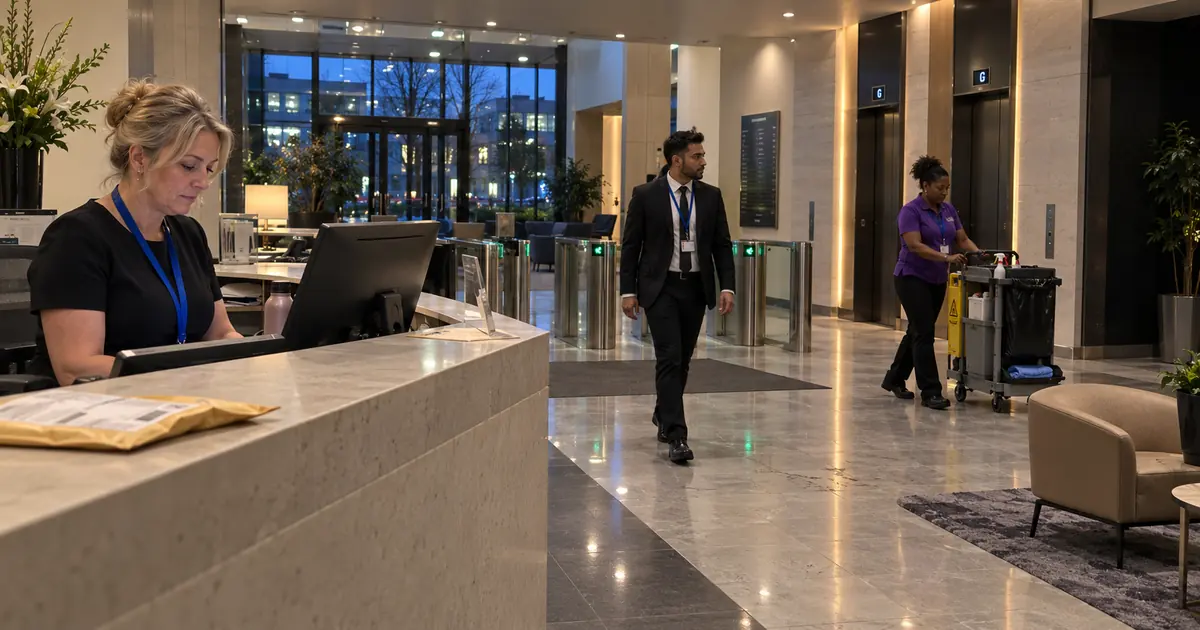
Integrated Security Cleaning and Reception – Illustrative Image
What Do We Cover In This Article?
How does the work decide the licence?
Role choice starts with the work being carried out. The Security Industry Authority, known as the SIA, uses licence categories that follow licensable activity, so a buyer should look past job titles and ask what the officer is actually doing.
A contracted security operative needs an SIA licence when the work is part of a contract for services and involves a licensable activity. GOV.UK gives the simple example of a private security company placing a guard in a shop and charging the shop a fee for that service.
The licence follows the activity and premises, not the wording a supplier puts on the rota. A shop, office, venue or event may all ask for “security”, yet the right category changes when the duties involve guarding licensed premises, controlling entry, protecting property or dealing with disorderly behaviour.
Assignment instructions matter because they turn the buying decision into a clear working role. They should state the premises type, the duty area and the limits of the job, so the SIA licence category matches the cover being delivered.
Where is door supervision needed?
A hospitality entrance or event door is where this difference usually becomes visible. Once the officer is guarding licensed premises against damage, theft, unauthorised access or disorderly behaviour, door supervision becomes the relevant SIA category.
Licensed premises means a venue licensed to sell alcohol for consumption on the premises, provide regulated entertainment, or both. That wording covers more than a nightclub, but it still needs proper judgement. Premises licence conditions and site risk can affect whether door staff are required for a given duty.
The table below compares door supervision with security guarding for a buyer specifying cover.
| Buyer issue | Door supervision | Security guarding |
|---|---|---|
| Typical site context | Licensed premises, venue entrances and regulated entertainment settings | Offices, retail sites, warehouses, construction sites and property guarding |
| Main licence fit | SIA door supervision licence | SIA security guarding licence |
| Key buyer check | Whether duties involve guarding licensed premises | Whether duties are premises or property guarding outside door supervision |
Door supervision is the safer specification for guarded entry at licensed premises. It is not a premium label for any visible security role. BS 7960 is the relevant code of practice for door supervision service provision, so a buyer can also ask how the supplier manages the role in practice.
For procurement, the point is simple. If the duty is guarded entry at licensed premises, the proposal needs to explain the door supervision licence fit clearly.
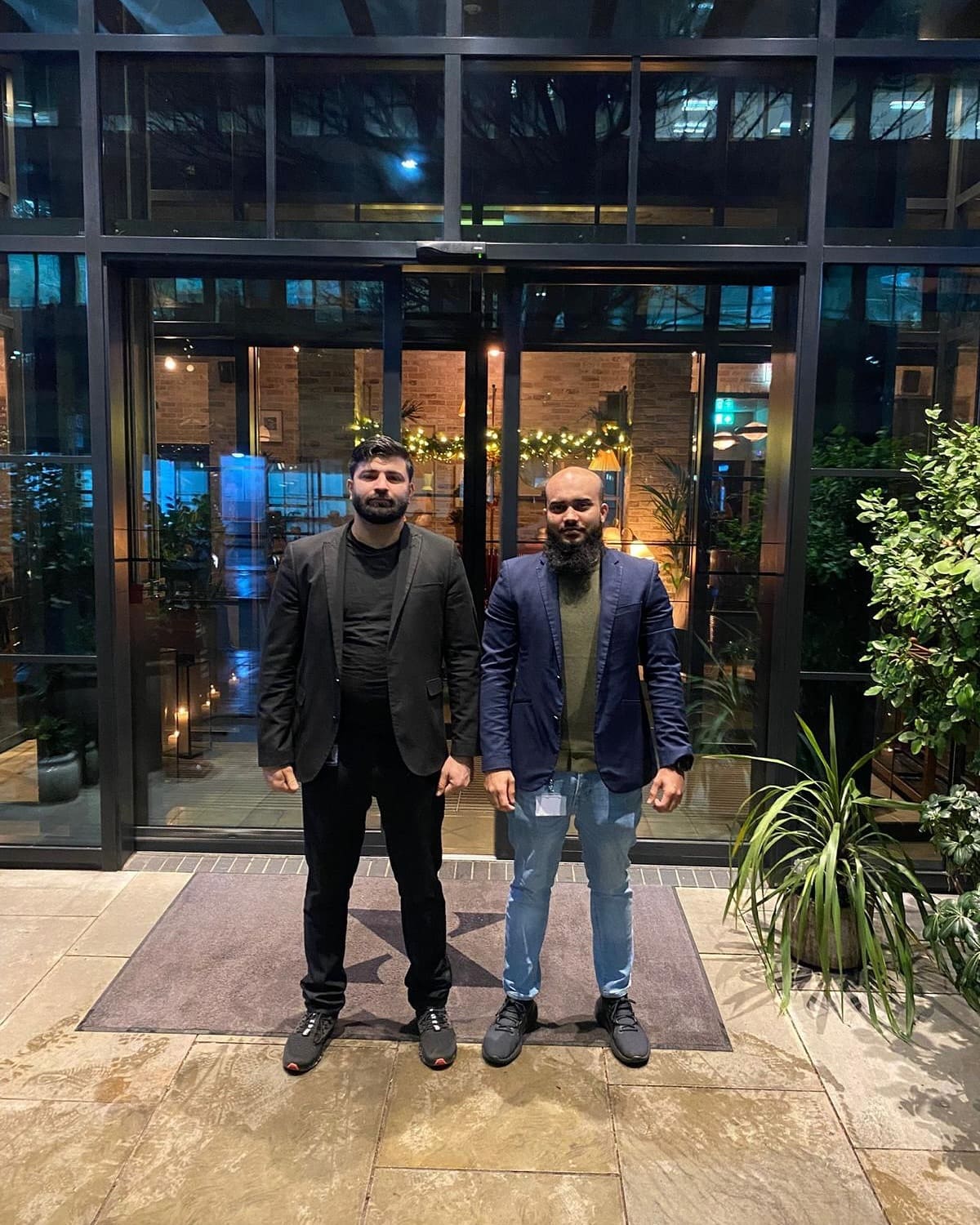
When is static guarding the right fit?
Security guarding is the practical fit for many sites that need a visible presence, patrols or protection of premises and property. The SIA security guarding licence covers guarding premises or property against damage, theft, unauthorised access or disorderly behaviour.
A static guarding role might place an officer at a reception point, a gatehouse, a retail floor or an out of hours post. The duty could include checking visitors, recording incidents, controlling keys or walking a patrol route agreed in the site instructions.
This role is not a lesser version of door supervision. It is the right specification where the site needs property and asset protection and the door supervision category is outside the duty. A warehouse with a delivery gate needs a different service shape from a venue entrance serving alcohol for consumption on site.
Contracts managed by Double Check Security Group include site inductions before an officer’s first shift, along with regular site visits. That matters because static guarding depends on site knowledge as much as licence status. BS 7499 is the relevant code of practice for the provision of static guarding security services.
Not sure whether you need a guard or a door supervisor?
Tell us about your site and we'll match the right licensed officer to it.
Can one role cover the other?
A door supervisor licence allows the holder to perform the licensable activity of a security guard. That is why a supplier may deploy a door supervisor licence holder on security guarding duties when the assignment instructions fit the role.
A security guarding licence does not give the holder the door supervision permissions needed for licensed premises. If the planned work is door supervision, the individual’s licence needs to match that category.
The door supervisor licence is broader for this specific overlap, but that does not remove the need for clear instructions. The buyer should still check the premises type, duty scope and role on the rota before accepting the proposed cover.
A good proposal will make the licence match visible in the service schedule, not buried in a generic staffing line.
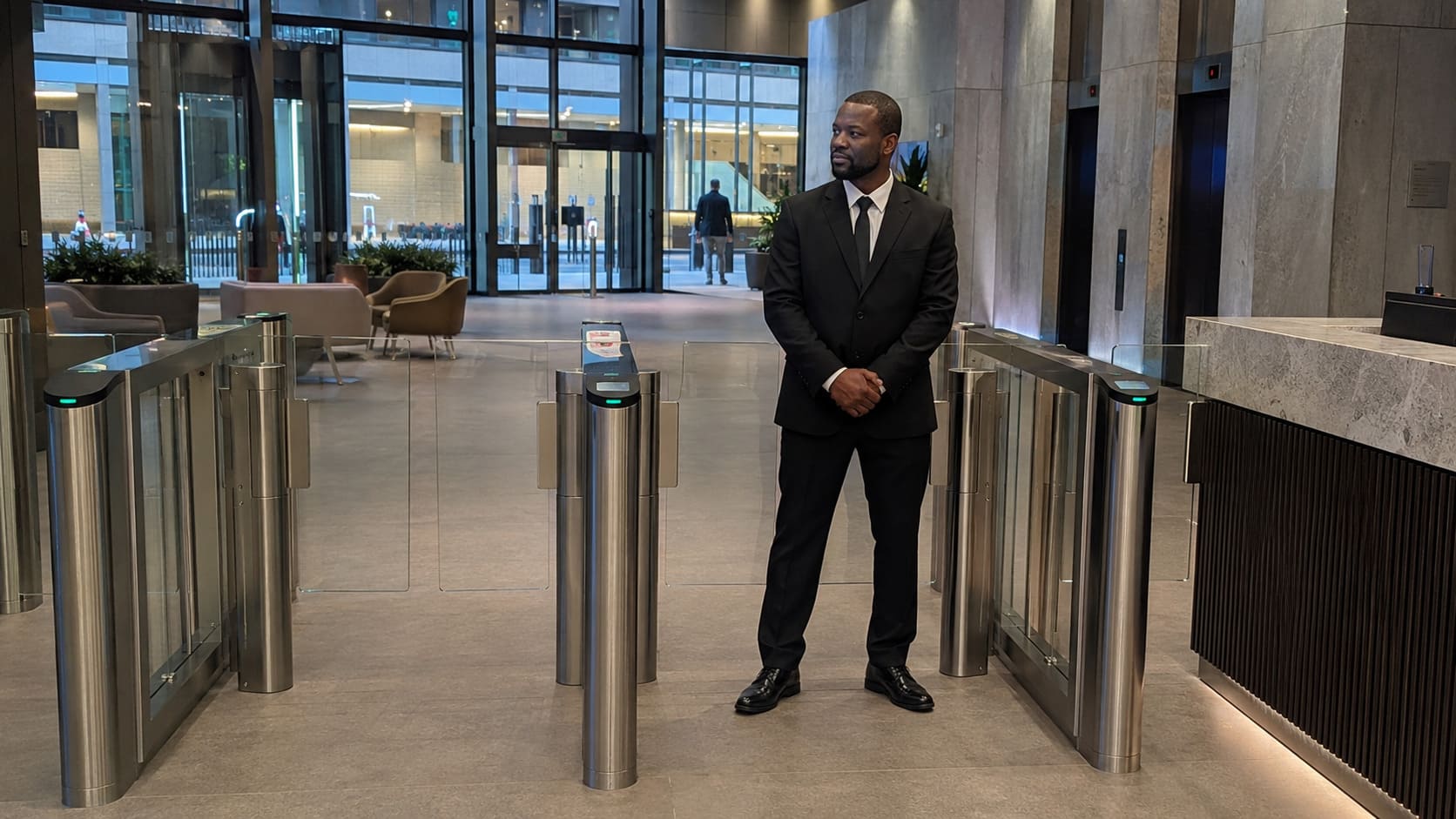
Security officer monitoring office access-control gates – Illustrative Image
What should buyers check before booking cover?
When you appoint a supplier, the main check is whether the proposed cover matches the site and the licensable activity. GOV.UK says a person can be fined or sent to prison if they pay someone to work in security without the right SIA licence, so this belongs in procurement before cover starts.
- Confirm the exact duties and premises type.
- Ask which SIA licence category each role needs.
- Check the individual licence before cover starts. You can use the 16-digit SIA licence number, or the person’s surname plus details such as date of birth and security role.
- Put the duties into assignment instructions.
- Agree how incidents, refusals, patrols and handovers will be recorded.
- Check whether any SIA Approved Contractor Scheme claim covers the service being bought.
Individuals hold SIA licences. Companies may hold SIA Approved Contractor Scheme, or ACS, approval. British Standards are also part of private security best practice and form a condition for ACS approval, including BS 7960 for door supervision and BS 7499 for static guarding.
Longer contracts need another check. SIA refresher training became mandatory on 1 April 2025 for door supervision and security guarding renewals. Double Check Security Group uses continuous monitoring and structured client feedback, which gives the role boundary somewhere to be checked after the first shift as well as before it.
These checks make the boundary between door supervision and security guarding visible before the officer starts work.
The right cover comes from the duty profile
A buyer starts with two familiar job titles, then finds the real decision underneath them. The site, the activity and the way the contract is supervised decide the right cover.
Door supervision, static guarding or a mixed arrangement can all be valid. A licensed venue entrance, a retail floor and a logistics gate do different jobs, so the licence category and instructions need to follow the duty profile.
Strong security procurement is precise. It names the role, checks the licence, sets the instructions and records what happens on site. The title on the rota matters after those decisions have been made.

Common questions about door supervision and security guarding
Can one site use door supervisors and security guarding together?
Yes. A venue may need door supervisors for guarded entry at licensed premises and security guarding for other premises or property duties. The supplier should separate the roles in the assignment instructions so each officer’s licence category matches the work.
Do door supervisors or security officers have police powers?
No. SIA licence holders have no special powers beyond those of any other citizen. Section 24A of the Police and Criminal Evidence Act 1984 allows a person other than a constable to make a citizen’s arrest in defined circumstances.
Can security guards search bags in the UK?
Bag searches need careful handling through site policy, consent and refusal of entry procedures. An SIA licence does not create a free power to search people, so your supplier should set out how searches are requested and recorded.
Can a security guard detain someone until police arrive?
A security operative may use force only where it is reasonable, necessary and proportionate in the circumstances. Any action linked to a citizen’s arrest must stay within those limits.
Does first aid training make security staff medical cover?
No. First-time door supervision and security guarding applicants need evidence of Emergency First Aid at Work, or equivalent first aid competence, before starting licence-linked training, and the award must have at least 12 months left before expiry. That baseline training does not turn a security role into medical cover.
