

What should a cleaning company check before pricing your site?
A proper commercial cleaning survey should check how your building is used, where cleaners can work, what risks affect the method, what supplies are needed and how the service will be managed. That gives you a quote built from real site conditions and clear working assumptions.
The practical question is simple: what a commercial cleaning company will look at before giving you a quote. Floor area matters, but it never tells the full story. Two buildings with the same footprint can need very different cleaning because people move through them differently.
Most weak quotes fail because the assumptions sit out of view. A cleaning walkthrough should bring them into the open before the contract starts, especially around access, out-of-hours working, washrooms, products and supervision.
A commercial cleaning site survey also protects the handover. Survey notes become the cleaning specification that cleaners, supervisors and managers use after mobilisation, so the visit has to do more than gather a few room names.
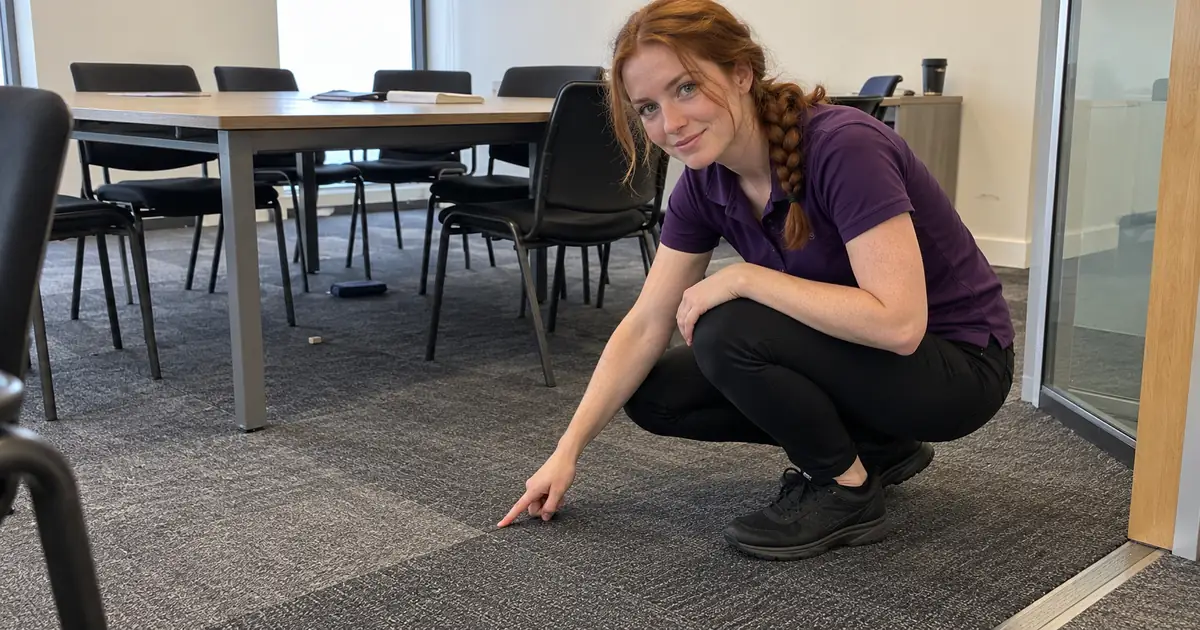
Commercial Office Carpet Tile Cleaning Survey – Illustrative Image
What Do We Cover In This Article?
Start with how the building is used
Useful surveying starts with the way the building runs on a normal working day. Entrances, opening hours, tenant movement, shared spaces and locked rooms all shape the labour plan.
At Double Check Security Group, we build the cleaning scope around the way your site is actually used. A fixed package rarely survives contact with a real building, so our survey starts with use patterns, access routes and the cleaning windows available before staff, visitors or tenants return.
The survey builds the cleaning specification, not a quick price from floor area. During a site visit before a cleaning quote, we look at the areas people use heavily and the spaces that need controlled access. Back of house can take more planning than the front office if cleaners need keys, alarm codes, lift access or loading points at set times.
Lock-up arrangements deserve plain attention. If a cleaner cannot reach a store cupboard, waste area or plant room without waiting for someone else, the quote has to allow for that lost time or set a different route through the building. Those details look small on a walkthrough, yet they decide whether the commercial cleaning quote works in practice.
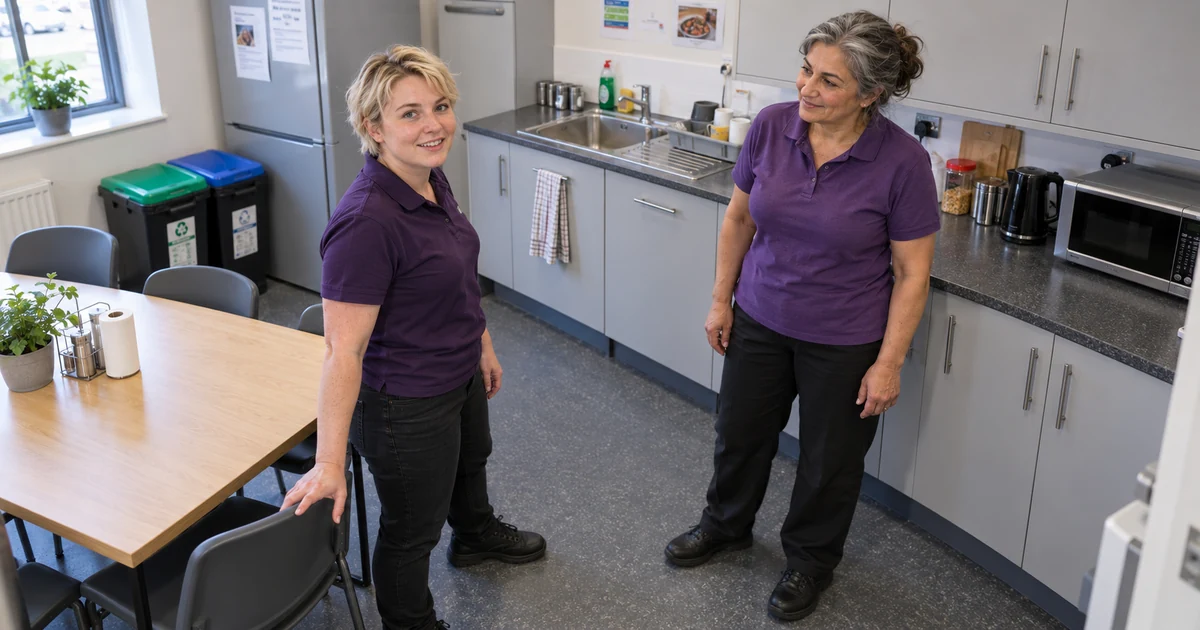
Workplace Break Room Cleaning Survey – Illustrative Image
Map risks to the cleaning specification
Floor type, wet cleaning and chemical use change the quote because they change the method, timing and level of control needed on site. A commercial cleaning risk assessment starts with the work that affects people using the building.
Floors set the method and timing
Smooth floors, wet-cleaning windows and busy routes all affect when cleaning can happen. The Health and Safety Executive says slips and trips remain the single most common cause of major injury in UK workplaces, and cleaning can create hazards such as damp smooth floors and trailing wires from equipment.
That matters during an office cleaning survey because the safe method may need different timing, area isolation or drying time. We check whether floors can dry before staff return, whether equipment leads would cross a walkway and whether a route needs cleaning in sections. A quote that ignores this can make the same task look cheaper on paper while leaving the real timing problem unsolved.
Products have to suit the surface
Product choice is part of the scope, because the wrong product wastes time and can affect the floor finish. HSE guidance points to the need for the correct amount of the right cleaning product, suitable equipment and maintained machines.
During the cleaning quote survey, we look at what the floor is made from and what kind of soil or residue has to be removed. A neutral detergent, a degreasing product or machine cleaning may each change the labour and equipment needed. Product suitability also affects storage, dilution and the way cleaners are briefed.
COSHH checks for cleaning chemicals sit inside this same discussion. We need to know the workplace risks, and your site needs to know if the contractor is bringing hazardous substances onto the premises. Storage, ventilation, spill handling and product records all affect how the cleaning specification is written.
Zones keep equipment use clear
Washrooms, kitchens, office areas and higher-risk spaces should be treated as separate zones during the survey. The British Cleaning Council colour-coding guidance uses red for washrooms and toilets, blue for general low-risk areas, green for food preparation and dining areas, and yellow for clinical or higher biological-risk areas.
Colour coding helps reduce cross-contamination by separating equipment by area or task. For your quote, that affects how many sets of equipment are needed, where they are stored and how cleaners move between zones. Pricing the building as one simple area loses that detail.
A proper quote separates routine work from extras
Two quotes for the same office can look close on the total while covering different work. One may include washroom supplies, periodic floor care and cover arrangements, while another leaves those items to be agreed later.
The table below compares work categories with how each category should appear in the quote.
| Work type | How it should appear in the quote |
|---|---|
| Routine cleaning | Included in the regular schedule with areas, frequency and tasks |
| Periodic work | Listed separately with the trigger, frequency or planned interval |
| Separately priced tasks | Shown outside the core scope where access, equipment or skill changes the labour |
Routine cleaning is the regular work people expect to see, such as desks, washrooms, kitchens, circulation routes and waste points. Periodic work covers tasks that sit on a planned cycle, such as floor treatment or deeper carpet work. Separately priced tasks need their own line when access, equipment or skill changes the labour.
A clear commercial cleaning specification also shows who supplies cleaning products and consumables. Washroom paper, soap, bin liners and specialist products affect storage and cost. If these are hidden inside one total, comparing commercial cleaning services becomes guesswork.
Skills belong in the quote as well. The British Institute of Cleaning Science provides structured cleaning skills training, so survey findings can be matched to the work needed on site, such as carpet extraction, high-level dusting or sector-specific cleaning. Labour remains a major cost driver, which is why hours, frequency, cover, supervision and mobilisation have to be visible.
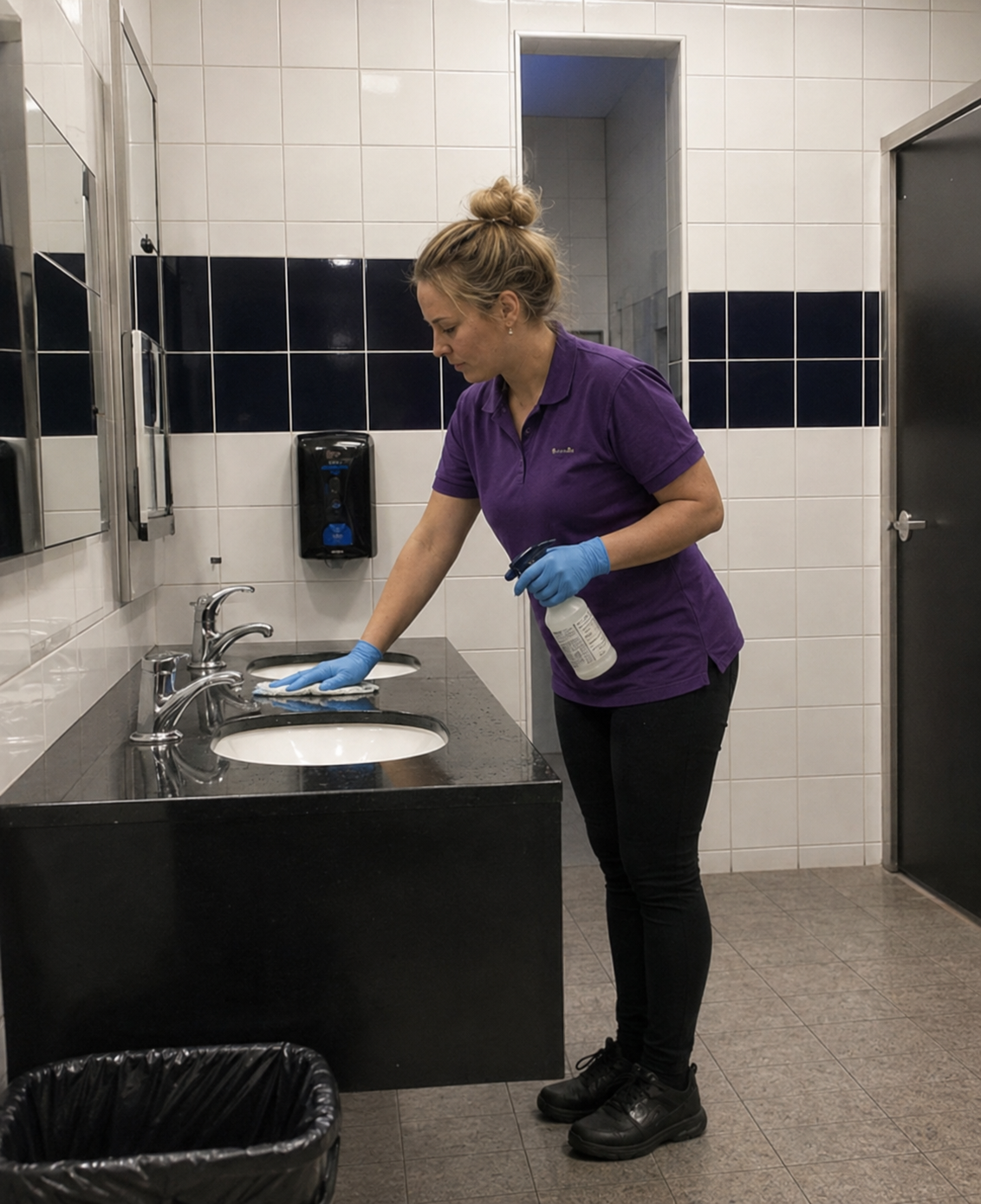
commercial cleaner cleaning washroom sink – Illustrative Image
Cheap quotes hide missing assumptions
The common misconception is that the lowest commercial cleaning quote is a like-for-like saving. Low totals often come from missing assumptions around cover, supervision, consumables, periodic work or mobilisation.
At Double Check Security Group, we treat the survey as the point where the cleaning service becomes manageable. The quote you can manage is the quote with visible assumptions, not the quote with the lowest headline total. Once those assumptions are visible, you can compare cleaning quotes fairly and hold the provider to the agreed scope.
After mobilisation, continuous monitoring and structured client feedback only work if the surveyed scope is clear enough to manage. A vague total gives everyone room to disagree about what was included. A low total is useful only after the missing work has nowhere left to hide.
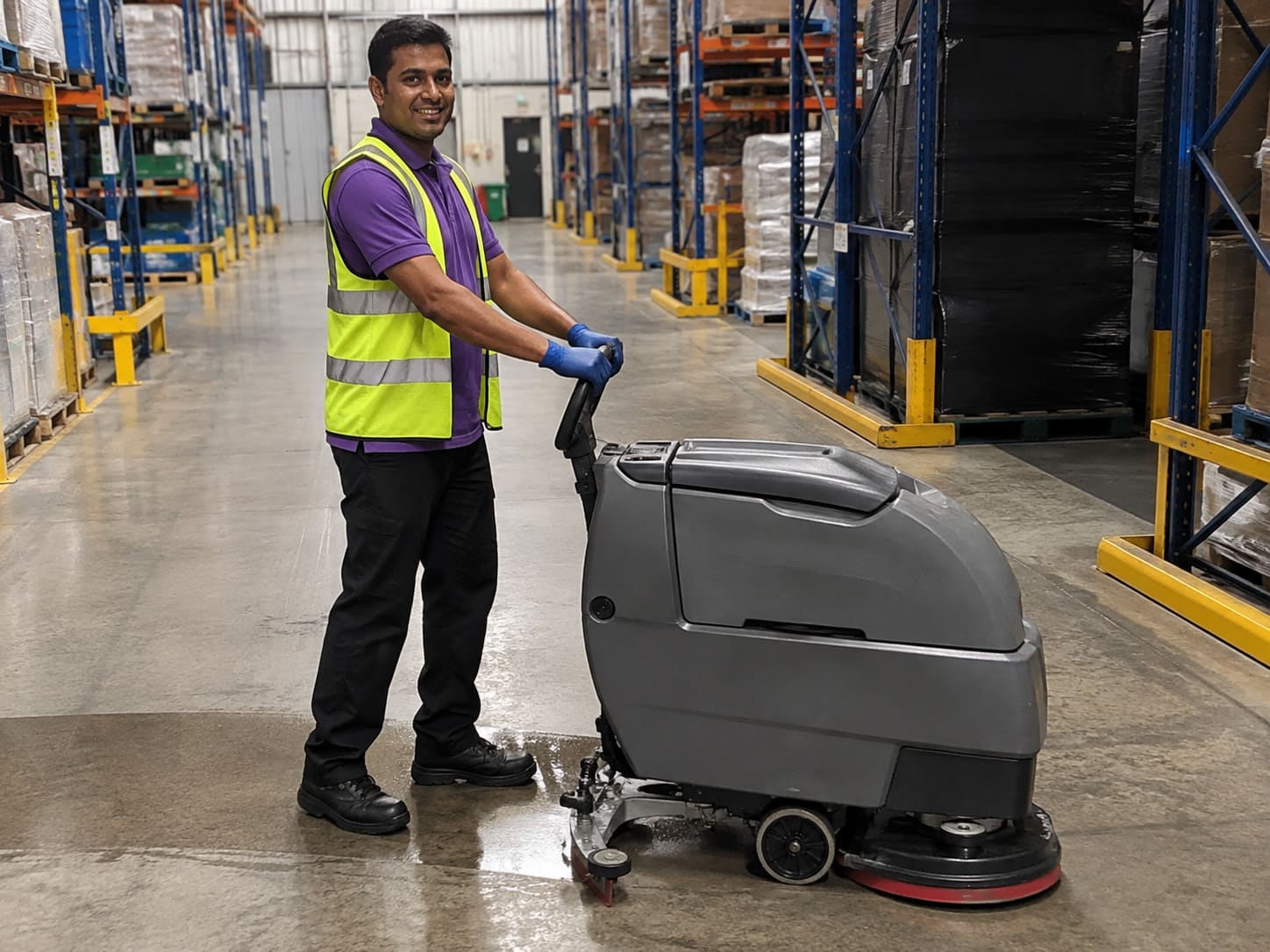
Factory cleaner operating floor scrubber for industrial warehouse cleaning – Illustrative Image
Questions we get asked about commercial cleaning site surveys
Can a short form replace a site visit for a simple office?
A short form can give enough detail for an early discussion, but a site visit gives a better basis for pricing. The walkthrough checks use patterns, access, products and timing, and it can reveal exclusions that would appear later.
What information should I prepare for the cleaning walkthrough?
Prepare your current cleaning schedule, known problem areas, access rules, opening hours and washroom supply arrangements. Floor types and any specialist areas also help the survey move from rough pricing to a workable scope.
Who supplies cleaning products and washroom consumables?
The survey should confirm whether the contractor or your site supplies products, equipment and consumables. That decision affects storage, ordering responsibility and the final price.
Does TUPE apply when changing cleaning contractors?
TUPE, the staff transfer rules linked to service changes, may need checking where an existing cleaning service is moving to a new provider. Current staff details and working hours may be needed before a final quote is confirmed.
What documents should a commercial cleaning contractor provide before starting?
The contractor should provide documents that support safe and managed work, including the cleaning specification, product information, COSHH assessments where relevant, method statements, insurance evidence and training evidence. Those documents should match the survey findings, because they form the working record for the contract.
