

Which role runs your site, and which role controls the property asset?
Facilities management runs the site for the people using it; property management controls the commercial property position. We separate daily service delivery from lease and asset control, then write the handover points clearly so cleaning, security, maintenance issues and occupier queries have named owners.
That distinction matters because most gaps in building management appear between job titles. A cleaner reports a leak, a guard handles an access issue, an occupier asks who pays for a repair, and nobody is quite sure whose decision it is.
We see the clearest arrangements when the contract says who decides, who delivers and who reports back. A managing agent, landlord, occupier, internal team and service provider can all touch the same building, so loose wording causes duplicated work or missed tasks.
The definitions are useful, but the working boundary is more useful. Once you split day-to-day site operation from lease, service charge and asset control, the right service model becomes easier to choose.
What Do We Cover In This Article?
Facilities management keeps the site working
Facilities management is the practical running of the building for its users, not a narrow repair service. The facilities management meaning is best understood through the daily tasks that keep a commercial site usable: cleaning schedules, guarding, reception cover, maintenance coordination, helpdesk reporting and contractor follow-up.
IWFM describes facilities management as a function that brings together people, place and process in the built environment. In plain terms, we look at whether the building works properly for the people inside it. That includes the standards they experience each day, as well as the faults that need fixing.
A retail site gives a simple example. Cleaning has to work around trading hours, security needs the right access information, and reception or concierge staff need to know how to report defects. Split those services into separate silos and small issues travel slowly. Manage them through one operational route and the site becomes easier to run.
At Double Check Security Group, we see integrated facilities management services work best where security, cleaning and building support share one scope, one reporting route and one standard of supervision. Contracted guarding also needs proper care around licensing, because a person carrying out licensable private security work under a contract may need a front line SIA licence.
For a commercial facilities management contract, the useful question is what the building needs every day to stay safe, clean, accessible and properly supported.
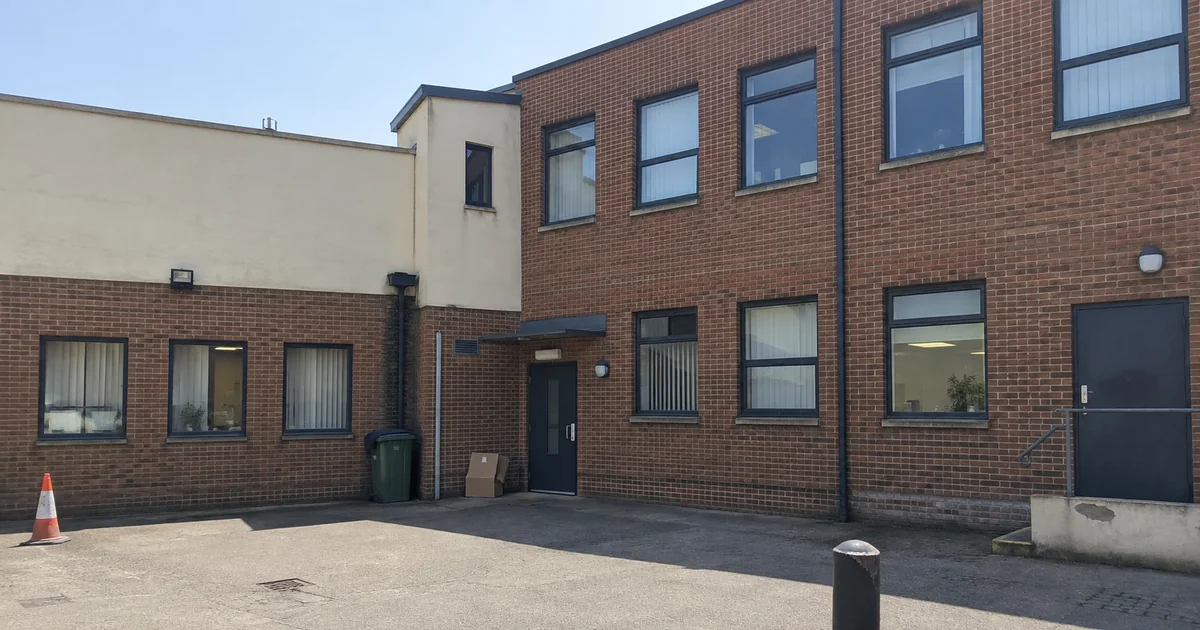
Property management commercial building exterior
Property management protects the asset and lease position
Property management centres on the commercial property asset and the arrangements around it. The property management meaning sits closer to ownership, leases, service charges, occupier communication and the financial control of shared building costs.
A property manager may deal with the landlord’s obligations, lease terms, budget approval and communication with occupiers about charges or building matters. Rent can be part of the picture, but commercial property management also covers the framework that allows services to be funded, approved and explained.
RICS service charge guidance for commercial property is aimed at property managers and occupiers, with a focus on fairness, transparency and consistency in service charge administration. Its second edition became effective from 31 December 2025, which reinforces how much of this role sits around proper administration and clear accountability.
Service delivery still has to happen on the ground. The property manager may approve expenditure or communicate with occupiers, while the facilities provider arranges attendance, supervises the work and reports what has been done. That split leads directly to the overlap.
Responsibility overlap needs a control and delivery split
Where does the confusion usually start? The same issue can involve a lease point, a cost decision and a site task, so the role boundary has to follow the decision path.
The table below compares facilities management responsibility with property management responsibility in common commercial building situations.
| Facilities management responsibility | Property management responsibility |
|---|---|
| Arrange and coordinate day-to-day maintenance attendance. | Decide whether the issue sits under lease, landlord or occupier responsibility. |
| Run cleaning schedules and check service standards on site. | Confirm how shared cleaning costs are budgeted or recovered where service charges apply. |
| Manage contracted guarding, CCTV monitoring or reception duties within the service scope. | Approve the commercial framework for security spend and occupier communication. |
| Receive site reports, log faults and push contractors for updates. | Handle formal occupier queries linked to lease obligations or cost allocation. |
| Keep operational records for attendance, issues and follow-up. | Maintain budget, service charge and asset-related records. |
| Support compliance tasks within the agreed service scope. | Confirm who has legal or contractual control for the relevant premises duty. |
The overlap becomes manageable when we separate control and delivery, not when we try to force every task into one job title. A facilities provider can arrange the guard, brief the cleaner and chase the contractor, but a landlord or managing agent may still control the budget or lease decision behind the task.
Security and public-facing premises show why the wording matters. Contracted security has licensing rules where the work is licensable, and those rules cannot be treated as ordinary staffing detail. For Martyn’s Law, the Home Office guidance bases responsibility on control of the premises for the relevant use, so the responsible person can be an occupier rather than the owner.
Until commencement, the guidance confirms there is no legal requirement to comply with Martyn’s Law. In-scope premises still have planning work to do, especially where security, occupier control and site operation meet in the same building.
Smaller sites may use one provider or one person for several tasks. That can work, provided the contract still names the role being performed at each point.

Facilities management plant room inspection
Choose the model by naming the responsibility
A site with daily cleaning, guarding, minor maintenance issues and occupier queries needs a practical split before it needs a label. If your main problem is how the building runs each day, you are looking at facilities management support. If your main problem is lease control, service charge administration or asset decisions, you need property management input.
Plenty of commercial sites need both. A managing agent may hold the property framework while an outsourced facilities provider runs the services that occupiers see each day. Your internal team may also keep some decisions in-house, especially around cost approval or occupier relationships.
Before agreeing a facilities management contract or a property management contract, we would check five points in the service schedule:
- Decision owner. Name who can approve work, spending and changes to scope.
- Delivery route. Say who arranges attendance on site and who supervises the service.
- Reporting line. Set where faults, missed attendance and occupier issues are logged.
- Cost approval. Make clear which costs sit inside the agreed service and which need separate approval.
- Escalation route. Give unresolved issues a named path, so a site problem does not sit in an inbox waiting for someone to claim it.
With integrated facilities management, the value comes from structure. At Double Check Security Group, we look at cleaning, security and facilities support through the same operational lens: scope first, then reporting, supervision and follow-up.
Once responsibilities are named properly, the choice stops being vague. You can see which party controls the asset, which party runs the site, and exactly where to check when something falls between the two.
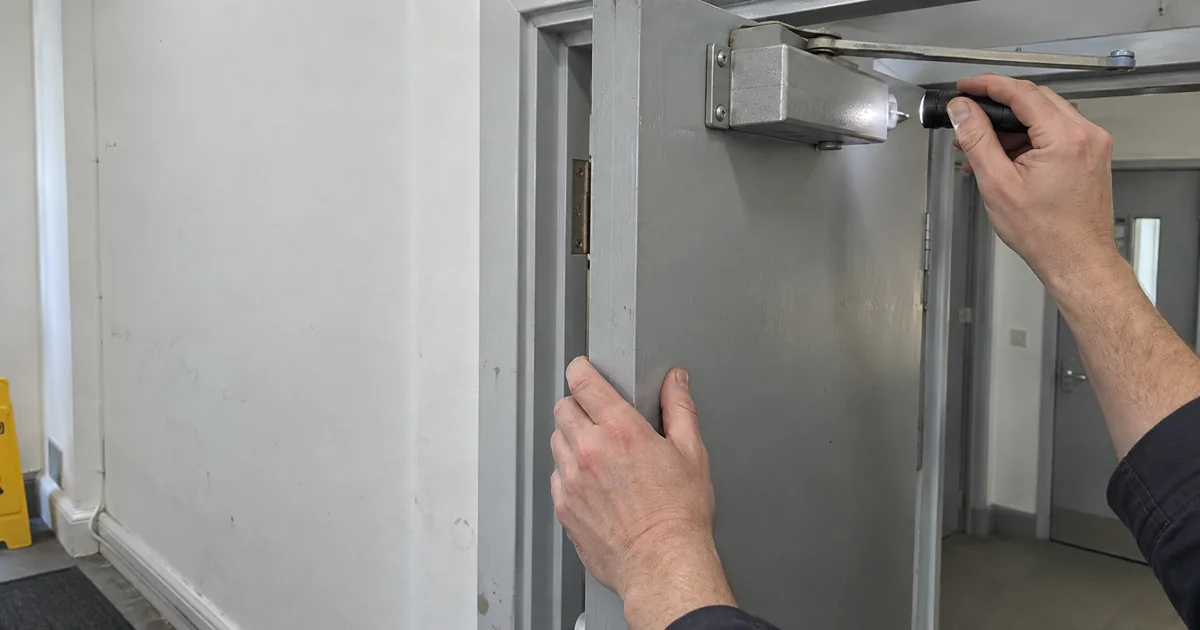
Facilities management fire door inspection
Questions we get asked about facilities and property management
Can cleaning sit outside a facilities management contract?
Yes, cleaning can be bought as a separate service. We prefer to check how it reports into the wider site operation, because cleaning issues often connect with access, security and maintenance.
What should happen to the responsibility split when a provider changes?
The incoming provider needs the same written split as the outgoing one, checked against the current lease and occupier arrangements before the first day. Handovers are where undocumented habits quietly disappear, because the people who remembered them have already left.
Can one company manage security, cleaning and facilities management?
Yes, one company can manage those services under an integrated facilities management model. The contract still needs clear scopes for each service, especially where security licensing and site records are involved.
Who should hold the building records?
Operational records normally sit with the team running the site service, while lease and service charge records sit with the property management side. Shared access to the right records prevents simple questions from turning into long chains of emails.
Is an internal office manager the same as a facilities manager?
An internal office manager may cover some facilities tasks, especially in a smaller workplace. The difference is scope: once the role includes contractor control, service standards, reporting and site risk, it needs the same clear structure as a facilities management function.
