

What does healthcare cleaning mean for your site?
Healthcare cleaning means planned, recorded cleaning for clinical and non-clinical areas, with extra controls where patients receive care or where hands touch surfaces often. It covers routine cleaning, risk-based disinfection, waste-aware working, staff training and evidence that the right areas were cleaned in the right way.
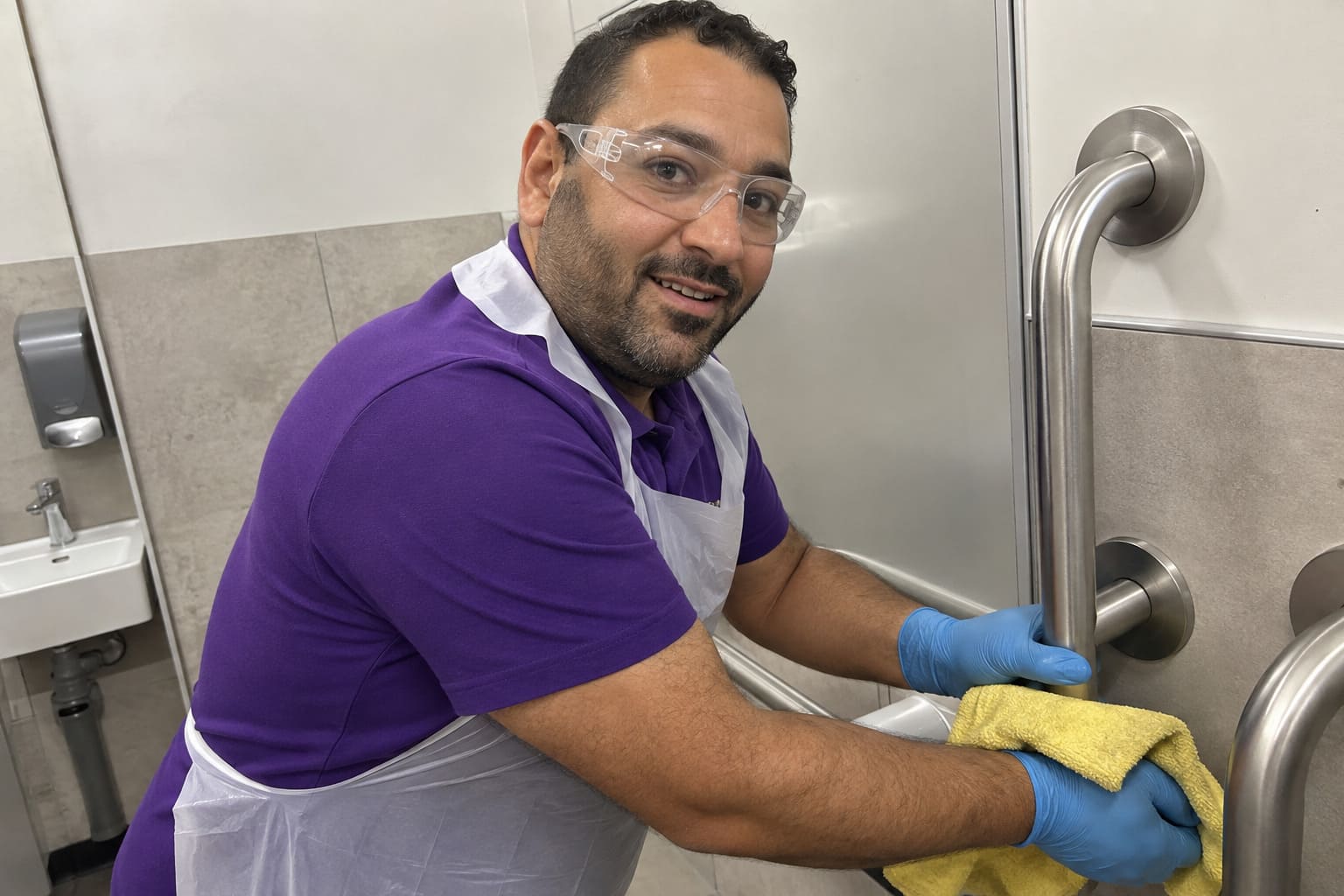
Hospital cleaner sanitising washroom fixtures during specialist healthcare cleaning
What Do We Cover In This Article?
Healthcare cleaning works as a managed system beyond ordinary office cleaning
Healthcare cleaning is a controlled service, not a vague promise to clean harder. A waiting room, toilet, reception desk, treatment room and staff office all need different attention because people use them in different ways and the risk is not the same across the site.
Cleaning removes visible dirt and unwanted material from surfaces. Disinfection uses suitable products to reduce germs on surfaces where that level of control is needed. Decontamination is a wider term used where items or areas need to be made safe for use again, often under a defined procedure. Those words matter because loose phrases such as “medical-grade cleaning” do not tell you what is being done, with which product, by whom, or how it is checked.
Infection prevention and control, often shortened to IPC, means the practical steps that reduce the chance of infection spreading. Healthcare cleaning supports that work through schedules, agreed methods, trained staff and clear records. National Health Service England, usually called NHS England, states in the National Standards of Healthcare Cleanliness 2025 that healthcare establishments must be able to show how and to what standard they are being cleaned.
A simple comparison shows the difference.
| Ordinary commercial cleaning | Healthcare or medical site cleaning |
|---|---|
| Focuses on appearance, comfort and general hygiene. | Focuses on cleanliness, infection prevention and evidence. |
| Uses a general task list for offices, washrooms and shared areas. | Uses a site-specific scope for clinical and non-clinical spaces. |
| Frequencies are set mainly by use and presentation. | Frequencies are set by risk, activity and local assessment. |
| Records may be light or mainly contractual. | Records need to show what was cleaned, when and under whose responsibility. |
| One team may cover most visible surfaces. | Some items, such as point-of-care equipment, may sit with clinical staff rather than cleaners. |
A proper medical site cleaning arrangement answers a better question than “was it cleaned?” It shows whether the right area was cleaned in the right way, with a record that someone can review.
Stricter standards come from risk and accountability
Stricter healthcare cleaning standards exist because healthcare sites contain vulnerable people, clinical activity and surfaces that many hands touch during care. The answer is controlled cleaning where risk is higher, instead of more cleaning everywhere.
A general office schedule can treat most desks, doors and floors as broadly similar. A clinic cleaning plan cannot do that. A door handle used by patients, staff and visitors may need attention at a different frequency from the door itself. NHS England specifically identifies high-frequency touchpoints because hand-mediated transmission contributes to infection spread in healthcare environments.
Clinical activity changes the plan as well. A treatment room, dental surgery or consulting room carries a different cleaning requirement from a private office where no care takes place. The method, product and timing need to fit the activity in that space.
Regulation also raises the bar. The Care Quality Commission, known as the CQC, expects providers to keep premises and equipment clean and suitable under Regulation 15. Outsourcing the cleaning does not hand away that duty, so the site needs a contractor who can support the provider’s own responsibilities.
In practice, Double Check Security Group treats higher-risk cleaning as structured facilities delivery. The scope sets out what is covered, supervision checks whether the work is being carried out, and shortfalls have somewhere to go before they become a bigger problem.
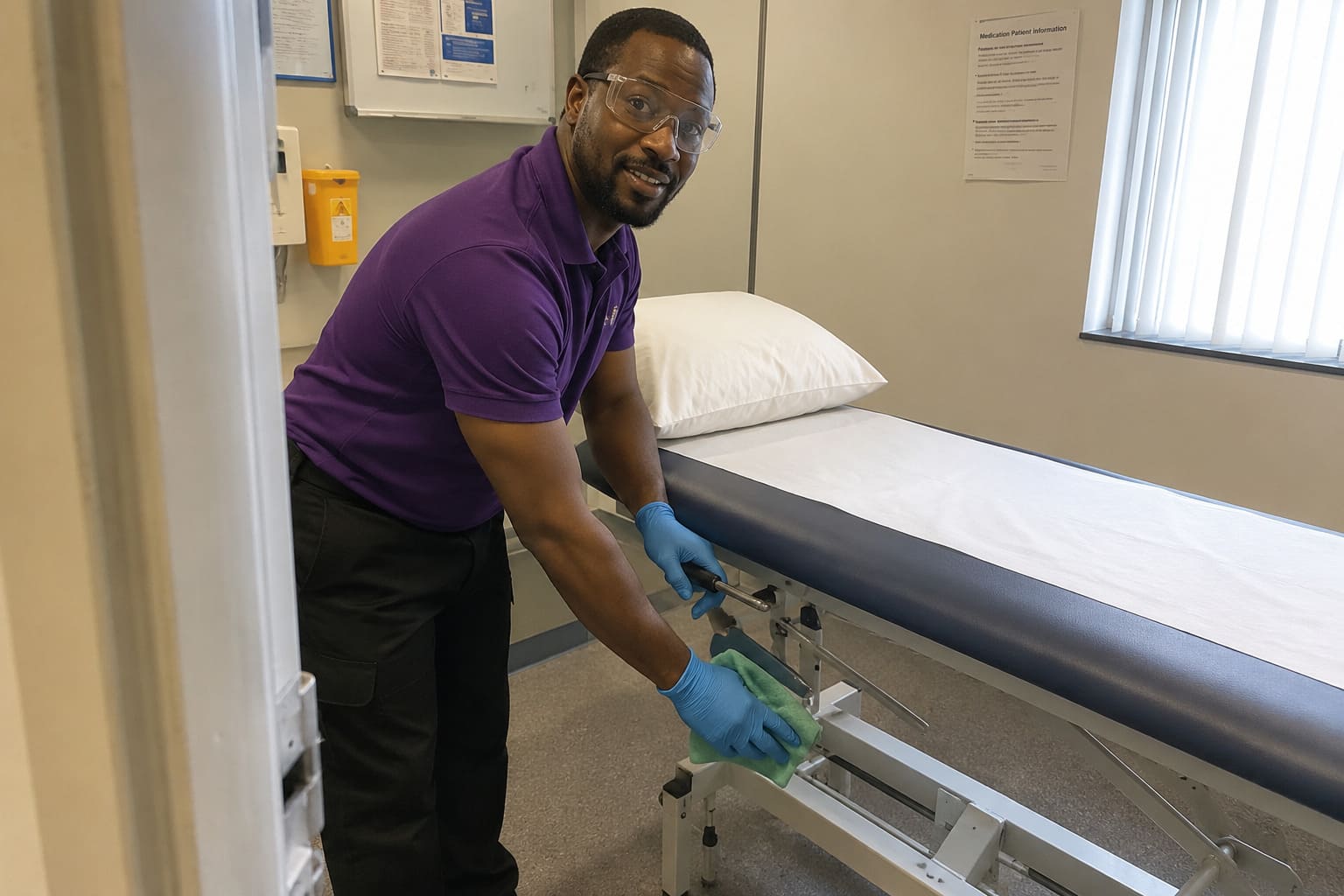
Hospital cleaner disinfecting patient bed during healthcare cleaning service
Risk areas shape the cleaning plan
A reception desk and a treatment couch do not belong on the same cleaning logic. One is a shared contact point. The other sits much closer to patient care. That difference affects frequency, method and responsibility.
NHS England’s 2025 standards use six functional risk categories, labelled FR1 to FR6, where FR means functional risk. The detail behind those categories belongs in a site plan, but the buyer’s test is simple: the schedule should change when the risk changes.
A general practitioner surgery, often called a GP surgery, may include consulting rooms, treatment rooms, toilets, a waiting area, admin offices and staff space. A dental practice adds other clinical considerations. A mixed commercial building with healthcare tenants may include areas controlled by the landlord and areas controlled by the healthcare provider. A single office-style specification across all of those spaces is too blunt.
Colour-coded cleaning equipment can help reduce cross-contamination, because equipment used in one type of area is kept separate from another. Chemical use, staff protection and safe storage also need clear handling through method statements, including duties under the Control of Substances Hazardous to Health Regulations 2002, often called COSHH. Those controls matter, but they are only useful when they sit inside a live cleaning plan rather than a file nobody checks.
Good planning also separates contractor tasks from clinical responsibilities. Cleaners may manage floors, toilets, waiting areas and agreed touchpoints. Clinical teams may remain responsible for certain care equipment or items used directly during treatment. The cleaning responsibility framework should make that split obvious enough that nobody is guessing at the end of a busy day.
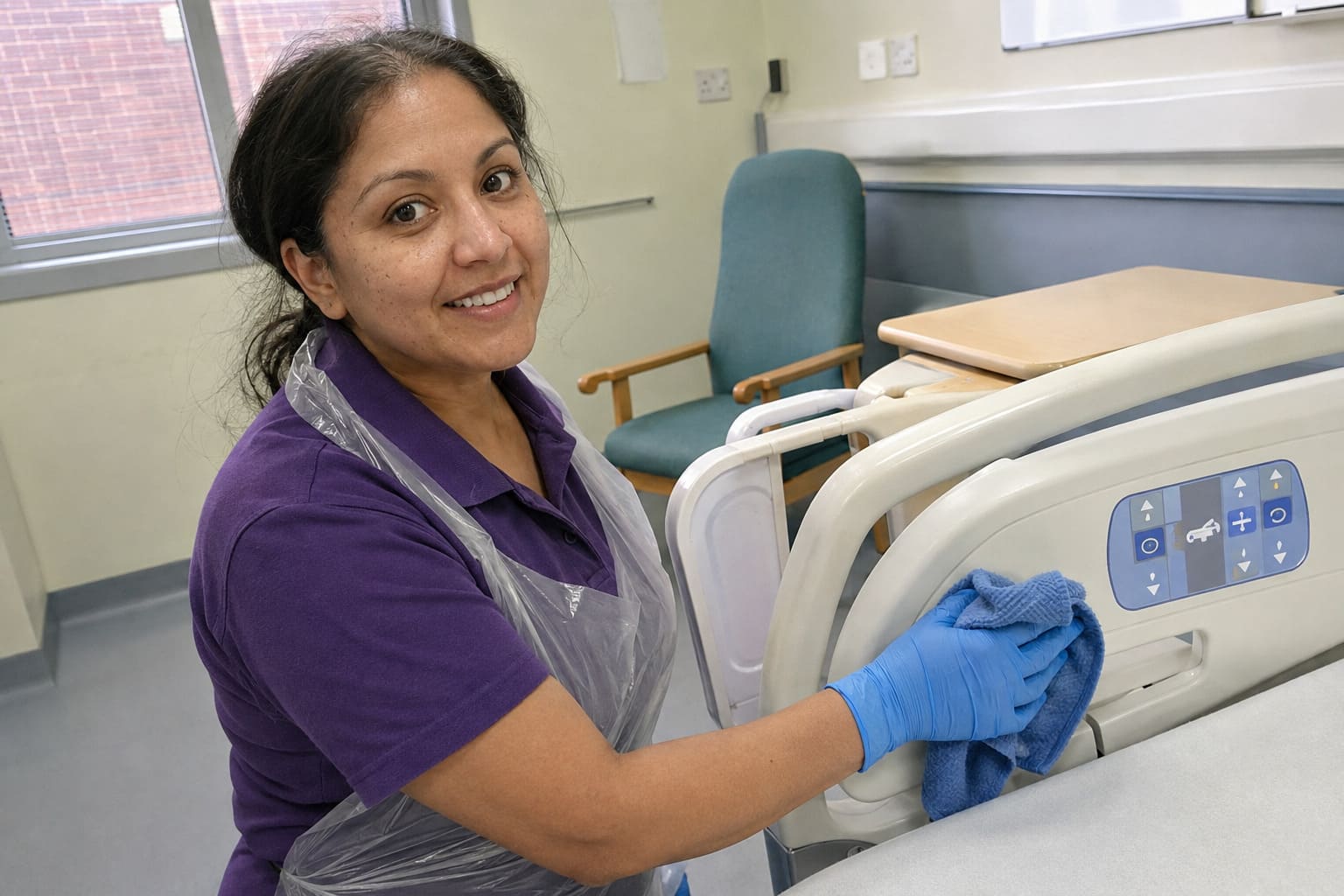
Healthcare cleaner disinfecting hospital bed controls during clinical cleaning
Audit evidence matters as much as visible cleanliness
A clean-looking site can still fail as a managed healthcare cleaning arrangement if nobody can show what was planned, what happened and what was corrected. Evidence turns cleaning from a promise into something you can manage.
The phrase “CQC compliant cleaning company” needs care. The CQC regulates health and social care providers, and its Regulation 15 guidance says providers retain legal responsibility when duties are delegated through contracts or legal agreements. The cleaner supports the arrangement, but the healthcare provider still needs the right oversight.
Useful evidence should be practical rather than theatrical. You should expect records that answer everyday management questions without needing a long search through emails.
- Current cleaning schedule: the document should show areas, tasks and agreed frequencies in plain terms.
- Responsibility split, including what cleaners handle and what clinical staff keep under their control.
- Completed records: these show attended work, not just a proposed rota.
- Audit results and follow-up notes, especially where a shortfall has been found.
- Training records for cleaning staff, including safe product use and site requirements.
- A contract specification that includes standards and audit processes, as well as hours and tasks.
For Double Check Security Group, the practical discipline sits in scopes, monitoring and escalation, because those are the parts a site team needs when cleaning is reviewed. That approach is useful for practice managers and facilities leads who need evidence without turning every cleaning issue into a compliance exercise.
Provider suitability shows in control, records and follow-up
Buying healthcare cleaning on extra hours alone is a weak way to manage risk. Extra time can be wasted on the wrong areas, or spent cleaning low-risk spaces more often while touchpoints and treatment areas still lack proper evidence.
A stronger appointment starts with the provider’s ability to explain the site. The contractor should understand which areas carry clinical risk, who owns each cleaning duty and how the service is checked. Empty phrases should be challenged. If a provider uses “medical-grade” as a selling point, the next answer should explain the method, product, training or contract standard behind the phrase.
Supervision matters because healthcare cleaning is repetitive work with little room for drift. A good contractor does not leave you to find the same missed item week after week. The service review should expose gaps, agree corrections and show whether standards are holding.
Two buying instincts lead to very different outcomes. One chooses the provider that promises more cleaning and reacts with an occasional deep clean when standards slip. The other chooses the provider that can show how cleaning is planned, delivered, checked and corrected as part of the normal service. The second approach works better over time because it gives your site something visible cleanliness alone never gives: control you can prove.
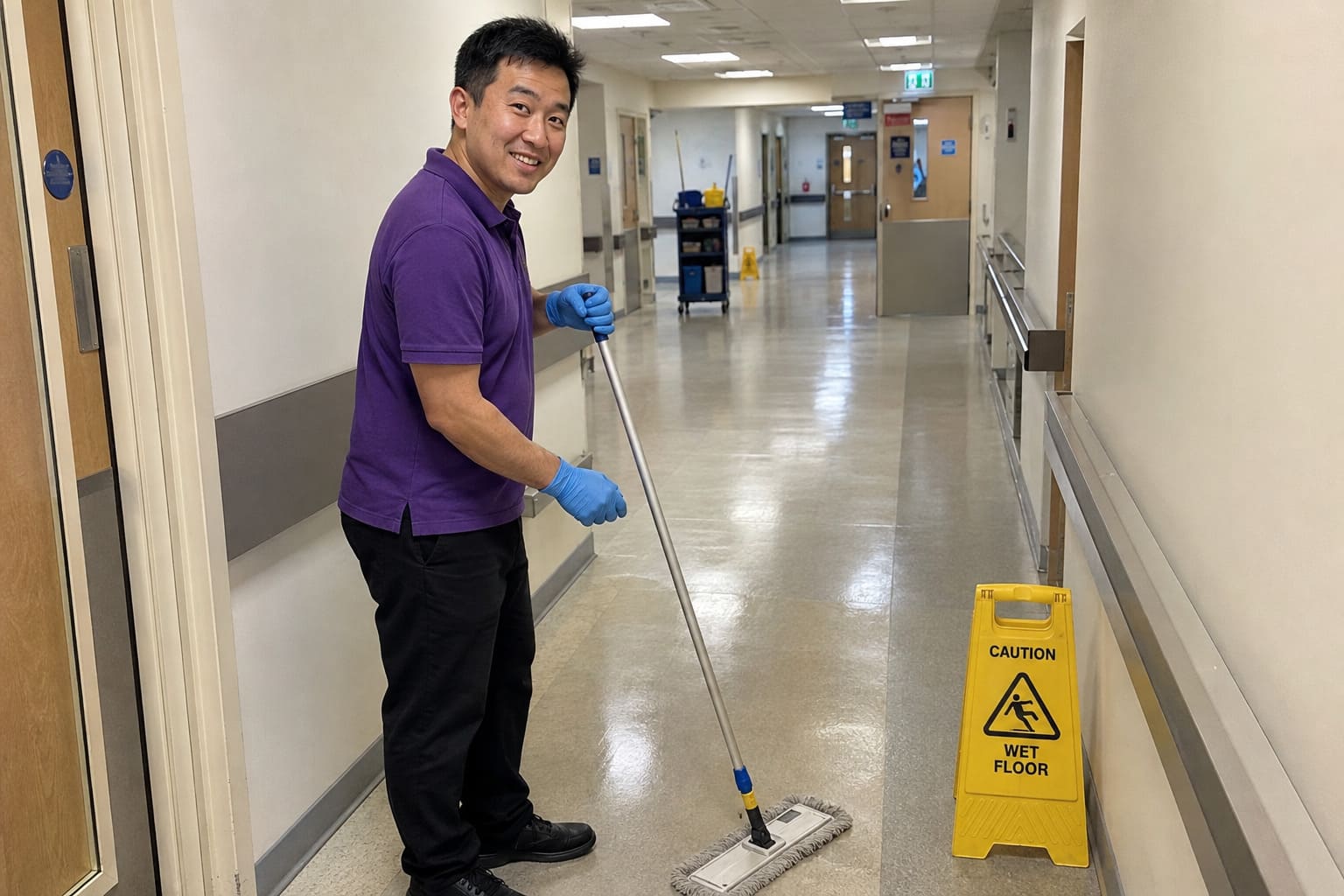
Healthcare cleaner mopping hospital corridor with professional cleaning equipment
Common questions about healthcare cleaning
Do clinic cleaners need healthcare-specific training?
Clinic cleaners need training that fits the site, the risks and the agreed methods. That includes safe product use, site procedures, cleaning records and the boundaries between cleaning staff and clinical staff duties.
Is deep cleaning a substitute for routine healthcare cleaning?
Deep cleaning can support a healthcare cleaning plan, but it does not replace routine cleaning and recorded touchpoint control. A site still needs day-to-day schedules that match the activity in each area.
Can the same cleaner work across clinical and non-clinical spaces?
A cleaner can work across different spaces only when the method, equipment controls and task order are properly managed. The plan needs to prevent cross-contamination and make clear which areas require separate handling.
Who should clean point-of-care equipment?
Point-of-care equipment may sit outside the cleaning contractor’s normal duties, depending on the site and the item. The cleaning responsibility framework should state whether cleaners or clinical staff are responsible, so the task is not missed.
Are colour-coded cleaning systems enough for healthcare cleaning?
Colour-coded systems are a useful control, but they are not a complete healthcare cleaning standard. The site still needs a risk-based schedule, trained staff, suitable products, records and oversight.
This is general information, not medical advice.
