

What is the difference between commercial cleaning and office cleaning, and which one suits your site?
Office cleaning usually covers routine cleaning in desk-based workplaces, including reception areas, meeting rooms, kitchens and toilets. Commercial cleaning is the broader category, which can include offices but also covers other site types, specialist tasks, different risk levels and stricter service requirements. The right choice depends on your building, how it is used, who uses it and what your contract actually includes.
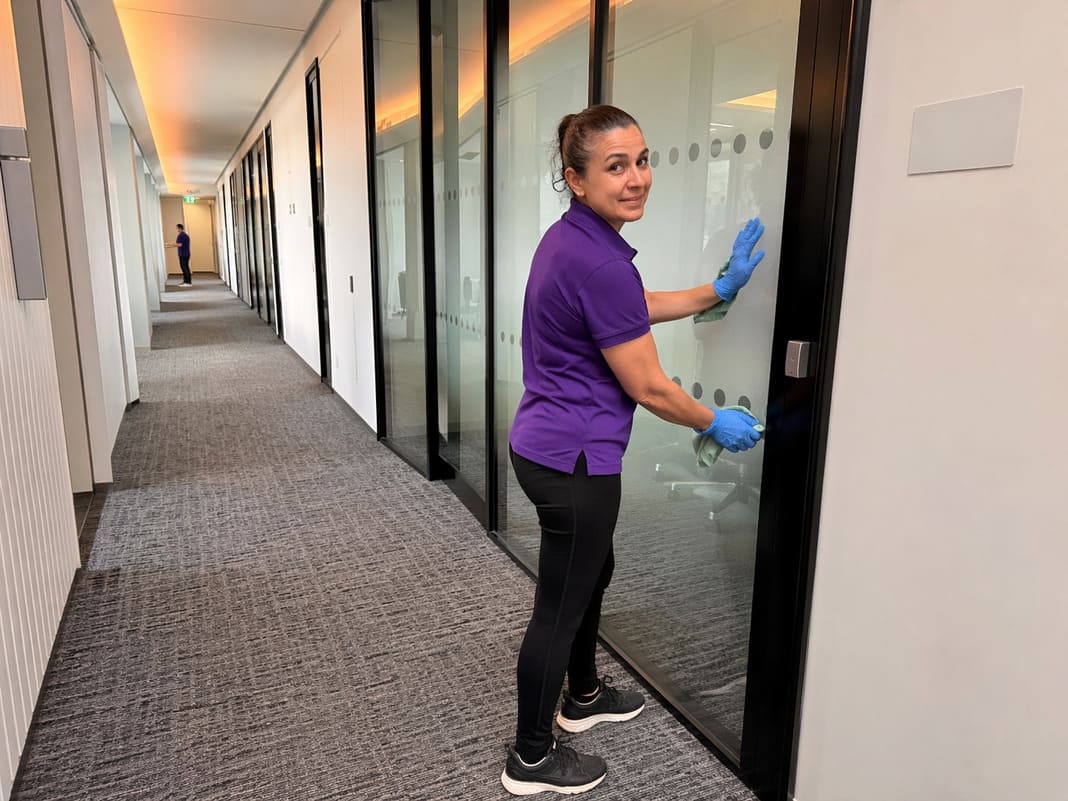
Office Cleaning Services In A Commercial Corridor – sample image
What Do We Cover In This Article?
The Industry Keeps These Terms Fuzzy on Purpose
Cleaning industry terms are often left vague because vague language makes selling easier.
Many providers use commercial cleaning and office cleaning as if they mean the same thing. In practice, they do not. Office cleaning sits inside commercial cleaning, in much the same way that one site type sits inside a wider service category.
Office cleaning usually points to regular, lower-risk tasks on a predictable schedule. Think desks, floors, washrooms, shared kitchens and bins in a standard workplace. Commercial cleaning can include those same tasks, but it can also extend to retail sites, communal residential areas, logistics spaces, hospitality venues and buildings with stricter hygiene, access or reporting demands.
That distinction matters because contract scope, task lists and service levels are often built around the label. A buyer who asks for office cleaning may receive a simple schedule for visible areas only. A buyer who needs broader commercial cleaning coverage may also need documented cleaning schedules, site-specific methods and clearer operational boundaries, particularly where facilities management providers are involved.
Standards also sit differently across the two terms. Organisations that align their systems with frameworks such as ISO 9001 or training bodies such as the British Institute of Cleaning Science usually define services more precisely. Less disciplined providers may prefer the blur, because the blur leaves room to promise broadly and deliver narrowly.
Scope Creep Is the Real Risk, Not Missing a Cleaning Day
A missed visit is obvious. Contract drift is quieter and usually more expensive.
Picture a business that signs what it believes is a commercial cleaning contract for a mixed-use building. The proposal mentions washrooms, floors, touchpoints and communal areas. Three months later, complaints begin to surface. The entrance mats are being cleaned, but the internal glass is not. The shared stairwell gets attention, but the loading bay welfare area does not. A manager asks why, and the answer comes back in familiar language: “That was not included in the agreed scope.”
Nothing dramatic happened. The problem was built in from the start. A vague service agreement allowed each side to picture a different service boundary.
Office cleaning limitations tend to show up first in exactly these moments. Routine areas are covered because they are easy to define and easy to price. Less obvious spaces, including storage rooms, secondary entrances, staff changing areas or high-traffic shared points, can slip outside the schedule unless they are named clearly. Once a team starts informally “helping out” with those areas, expectations shift, standards become inconsistent and disputes follow.
Clear documentation is the only reliable defence. A proper cleaning contract scope needs specific task lists, frequencies, escalation processes and, where relevant, risk assessments linked to the site. Without that level of detail, what was promised and what gets delivered start to drift apart.
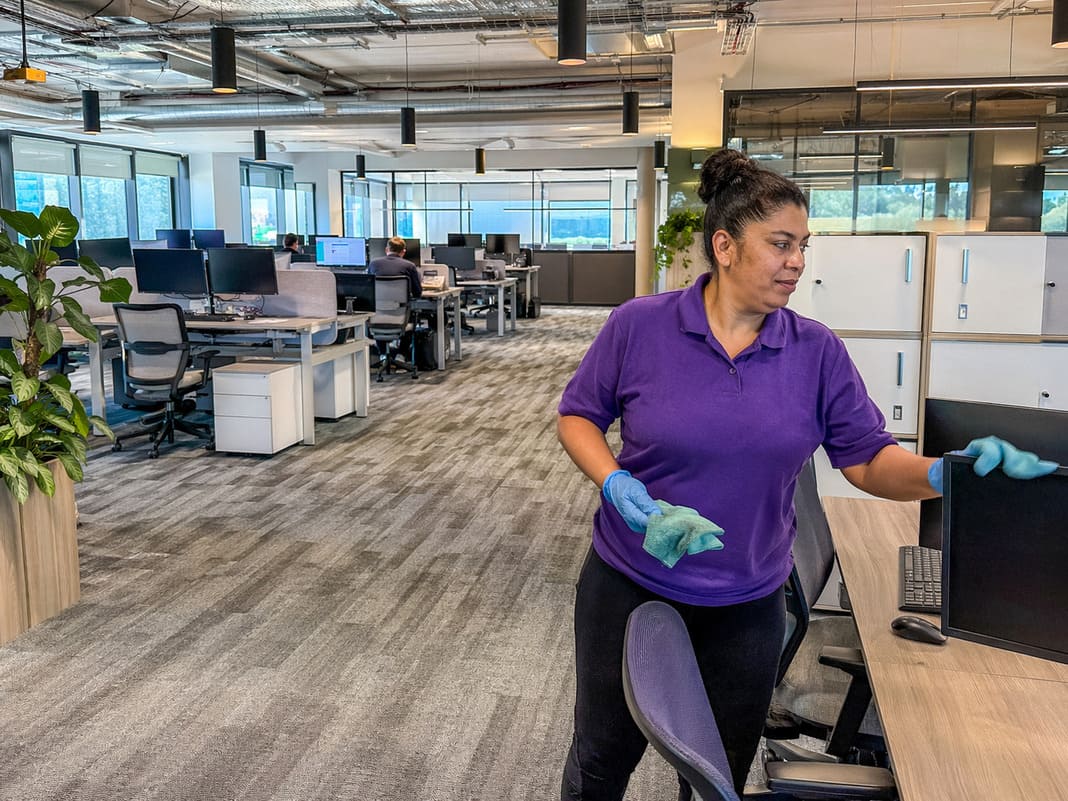
Open Plan Office Cleaning Services In A Modern Office – sample image
Compliance Isn’t Optional, It’s the Baseline
Compliance sits underneath every professional cleaning service, whether the site notices it or not.
A workplace may look clean and still be poorly managed. That gap tends to appear during an incident, an insurance query or a compliance audit, when someone needs to confirm training records, safe systems of work, chemical handling, site inductions or documented reporting. If the provider cannot produce them, the problem stops being cosmetic and becomes operational.
Office cleaning is sometimes treated as informal because the setting feels familiar. Yet health and safety regulations still apply, chemical use still needs control and staff still need procedures that match the building. In more regulated commercial settings, the margin for improvisation gets even smaller. Accreditation does not guarantee good delivery on its own, but recognised frameworks such as ISO 9001 and British Institute of Cleaning Science standards usually signal that the provider works within a documented system. That matters because consistency rarely comes from goodwill alone.
Some businesses also buy cleaning alongside wider security or building services. In those cases, compliance culture across the whole provider becomes relevant. A company working within recognised audit structures, and in some service lines under schemes such as the SIA Approved Contractor Scheme, is more likely to treat inductions, reporting and site controls as normal practice rather than optional admin.
A non-compliant cleaner can look cheaper on paper. The price often changes shape once an incident exposes weak insurance cover, missing records or poor supervision on site.
One-Size-Fits-All Cleaning Schedules Are a False Economy
Standard schedules often exist because they are easy to quote, not because they fit the building.
A generic office cleaning routine usually assumes a familiar pattern: empty bins, wipe desks, vacuum floors, clean washrooms, lock up. That may be enough for a small office with steady occupancy and limited visitor traffic. It starts to fail when the same template is dropped into a site with staggered shifts, public-facing areas, delivery traffic, shared welfare facilities or uneven daily use. The schedule still looks tidy on paper, but the wrong areas get attention at the wrong time.
A stronger commercial cleaning programme starts with the site itself. Facilities management teams that rely on site surveys, operational risk assessments and cleaning audits can adjust frequency, methods and timing around how the building actually runs. A reception used heavily in the morning may need a different rhythm from a back-office floor. A washroom beside a warehouse entrance may need closer monitoring than one next to a meeting suite. Custom cleaning schedules tend to cost more thought at the start, yet they often reduce the hidden waste of over-servicing quiet areas and neglecting busy ones.
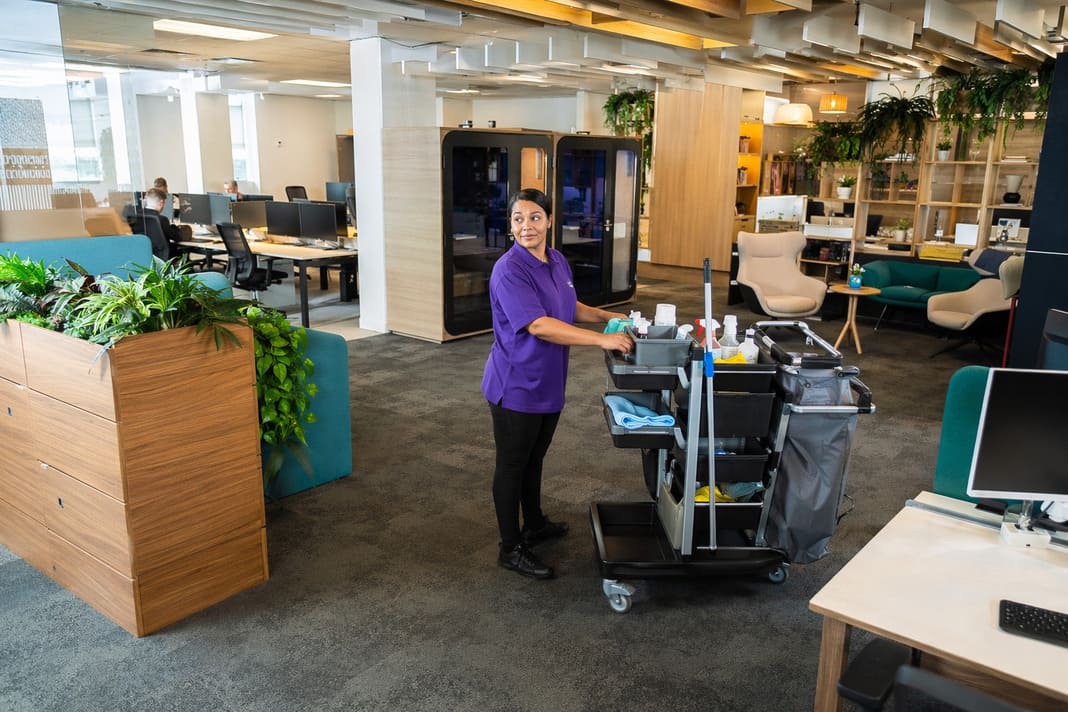
Office Cleaning Services In A Modern Office – sample image
The Right Provider Is Structured, Not Just Flexible
Flexibility sounds reassuring, but structure is what keeps standards steady.
Consider two providers asked to support a multi-use commercial site. The first proudly says it can adapt to anything. Requests are handled informally, supervisors make changes on the fly and the service shifts week by week depending on who is available. The second uses an operational framework, which means requests are logged, scope changes are agreed, performance is monitored and service levels stay visible. Both may describe themselves as flexible. Only one is likely to remain consistent once the site gets busy.
That difference matters more than polished language in a proposal. Structured cleaning providers tend to have clearer escalation protocols, better performance monitoring and more reliable service consistency across different site types. In practice, organisations such as Double Check Security Group often stand out because they treat cleaning delivery as part of a controlled operational system rather than a loose promise to be accommodating.
Most Cleaning Failures Are Down to Oversight, Not Effort
Poor outcomes usually come from weak monitoring, not from lack of effort on the ground.
A cleaner can complete every task on a sheet and still miss the pattern that matters. If no one checks standards properly, issues settle in slowly. Finger marks stay on internal doors for days. Washroom supplies run low at the same time each week. A back stairwell starts slipping below standard because it sits outside the main walkthrough route. Staff may be trying hard, but the service is drifting.
Strong cleaning oversight changes that pattern early. Site visit logs, audit processes, induction records and performance reporting create a feedback loop that picks up decline before it becomes normal. One provider may rely on ad hoc complaints to identify problems. Another may use regular site visits and documented reviews to track them in routine operation. Double Check Security Group is one example of a business model that puts regular oversight and site discipline at the centre of service delivery, which is usually where quality assurance in cleaning becomes visible in day-to-day results.
Blame rarely fixes a weak system. Clear reporting lines often do.
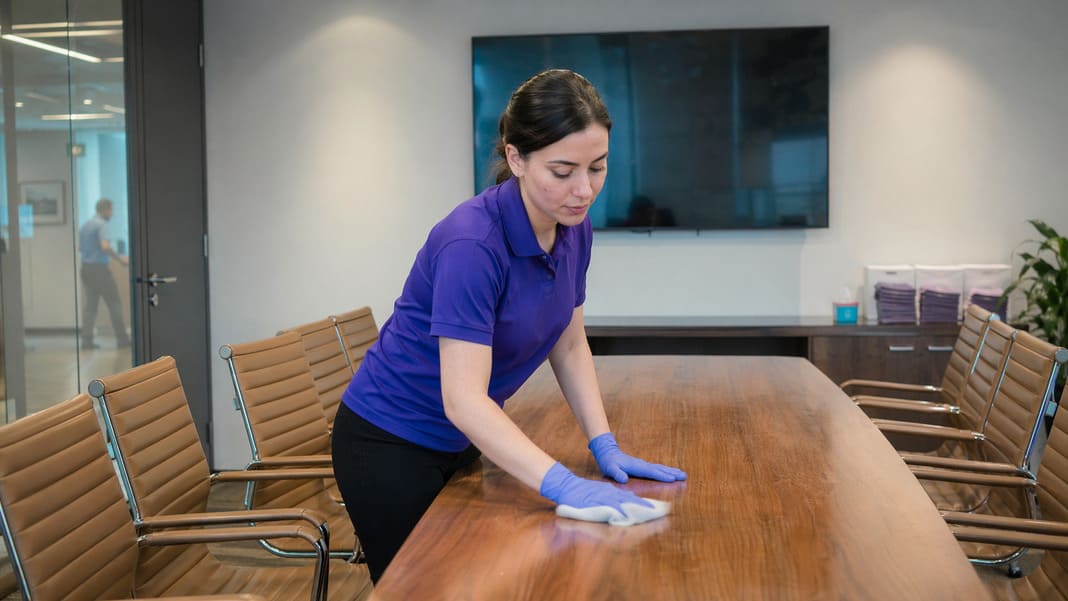
Office Cleaning Services In A Corporate Boardroom – sample image
Long-Term Outcomes Favour Structure Over Short-Term Savings
Cheap cleaning can stay cheap for a month. Poor cleaning rarely stays cheap for a year.
One approach buys the lowest visible price and assumes cleaning is a basic commodity. The contract is light on detail, the schedule is generic and oversight is minimal unless someone complains. That route may trim the monthly figure, but the hidden costs tend to appear elsewhere: patchy presentation, recurring service disputes, avoidable compliance concerns and extra management time spent chasing standards.
The other approach pays closer attention to cleaning contract value than headline price. Scope is defined properly, quality management systems support delivery and service changes are controlled rather than improvised. Over time, that usually leads to better operational continuity, fewer arguments about coverage and a more reliable standard across the whole site.
Short-term savings reward optimism. Structured delivery tends to reward experience.
